FORT BELVOIR, Va. — The U.S. Army has officially unveiled a sweeping, long-term biodefense strategy designed to fundamentally shift how the force operates, survives, and wins in what military planners now define as a "biologically contested environment."
As global threats evolve from naturally occurring pandemics like COVID-19 to the sophisticated, deliberate misuse of biotechnology by near-peer adversaries, the Army is moving to treat biological hazards not merely as medical inconveniences, but as critical operational constraints. This new directive, finalized under former Army Secretary Dan Driscoll, outlines a ten-year roadmap aimed at building a resilient, tech-enabled force capable of maintaining combat lethality regardless of the biological landscape.
The Paradigm Shift: Defining the Contested Environment
For decades, military biodefense was largely siloed within medical and specialized chemical-biological units. The new strategy, explained by Lt. Col. Dave Kingery, the biological defense integrator for the Army’s headquarters and the U.S. Army’s Nuclear and Countering Weapons of Mass Destruction Agency (USANCA), mandates a whole-of-service approach.
"We have to ensure that a global pandemic or some other health event does not stop us from our ability to project those forces forward," Kingery told a group of reporters at a recent media event. "We must be in the place to fight and win the war and endure through any conflict."
The Army defines a "biologically contested environment" as a spectrum of risk that includes:
- Naturally Occurring Threats: Endemic diseases, malaria, and future pandemic-scale pathogens.
- Accidental Threats: Laboratory leaks or industrial failures involving hazardous biological agents.
- Deliberate Threats: Man-made pathogens engineered by state or non-state actors, utilizing the latest advancements in synthetic biology.
By integrating biodefense into the broader concept of warfighting, the Army aims to prevent the paralysis that biological uncertainty can impose on commanders in the field.
Five Pillars of Modernized Biodefense
The strategy is structured around five distinct "lines of effort" (LOEs), each designed to be implemented progressively between now and 2035.
1. Building Knowledge: The Human Element
The first pillar focuses on human capital. The Army intends to recruit, develop, and retain a specialized cadre of scientific, medical, and operational subject matter experts (SMEs) across all echelons of the force. This includes integrating rigorous biodefense curricula into professional military education and training, ensuring that non-medical leaders understand the tactical implications of biological threats.
2. Gaining Situational Awareness: The Digital Sentinel
Under this line of effort, the service plans to embed advanced biological sensors and analytical tools directly into existing military platforms. This "decision advantage" initiative is intended to provide commanders with real-time data on biological presence, enabling them to make informed maneuvers rather than retreating at the first sign of a potential threat.
3. Managing Information and Communication: Battling the Infodemic
Recognizing that modern warfare is fought in the information space as much as the physical, the Army is prioritizing the standardization of biological information sharing. This extends to allies and joint forces, ensuring a unified common operating picture. Furthermore, the Army will utilize artificial intelligence (AI) and machine learning (ML) to monitor for misinformation campaigns that could exacerbate panic or cause operational confusion during a biological incident.
4. Building Biodefense Readiness: Operational Integration
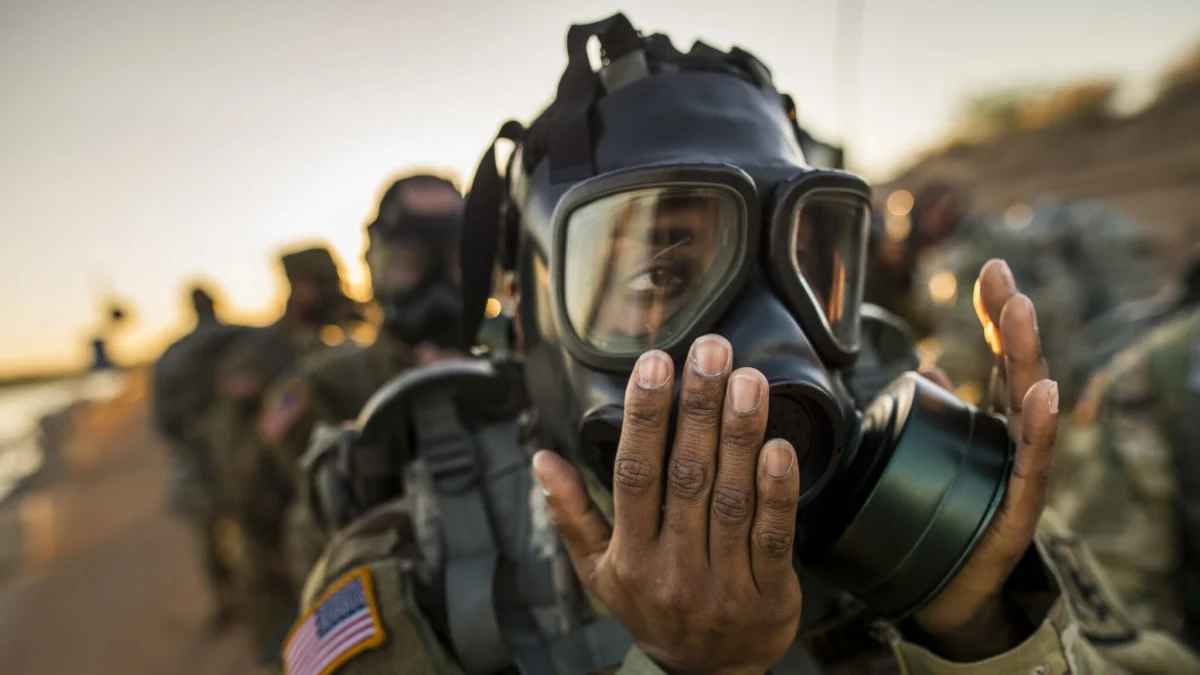
Perhaps the most significant change is the shift in perspective: the Army is moving away from treating biothreats as purely a medical problem. Instead, they are being classified as operational constraints that directly affect mission accomplishment. This line of effort emphasizes the provision of enhanced decontamination capabilities and protective equipment designed for high-intensity, sustained combat.
5. Modernizing Biodefense: The Technological Edge
The final pillar centers on agility. By leveraging synthetic biology, additive manufacturing, and rapid acquisition processes, the Army aims to shorten the time between threat detection and the deployment of countermeasures. Doctrine will be updated continuously to address identified capability gaps.
Chronology of Implementation: A Phased Approach
The Army has established a rigorous schedule to ensure these pillars are not merely theoretical but are integrated into the force’s DNA:
- 2025–2028: The Foundation (Focus on LOEs 3 & 5). During this phase, the Army will prioritize information management and modernization. The rationale is that building the necessary data architecture and digital infrastructure is a prerequisite for success in the other three areas.
- 2028–2031: Capability Expansion (Focus on LOEs 1 & 2). Once the technical architecture is in place, the service will pivot to institutionalizing its human expertise and sensor networks.
- 2031–2035: Full Integration (Focus on LOE 4). The final phase involves the total embedding of biodefense readiness into the standard operating procedures of every unit in the Army.
Supporting Data: The Speed of Detection
Col. Dennis Rufolo, deputy director for Force Health Protection, highlighted the dramatic technological leap that makes this strategy viable. "A few years ago, if a soldier found a suspicious substance or dead wildlife, they had to send samples back to the continental U.S. for testing," Rufolo explained. "That was a weeks-long process. Today, we have mobile genetic sequencing devices that allow for identification in as little as 24 hours."
This speed is critical for mitigating exposure and protecting the force. Furthermore, the use of AI is revolutionizing how the Army monitors the global health landscape. By establishing "baselines" for disease prevalence—using open-source data from other nations—the Army can now detect anomalies with unprecedented speed. If a disease begins to spread in a way that deviates from the AI-established baseline, commanders are alerted immediately, allowing for proactive rather than reactive decision-making.
Official Responses and Strategic Implications
Allison Tamasi, chief of USANCA’s survivability and effects analysis division, noted that while there was no single "trigger" for the new strategy, it represents a synthesis of hard-won lessons from the COVID-19 pandemic and the rapidly changing global threat picture.
"The 2021 strategy was focused on getting the initial pieces in place within specialized chemistry and biology shops," Tamasi said. "The new strategy is about making biodefense everyone’s responsibility. It is no longer a scenario where you see something strange and leave it to the surgeons. Every soldier, intelligence officer, and logistician has a role to play in recognizing and reporting threats."
Implications for Future Conflicts
The implications of this strategy are profound. By treating biological threats as operational factors, the Army is signaling to adversaries that they cannot rely on biological weapons to disrupt U.S. power projection.
Furthermore, the emphasis on AI-driven data collection and decentralized detection means that the Army is no longer reliant on centralized, vulnerable command-and-control structures to process biological threats. Instead, the "biodefense-ready" soldier becomes a node in a global surveillance network.
However, the strategy also acknowledges the reality of modern research. As Tamasi noted, advancements in precision medicine, while beneficial for global health, can also be weaponized. The Army’s new posture is a direct answer to the dual-use nature of modern biotechnology, ensuring that the service remains resilient in a world where the line between natural public health crises and intentional biological warfare has become increasingly blurred.
Conclusion: A Resilient Future
The 2035 vision for the U.S. Army is one of a force that is "biologically aware." By transitioning from a reactive, medical-centric model to a proactive, operationally integrated one, the Army hopes to preserve its ability to project power globally.
As the service begins the work of prioritizing its information architecture and modernization efforts through 2028, the ultimate success of the program will hinge on the culture shift within the ranks. As Col. Rufolo and Tamasi emphasized, the goal is to make the defense of the force against invisible threats as second-nature as the defense against traditional kinetic munitions. In a landscape defined by rapid technological change and persistent global instability, the Army’s new biodefense strategy serves as a vital safeguard for the future of national security.