
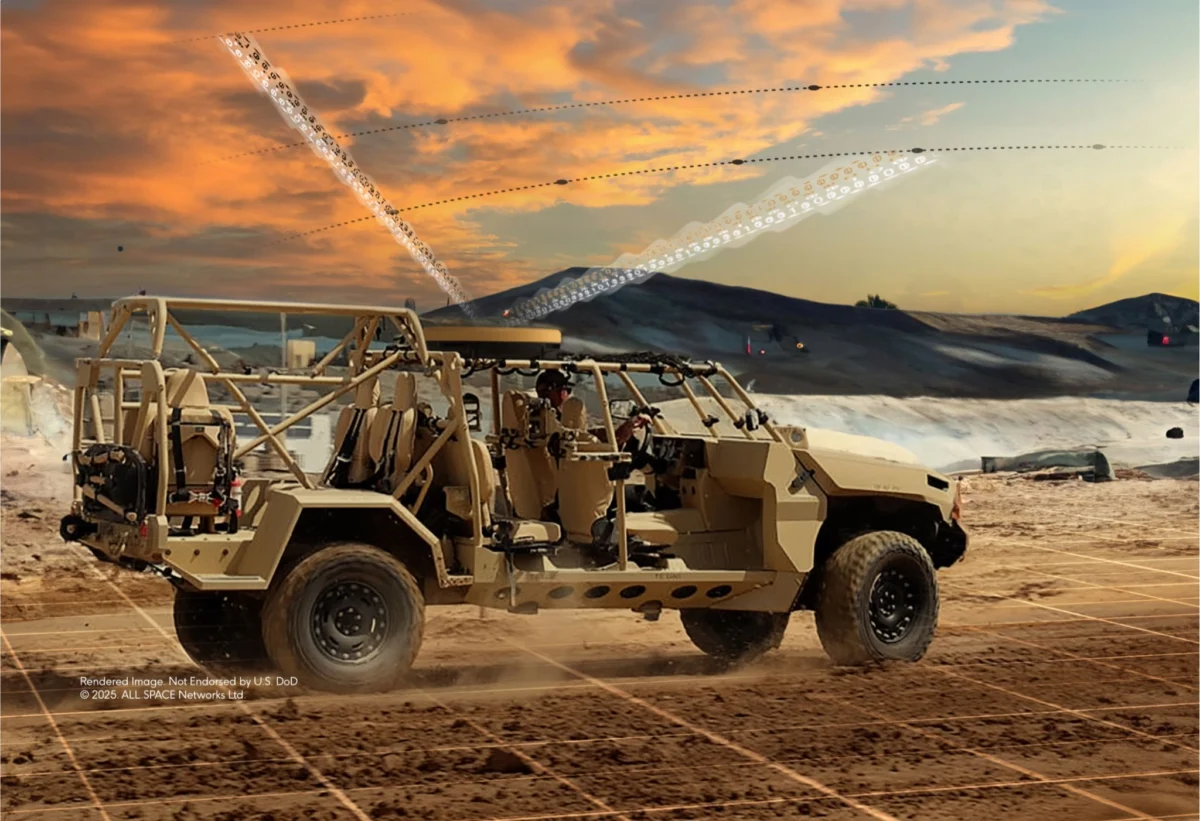
In a strategic move to bolster the United States’ domestic defense industrial base, the Department of Defense’s Defense Innovation Unit (DIU) has awarded a significant Other Transaction Authority (OTA) contract to All.Space. The contract, which focuses on the mass production of the company’s signature "Hydra" satellite communication terminals, marks a pivotal shift in how the military approaches the procurement of high-tech, multi-orbit connectivity solutions.
By integrating All.Space into the DIU’s Adaptive Space Manufacturing and Integration at Scale (10²) project, the Pentagon is signaling its intent to move away from low-volume, handcrafted hardware toward a model of agile, on-demand manufacturing. This partnership is designed to bridge the "valley of death" between prototype validation and large-scale deployment, ensuring that the warfighter has resilient, multi-orbit communications at the speed of modern conflict.
The Core Objective: Scaling for the Modern Battlefield
The Hydra terminal represents a paradigm shift in satellite communications (SATCOM). Unlike traditional terminals that are often locked to a specific frequency or orbit, the Hydra is engineered to deliver seamless, resilient connectivity across multiple networks and orbital planes simultaneously.
However, technology is only as effective as its deployment capability. The DIU’s 10² project was established specifically to solve the bottleneck of domestic production. Under this new contract, All.Space—now a subsidiary of York Space Systems—will participate in an iterative design-build-test-validate cycle. The ultimate objective is to demonstrate that the company can achieve "on-demand production rates" capable of supporting hundreds of units per month and thousands per year.
For the military, this is not merely a logistical upgrade; it is a tactical necessity. In an era of contested space environments, where the ability to switch between LEO (Low Earth Orbit), MEO (Medium Earth Orbit), and GEO (Geosynchronous Equatorial Orbit) networks is critical to maintaining connectivity, the Hydra terminal acts as a force multiplier.
Chronology: From U.K. Innovation to U.S. Industrial Powerhouse
The journey toward this contract award has been characterized by rapid international growth and strategic realignment.
- Early Development: All.Space, formerly known as Isotropic Systems, spent years developing its unique lens-based antenna technology, which allows for multiple simultaneous beams without the signal interference typically associated with high-density satellite arrays.
- The York Space Systems Acquisition: In mid-2026, the company was acquired by York Space Systems, a move that consolidated All.Space’s cutting-edge terminal technology with York’s robust satellite bus manufacturing capabilities.
- The Domestic Pivot: Following the acquisition, All.Space made the high-profile decision to relocate its global headquarters from the United Kingdom to the United States. This move was not just administrative; it was a clear signal of intent to embed itself deeply within the U.S. Defense Industrial Base.
- Establishing the Alabama Hub: The company established a state-of-the-art technical and manufacturing hub in Florence-Muscle Shoals, Alabama. This facility now serves as the heartbeat of their production efforts.
- November 2025 (Contract Award): The DIU officially announced the OTA contract, categorizing All.Space as a "disruptive innovator" within the 10² program, tasking them with scaling production to meet the demands of the Space Force and other military branches.
Supporting Data: Why "10²" Matters
The DIU’s "10²" program derives its name from the mathematical goal of increasing production capability by orders of magnitude. Historically, defense-grade SATCOM terminals were produced in small batches, leading to high unit costs and long lead times—sometimes extending to 18–24 months from order to delivery.
By adopting a commercial-manufacturing philosophy, All.Space aims to:
- Reduce Lead Times: Transitioning from bespoke manufacturing to a modular assembly line process.
- Enhance Reliability: Utilizing automated testing protocols during the assembly process to ensure that each unit meets stringent military-grade MIL-STD requirements before leaving the factory floor.
- Cost Efficiency: By moving to a mass-production model, the economy of scale is expected to drastically lower the unit price of the Hydra terminal, allowing for wider distribution across the U.S. military’s vehicle fleet, maritime assets, and forward-operating bases.
The technical requirements for the 10² program require participating firms to prove they can scale their manufacturing infrastructure without sacrificing the sophisticated radio frequency (RF) performance for which the Hydra is known.
Official Responses and Strategic Vision
Leadership at both All.Space and the broader defense sector view this contract as a litmus test for the "Commercial-off-the-Shelf" (COTS) procurement strategy.
Rod McCurdy, COO of All.Space, underscored the necessity of this pivot during the contract announcement:
"Hydra was designed to deliver resilient connectivity across multiple networks and orbits, and this effort provides an opportunity to demonstrate how those capabilities can be delivered at the pace required by next-generation space and defense architectures. We are aligning our manufacturing processes to meet the urgent needs of the warfighter, ensuring that these advanced terminals are not just prototypes, but field-ready assets available in quantity."
Industry analysts note that this contract is a direct result of the Pentagon’s broader "Space Force" integration efforts. As the U.S. military leans more heavily on commercial LEO constellations like Starlink, Eutelsat OneWeb, and Kuiper, the need for a terminal that can aggregate these services—and switch between them instantly—has moved from a "nice-to-have" to a "mission-critical" requirement.
The Strategic Implications: A New Era of Connectivity
The implications of this DIU award extend far beyond the balance sheet of All.Space.
1. Resiliency Through Redundancy
Modern warfare relies on data. Whether it is drone telemetry, secure voice communications, or high-definition intelligence feeds, the volume of data required at the tactical edge is unprecedented. The Hydra terminal allows a single vehicle to pull data from multiple satellites simultaneously. If an adversary attempts to jam or spoof a signal in one orbit, the Hydra’s software-defined nature allows it to route traffic through an alternative constellation seamlessly.
2. Supply Chain Sovereignty
By moving manufacturing to Alabama, All.Space is directly addressing the Department of Defense’s growing concern over reliance on foreign supply chains. The 10² program incentivizes companies to source components domestically and build robust, redundant production lines within the continental United States.
3. The "Disruptive Innovator" Model
The DIU’s choice to label All.Space a "disruptive innovator" is significant. It suggests that the Pentagon is moving away from the traditional prime contractors for terminal hardware and is instead favoring agile, tech-focused companies that can iterate quickly. This creates a more competitive landscape, which historically leads to better performance and lower costs.
4. Integration with York Space Systems
The synergy between York’s satellite buses and All.Space’s terminals creates a "closed-loop" ecosystem. As York launches more satellites into the proliferated LEO architectures, All.Space ensures that those satellites have a reliable, high-bandwidth "front door" on the ground. This vertical integration is expected to accelerate the deployment of the military’s Space Development Agency (SDA) Transport Layer.
Conclusion: The Road Ahead
As All.Space ramps up its production lines in Alabama, the defense community will be watching closely. The success of this contract will likely serve as a blueprint for how the DIU manages the acquisition of other critical technologies.
The transition from a boutique engineering firm to a mass-production powerhouse is fraught with challenges—including supply chain management, quality control at scale, and the inevitable integration hurdles that arise when connecting new hardware to legacy military networks. However, with the backing of the DIU and the industrial weight of York Space Systems, All.Space appears well-positioned to meet these challenges.
For the warfighter, the promise is simple: the next generation of satellite communications will not be tethered to a single provider or a single orbit. Instead, it will be as pervasive, resilient, and reliable as the commercial networks we use every day, but built with the hardening and security required for the most demanding environments on Earth—and above it.
The Hydra terminal, now set for mass production, is no longer just a technological marvel; it is on the verge of becoming the standard for the future of defense communications.