
PARIS — The paradigm of space operations is undergoing a tectonic shift. For decades, the space industry was characterized by rigid, ground-commanded missions that required massive teams of engineers to monitor telemetry and execute corrective actions. However, as the 2026 World Space Business Week (WSBW) in Paris highlighted this week, the integration of Artificial Intelligence (AI) has fundamentally altered the landscape, transitioning the industry from a state of manual supervision to one of intelligent autonomy.
Industry leaders gathered at the event to discuss a pivotal reality: AI has officially graduated from a niche analytical research tool to the operational backbone of the modern space economy.
Main Facts: The Democratization of Space Intelligence
The core takeaway from this year’s discussions is that the barrier to entry for space-based operations is collapsing. As AI models become more accessible and compute-heavy tasks move from the ground to the satellite itself, the space sector is no longer the exclusive domain of national space agencies or massive prime contractors.
Eutelsat’s Chief Data and Information Officer, Mariam Kaynia, noted that the rise of foundation models has allowed for a "democratization of insights." By leveraging these models, operators can process significantly more data with greater accuracy, transforming raw telemetry into actionable intelligence without the need for exhaustive, manual intervention.
This evolution is defined by the "agentic" nature of modern AI—a shift where software acts as an agent, executing complex, multi-step tasks autonomously. In this new hierarchy, the human role has shifted from a "joystick operator" to a "supervisor" of AI-driven systems.
Chronology of the Shift: From Data Collection to Cognitive Processing
To understand the magnitude of this transition, one must look at the recent evolution of space technology:
- Pre-2020: The Manual Era. Missions were defined by "Bent Pipe" architectures. Satellites acted as passive relays, and all intelligence gathering required massive data downlinks to ground stations for human processing.
- 2020–2024: The Machine Learning (ML) Pilot Era. Companies began experimenting with simple ML algorithms for image classification and anomaly detection. These were limited to specific, narrow tasks.
- 2025: The Emergence of On-Board Processing. The industry began testing edge-computing hardware, allowing satellites to discard "noisy" data and downlink only high-value information, significantly reducing bandwidth costs.
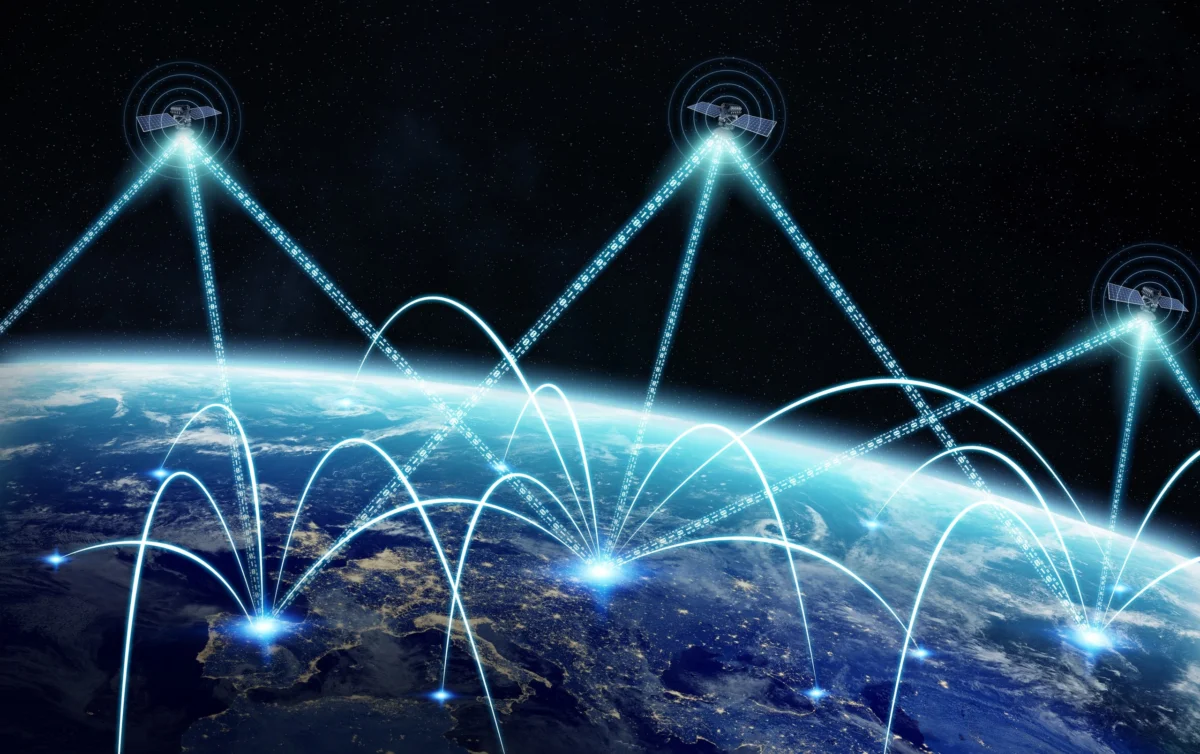
- 2026: The Era of Agentic Autonomy. As witnessed at WSBW, the industry is now deploying AI that can make real-time decisions. AI-driven co-processors on satellites are now handling navigation, sensor optimization, and even emergency response without waiting for a ground-station "handshake."
Supporting Data and Technical Innovations
The technical shift is underpinned by two primary advancements: on-board edge computing and the integration of large-scale foundation models.
On-Board Co-Processing
Isobel Porteous, head of Business Development for EarthTraq, highlighted the significance of placing AI co-processors directly on spacecraft. By performing "dense computing" in orbit, companies can bypass the bottlenecks associated with deep-space communication. "Data is the most important currency," Porteous stated. "By making better use of the sensor suite on-board, we are building a more efficient pipeline that makes space data accessible to a much broader customer base, far beyond the traditional aerospace industry."
The "Downstream" Advantage
Beau Legeer, Director of Imagery and Remote Sensing for Esri, argued that the real competitive advantage in the coming decade will be found in the "downstream" market—the analysis and application of the data once it reaches Earth. Legeer emphasized the necessity of an "alignment function." As AI models become more powerful, there is a critical need to ensure that the "AI intent" remains perfectly synchronized with "human intent." This alignment ensures that as systems become more autonomous, they remain ethically and operationally tethered to the objectives of their human operators.
Official Responses: Leading the Charge
The panel featured several prominent leaders who offered perspectives on the human-machine interface.
The Human-in-the-Loop Necessity
Despite the push toward autonomy, the consensus among experts is that humans are not being removed from the equation; their roles are simply being elevated. Mariam Kaynia of Eutelsat emphasized that "context engineering"—the process of training and adapting models to the specific, often harsh environments of space—requires a deep level of human expertise. "AI is now starting to take the decisions and the actions," she noted, "but you need someone to validate it. You still need humans in the loop to provide that final layer of safety and context."
Space42 and Predictive Analytics
Hasan Al Hosani, CEO of Smart Solutions at Space42, showcased how his firm is leveraging these tools for immediate social impact. By utilizing AI for predictive analysis, Space42 has drastically reduced the time between data acquisition and actionable reporting. In the context of natural disasters, such as earthquakes, this speed is life-saving. "We want something that adds value, going beyond common ML processes," Al Hosani explained. "AI allows us to derive more information from the scene and understand the whole picture, turning raw data into conviction."
Implications: Sovereignty and Strategy in the AI Age
Perhaps the most complex issue addressed at WSBW was the intersection of AI and national sovereignty.
The Re-definition of Sovereignty
Historically, space sovereignty was synonymous with hardware ownership—owning the satellite, the launch vehicle, and the ground station. Today, that definition is fluid. Legeer suggested that sovereignty has evolved into a "national strategy" rather than just a point of pride.
Mariam Kaynia added that in the age of AI, sovereignty is increasingly about "trust." It is no longer just about who owns the asset, but about how a nation’s specific regulatory and security requirements are embedded into the service models of international satellite providers. Every nation is now grappling with how to integrate their unique sovereign data requirements into a globally connected, AI-driven infrastructure.
Business Continuity and Economic Power
For companies like Space42, sovereignty is tied to business continuity. By launching Synthetic Aperture Radar (SAR) constellations, they are creating a consistent flow of data that is immune to external disruptions. "We are moving from information to knowledge to conviction," Al Hosani said. This progression is the ultimate goal of the space industry: to provide governments and private enterprises with the "conviction" needed to make high-stakes decisions on Earth based on data from the stars.
The New Competitive Landscape
The democratization of space tech also means that smaller, non-traditional actors can now enter the market. As Porteous noted, the knowledge barrier to building spacecraft is falling, thanks to open-source AI tools and standardized satellite components. This implies a future where space is not just a government playground, but a crowded, vibrant, and highly competitive commercial marketplace.
Conclusion
The 2026 World Space Business Week has made one thing clear: the future of space is not just about rockets and orbits; it is about cognitive architecture. As AI moves from the laboratory to the vacuum of space, it is fundamentally changing how we observe, interact with, and govern our planet.
The industry is entering a phase where the primary limiting factor is no longer the physical ability to launch assets, but the intellectual ability to synthesize the massive, continuous, and complex streams of data that those assets provide. In this new era, the entities that master the alignment of AI intent with human strategy will be the ones that define the next century of human progress—both on Earth and beyond.