September 1, 2026 — In a move poised to reshape the landscape of secure satellite communications, Telesat, a global leader in satellite operations, has entered into a strategic collaboration agreement with French photonics innovator Cailabs. The partnership aims to integrate Cailabs’ advanced optical ground station (OGS) technology with the Telesat Lightspeed low-Earth orbit (LEO) constellation, specifically targeting the stringent requirements of U.S. government and allied defense missions.
This development marks a significant shift in how sovereign data networks are constructed, moving beyond traditional radio frequency (RF) systems toward the high-capacity, interference-resistant world of laser-based optical communications.
Main Facts: A Convergence of Optical Expertise
The collaboration is built upon the synergy between Telesat’s Lightspeed infrastructure—a high-performance, global LEO network—and Cailabs’ specialized expertise in "optical beam shaping."
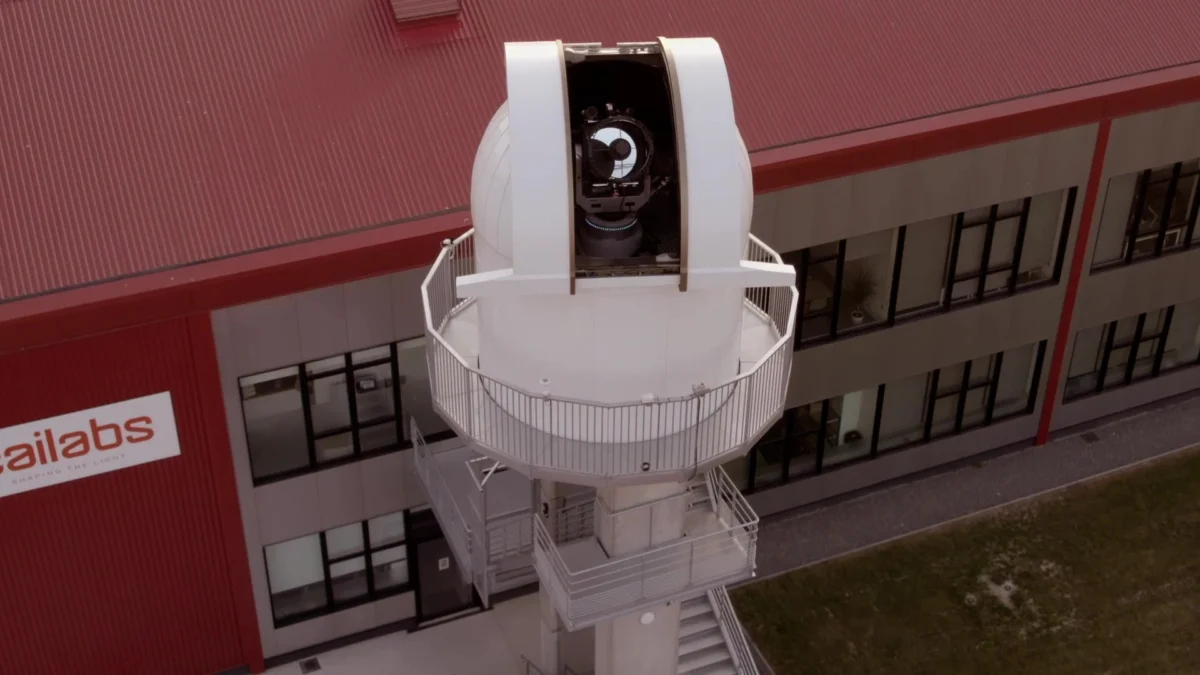
At the core of this partnership is the integration of Cailabs’ TILBA-OGS technology. Unlike conventional optical ground stations that struggle with atmospheric turbulence, Cailabs utilizes proprietary multi-plane light conversion (MPLC) technology. This allows their ground stations to effectively "correct" for the turbulence caused by the Earth’s atmosphere, ensuring a stable and high-speed laser link between satellites in orbit and terminals on the ground.
Key pillars of the agreement include:
- Joint Technical Studies: The companies will conduct rigorous assessments to ensure seamless handoffs and data integrity between Lightspeed satellites and Cailabs’ fixed and transportable OGS units.
- Targeting Government Sovereignty: The primary objective is to provide the U.S. Department of Defense (DoD) and allied nations with a sovereign, secure, and resilient data-relay pipeline.
- Terminal Compatibility: The partnership is facilitated by the fact that Telesat Lightspeed satellites are already equipped with Tesat-Spacecom’s SCOT80 optical terminals. Cailabs has previously demonstrated successful connectivity with these specific terminals, effectively de-risking the integration process.
Chronology: Building the Foundation for Laser Communications
The path to this partnership was not an overnight development but the result of years of testing and technical maturation within the photonics sector.
- 2023–2024: Cailabs gains industry attention by deploying its TILBA-OGS systems in various test environments, proving that its MPLC technology could reliably handle the challenges of free-space optical (FSO) communication.
- May 2024: A pivotal moment occurs when MDA, the primary contractor for the Telesat Lightspeed constellation, selects Tesat-Spacecom to provide the optical inter-satellite links (OISLs) for the network. This established the "language" that the Lightspeed satellites would speak.
- Late 2024 – Early 2025: Cailabs successfully demonstrates connectivity between its ground stations and the Tesat SCOT80 terminals. This "proof of concept" served as the primary catalyst for the current collaboration, demonstrating that the French firm’s ground technology was natively compatible with the hardware Telesat had already committed to launching.
- September 1, 2026: Telesat and Cailabs formally announce their strategic collaboration, signaling the transition from research-and-development to operational integration for government-sector applications.
Supporting Data: Why Optical Matters
The transition from traditional Radio Frequency (RF) to optical communications (lasercom) is driven by three primary factors: capacity, security, and spectrum congestion.
The Capacity Gap
Current RF systems, while reliable, are increasingly limited by the finite amount of spectrum available. Laser communication, by contrast, offers bandwidths orders of magnitude higher than RF, allowing for the transmission of massive datasets—such as high-resolution imagery and real-time sensor fusion data—that are increasingly required by modern military command centers.
Resilience and Security
Laser links are inherently directional and extremely narrow. Unlike RF signals, which broadcast in a wide pattern and can be intercepted or jammed from a significant distance, a laser beam is notoriously difficult to detect or disrupt without physically obstructing the path. For the U.S. government, this "low probability of intercept/low probability of detection" (LPI/LPD) characteristic is essential for mission-critical operations.
The Cailabs Advantage: TILBA-OGS
Cailabs’ TILBA-OGS product line represents a paradigm shift in station design. Because it utilizes MPLC, the system can handle the "scintillation" caused by the atmosphere. Traditional stations often require massive aperture mirrors to capture a laser beam; Cailabs’ approach allows for smaller, more transportable ground stations that can be deployed rapidly in theater, providing "anywhere-access" to the Lightspeed constellation.
Official Responses: Aligning Strategy with Mission Needs
The leadership at both companies views this collaboration as a strategic necessity in an era of contested space environments.
Chuck Cynamon, president of Telesat Government Solutions, emphasized the demand for flexibility:
"Government users need communications architectures that combine resilience, security, and high capacity with the flexibility to operate across space and terrestrial networks. We believe that combining Telesat Lightspeed with Cailabs’ mature optical ground capabilities creates the potential to offer differentiated solutions designed for the demanding, sovereign connectivity requirements of U.S. and Allied missions."
By framing the collaboration as a "sovereign" solution, Cynamon touches on a critical pain point for government agencies: the desire to control the entire data chain, from the satellite in orbit to the secure ground terminal, without relying on vulnerable commercial infrastructure.
Cailabs, meanwhile, views the agreement as a validation of its commercial strategy. By aligning with a Tier-1 operator like Telesat, the French firm secures a path to large-scale deployment. The partnership serves as a testament to the "European-to-American" technology pipeline that is becoming increasingly vital to NATO-aligned space strategies.
Implications: The Future of Sovereign Networks
The Telesat-Cailabs partnership has profound implications for the aerospace and defense industry.
1. The Rise of the "Hybrid" Architecture
This collaboration points toward a future where the distinction between "space networks" and "terrestrial networks" continues to blur. By creating a standardized bridge between LEO constellations and mobile ground stations, the partners are enabling a truly global, cloud-like infrastructure for defense.
2. Market Pressure on Competitors
For other satellite operators, the message is clear: if you are not investing in robust, laser-based ground infrastructure, you risk being left behind. The integration of the Tesat SCOT80 terminal with Cailabs’ ground stations creates a formidable "turnkey" solution. Competitors will likely need to accelerate their own optical ground segment partnerships to remain competitive in upcoming government contract bids.
3. Strengthening Allied Interoperability
With the U.S. and its allies seeking greater interoperability, the use of standardized optical terminals and compatible ground stations is a step toward a unified "space-mesh" network. If Telesat Lightspeed becomes the backbone for various allied nations, the Cailabs OGS technology could become the standard for how those nations interface with the sky.
4. Technical Challenges Ahead
Despite the optimism, significant hurdles remain. Integrating optical ground stations into existing military command-and-control (C2) software suites is a massive undertaking. Furthermore, while the technology is mature, scaling production to meet the needs of a global, persistent defense network will require significant capital expenditure and manufacturing rigor. Weather remains the "Achilles’ heel" of optical communications; because lasers cannot penetrate thick clouds as effectively as RF, the partners will need to develop sophisticated site-diversity networks to ensure 99.9% uptime.
Final Thoughts
As we move into the latter half of the decade, the Telesat-Cailabs collaboration serves as a bellwether for the space industry. It signals that the era of "experimentation" for laser communications has ended, and the era of "operational integration" has begun. For the U.S. government, this partnership offers a promising pathway toward a more secure, high-capacity, and resilient future in the high-stakes environment of global space data relay.
By combining the orbital capacity of Telesat Lightspeed with the cutting-edge photonics of Cailabs, the two companies are positioning themselves to become the primary architects of the next generation of sovereign connectivity.