
In a stark assessment of the changing nature of modern warfare, the United States’ highest-ranking military official has signaled a paradigm shift in defense strategy. Gen. Dan Caine, Chairman of the Joint Chiefs of Staff, delivered a keynote address at the Air & Space Forces Association’s Air, Space & Cyber Conference in National Harbor, Maryland, on September 16, 2026, warning that the U.S. military must prepare to project power into regions once considered beyond the reach of traditional combat: specifically, cislunar space.
"Today’s modern battlefield operates from the seabed to cislunar space," Caine declared. This pronouncement marks a significant expansion of the military’s operational theater, moving beyond the traditional domains of land, sea, and air to include the vast, resource-rich, and increasingly strategic expanse between the Earth and the Moon.
The Strategic Importance of Cislunar Space
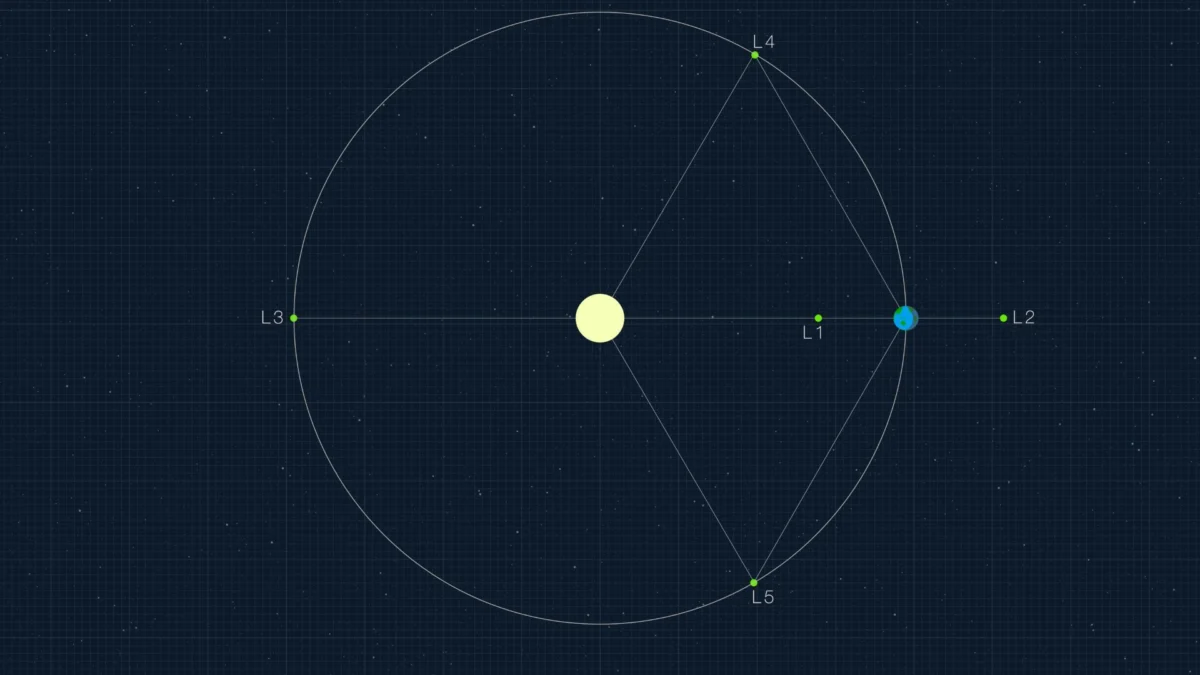
Cislunar space—the region extending from Earth’s orbit out to the Moon and encompassing the lunar surface—has become the focal point of a new geopolitical contest. For decades, the Moon was viewed primarily as a site for scientific inquiry and symbolic exploration. However, as nations and commercial entities alike turn their gaze toward the lunar south pole—a region believed to hold significant deposits of water ice—it has transformed into a critical strategic asset.
Water is the "oil" of the solar system. By extracting hydrogen and oxygen, lunar bases could theoretically produce rocket fuel, turning the Moon into a celestial refueling station. Whoever controls these resources, and the infrastructure surrounding them, will effectively dictate the "norms of behavior" for the rest of humanity’s expansion into the solar system.
Military planners are keenly aware of this dynamic. The race to the lunar south pole is no longer just a feat of engineering; it is an exercise in establishing a presence that could determine long-term dominance in the region.
A Chronology of Escalation: From Exploration to Contention
The shift toward the militarization of space has been gradual, but recent events have accelerated the timeline.

- 2019: The Far Side Breakthrough: China’s Chang’e 4 mission successfully executed the first-ever soft landing on the far side of the Moon. This milestone demonstrated a level of precision and technological maturity that caught the global defense community’s attention.
- 2024: Sample Return: Building on their momentum, China’s Chang’e 6 mission achieved the unprecedented feat of returning surface samples from the lunar far side to Earth. This mission solidified China’s status as a primary peer competitor in lunar logistics.
- 2025–2026: The Strategic Pivot: Throughout this period, U.S. military officials have repeatedly emphasized that the era of uncontested space access is ending. The focus has moved from "freedom of navigation" in Earth orbit to the necessity of defending infrastructure that sits 238,000 miles away.
- September 2026: The New Doctrine: The addresses by Gen. Caine and Space Force chief Gen. Douglas Schiess represent a formal acknowledgment that the U.S. has integrated space-based weaponry into its defensive posture.
Official Responses: The Shift Toward Transparency
Perhaps the most significant development from the September conference was the unprecedented candor regarding the existence of active space-based weapons. While the U.S. has long maintained a robust space program, officials have historically been circumspect about the existence of offensive or defensive kinetic or electronic weapons in orbit.
Gen. Douglas Schiess, head of the U.S. Space Force, broke this tradition of ambiguity during his address on September 15, 2026. "Let me be crystal clear: Today, guardians operate on-orbit weapons that can defend the joint force against space-enabled attacks," Schiess stated.
The term "Guardians" refers to the service members of the U.S. Space Force, and the admission that they are managing an active arsenal of orbital assets represents a sea change in American military transparency. While Schiess declined to provide granular technical specifications, he offered a crucial clarification: the focus is on electromagnetic capabilities rather than kinetic destruction.
This distinction is vital. Kinetic weapons—missiles that physically impact a target—create clouds of space debris, which can remain in orbit for decades, threatening all satellites, including those owned by the country that launched the attack (the "Kessler Syndrome" risk). By contrast, electromagnetic weapons can "jam" or "blind" an adversary’s sensors, rendering their satellites useless without generating a permanent debris field. This is the new, invisible theater of war.
The Reality of a Contested Environment
Gen. Caine’s warning was clear: the U.S. military can no longer assume that it will have the luxury of operating in an environment where it holds total supremacy.
"Future conflicts will demand that we operate without the assumptions of uncontested access, secure rare areas or uninterrupted or uncontested sustainment," Caine said. This is a departure from the post-Cold War doctrine, which was predicated on the assumption that the U.S. would always possess the ultimate "high ground."

Today, that high ground is being contested. Russia and China have both demonstrated the ability to conduct "inspector" satellite maneuvers—where one craft maneuvers dangerously close to another—and have performed anti-satellite (ASAT) missile tests. These actions serve as a constant reminder that the digital infrastructure supporting everything from GPS navigation to global financial markets is vulnerable.
Implications for Global Security
The implications of this transition are profound. If the Moon becomes a "Strait of Hormuz" of the solar system, the risk of a miscalculation increases exponentially.
- The Proliferation of Counterspace Technology: As the U.S. acknowledges its own defensive orbital weapons, it effectively normalizes the deployment of such systems. This will likely trigger an arms race where nations rush to deploy their own counter-capabilities, leading to an increasingly crowded and volatile orbital environment.
- The "Grey Zone" Conflict: Most future conflict in space will likely occur in the "grey zone"—actions that fall short of declared war but are intended to cripple an adversary’s capabilities. This includes blinding optical sensors, spoofing navigation data, and cyber-attacks on ground-based mission control centers.
- The Economic Stakes: With private corporations like SpaceX and Blue Origin looking to commercialize lunar logistics, the military is now tasked with protecting not just government assets, but the nascent space-based economy. The protection of property rights and trade routes in cislunar space will eventually become a core military mission.
- The Need for New Treaties: The current international legal framework for space, primarily the 1967 Outer Space Treaty, is woefully inadequate for an era of permanent lunar bases and orbital weapon systems. The lack of a clear "rules of the road" for space engagement creates a vacuum that is currently being filled by military posturing rather than diplomacy.
Conclusion: A New Era of Vigilance
The era of space as a sanctuary is over. As Gen. Caine noted, the challenge is to "adapt right now, so the joint force is prepared to fight, endure and win in global contested environments, from the seabed to cislunar space."
The U.S. strategy appears to be one of deterrence: ensuring that any adversary thinking of disrupting American capabilities understands that the U.S. is not only aware of the threat but is actively prepared to neutralize it. However, this strategy carries significant risks. As the lines between military and commercial, and between terrestrial and celestial, continue to blur, the risk of a localized incident escalating into a broader conflict becomes a permanent fixture of 21st-century geopolitics.
For the public, this means that the serene, distant Moon may soon be viewed through a different lens—not just as a beacon of discovery, but as the next frontier where the survival of nations may ultimately be tested. The "Earthset" photo captured by the Artemis II crew in 2026 serves as a beautiful reminder of our fragile home; for military planners, it is also a reminder of the vast, high-stakes expanse that must now be guarded.