By [Your Name/Journalist Name]
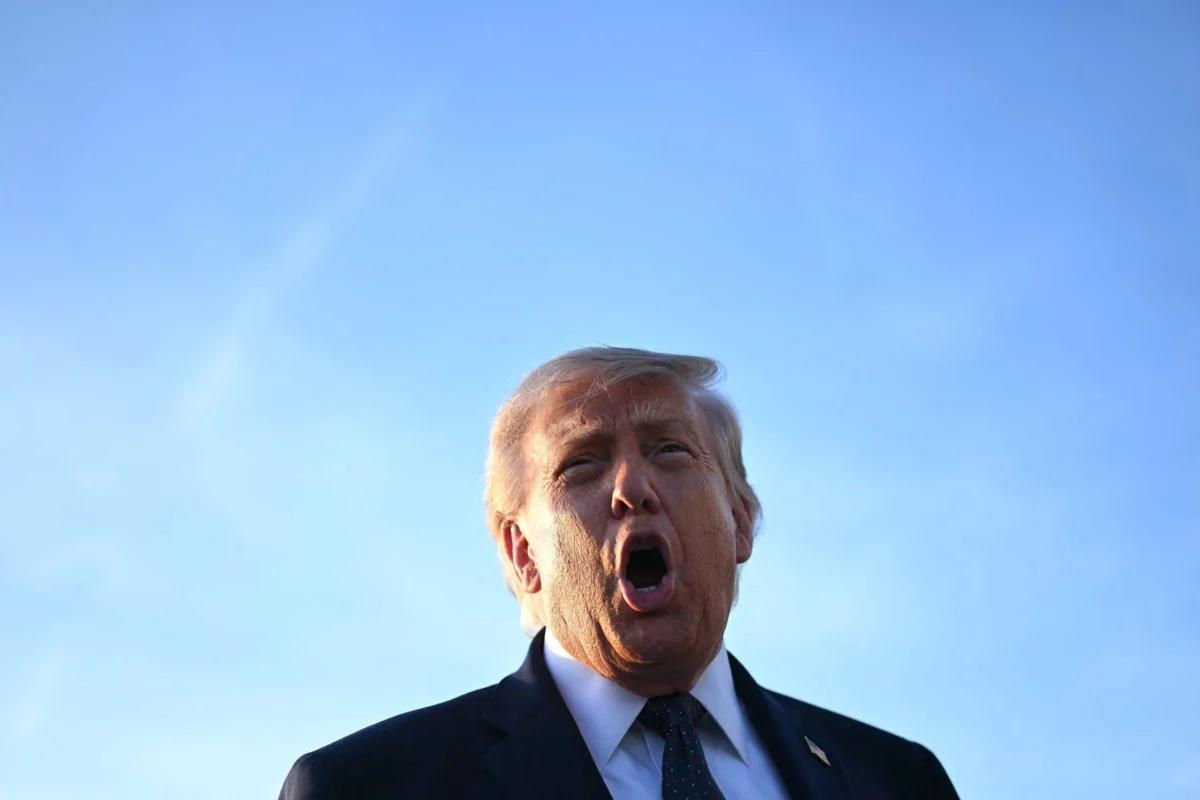
President Donald Trump has waded into the increasingly volatile debate surrounding artificial intelligence safety, framing the growing calls for oversight and regulation as the latest in a series of manufactured crises. In a characteristic display of political rhetoric, the President dismissed concerns over the existential risks posed by advanced AI as a "hoax" orchestrated by the "Radical Left," signaling a significant escalation in the administration’s approach to the burgeoning tech sector.
The Main Facts: A New Front in the Culture War
The President’s recent statements mark a departure from the nuanced, albeit skeptical, position he held as recently as last weekend. While he previously expressed an openness to "guardrails" for the industry, his latest communication suggests a more combative stance.
On Saturday, the President took to his social media platform, Truth Social, to launch a broadside against those questioning the rapid development of AI. He characterized the movement as part of a historical lineage of "Democratic hoaxes," placing it alongside his previous grievances regarding the Russia investigations, the two impeachment proceedings, and various social issues.
"The decimation, or destruction, of AI is one of many Democratic hoaxes," the President wrote. He further argued that the current skepticism surrounding the technology was born out of a failed effort to suppress data centers—the physical infrastructure fueling the AI boom—and that critics have now shifted their focus to the software and models themselves.
Chronology of the President’s AI Pivot
The progression of the President’s messaging provides a window into the administration’s evolving strategy toward Silicon Valley.
Saturday Morning: A Branding Exercise
The discourse began with an unconventional critique of the term "Artificial Intelligence." The President suggested that the name itself is "inaccurate and very ineloquent." To address this, he launched an informal poll on Truth Social, inviting his followers to vote on a more "superior" moniker for the technology. The options—Superior Intelligence, Extreme Intelligence, and Supreme Intelligence—highlight a desire to rebrand AI as an instrument of national power rather than a subject of existential dread.
Saturday Afternoon: The "Hoax" Narrative
Hours later, the President formalized his opposition to the safety movement. By framing AI oversight as a political weapon, he successfully mobilized his base, connecting the debate to familiar grievances. He asserted that he would "not stand by and let this happen," framing his intervention as a defense of national progress.
Recent Context: The Golf Tournament Prelude
These remarks follow comments made during a golf tournament last weekend, where the President first teased his "guardrails" strategy. At the time, he acknowledged that the technology required some level of supervision but remained deeply suspicious of the motives behind the current push for regulation, claiming that "negative forces" were driving the conversation.
Supporting Data and Industry Tensions
The President’s comments come at a time when the AI industry is facing a genuine identity crisis. Recent months have seen a surge in public concern regarding the safety of frontier models.
The Anthropic Exodus
The debate reached a fever pitch earlier this month when a prominent researcher resigned from Anthropic, a leading AI firm. The researcher explicitly warned that industry leaders "earnestly believe [AI] could kill us all by the end of the decade" and criticized the rapid, unchecked pace of development as "gambling with our lives." This public internal dissent triggered a domino effect, leading Anthropic CEO Dario Amodei to release a strategic plan to "pace the frontier." This move was met with cautious support from industry heavyweights like OpenAI’s Sam Altman and SpaceX’s Elon Musk.
The Physical Infrastructure Bottleneck
While the President focused on the software, the hardware reality is equally contentious. As the AI industry demands massive amounts of electricity and water, data centers have become flashpoints for local opposition. New York state recently made history by halting permits for large-scale data center projects, a move that the President described as a "crazed attack" that ultimately failed to stop the industry’s growth.
Industry Alignment
The industry has not been silent. Nvidia CEO Jensen Huang recently appeared at the All-In Summit, co-hosted by venture capitalist and former AI czar David Sacks. During the event, Huang stood alongside the President’s sentiments, explicitly stating that "we’re not going to let an AI slowdown happen." This alignment between the President and key industry players suggests a growing coalition aimed at maintaining an aggressive, regulation-free development trajectory.
Official Responses and the "AI Force"
In a move reminiscent of his first-term establishment of the Space Force, the President announced the creation of an "AI Force." While details remain sparse, the initiative is clearly intended to centralize control over the technology under the executive branch.
The Search for an AI "Czar"
The President also confirmed that he would soon be appointing an "AI Czar." The criteria for the role, according to the President, are narrow: "Only High I.Q. individuals need apply!" This follows the departure of David Sacks, who stepped down as the administration’s previous point person for AI and crypto to focus on his role at the President’s Council of Advisors on Science and Technology.
The ambiguity surrounding the duties of the AI Force and the incoming Czar has left both lawmakers and industry experts speculating. Will this force serve as a regulatory body, or will it act as an engine for government-subsidized development? The lack of a clear mandate suggests that the administration is currently prioritizing the symbolism of the initiative over the technical infrastructure.
Implications: A High-Stakes Geopolitical Strategy
The President’s branding of AI safety as a "hoax" carries profound implications for the future of the technology, the economy, and international relations.
The Erosion of Consensus
By politicizing the safety debate, the President is making it increasingly difficult to achieve a bipartisan consensus on responsible AI development. When the concerns of researchers and ethicists are framed as partisan attacks, the nuance required to govern complex technologies is often lost.
Global Competition and the "Race"
The "AI Force" initiative indicates that the administration views AI primarily through the lens of global competition. By dismissing internal safety concerns, the President is signaling that the United States will prioritize speed and dominance above all else. This "growth at all costs" mentality is designed to ensure that the U.S. remains ahead of competitors, specifically China, regardless of the potential for internal societal disruption.
The Immediate Harms vs. Existential Risks
While the President focuses on the political dimensions of the "hoax," critics of the industry argue that this framing ignores the immediate, tangible harms of AI—such as algorithmic bias, job displacement, and the proliferation of misinformation. By labeling the entire debate a hoax, the administration may be inadvertently shielding the industry from legitimate scrutiny regarding these immediate risks, focusing instead on a binary choice between "progress" and "destruction."
Conclusion: A New Era of Executive Oversight
The President’s recent rhetoric marks a significant turning point in the AI safety debate. By positioning himself as the protector of the AI industry against a perceived "Radical Left" assault, he has transformed a technical and ethical discussion into a core plank of his political platform.
As the "AI Force" begins to take shape and the hunt for a new "Czar" begins, the tech industry finds itself with a powerful, albeit controversial, ally in the White House. Whether this approach will lead to the "Superior Intelligence" the President envisions, or whether it will exacerbate the risks that critics are currently sounding the alarm about, remains to be seen. What is clear is that the era of quiet, boardroom-based AI development is over; the future of the technology is now firmly in the center of the political arena, where the battle for control—and the narrative—is only just beginning.
The upcoming appointment of the AI Czar will likely be the first indicator of how the "AI Force" intends to wield its influence. Until then, the industry remains in a state of high-stakes acceleration, buoyed by executive support and increasingly emboldened to disregard the growing chorus of safety advocates. The "hoax" label may be a political tool for now, but its impact on the long-term stability and safety of artificial intelligence could prove to be one of the most consequential narratives of the decade.