
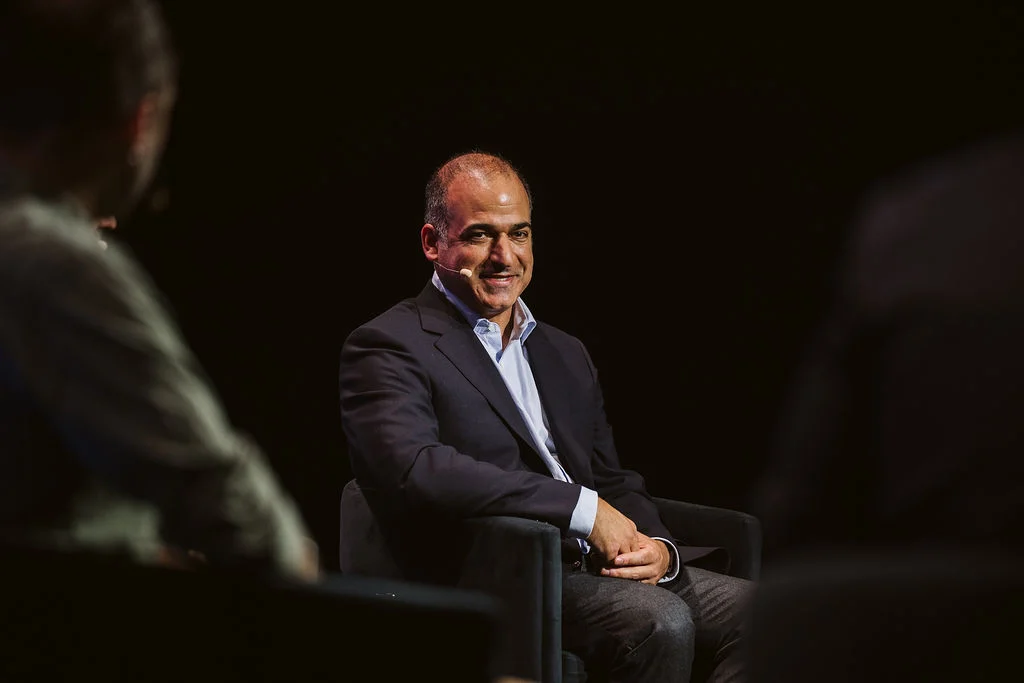
This week, at the All In conference, the conversation shifted from the familiar territory of Large Language Models (LLMs) to the burgeoning, enigmatic frontier of "world models." As I moderated a panel on this transformative technology, it became increasingly clear that we are witnessing the rise of a new breed of AI labs—led by industry titans like Yann LeCun’s AMI Labs and Fei-Fei Li’s World Labs—that are currently defined as much by their profound technical ambition as by their resolute, almost unnerving, silence regarding commercial strategy.
While these organizations have successfully commanded massive capital injections and generated significant industry buzz, they currently rank exceptionally low on the "trying-to-make-money" scale. This lack of clear monetization strategy is not necessarily a failure of vision, but rather a deliberate tactical posture in an increasingly crowded and competitive landscape.
The Promise of Spatial Intelligence
At its core, the movement toward world models represents a fundamental shift in how artificial intelligence perceives reality. While LLMs are masters of text and statistical probability, world models are designed to automate "spatial intelligence."
This is the holy grail of modern AI research. By enabling machines to understand the physics, geometry, and causal relationships of the three-dimensional world, these labs are aiming to unlock breakthroughs in robotics, interactive media, and highly sophisticated autonomous navigation. Imagine a robot that doesn’t just follow a pre-programmed path but understands the structural integrity of the objects it handles, or a generative video platform that creates photorealistic, interactive environments indistinguishable from physical reality. The potential for disruption is immense, spanning from manufacturing and healthcare to Hollywood-grade CGI.
Chronology: A Race Under Wraps
The trajectory of the world model sector has been defined by rapid, stealthy development.
- Initial Inception: Within the last 18 months, industry veterans began coalescing around the concept of "World Models" as the successor to the Transformer-based language architectures.
- The Funding Surge: Despite having few, if any, consumer-facing products, companies like World Labs and AMI Labs secured massive seed and Series A rounds, driven by the reputations of their founders.
- The Demonstration Phase: Throughout late 2024 and early 2025, we began to see the first public glimpses of capability. World Labs’ "Marble" emerged as a flagship, showcasing the ability to generate explorable environments.
- The Current "Blackout": As of early 2026, the labs have largely retreated into a "build mode." Public communication has been replaced by technical papers and brief, vague demos, signaling a pivot toward internal development rather than external validation.
The Wall of Silence: A Lack of Transparency
When I pressed Michael Rabbat, co-founder of AMI Labs and VP of World Models, on the panel regarding the specific commercial roadmap for the company, the response was characteristically opaque. "We’ll talk about it when we’re ready to talk about it," he noted.
Follow-up inquiries via email yielded little more clarity. "We’re still in a research and building phase, so we’re not talking publicly about any product plans or timeline," Rabbat stated. This is not an isolated incident; it is an industry-wide protocol.
This secrecy even filters down to the supply chain. Alex de Vigan, CEO of Physicl—a company that provides critical data for these models—expressed a common frustration among partners. "I know our data is being used, but I’m often in the dark about the specific end-goal," de Vigan told me. "I wish they would tell us more. We could build more useful, targeted data if we understood the specific application they were prioritizing."
The Versatility Trap
The primary reason for this silence is the extreme versatility of the technology. A model capable of navigating a 3D environment is a dual-use asset. It could be optimized for a humanoid robot in a warehouse, a surgical assistant for doctors (as seen in AMI’s Nabia partnership), or a software layer for autonomous vehicle fleets.
However, the laws of business dictate that a company cannot be everything to everyone. Pursuing manufacturing, biomedicine, and consumer gaming simultaneously is a recipe for operational failure. Yet, by choosing one lane, these labs risk alienating investors who are betting on the total addressable market (TAM) of "all of the above."
Implications: The "Dark Forest" Hypothesis
To understand why these labs are so secretive, one must look toward the "Dark Forest" hypothesis—a concept popularized by science fiction author Cixin Liu. In a competitive ecosystem where information is a liability, survival depends on concealment.
If AMI Labs were to announce today that they had achieved a breakthrough in humanoid robotics, the market impact would be instantaneous. It would serve as a flare, alerting every major incumbent—from OpenAI and Anthropic to established tech giants—that a new beachhead has been established. Currently, the "easy money" provided by venture capital allows these labs to build without the pressure of immediate revenue. But that same abundance of capital means their rivals are equally well-funded.
By keeping their specific focus, timeline, and product architecture under wraps, these companies are successfully delaying the "war." They are buying themselves time to build a competitive moat that cannot be easily replicated once they finally emerge from the shadows.
Can the Secrecy Last?
The question remains: how long can these companies operate in a vacuum? As the technology moves from research labs into the field, the need for partnerships, regulatory compliance, and customer feedback will eventually force a transition toward transparency.
For now, the strategy of "stealth-mode research" is working. It protects the labs from premature competition and allows them to iterate on their world-modeling techniques without the distorting influence of public market expectations.
However, this period of grace is finite. Eventually, the promise of "spatial intelligence" must manifest as a tangible product that generates revenue. Until then, we are left observing the periphery of these labs, watching as they silently lay the groundwork for what could arguably be the most significant technological leap of the decade.
In the high-stakes, high-capital environment of 2026, the silence from AMI Labs and World Labs is not a sign of inactivity. It is a calculated, strategic choice. They are operating in the dark forest of AI, hoping that by the time their competitors realize what they are building, it will be far too late to stop them.
Russell Brandom has been covering the tech industry since 2012, with a focus on platform policy and emerging technologies. He previously worked at The Verge and Rest of World, and has written for Wired, The Awl, and MIT’s Technology Review. He can be reached at [email protected] or on Signal at 412-401-5489.