
Executive Summary: A New Era for Omani Connectivity
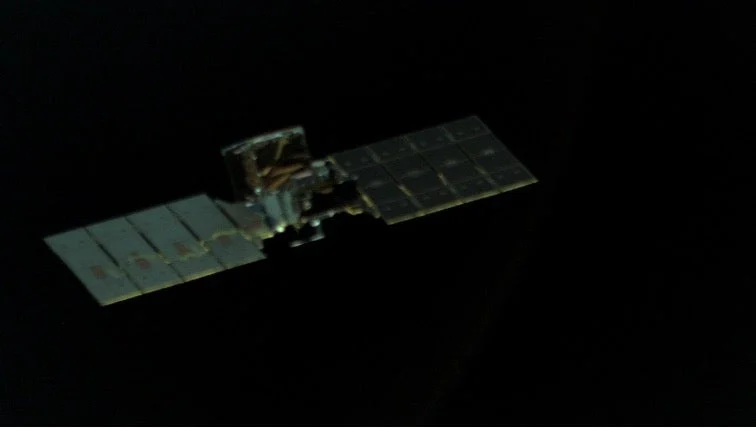
In a significant development for the Middle Eastern telecommunications landscape, ST Engineering iDirect has announced a strategic partnership with MBSat—a division of the Oman-based Mohammed Al Barwani (MB) Group—to provide the critical ground network infrastructure for the MB Sat-1 mission. This sovereign microGEO satellite, manufactured by the California-based aerospace innovator Astranis, represents a pivotal shift in how regional actors are approaching data security, connectivity, and national autonomy.
By deploying its cutting-edge "Intuition" software-defined ground segment, ST Engineering iDirect will serve as the technological backbone for MBSat’s operations across Oman and the wider Middle East. This infrastructure is designed to facilitate dynamic resource allocation and seamless integration with both legacy systems and future satellite architectures, marking a departure from rigid, hardware-heavy ground stations of the past.
The Genesis of the MB Sat-1 Project: A Chronology
The journey toward the launch of MB Sat-1 reflects a rapidly evolving geopolitical and commercial environment in the Middle East, where the demand for independent, secure satellite communications has reached a boiling point.
Early 2026: The Initial Order
The trajectory of the program was set in early 2026, when MB Group officially commissioned Astranis to build the microGEO satellite. The choice of a microGEO platform was strategic; these satellites offer the performance of traditional geostationary satellites but at a fraction of the cost, weight, and development time. This allowed the Omani group to fast-track its entry into the space sector, signaling a move toward regional digital independence.
March 2026: SATShow Week Unveiling
During the industry-standard SATShow Week in March 2026, leadership from both MB Group and Astranis provided a deeper look into the mission’s intent. It was here that the true scope of the project was revealed: MB Sat-1 is not merely a corporate asset, but a sovereign communications tool. Executives emphasized that the satellite would serve as a "broker" of secure, private connectivity for other corporations and government entities in the region that prioritize operational security over reliance on third-party international network providers.
Late 2026 – 2027: Implementation and Integration
Following the selection of ST Engineering iDirect as the ground segment partner, the current phase involves the deployment of Ka-band gateway infrastructure. This build-out is essential for the high-throughput capabilities promised by the Astranis platform. The mission is currently on track for a 2027 launch as part of the Astranis Block 3 mission manifest, which will see the satellite positioned to provide optimal coverage across the Omani sphere of influence.
Technological Foundations: The Intuition Platform
At the heart of this partnership is ST Engineering iDirect’s "Intuition" solution. In an industry increasingly dominated by software-defined satellites (SDS), the ground segment must evolve to match the agility of the space segment.
Software-Defined Agility
The Intuition platform is built on the principle of virtualization. By decoupling software from proprietary hardware, iDirect allows MBSat to manage its network via a centralized, flexible interface. This is critical for a sovereign satellite, as it allows operators to reconfigure frequency allocations, beam hopping patterns, and power distribution in real-time, responding instantly to changing regional demand or security threats.
Ka-Band and Resource Allocation
The integration of Ka-band gateway infrastructure is essential for the high-bandwidth requirements of modern broadband services. Intuition provides the intelligence layer—a dynamic resource allocation engine—that ensures data traffic is routed with maximum efficiency. This prevents bottlenecks and ensures that government and corporate clients receive consistent, high-speed, and low-latency connectivity, regardless of the volume of traffic across the network.
Official Perspectives: Bridging the Gap Between Policy and Tech
The partnership has garnered significant praise from both sides of the agreement, highlighting a shared vision for the future of sovereign satellite services.
"We are providing MBSat with a flexible, software-defined ground platform that integrates with its existing operational environment," stated Sridhar Kuppanna, Chief Executive Officer of ST Engineering iDirect. "This enables more efficient service deployment and operations today, with the flexibility to scale, introduce new capabilities, and evolve as requirements change."
Kuppanna’s comments underscore a critical industry trend: the "future-proofing" of space infrastructure. As satellite technologies advance, ground segments often become the limiting factor. By selecting a software-defined solution, MB Group ensures that their investment remains relevant for the duration of the satellite’s orbital life, allowing for software-driven updates that can unlock new features or improved efficiency long after the satellite has been launched.
Strategic Implications: Sovereignty and Security
The move by MB Group to secure its own satellite capacity is a symptom of a larger trend: the "sovereign space" movement.
Reducing External Dependencies
For decades, Middle Eastern nations have largely relied on international satellite operators for connectivity. While efficient, this reliance creates vulnerabilities. If an external operator changes its service terms, prioritizes other regions, or suffers a geopolitical conflict that compromises their network, the dependent nation is left exposed. By owning the satellite and controlling the ground segment via ST Engineering iDirect, MB Group effectively creates a "walled garden" of communications.
The Brokerage Model
As noted during the SATShow Week, MB Group intends to act as a provider for other government agencies and corporations. This turns the satellite into a revenue-generating commercial asset while simultaneously fulfilling a national security mandate. It is a dual-use model that is becoming increasingly attractive for sovereign wealth funds and large regional conglomerates looking to diversify their portfolios into the space economy.
Responding to Regional Conflict
The backdrop of this initiative is the ongoing volatility in the Middle East. Security experts have noted that terrestrial fiber optic networks are susceptible to physical sabotage and cyber interference. Satellites, particularly those under sovereign control, offer a level of resilience that terrestrial networks cannot match. The ability to control the ground network—the "entry and exit points" for data—allows for superior encryption protocols and monitoring, ensuring that sensitive communications remain within the sovereign control of the operator.
Market Outlook: What Lies Ahead?
The successful launch of MB Sat-1 in 2027 will likely serve as a blueprint for other nations and private groups in the Middle East.
The Rise of MicroGEO
Astranis’s success with the microGEO platform has proven that entry into space does not require billions of dollars in upfront capital. The combination of smaller, highly capable satellites and flexible ground segments like iDirect’s Intuition makes "space-as-a-service" a viable path for regional players.
Competitive Dynamics
As MB Group enters the market as a provider of sovereign communications, they will challenge existing international players who have historically dominated the region. The competition will likely center on the quality of service, the level of security provided, and the depth of integration with local infrastructures.
Future Scalability
The architecture selected by MB Group is modular. Should the demand for their services grow, the Intuition platform is designed to scale. This means that as more satellites are added to the MB constellation, the ground network can expand without requiring a complete overhaul of the existing architecture, protecting the initial investment and ensuring a smooth transition to a multi-satellite environment.
Conclusion: A Paradigm Shift
The collaboration between ST Engineering iDirect and the Mohammed Al Barwani Group is more than just a procurement deal; it is a manifestation of the shift toward digital sovereignty in the 21st century. By leveraging the software-defined capabilities of the Intuition platform and the efficiency of the Astranis microGEO, MB Group is positioning itself as a cornerstone of the regional telecommunications ecosystem.
As the 2027 launch date approaches, the eyes of the satellite industry will be fixed on this mission. It represents the successful convergence of high-tech aerospace manufacturing, agile software engineering, and a clear-eyed strategic vision for national autonomy. In an era where data is the most valuable commodity, the ability to control the flow of that data from the ground up is the ultimate mark of progress.
The MB Sat-1 mission is not merely providing internet or voice services; it is providing a secure, reliable, and independent communications layer for a region that is increasingly aware of the value of sovereign control. Through this partnership, ST Engineering iDirect is not just building a network; they are enabling the future of Omani space-based infrastructure.