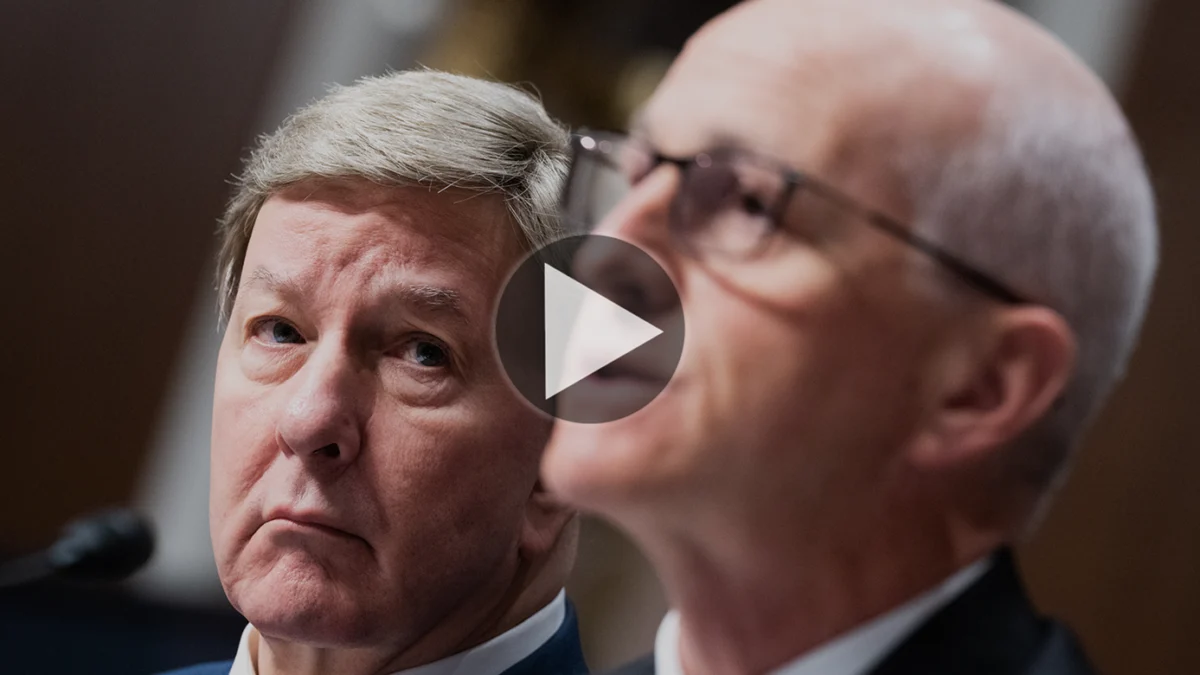
The House Armed Services Committee (HASC), long regarded as one of the few bastions of bipartisan cooperation on Capitol Hill, stands at a critical juncture. Following the formal announcement by Rep. Mike Rogers (R-Ala.) that he will not seek a waiver to extend his tenure as the top Republican on the committee, the race to succeed him has officially commenced. This transition arrives at a moment of significant political volatility, as the committee prepares to navigate a new administration, a shift in legislative priorities, and the prospect of aggressive oversight regarding the Department of Defense.
As Rep. Rogers prepares to step aside, the focus shifts to the two primary contenders vying for his seat: Rep. Trent Kelly of Mississippi and Rep. Ronny Jackson of Texas. Both men bring distinct backgrounds and strong political alignments to the table, and their potential ascendancy signals a possible pivot in how the committee will interact with the Pentagon under the incoming Trump administration.
Main Facts: The End of an Era and the New Contenders
Rep. Mike Rogers’ decision not to seek a waiver is a significant turning point for the HASC. Under his leadership, the committee maintained a reputation for delivering the annual National Defense Authorization Act (NDAA) on time, often insulating the defense budget from the more chaotic impulses of partisan legislative theater.
The ensuing leadership race pits two distinct Republican profiles against one another:
- Rep. Trent Kelly (R-Miss.): A Major General in the Mississippi Army National Guard with multiple combat deployments, Kelly represents the traditional, committee-focused institutionalist approach. He has served as the chairman of the Subcommittee on Tactical Air and Land Forces, earning a reputation for deep, granular knowledge of procurement and military readiness.
- Rep. Ronny Jackson (R-Texas): A retired U.S. Navy Rear Admiral and former White House physician to President Donald Trump, Jackson represents a more populist, aggressive brand of oversight. His proximity to President Trump and his public-facing stance on military cultural issues make him a favorite among the party’s more ideological wing.
The outcome of this contest is not merely a matter of committee hierarchy; it will define the ideological temperament of the HASC for the remainder of the 119th Congress.
Chronology: A Rapidly Shifting Landscape
The timeline leading to this leadership vacuum reflects the fast-paced nature of post-election congressional maneuvers:
- Early November 2024: Following the presidential election, speculation mounts regarding committee chairmanships and ranking member positions as the GOP prepares to manage its legislative agenda.
- Mid-November 2024: Rep. Mike Rogers publicly clarifies his intentions, confirming he will abide by term limits and decline a waiver. This move immediately sparks internal lobbying among HASC members.
- Late November 2024: Rep. Trent Kelly and Rep. Ronny Jackson emerge as the frontrunners, with both candidates spending the subsequent weeks solidifying support among the Republican Steering Committee.
- December 2024: In the latest episode of The Congressional Roundup, Breaking Defense Editor-in-Chief Aaron Mehta highlights the urgency of the situation, noting that the committee’s internal dynamics are being influenced by broader external pressures, specifically the looming confirmation and oversight battles surrounding Defense Secretary-designate Pete Hegseth.
Supporting Data: The Power of the HASC
The House Armed Services Committee is responsible for funding and overseeing the U.S. military, including the Department of Defense, the military services, and the Department of Energy’s nuclear programs. With an annual budget authorization exceeding $800 billion, the committee’s reach is vast.
Key Committee Metrics:
- Legislative Output: The HASC has historically maintained a 60-plus year streak of passing the NDAA annually.
- Jurisdictional Scope: The committee oversees roughly 15% of the total federal budget.
- Member Composition: Currently, the committee is divided among 30+ Republicans and 25+ Democrats, making the Ranking Member’s ability to work across the aisle essential for successful legislation.
The tension lies in the potential for this traditionally collaborative environment to succumb to the "investigative era." As the committee prepares to vet the Pentagon’s new leadership, the budgetary functions of the committee—traditionally the priority—may be overshadowed by investigative mandates.
Official Responses and Political Implications
The implications of this leadership race are felt far beyond the halls of the Rayburn House Office Building. The expected incoming Chairman, Rep. Adam Smith (D-Wash.), has already signaled a willingness to conduct rigorous investigations into the Pentagon, specifically targeting the potential management style and policy shifts expected under Defense Secretary Pete Hegseth.
The Bipartisanship Question
Rep. Adam Smith, a veteran legislator known for his pragmatic approach to national security, now faces the challenge of managing a committee where the Republican Ranking Member may be incentivized to pursue a more combative oversight strategy. If Rep. Jackson secures the seat, observers anticipate a more confrontational approach to the Pentagon, potentially mirroring the investigative vigor seen in other high-profile House committees. Conversely, if Rep. Kelly is chosen, the committee may see a return to the "regular order" that has historically defined its success.
Pentagon Oversight and the Hegseth Factor
The appointment of Pete Hegseth has created a flashpoint for the committee. Critics within the Democratic caucus have raised questions about Hegseth’s experience and his stated goals for reforming the military’s leadership structure.
"The committee is at a crossroads," says a senior aide familiar with the process. "Do we prioritize the readiness of our forces and the integrity of the procurement process, or do we turn the HASC into a venue for the political battles that defined the previous election cycle?"
The Road Ahead: What to Watch
As the leadership contest moves toward its conclusion, several factors will determine the future effectiveness of the committee:
- The Steering Committee Vote: The ultimate decision rests with the Republican Steering Committee, which must weigh the value of institutional experience (Kelly) against ideological alignment with the Trump base (Jackson).
- The NDAA Lifecycle: With the next budget cycle looming, the new Ranking Member will have little time to settle in before needing to negotiate the initial markups of the next NDAA.
- Pentagon Relations: The degree to which the HASC maintains a functional relationship with the Department of Defense will be a key indicator of whether the committee can fulfill its primary mission: providing for the common defense.
Conclusion: A Legacy at Stake
The HASC has long been shielded from the hyper-partisanship that has paralyzed other areas of Congress. However, the confluence of a leadership transition, a change in administration, and the intense scrutiny of the incoming defense leadership threatens this delicate balance.
Whether the committee elects a pragmatic institutionalist or a combative populist, the message sent to the Pentagon and the American public will be clear. The next Ranking Member will be tasked with balancing the need for rigorous oversight of an evolving defense establishment with the necessity of maintaining the legislative stability that ensures American national security. As Aaron Mehta noted in The Congressional Roundup, the stakes could not be higher; in an era of global strategic competition, a dysfunctional HASC is a luxury the United States cannot afford.
The coming weeks will not only settle the leadership of the House Armed Services Committee but will also set the tone for the nation’s defense policy for the next two years. The transition from the Rogers era marks a definitive end to the status quo, ushering in a period of uncertainty that will demand steady, deliberate, and principled leadership from whoever emerges victorious in this high-stakes contest.