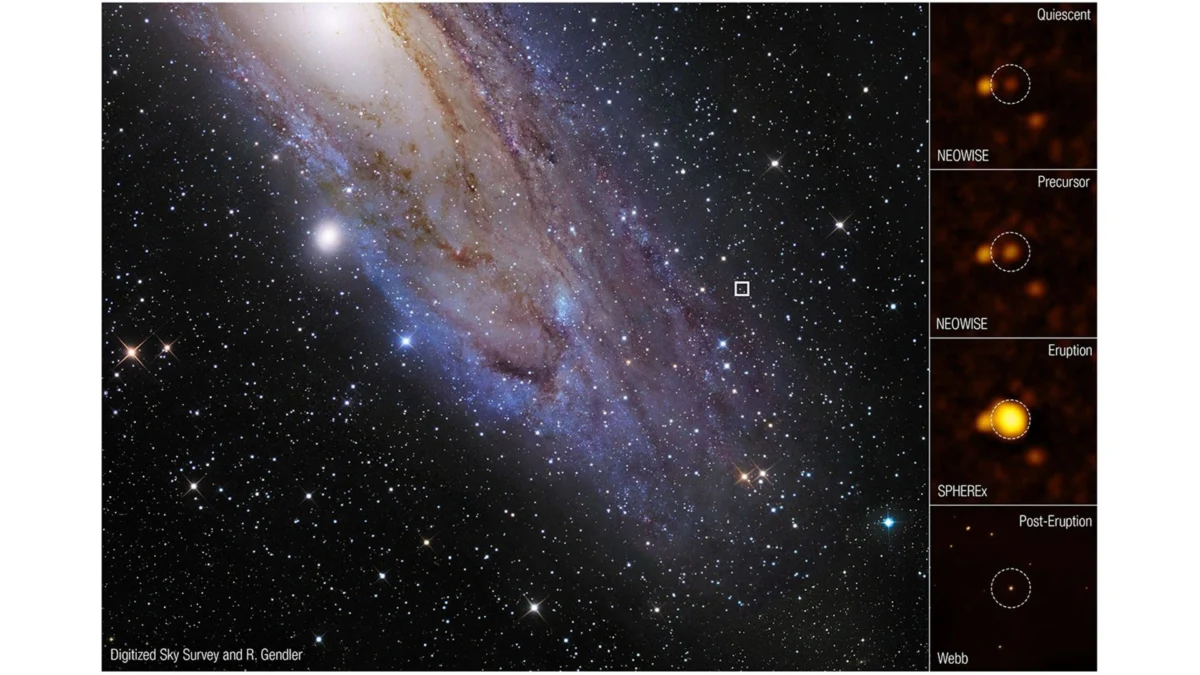
In a milestone achievement for stellar astrophysics, researchers have reported the first-ever direct observation of a star engulfing its companion. The event, which occurred within the Andromeda galaxy, provides a vivid, real-time look at a process that has been theorized for decades but had remained frustratingly elusive. By tracking the dramatic brightening and subsequent eruption of a binary star system nicknamed "Bao," scientists have finally captured the "smoking gun" of stellar cannibalism.
The discovery, published in the journal Nature on November 18, details how a red giant star—already massive and bloated—eventually consumed its smaller companion, fundamentally altering the landscape of the binary system. This observation not only confirms long-standing theoretical models but also offers a glimpse into the chaotic final stages of stellar evolution.
The Anatomy of the "Bao" System
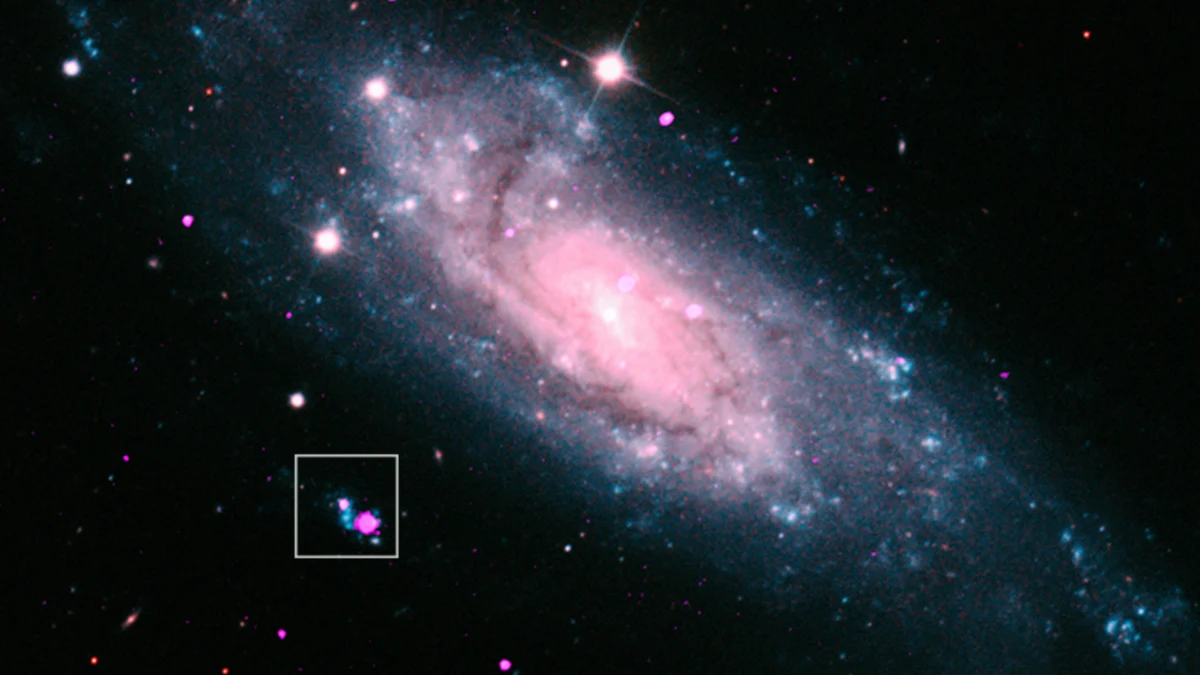
The object of the study is a red giant star designated WNTR23bzdiq, situated approximately 2.5 million light-years away in the neighboring Andromeda galaxy (M31). This red giant is a stellar heavyweight, boasting about seven times the mass of our sun and stretching 350 times its diameter.
In binary systems, the dance of two stars is usually a stable, rhythmic affair. However, as one star exhausts its nuclear fuel, it enters the red giant phase, ballooning in size. This expansion often puts the star on a collision course with its neighbor. When the outer layers of the giant star begin to encroach upon the orbit of the companion, the companion is pulled into the primary star’s atmosphere. This process creates a drag effect, causing the companion to spiral inward toward the giant’s core, generating intense heat and light in the process.
A Chronology of a Celestial Catastrophe
The story of the "Bao" system is one of slow-motion inevitability followed by a violent, explosive finale. The timeline, reconstructed through archival data and modern telescope observations, paints a picture of a system in its death throes.
The Initial Warning Signs (2018–2022)
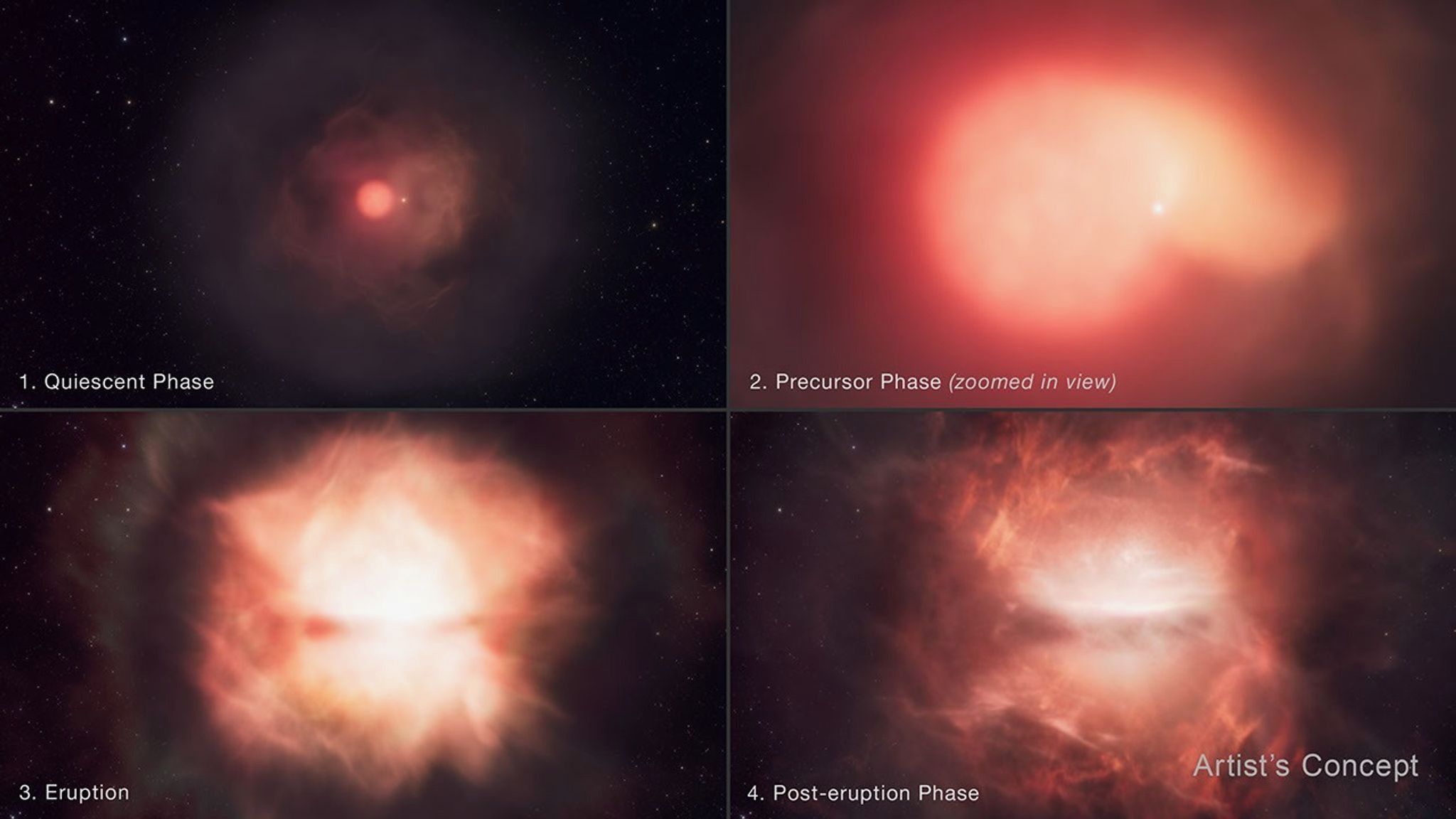
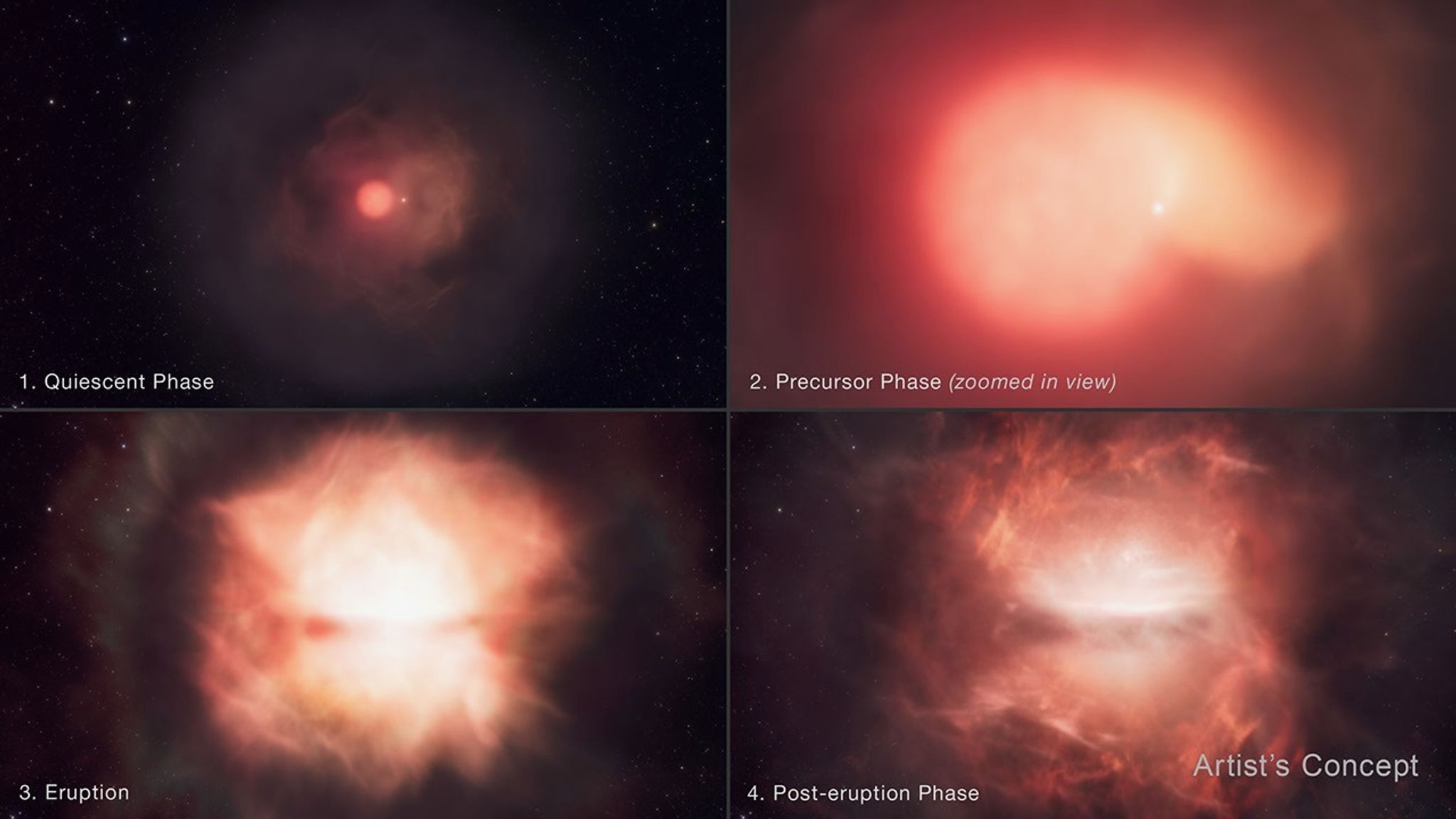
The first hints that something was amiss emerged in 2018, when records indicated that the red giant had begun a gradual, steady increase in luminosity. For years, this brightening was subtle, occurring beneath the threshold of many survey instruments. It was not until 2023 that the shift became undeniable. Researchers utilizing NASA’s NEOWISE space telescope and the WINTER telescope at the Palomar Observatory in California identified a distinct spike in brightness. This was the "in-spiral" phase, where the friction of the smaller star moving through the giant’s outer gases began to release a significant amount of energy.
The Eruption (Late 2025)
The climax of this cosmic drama arrived in late 2025, when the system underwent a massive, sudden eruption of light. This was not a slow consumption but a violent event, marking the moment the companion star, estimated at roughly 70% the mass of our sun, crashed into the heart of the red giant. The energy release was profound, as the system expelled a vast cloud of dust and gas, estimated to be between 0.1 and 0.2 times the mass of the sun.
The JWST Post-Mortem (2026)
Following the eruption, NASA’s James Webb Space Telescope (JWST) was pointed toward the scene. By observing the system just 47 days after the peak of the explosion, astronomers were able to analyze the chemical composition and physical state of the ejecta. This data provided the final evidence needed to confirm that the luminosity spike and the subsequent eruption were indeed the result of a merger rather than a standard stellar flare or supernova.
Supporting Data and Technical Observations
The complexity of this event required a multi-faceted approach to data collection. The "bucket of water in the ocean" analogy provided by lead author Viraj Karambelkar, an astrophysicist at Columbia University, highlights the difficulty of the task. Because a star swallowing a companion produces an effect that is subtle compared to the total output of a galaxy, researchers had to rely on high-cadence, long-term monitoring.
The data collected by the WINTER telescope was crucial for the initial detection, as it is designed specifically for time-domain astronomy—the study of objects that change brightness over time. The subsequent infrared imaging from the James Webb Space Telescope allowed the team to look through the thick, obscuring dust cloud created by the eruption. This revealed the "post-merger" state of the system, where dust was observed freely expanding at the poles of the newly formed single, larger star.
Official Responses and Expert Commentary
The scientific community has reacted with significant enthusiasm to the findings. For decades, researchers have modeled the "common envelope" phase of stellar evolution—the period where two stars share a single atmosphere—but had never observed the transition into a full merger.
"Catching a star engulfing its companion in the act is very difficult," Dr. Karambelkar noted during his briefing on the study. "I was absolutely flabbergasted when we saw this. Stars engulfing their companions have been theorized for many decades, and this event provides the first observations of this theoretical prediction."
While the team is confident in their conclusion, they maintain a rigorous scientific standard. Karambelkar acknowledged that while the evidence points heavily toward a merger, there is a remote possibility that the stars survived, albeit in a drastically altered, high-speed, tight orbit. "In order to conclusively determine what happened, we need to continue monitoring what the system does, once the heft of the eruption settles down," he added.
The Broader Implications for Stellar Science
The discovery of the "Bao" merger is not just an isolated anecdote; it has far-reaching implications for how we understand the lifecycle of galaxies.
Refined Stellar Evolution Models
For years, astronomers have struggled to explain certain anomalies in the populations of stars found in galaxies. The discovery confirms that stellar mergers are a viable, albeit rare, path in stellar evolution. This allows researchers to refine their computer simulations, leading to more accurate predictions about how stars age and die.
A New Era of Time-Domain Astronomy
The "Bao" event serves as a proof-of-concept for the new generation of wide-field survey telescopes. With upcoming facilities like the Nancy Grace Roman Space Telescope and the Vera Rubin Observatory, astronomers expect to find many more such events. These observatories will monitor large swaths of the sky with unprecedented sensitivity, moving from "lucky" detections to systematic cataloging of stellar mergers.
Understanding Heavy Elements
When stars merge, the extreme heat and pressure can facilitate the creation of heavy elements, which are then ejected into the interstellar medium. By studying the chemical signatures of the dust cloud produced by the Bao eruption, scientists can better understand how these mergers contribute to the chemical enrichment of the galaxy—the very materials that eventually form planets and, potentially, life.
Conclusion: Looking Toward the Horizon
The observation of the Bao system represents a triumph of modern technology and international collaboration. It bridges the gap between theoretical physics and observational reality, proving that the universe is far more dynamic than a static view through a telescope might suggest.
As Dr. Karambelkar noted, this is only the beginning. The transition from "theorized for decades" to "observed for the first time" marks a paradigm shift in our understanding of the night sky. In the coming years, as more data rolls in from the Rubin Observatory and the Roman telescope, we can expect to see more of these hidden, violent dramas, each one telling a piece of the story of how our universe grows, evolves, and occasionally, consumes itself.
The "Bao" system will remain under observation for the foreseeable future. Every dip in brightness, every flicker of infrared radiation, and every shift in its spectrum will be analyzed to determine if the two stars have truly become one or if they are locked in a new, even more dangerous dance. For now, the scientific community is celebrating a monumental success: for the first time in human history, we have seen a star disappear into the maw of another, and in doing so, we have shed light on the darkest, most hidden processes of the cosmos.