As the geopolitical center of gravity shifts decisively toward the Indo-Pacific, the U.S. military and its regional allies are engaged in a race against time. The objective: to build a network so resilient, decentralized, and synchronized that it renders traditional anti-access/area-denial (A2/AD) strategies obsolete.
At the recently concluded AFCEA TechNet Indo-Pacific 2026, the rhetoric from senior military commanders and defense industry pioneers was unified: the era of centralized command-and-control is ending, replaced by the necessity of "distributed lethality" underpinned by robust cyber-defense and seamless, multi-domain data sharing.
Main Facts: The New Reality of the Indo-Pacific Battlespace
The 2026 iteration of TechNet Indo-Pacific served as a stark diagnostic of the current security environment. The overarching theme was the transformation of the "tyranny of distance"—once an American strategic advantage—into a complex logistical and communications hurdle.
Key takeaways from the summit included:
- Persistent Electronic Warfare (EW): Military leaders highlighted that the Korean Peninsula remains a primary laboratory for sophisticated EW tactics. Adversaries are no longer merely "jamming" signals; they are injecting false data and utilizing cognitive warfare to degrade decision-making cycles at the tactical edge.
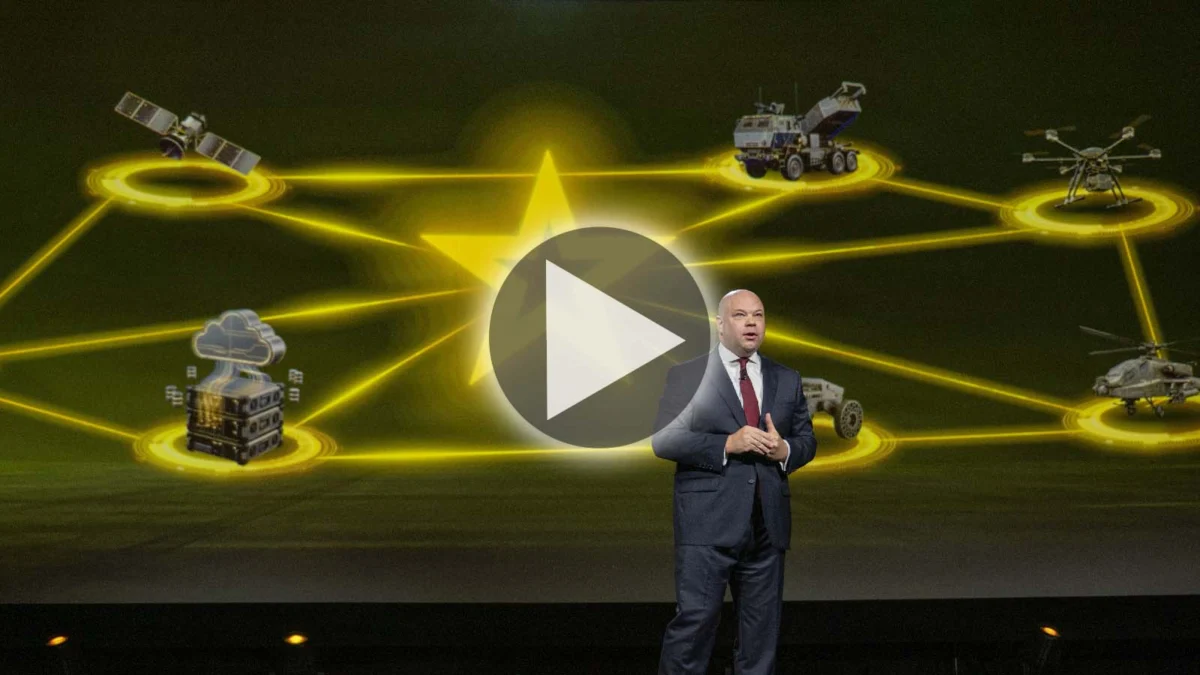
- The Data-Sharing Imperative: U.S. Indo-Pacific Command (INDOPACOM) stressed that the current "stovepiped" nature of ally and partner networks is a critical vulnerability. The push is now toward a "Combined Joint All-Domain Command and Control" (CJADC2) architecture that can ingest data from disparate sources—from Japanese maritime patrol aircraft to Australian signals intelligence—and synthesize it in real-time.
- The Taiwan Timeline: While specific intelligence remains classified, the consensus among participants is that the "window of maximum danger" has compressed. Military planners are operating under the assumption that conflict is no longer a distant theoretical scenario but a looming operational requirement.
Chronology: The Evolution of the Indo-Pacific Defense Posture
The path to the 2026 tech-heavy approach did not happen in a vacuum. It is the result of years of strategic refinement:
- 2023–2024 (The Awakening): Initial efforts focused on the "Pacific Deterrence Initiative." The focus was largely on hardware—missile batteries and island-based logistics.
- 2025 (The Integration Phase): Following a series of high-level exercises, the Department of Defense (DoD) identified that even the most advanced missiles are useless if they cannot be targeted accurately due to degraded communications. The pivot toward "software-defined warfare" began in earnest.
- Late 2025 (The Infrastructure Surge): Accelerated deployment of low-earth orbit (LEO) satellite constellations and underwater sensor arrays began providing the "backbone" for what would eventually be discussed at TechNet 2026.
- November 2026 (TechNet Indo-Pacific): The conference served as a showcase for these integrated capabilities, moving beyond the "concept" stage into the "fielded capability" stage.
Supporting Data: The Metrics of Modern Conflict
The urgency described at TechNet 2026 is supported by a sobering analysis of current capabilities versus projected requirements.
The Bandwidth Gap
Current exercises indicate that U.S. forces require a 400% increase in secure, resilient data throughput to maintain a "common operating picture" in a contested environment. The move toward Mesh Networking—where every ship, drone, and soldier acts as a node—is designed to close this gap.
Electronic Warfare (EW) Resilience
Adversarial EW capabilities have increased in intensity by an estimated 60% over the last 36 months. TechNet 2026 highlighted that "Frequency Hopping" is no longer a sufficient defense. The shift is toward AI-driven cognitive radio, which can detect, analyze, and evade jamming in microseconds.
Multinational Participation
The 2026 summit saw a 35% increase in participation from regional partners compared to 2024. This growth reflects a significant shift in diplomatic and military trust, as nations like the Philippines, Vietnam, and India move to integrate their localized sensors into the broader U.S.-led information architecture.
Official Responses: The Leadership Perspective
During the keynote sessions, leadership emphasized that the technological solutions being proposed are not merely "nice to have"—they are survival requirements.
"We are building a network that can sustain a punch," noted a senior U.S. Navy official during a panel on maritime domain awareness. "If we lose a satellite, the network self-heals. If we lose a terrestrial hub, the drones pick up the slack. Our resilience is our greatest deterrent."

Conversely, civilian defense analysts argued that technology must be balanced with policy. "You can have the best network in the world, but if your partners are prohibited from sharing certain data due to outdated export controls or security classifications, you have a broken chain," stated a leading defense policy fellow. "The real work at TechNet 2026 was in the rooms where lawyers and diplomats were talking about ‘Interoperability by Design’."
Implications: Strategic Deterrence in the Age of AI
The implications of the strategies discussed at TechNet 2026 are profound, extending far beyond the immediate military theater.
1. The Death of the "Static Command Post"
For decades, the U.S. military relied on large, fixed headquarters. The consensus in 2026 is that such facilities are "first-strike magnets." The new doctrine mandates "Mobile Command," where leadership is constantly moving, physically and digitally, to prevent targeting.
2. Cognitive Warfare as a Frontline
The discussion at the conference highlighted that the human element is the weakest link in the network. Adversaries are increasingly using AI-generated deepfakes and misinformation to influence the decision-making of regional commanders. Defense training is now incorporating "Cognitive Defense" to help personnel verify information integrity at machine speed.
3. The Industrial Base Pivot
The emphasis on rapid, iterative software development means that the traditional 10-year defense procurement cycle is essentially dead. The military is moving toward "Commercial-Off-The-Shelf" (COTS) integration. If a startup in Silicon Valley or a tech firm in Tokyo develops a superior signal-encryption algorithm, the military wants to be able to push that update to the fleet in days, not years.
Conclusion: The Path Forward
The 2026 TechNet Indo-Pacific conference served as a clarifier. It moved the conversation away from the abstract "Great Power Competition" and into the granular, technical reality of how to survive and win in a high-intensity, digitized theater of war.
The primary takeaway is that the "Indo-Pacific Battlespace" is no longer just a geographic space—it is a digital ecosystem. Those who can protect their data, share it with allies, and act upon it faster than their adversaries will hold the strategic advantage.
As we look toward the remainder of the decade, the integration of these technologies—AI, LEO satellites, cognitive radio, and multinational cloud architectures—will define the success or failure of deterrence in the region. The U.S. and its partners are clearly signaling that they are not just watching the horizon, but actively constructing the digital bastions necessary to ensure stability in an increasingly volatile world.
For those seeking a deeper dive into the specific technologies, strategic frameworks, and industry partnerships that are reshaping the Indo-Pacific, we have compiled an exclusive eBook. This publication aggregates the most critical insights from TechNet Indo-Pacific 2026, providing a roadmap for defense professionals and policy experts navigating the future of the Pacific theater.
[Sign up here to receive your free, comprehensive copy of the 2026 TechNet Indo-Pacific Strategic Review.]
Note: By submitting your information, you are opting in to receive industry-leading analysis and updates from Breaking Defense and our verified defense partners.