WASHINGTON — As the United States Navy faces a critical reckoning regarding its fleet capacity and the stagnation of its domestic shipbuilding industrial base, William Toti, the nominee for Undersecretary of the Navy, has proposed a strategic pivot that seeks to bypass the intensifying political friction between the Trump administration and Congress.
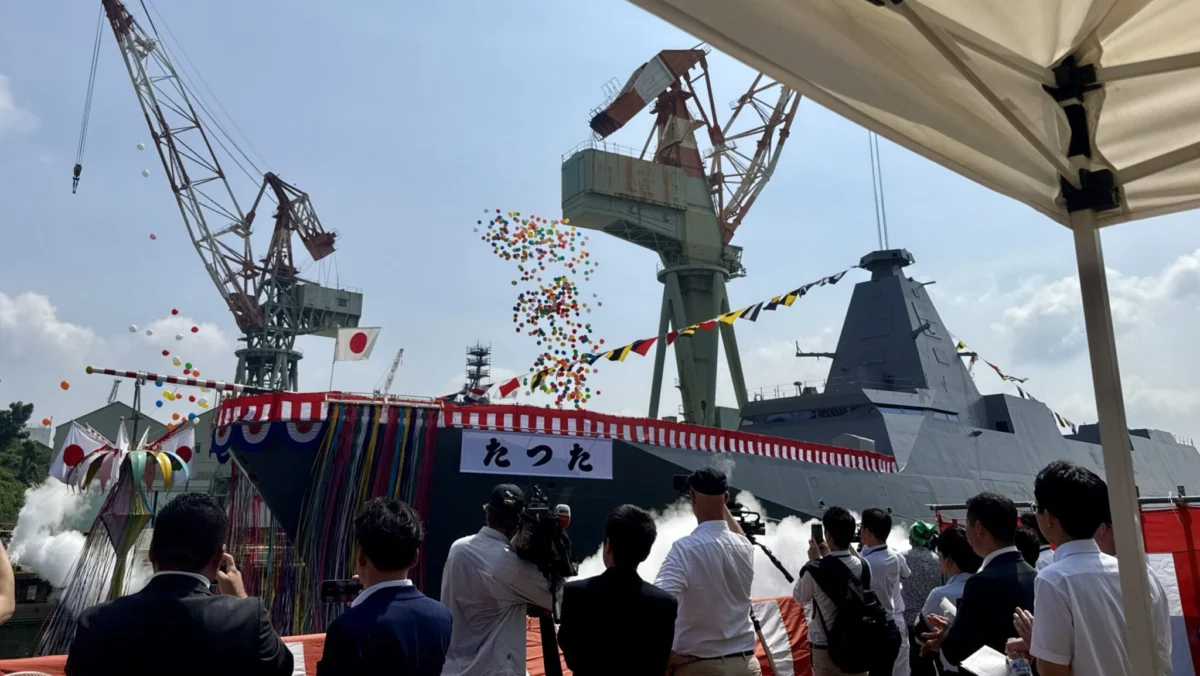
During his confirmation hearing before the Senate Armed Services Committee, Toti effectively distanced himself from the administration’s more aggressive push to outsource the construction of US warships to foreign yards. Instead, he championed a "domestic-first" synthesis: importing the world-class process engineering and production efficiencies of South Korean and Japanese shipbuilders to construct new, high-tech facilities on American soil.
The Core Proposal: Rebuilding at Home, Using Global Expertise
Toti’s testimony represents a nuanced evolution in the ongoing debate over how to rapidly expand the fleet. While the administration has aggressively pushed for a "Finland model"—whereby vessels are initially constructed overseas before transitioning to US yards—Toti argued that the most expedient way to address the current shortage of frigates is to bring foreign expertise into the American workforce.
"We have destroyers today doing frigate work, and the quickest way to get frigates in the United States Navy is to establish a new, world-class shipyard that’s focused just on those ships," Toti told senators.
His strategy centers on a simple premise: the United States does not necessarily need to buy finished ships from foreign nations to benefit from their maritime dominance. Rather, it needs to import their "production standpoint." By incentivizing Asian shipbuilders to establish a physical presence in the US, Toti believes the Navy can solve its dual problems of labor shortages and outdated construction techniques without ceding control over its combatant fleet.
Chronology of a Shipbuilding Crisis
The debate over foreign shipbuilding is the result of years of mounting pressure on the US Navy to modernize its fleet while facing a hollowed-out domestic industrial base.
- 2024: South Korean giant Hanwha makes a significant entry into the US market by acquiring a shipyard in Philadelphia, signaling the start of a trend where foreign capital seeks to bridge the gap in American production capacity.
- May 2026: Acting Secretary of the Navy Hung Cao signals a shift, openly inviting foreign investment. Simultaneously, Chief of Naval Operations Adm. Daryl Caudle voices desperation, stating, "I need ships, I need them now, I need capacity," and acknowledging that the current domestic base cannot support the Navy’s requirements.
- August 2026: President Trump signs a landmark memorandum intended to expand the "Finland model"—a framework initially used for Coast Guard Arctic Security Cutters—to the broader Navy fleet. The memo allows foreign yards to build up to two ships in three specific classes abroad, provided they commit to moving production to the US thereafter.
- September 2026: William Toti’s nomination for Undersecretary of the Navy is officially submitted to the Senate, placing him at the center of a brewing confrontation between the executive branch’s desire for rapid, foreign-aided growth and the legislative branch’s protectionist leanings.
The Legislative Standoff
The conflict between the White House and Congress has reached a fever pitch as both the House and Senate move to finalize the Fiscal Year 2027 National Defense Authorization Act (NDAA).
The House version, passed in July, contains explicit prohibitions against building both warships and combat logistics vessels in foreign yards. The Senate Armed Services Committee has followed suit, reflecting a deep-seated bipartisan fear that relying on foreign nations for the construction of critical national security assets could undermine US sovereignty and domestic employment.
However, the Senate version offers a narrow window for compromise: it permits the procurement of up to two auxiliary ships from foreign yards, provided those companies commit to significant, long-term capital investment in the American maritime industrial base. This compromise mirrors Toti’s own position, which distinguishes between "auxiliary vessels," where he is open to foreign procurement, and "surface combatants," which he insists must be built on US soil to maintain operational security and industrial integrity.
Supporting Data and Strategic Necessity
The Navy’s urgency is not merely political—it is mathematical. With a budget request that includes $1.85 billion in reconciliation funding, the Navy is actively exploring the feasibility of purchasing ships from Japan or South Korea to bridge the current gap in combat capability.
The rationale provided by military leadership is stark: the US workforce lacks the scale, and the existing shipyards lack the modularity, to meet current demand. Adm. Caudle’s testimony highlighted the "all-hands-on-deck" nature of the crisis. When current destroyers are tasked with performing the duties of lighter, more versatile frigates, the entire fleet’s operational efficacy is compromised.
Toti’s argument for a new, dedicated frigate shipyard is supported by the theory of "specialization." By focusing a new facility exclusively on frigate production—rather than attempting to retrofit antiquated yards built for legacy ships—the Navy could theoretically realize the same efficiencies seen in the shipyards of Busan or Nagasaki, where advanced robotics and standardized block-construction are the industry standard.
Implications: A New Industrial Policy?
The potential adoption of Toti’s proposal carries profound implications for the future of the US economy and national security.
1. Workforce Revitalization
By partnering with Korean and Japanese firms, the US would theoretically benefit from a massive transfer of knowledge. Toti argued that importing these processes "only strengthens our workforce." It represents a shift from "buying ships" to "buying capacity," effectively creating a vocational pipeline that could modernize American shipbuilding labor for the next half-century.
2. Geopolitical Alignment
The move also serves as a pillar of the administration’s broader Indo-Pacific strategy. By integrating the industrial bases of the US, Japan, and South Korea, the Navy is essentially creating an "industrial alliance" that matches the military alliances already in place. This creates a unified maritime front against regional rivals, ensuring that the supply chain for naval combatants is shared among the most technologically advanced and politically aligned nations in the world.
3. Political Risk
Despite the logical appeal, the strategy remains a political minefield. Labor unions, which have historically held significant sway over shipbuilding policy, are wary of any initiative that introduces foreign competitors, regardless of the promise of domestic investment. Furthermore, the "buy American" sentiment in Congress remains a powerful legislative hurdle. Any move to use foreign funds or foreign-led management, even on US soil, will require a delicate balancing act to ensure that it is perceived as an expansion of American power rather than a surrender of domestic capability.
Conclusion: The Path Forward
As the Senate prepares to vote on Toti’s nomination, his stance serves as a litmus test for the future of US naval policy. The nominee has positioned himself as a pragmatist: he acknowledges the desperate need for capacity while respecting the congressional red lines that protect the US industrial base.
If Toti is confirmed, his tenure will likely be defined by the success—or failure—of this hybrid model. Whether he can convince the skeptics in Congress that a "foreign-built shipyard in the US" is the golden mean between the inefficiency of the status quo and the political danger of total foreign outsourcing remains to be seen. For the Navy, however, the clock is ticking; the demand for frigates is immediate, and the "full portfolio of tools" that Toti advocates may well be the only path toward maintaining naval supremacy in a contested global environment.