In a strategic pivot aimed at capturing the modern knowledge worker, Anthropic has unveiled a suite of productivity-focused tools designed to move its flagship AI, Claude, from a passive conversational interface to an active, integrated digital workspace. This expansion, which follows the successful implementation of "Claude Code" for developers, signals a bold attempt to challenge entrenched office productivity giants like Microsoft and Google by embedding AI directly into the fabric of team collaboration.
The newly announced features—including Claude Meetings, Claude Whiteboards, and Claude Sheets—represent a concerted effort to make the platform "stickier." By reducing the friction of switching between browser tabs and standalone applications, Anthropic is positioning Claude as the central nervous system for corporate workflows.
The Core Expansion: A New Paradigm for Productivity
For the past year, the battle for AI dominance has moved beyond simple LLM benchmarking. Companies are now competing on "workflow integration." Anthropic’s latest update moves beyond the text-generation capabilities seen in earlier iterations of Claude.
Claude Meetings: The Virtual Notetaker
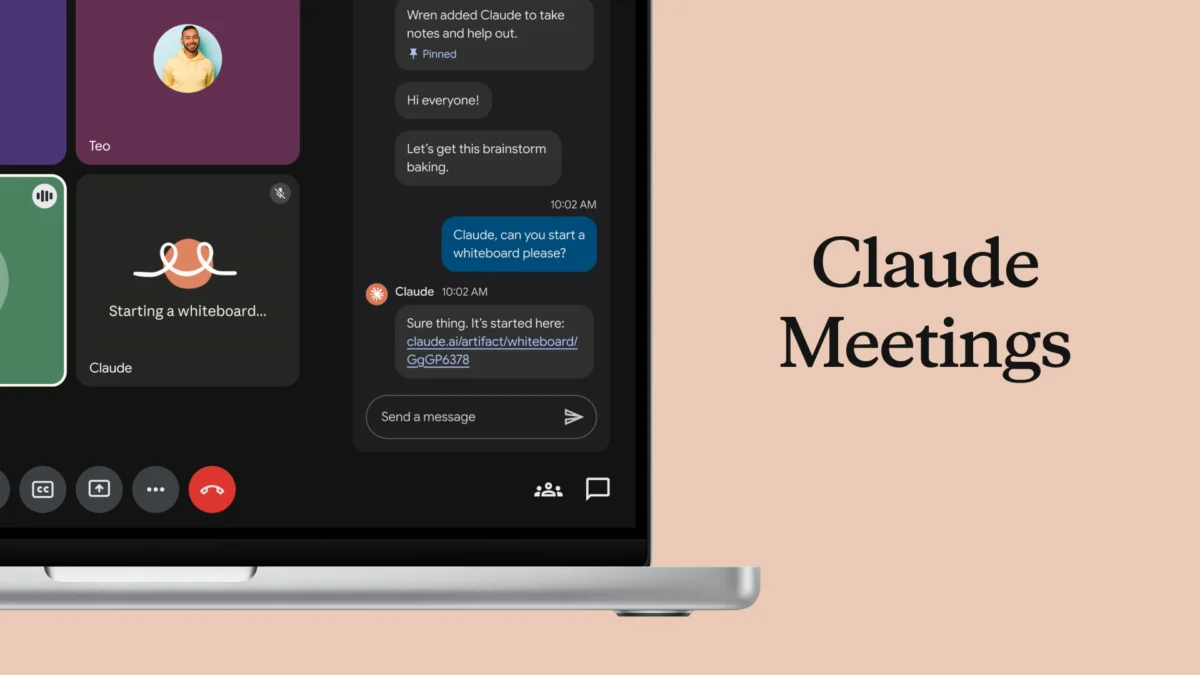
Perhaps the most significant addition is Claude Meetings. By joining video calls—currently limited to Google Meet—Claude acts as an autonomous participant. It handles real-time transcription, answers questions via the meeting’s chat interface, pulls data from connected enterprise apps, and generates actionable project timelines. Once the meeting concludes, all documentation is seamlessly synced to the user’s claude.ai dashboard.
Visual Collaboration with Whiteboards
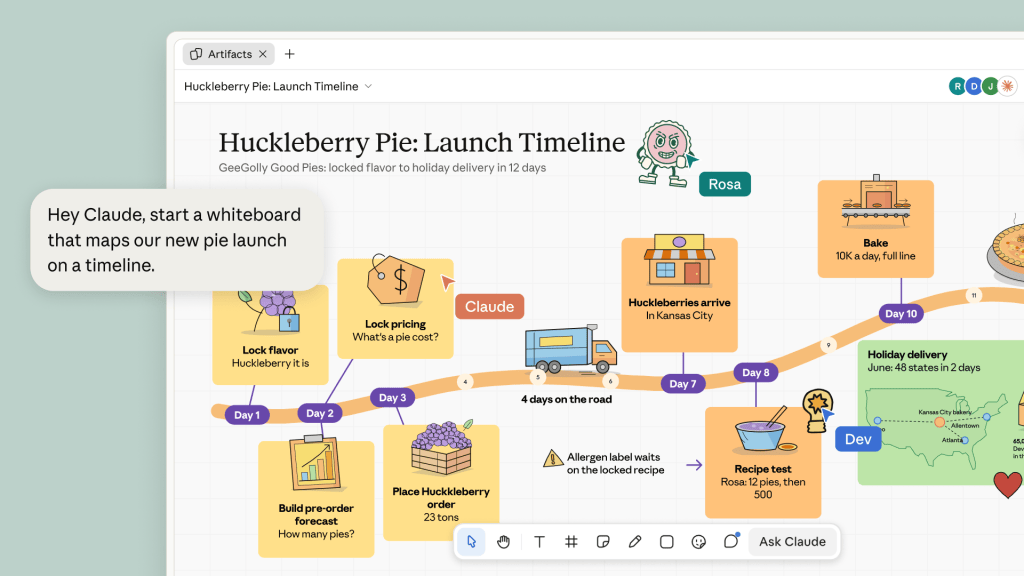
Recognizing that brainstorming often stalls when ideas move from a whiteboard to a document, Anthropic has launched Claude Whiteboard. This feature allows teams to co-create on a shared canvas. Claude then translates these loose visual inputs into structured deliverables, such as timelines, task assignments, and concrete deadlines.
Data and Integration: Sheets and Connectors
To compete with the dominance of Excel and Google Sheets, Anthropic has introduced Claude Sheets, a collaborative spreadsheet tool. Furthermore, the company has overhauled its "interactive connectors." Originally launched in January to provide basic app access, the new connectors allow users to open full, functional versions of third-party applications—such as Adobe, Box, and Notion—directly within the Claude interface. Users can now command the AI to edit documents or retouch images without leaving the Claude environment.

Chronology: From Code to Collaboration
Anthropic’s trajectory reflects a deliberate, phased rollout strategy:
- January 2026: Initial launch of "interactive connectors," allowing Claude to interface with external third-party software.
- September 2026: Anthropic introduces "Claude Docs" and "Claude Slides," signaling a clear move into the office productivity market.
- Late 2026: The successful adoption of "Claude Code" among software engineers provides a blueprint for how AI can handle complex, multi-step technical tasks.
- November 2026 (The Current Expansion): Anthropic moves into the broader enterprise space with the beta launches of Claude Meetings, Whiteboards, and the updated Sheets and Connectors suite.
Supporting Data and Market Context
The market for meeting assistants is currently saturated, featuring established players like Microsoft Copilot (Teams), Zoom’s native AI, and Cisco Webex. Additionally, standalone AI startups like Otter.ai and Granola have already carved out significant market share.
Industry experts suggest that Anthropic’s entry is less about inventing a new category and more about consolidation. As Irwin Lazar, principal analyst at Metrigy, points out, the value lies in the elimination of the "copy-paste tax." By having direct access to meeting notes without requiring manual data transfer, Claude significantly reduces the cognitive load on the average knowledge worker.
The financial model is equally clear: these features are gated behind Claude Team and Enterprise plans. By making these tools the default for business users, Anthropic is effectively creating an "all-in-one" ecosystem that makes it difficult for enterprise customers to justify the cost of maintaining multiple disparate subscriptions.
Official Responses and Expert Analysis
The Shift in User Behavior
Craig Durr, chief analyst at The Collab Collective, views this as a fundamental shift in the AI value proposition. "Anthropic is moving Claude from a place you go to ask a question to a place where teams do their work," Durr noted. This transition is crucial for long-term retention. While a chatbot is a utility, a workspace is an infrastructure; once an organization builds its workflows around Claude, the switching costs become prohibitively high.
The "Proactive" Future
One of the most discussed aspects of the update is the potential for AI autonomy. Reports indicate that while Claude Meetings currently acts only upon user instruction, Anthropic is exploring "proactive" capabilities. This future-state AI would not just wait to be asked; it would anticipate needs, flag conflicts in calendars, and initiate documentation based on environmental cues.
However, this brings a new set of concerns. As Durr warns, "A meeting participant that acts on its own is a different product, and it starts a different governance conversation."
Implications for the Enterprise
Governance, Privacy, and Compliance
The introduction of an AI "participant" into private corporate meetings raises significant legal and ethical questions. Anthropic has implemented safeguards—such as requiring admin approval for calls involving external guests—but the burden of compliance remains with the organization.
IT and HR departments are now faced with the task of establishing clear, enforceable policies:
- Consent Protocols: Does the meeting participant know they are being recorded/analyzed?
- Jurisdictional Compliance: Rules regarding data storage and AI recording vary wildly between the EU (GDPR), the US, and Asia.
- Data Siloing: With Claude now acting as a hub for Notion, Box, and Adobe, the security perimeter of the organization effectively expands to include Anthropic’s servers.
The Limits of Ambition
Despite these aggressive moves, analysts remain skeptical about Anthropic’s desire to become a full-fledged communication provider. Irwin Lazar notes that while Claude is winning in productivity, the company is unlikely to build its own email or video-calling infrastructure. "Email, calling, and video meeting software all require far more extensive capabilities and infrastructure," Lazar explains. Anthropic appears content to play the role of the "intelligence layer" on top of existing communication platforms rather than trying to replace them.
Conclusion: A New Competitive Frontier
Anthropic’s recent updates mark the end of the "Chatbot Era" and the beginning of the "Agentic Workspace Era." By focusing on the daily minutiae of the knowledge worker—meetings, whiteboarding, and data management—Anthropic is not just competing with OpenAI’s ChatGPT; it is competing with the very concept of the traditional office suite.
For enterprise IT teams, the immediate directive is clear: the integration of these tools offers significant efficiency gains, but it requires a sophisticated approach to data governance and user consent. As Claude becomes more proactive and autonomous, the line between "assistant" and "colleague" will continue to blur. Whether this leads to a more productive workforce or a more complex management challenge remains to be seen, but one thing is certain: the way we work is being rewritten by the very code that once merely answered our questions.