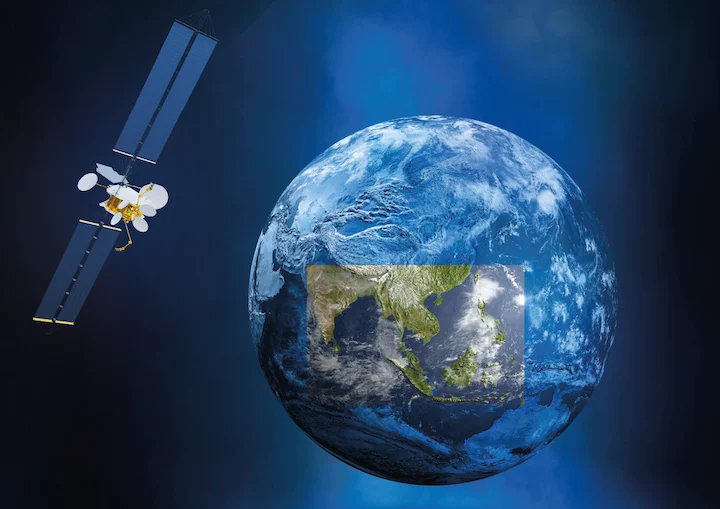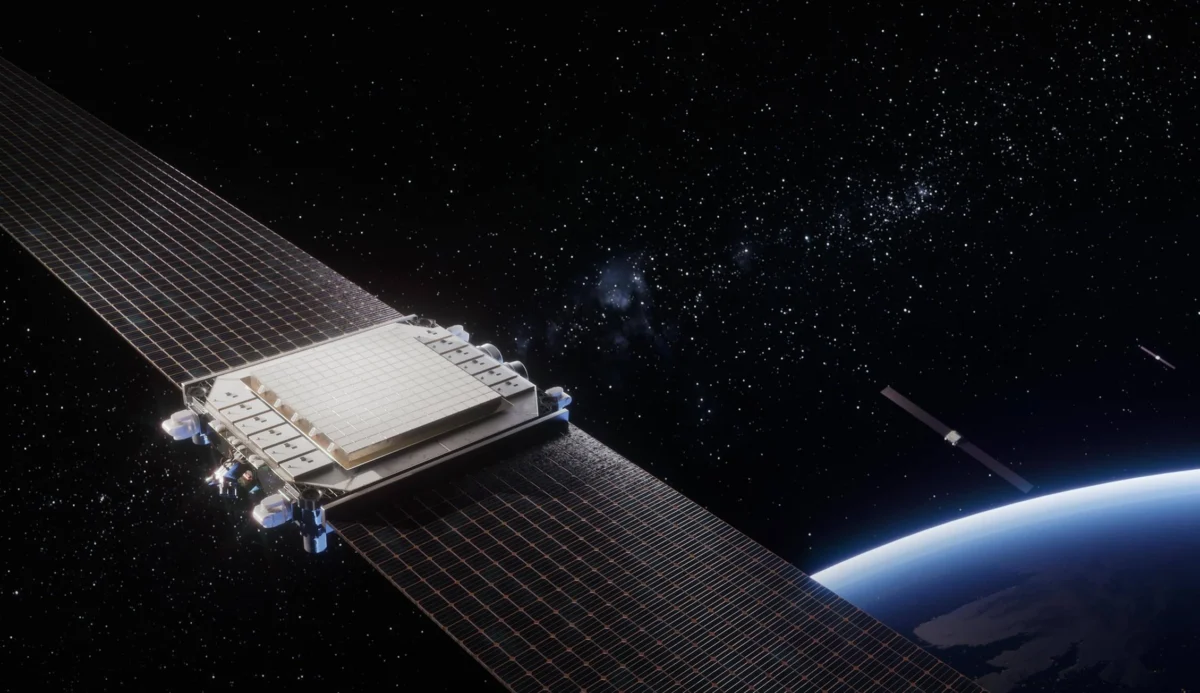
In a significant leap forward for high-speed space communications, satellite giant SES has successfully demonstrated a bi-directional optical (laser) communications link between its "meoSphere" pathfinder payload and a ground-based station. The milestone, achieved in collaboration with K2 Space, marks a pivotal moment in the industry’s shift toward laser-based data transmission, which promises to revolutionize the speed, security, and capacity of orbital networks.
The demonstration utilized a Mynaric Condor optical terminal integrated onto the K2 Space Gravitas satellite, facilitating a seamless high-definition video data transfer to Cailabs’ optical ground station located in Rennes, France. This achievement validates the technical viability of SES’s next-generation Medium-Earth Orbit (MEO) network concept, known as meoSphere.
Main Facts: The Anatomy of a Laser Link
The demonstration represents a triumph of precision engineering and orbital synchronization. Unlike traditional Radio Frequency (RF) communications, which rely on electromagnetic waves that can be susceptible to interference and limited bandwidth, optical communications use concentrated laser beams to transmit data. This method allows for significantly higher data rates—often magnitudes faster than current RF standards—while providing inherently more secure, localized transmission paths.
Technical Components of the Mission:
- The Satellite Platform: The Gravitas satellite, built by K2 Space, serves as the host for the meoSphere pathfinder. Gravitas is a "Mega-class" satellite platform, designed to offer high-payload capacity and modularity, making it an ideal testbed for cutting-edge telecommunications technology.
- The Optical Terminal: The Mynaric Condor terminal, a high-performance, space-qualified optical communications system, served as the bridge between the vacuum of space and the terrestrial station.
- The Ground Station: Cailabs provided the terrestrial infrastructure in Rennes, France, featuring the advanced optical equipment necessary to capture, stabilize, and decode the high-speed data stream emanating from the satellite.
- Integration and Operations: SES led the design, development, and operation of the optical mission, including the custom automation software required to maintain the link during the satellite’s transit. Thales Alenia Space played a critical role in the system’s assembly, integration, and testing, ensuring the hardware could withstand the rigors of launch and the harsh environment of space.
Chronology: A Roadmap to meoSphere
The success of this mission is not an isolated event but the culmination of a strategic, iterative development roadmap set forth by SES over the past several years.
2025: The Strategic Pivot
In mid-2025, SES formally announced a collaboration with K2 Space to accelerate the development of its future MEO network. Recognizing that traditional satellite manufacturing cycles were becoming too slow for the rapidly evolving connectivity market, SES opted for a "pathfinder" strategy. This approach involves launching smaller, experimental payloads to validate key technologies before committing to a full-scale network constellation.
March 2026: The Gravitas Launch
The Gravitas mission launched in March 2026, carrying multiple SES payloads. This launch was a watershed moment for the partnership, as it marked the first time SES would test its proprietary meoSphere concepts in a real-world, orbital environment. The inclusion of these payloads was part of a broader push by SES to iterate faster in response to increasing geopolitical instability and a "capital war" in the satellite manufacturing sector, where agility is now the primary competitive advantage.
Q2 2026: Achieving First Light
Following the launch and successful orbital commissioning, the teams began the delicate process of "pointing, acquisition, and tracking" (PAT). Establishing a laser link between a moving satellite traveling at thousands of miles per hour and a fixed point on Earth requires extreme precision—comparable to hitting a moving target the size of a coin from several hundred miles away. After rigorous testing, the team successfully transferred video data, marking the formal "First Light" for the meoSphere pathfinder.
Supporting Data: Why Optical Communications Matter
The shift toward optical communications is driven by an insatiable global demand for data. As terrestrial networks expand, the bottleneck for global connectivity increasingly rests on the capacity of the satellite backhaul.
Performance Metrics:
- Bandwidth Density: Optical links can support multi-gigabit speeds, vastly outperforming current Ka-band or Ku-band RF systems.
- Spectrum Efficiency: Because optical light occupies a different part of the electromagnetic spectrum, it bypasses the increasingly crowded RF bands, which are subject to stringent regulatory licensing and interference issues.
- Low Latency: Laser links provide a direct, high-capacity pipeline that reduces the overhead associated with packet routing in congested RF channels.
SES has indicated that the current mission is only the beginning. The company plans to continue testing to extend the duration of each link—a significant challenge given atmospheric turbulence and cloud cover—and to push the boundaries of link speed and overall system performance.
Official Responses: Leadership Perspectives
The success of the meoSphere pathfinder has been met with optimism by leadership at SES, who view this as a vindication of their "vertically integrated, iterative approach."
Carmel Ortiz, Senior Vice President of MEO Programs at SES, stated:
"This Pathfinder 1 achievement validates our vertically integrated, iterative approach to developing next-generation space capabilities. Together with our partners, we have successfully and repeatedly transferred data between space and the ground, demonstrating the performance of optical communications in an operational environment."
Industry analysts note that Ortiz’s emphasis on "iterative development" is a departure from the traditional "big bang" satellite procurement models of the past decade. By building smaller, more frequent pathfinder missions, SES is significantly de-risking its future MEO investments.
K2 Space, as the provider of the Gravitas bus, has also highlighted the significance of the partnership. By offering a platform that can accommodate rapid payload integration, K2 Space is positioning itself as a vital partner for operators looking to deploy experimental technology without the multi-year wait times associated with traditional satellite bus manufacturing.
Implications: The Future of Global Connectivity
The implications of this successful demonstration extend far beyond a single technical milestone. They provide a blueprint for the future of the global telecommunications infrastructure.
1. Resilient Global Networks
As geopolitical tensions rise, the ability to maintain secure, high-speed, and resilient communication links is a matter of national security. Optical links are notoriously difficult to jam or intercept, making them a preferred choice for government and defense applications. The success of meoSphere puts SES in a strong position to bid for high-security, high-capacity government contracts.
2. The Commercialization of MEO
For years, the industry has debated whether LEO (Low-Earth Orbit) or MEO (Medium-Earth Orbit) would win the race for connectivity. LEO offers low latency, while MEO offers greater coverage area per satellite. By integrating advanced optical technology into its MEO infrastructure, SES is effectively "leveling up" its MEO network to compete with the high-speed data capabilities of LEO constellations, while retaining the superior orbital coverage footprint of MEO.
3. A Model for Collaborative R&D
The collaboration between SES, K2 Space, Mynaric, and Cailabs demonstrates a modern, decentralized model for aerospace innovation. No single company is responsible for the entire stack; rather, a "best-in-class" ecosystem of partners is contributing to a unified goal. This model is likely to become the standard for future space projects, where specialized expertise in optics, bus manufacturing, and software integration must converge to create viable commercial products.
4. Next Steps for meoSphere
As the mission continues, the focus will shift from "can it be done" to "how efficiently can it be scaled?" The data gathered during the coming months will be critical in designing the operational MEO constellation. SES will look to optimize the software automation layer, which is essential for managing a fleet of satellites that must constantly point their lasers at moving ground targets while coordinating with other satellites in the constellation.
Conclusion
The successful optical communications link between the meoSphere pathfinder and the Cailabs ground station in Rennes is a resounding success for SES and its partners. It marks the transition of optical space communication from a theoretical advantage to a practical, operational reality.
As SES moves toward the next phases of its pathfinder missions, the company is not merely testing hardware; it is architecting the backbone of the next generation of global connectivity. By combining the agility of the K2 Space Gravitas platform with the cutting-edge precision of Mynaric and the operational expertise of Thales Alenia Space, SES is ensuring that its MEO network will remain the standard-bearer for performance, security, and scalability in the years to come. The era of the "Mega-class" satellite and optical orbital networking has truly arrived, and the industry is watching closely to see how quickly these lessons can be translated into a full-scale, global deployment.