Executive Summary & Primary Developments
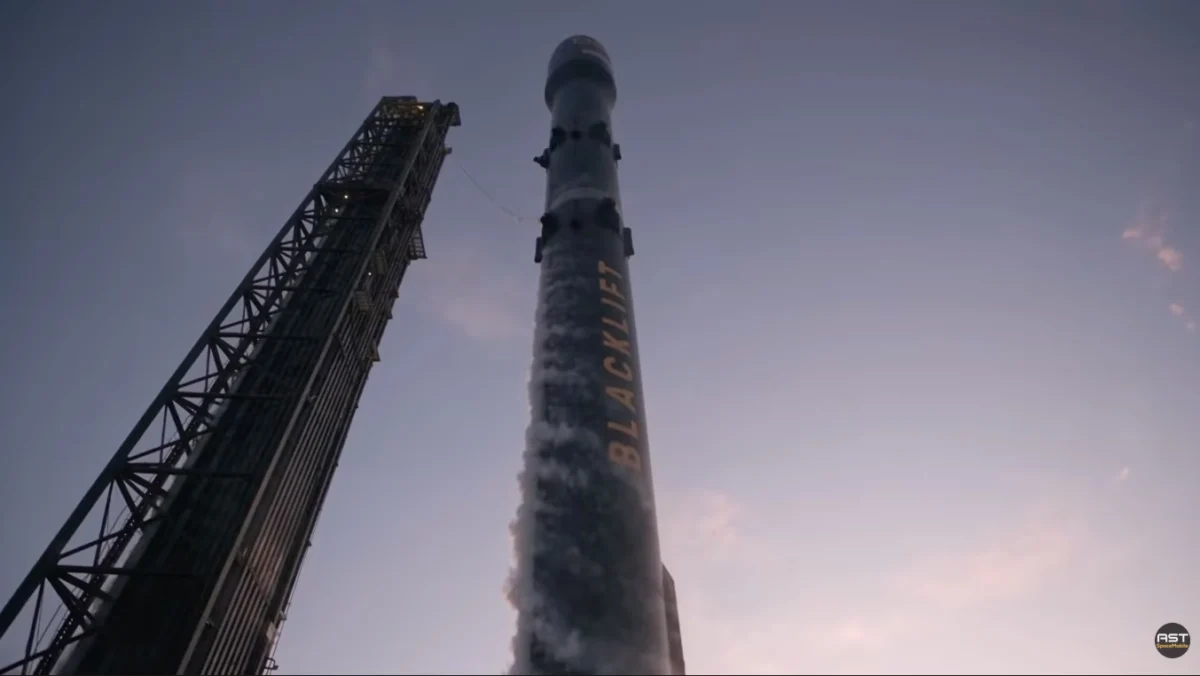
In an audacious move that has sent ripples through the commercial space industry, AST SpaceMobile has unveiled aggressive plans to build, test, and launch its own reusable medium-to-heavy-lift orbital rocket. Dubbed Blacklift, the proposed launch vehicle is designed to carry a payload of 20 metric tons (20,000 kilograms) to Low Earth Orbit (LEO). AST SpaceMobile executives claim the rocket will perform its inaugural flight in late 2028—a rapid two-year development cycle from concept to launch pad that stands in stark contrast to traditional aerospace timelines.
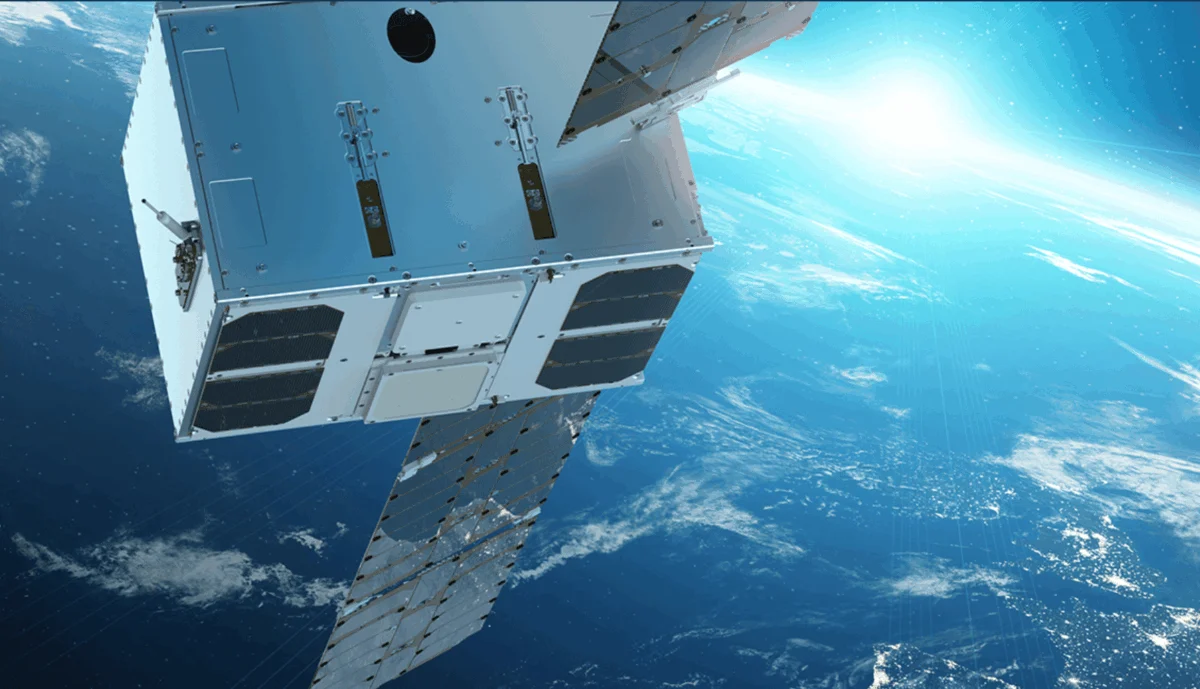
The company, primarily known for developing space-based cellular broadband constellations directly accessible by standard smartphones, frames the rocket project not as a commercial expansion into space transportation, but as a critical vertical integration effort. AST SpaceMobile Chief Executive Abel Avellan emphasized that Blacklift is being developed strictly to break open a systemic global launch bottleneck that threatens to delay the deployment of its massive "BlueBird" satellites. Capable of lifting up to five BlueBird spacecraft in a single launch, Blacklift is projected to launch up to twice a month once fully operational.
However, the ambitious program faces immediate industry skepticism. Beyond the aggressive schedule, AST’s technical choices—specifically a non-traditional three-stage architecture and an all-carbon-composite structure—present severe qualification risks. Furthermore, a glaring discrepancy has emerged regarding where the rocket will actually launch. While AST executives publicly claimed they would upgrade and utilize the historical Antares launch pad (Pad 0-A) at NASA’s Wallops Flight Facility in Virginia, state spaceport officials have flatly refuted those assertions, stating that Pad 0-A is not on the table.
Chronology of the Blacklift Announcement
The road to AST SpaceMobile’s unexpected entry into launch vehicle development unfolded across a series of high-stakes corporate updates in November.
+-----------------------------------------------------------------------------------+
|                              DEVELOPMENT TIMELINE                                 |
+-------------------+---------------------------------------------------------------+
| Date              | Event / Milestone                                             |
+-------------------+---------------------------------------------------------------+
| November 6        | AST SpaceMobile publicly announces the "Blacklift" rocket      |
|                   | program and a $1.3B strategic technology deal with Firefly.   |
+-------------------+---------------------------------------------------------------+
| November 9        | Q3 Earnings Call: CEO Abel Avellan details launch plans,     |
|                   | claiming access to Antares Pad 0-A at Wallops Island, VA.     |
+-------------------+---------------------------------------------------------------+
| November 12       | NYC Unveiling Event: AST presents CAD animations, manufacturing|
|                   | slides, and details a three-stage carbon composite vehicle.   |
+-------------------+---------------------------------------------------------------+
| November 12 (pm)  | Virginia Spaceport Authority refutes AST's Pad 0-A claims,    |
|                   | revealing talks are preliminary and exclude the Antares pad.  |
+-------------------+---------------------------------------------------------------+
| Late 2028 (Target)| Projected inaugural flight of the reusable Blacklift rocket.  |
+-------------------+---------------------------------------------------------------+
The motivation behind Blacklift stems directly from AST SpaceMobile’s core business model. The company requires dozens of high-powered, large-aperture BlueBird satellites in orbit to provide seamless global cellular coverage. However, the commercial launch market is severely constrained. SpaceX’s Falcon 9 is largely booked with internal Starlink missions and third-party commercial payloads, while next-generation heavy lifters like United Launch Alliance’s Vulcan Centaur, ArianeGroup’s Ariane 6, and Blue Origin’s New Glenn face multi-year manifest backlogs.
Recognizing that satellite production in Midland, Texas, could soon outpace available rocket berths, AST announced on November 6 that it was initiating its own launch program. To fast-track the effort, AST entered into a $1.3 billion deal with Firefly Aerospace. The contract secures Firefly-built engines for the first three Blacklift vehicles, grants AST IP licensing rights to eventually manufacture those engines in-house, and provides ongoing engineering support.
Three days later, during a November 9 earnings call, Avellan laid out the operational vision, asserting that initial launches would leverage established infrastructure at Wallops Island. On November 12, AST hosted an official "unveiling" presentation in New York City. Despite the high-profile staging, the event featured no physical rocket hardware. Instead, attendees were shown CAD animations of Blacklift, recorded engine test firings from Firefly, and virtual tours of AST’s satellite assembly line in Texas.
Technical Architecture and Engineering Nuances
AST SpaceMobile’s technical blueprint for Blacklift departs significantly from standard commercial launcher designs, introducing both unconventional staging physics and advanced material choices.
+-----------------------------------------------------------------------------------+
|                        BLACKLIFT TECHNICAL CONFIGURATION                          |
+-------------------+---------------------------------------------------------------+
| Payload Capacity  | 20 Metric Tons to Low Earth Orbit (LEO)                       |
+-------------------+---------------------------------------------------------------+
| Dedicated Cargo   | Up to 5 BlueBird Satellites per launch                        |
+-------------------+---------------------------------------------------------------+
| Primary Structural| 100% Carbon Fiber Composite (Claimed 40% dry mass reduction)   |
| Material          |                                                               |
+-------------------+---------------------------------------------------------------+
| Vehicle Mass      | ~95% Vertically Integrated (excluding initial propulsion IP)  |
| Integration       |                                                               |
+-------------------+---------------------------------------------------------------+
| STAGE 1 (Reusable)| Powered by 7 Firefly "Miranda" Engines                        |
+-------------------+---------------------------------------------------------------+
| STAGE 2           | Powered by 2 Firefly "Vira" Engines                           |
+-------------------+---------------------------------------------------------------+
| STAGE 3           | Powered by 1 Firefly "Vira" Engine                            |
+-------------------+---------------------------------------------------------------+
The Three-Stage Conundrum
The vast majority of modern operational and in-development LEO launch vehicles—including SpaceX’s Falcon 9, Rocket Lab’s Neutron, Relativity Space’s Terran R, Stoke Space’s Nova, and Blue Origin’s New Glenn—utilize a two-stage architecture. Two-stage designs minimize structural mass penalties and eliminate the operational complexity of an additional staging event.
Blacklift, by contrast, relies on a three-stage design:
- Stage 1 (Booster): Powered by seven Firefly Miranda engines, designed for propulsive recovery and reusability.
- Stage 2: Powered by two Firefly Vira engines.
- Stage 3: Powered by a single Firefly Vira engine to perform final orbit insertion and payload deployment.
Avellan argued that adding a third stage fundamentally simplifies booster recovery. "When you have three stages, the first stage will go up not that much and will come back down very easily, compared of going back very high and then trying to maneuver that back to Earth," he explained during the New York presentation.
From an aerodynamic and thermal perspective, staging at a lower altitude and velocity reduces the thermal protection system (TPS) requirements and atmospheric entry loads on Stage 1. However, rocket engineers note that a three-stage architecture adds structural dry weight to upper stages, increases ignition failure risks in vacuum conditions, and introduces complex staging separation dynamics mid-flight.
Carbon Composite Tank Qualification Risks
Blacklift will feature a structures-and-tanks design built entirely from carbon fiber composites, which Avellan claims yields a 40% reduction in dry mass compared to traditional metallic (aluminum-lithium) airframes. AST plans to manufacture these massive composite propellant tanks at its existing Midland, Texas, facility, targeting the completion of 10 prototype tanks by January for structural testing.
While AST points to its internal experience using composite materials for satellite structures, adapting carbon composites to hold cryogenic liquid propellants under high pressure is an notoriously difficult engineering feat. Composite materials are prone to micro-cracking under cryo-temperatures, leading to propellant leaks or structural delamination.
Industry precedent highlights these dangers:
- Rocket Lab’s Neutron Experience: Rocket Lab, an established launch provider with years of carbon-composite experience on its small-lift Electron rocket, faced severe setbacks when qualifying the larger composite tanks for its medium-lift Neutron vehicle. In January, a primary stage tank failed during pressure qualification testing. Subsequent tank development issues forced Rocket Lab to push Neutron’s inaugural launch back to 2027.
AST’s assertion that it can design, manufacture, pressure-test, and flight-certify composite cryogenic tanks for a 20-ton payload rocket within two years stands as one of the most high-risk assumptions in the Blacklift manifest.

Infrastructure Discrepancies and Official Responses
Beyond technical hurdles, AST SpaceMobile faces an immediate infrastructure crisis regarding its planned launch site.
The Wallops Pad 0-A Contradiction
During both the November 9 earnings call and the November 12 presentation, Avellan repeatedly assured investors and analysts that Blacklift’s launch site was already secured via existing infrastructure at NASA’s Wallops Flight Facility in Virginia.
"Our first launches are going to be upgrades on existing launch [infrastructure], which Firefly already have prearranged for their Eclipse configuration," Avellan stated. "We have a launch site, a site which is Wallops. It’s the same place where Antares used to fly, and where the Eclipse from Firefly will fly, and that we’re upgrading that facility."
AST explicitly stated in its presentation slides that it planned to use Pad 0-A—the heritage launch pad originally built for Northrop Grumman’s Antares rocket and currently being upgraded to support Firefly’s Alpha and the joint Firefly/Northrop Grumman Eclipse (formerly Antares 330) vehicle.
However, state officials quickly dismantled this narrative. In a statement provided to SpaceNews, a spokesperson for the Virginia Spaceport Authority (VSA)—the state agency that owns and operates the commercial launch complex at Wallops—flatly contradicted AST’s claims.
The VSA confirmed that while it has participated in "early, preliminary conversations" with AST SpaceMobile regarding potential future operations, those discussions explicitly do not involve Pad 0-A.
                       WALLOPS ISLAND LAUNCH INFRASTRUCTURE REALITY
+------------------+----------------------------------+-----------------------------------+
| Facility Option  | AST SpaceMobile Claim            | Virginia Spaceport Authority State|
+------------------+----------------------------------+-----------------------------------+
| Pad 0-A          | Primary launch site; upgrading   | NOT available to AST; dedicated to|
|                  | existing Antares infrastructure. | Firefly / Northrop Grumman.       |
+------------------+----------------------------------+-----------------------------------+
| Pad 0-B          | Not publicly discussed by AST.   | Requires extensive, costly conversion|
|                  |                                  | from small solid to heavy liquid. |
+------------------+----------------------------------+-----------------------------------+
| Greenfield Site  | Not publicly discussed by AST.   | Requires building new Pad 0-C from|
| (Pad 0-C)        |                                  | scratch; multi-year NEPA delays.  |
+------------------+----------------------------------+-----------------------------------+
The Cost and Schedule Fallout
Because Pad 0-A is committed to the Northrop Grumman/Firefly Eclipse program, AST is left with two significantly more complex alternatives at Wallops:
- Refurbishing Pad 0-B: Pad 0-B is currently configured for small, solid-propellant rockets (such as the Minotaur family). Converting Pad 0-B to support a massive 20-ton payload liquid-propellant rocket using LOX/RP-1 engines would require completely tearing down and rebuilding the launch mount, flame trench, fuel storage farms, and high-pressure gas systems.
- Constructing a New Greenfield Pad (Pad 0-C): Building a brand-new launch pad on Wallops Island would require extensive Environmental Impact Statements (EIS) under the National Environmental Policy Act (NEPA), federal permits, ground stabilization, and hundreds of millions of dollars in civil infrastructure construction.
Either alternative will add hundreds of millions of dollars in unbudgeted capital expenditure and cause environmental review delays that would push any initial launch well beyond the targeted late-2028 deadline.
Strategic Implications and Industry Analysis
AST SpaceMobile’s attempt to build an in-house medium-to-heavy lift rocket highlights the desperation felt by satellite constellation operators in a supply-constrained launch market. However, the move carries tremendous strategic and financial risks.
"Third Base" vs. Aerospace Realities
AST defends its late-2028 schedule by pointing out that engine development—typically the longest and most capital-intensive part of rocket program—is effectively outsourced. By purchasing Firefly’s proven Miranda and Vira engines, AST claims it is skipping a decade of early-stage propulsion R&D.
"A typical design cycle of a rocket could be over a decade. Eighty percent of that is on the engine," Avellan asserted. "We’re starting this program on third base. We bypass 10 years of engineering and R&D. What remains is integration, stage testing, and licensing: exactly what the plan is built around."
Traditional Rocket R&D Timeline vs. AST SpaceMobile Claims:

TRADITIONAL (10-12 Years):
[ Propulsion R&D (7-8 Yrs) ] ---> [ Structures & Avionics ] ---> [ Test & Launch (2 Yrs) ]

AST BLACKLIFT (Claimed 2 Years):
[ Procure Firefly Engines ]  ---> [ Integration & Testing ] ---> [ Late 2028 Inaugural Flight ]
                                  *Ignores historic tank, pad, and licensing lead-times
Yet, history suggests that starting "on third base" does not guarantee a quick home run. Integrating complex flight hardware, developing high-rate manufacturing tooling for carbon composite structures, building out launch infrastructure, and navigating FAA vehicle operator licensing regularly take five to seven years—even when using off-the-shelf engines.
Financial Exposure and Capital Requirements
The financial commitment required for Blacklift is formidable. Beyond the $1.3 billion contract signed with Firefly Aerospace for initial engines, IP licensing, and engineering support, AST SpaceMobile must fund:
- Tooling and fabrication of composite tank production lines in Midland.
- Construction of dedicated stage-testing stand facilities.
- Major launch pad modification or greenfield construction.
- A dedicated launch operations and system engineering software team.
While AST claims it will achieve 95% vertical integration for Blacklift, the financial capital required to achieve this operational state will test the company’s balance sheet at a time when it must also fund the mass manufacturing of its core revenue driver: the BlueBird satellites themselves.
Market Impact and Verdict
AST SpaceMobile’s decision to build Blacklift is a high-stakes gamble. If successful, the company secures complete autonomy over its launch schedule, shielding its direct-to-device constellation rollout from third-party launch delays and driving down long-term marginal deployment costs.
If, however, Blacklift succumbs to the technical hurdles that plague rocket development—such as composite propellant tank delays, staging failures, or multi-year spaceport permitting battles—it risks burning through billions of dollars in capital while distracting management from its core telecommunications mission. As the aerospace industry watches closely, AST SpaceMobile must now bridge the formidable gap between CAD animations and real, operational hardware on the launch pad.