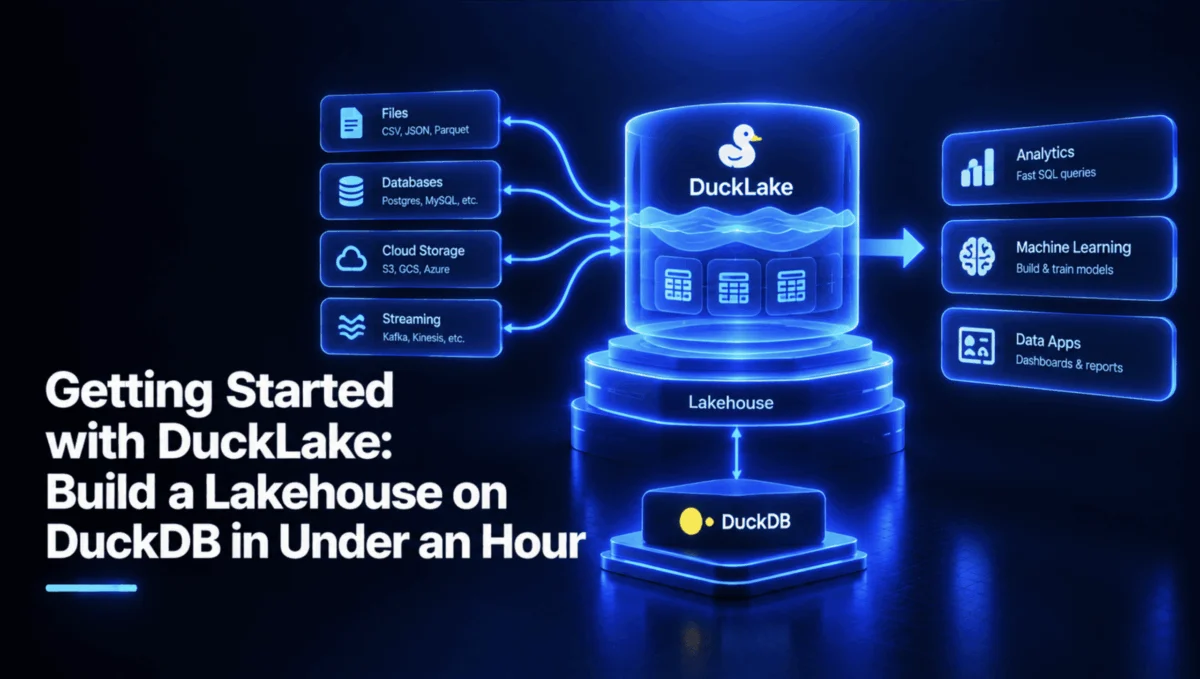
The evolution of modern data architecture has reached a pivotal junction. As organizations grapple with the increasing complexity of managing massive datasets, the "Lakehouse"—a hybrid architecture that combines the cost-effectiveness of data lakes with the performance and transactional integrity of data warehouses—has become the industry standard. Into this competitive landscape steps DuckLake, an innovative, open-source table format developed by the team behind the wildly popular DuckDB.
Launched in April 2026, DuckLake 1.0 represents a significant shift in how developers approach data storage. By leveraging a SQL-based catalog to manage metadata while keeping raw data in high-performance Apache Parquet files, DuckLake offers a streamlined, developer-centric experience. This article explores the mechanics of DuckLake, providing a comprehensive guide to building a production-ready lakehouse on your local machine in under an hour.
Main Facts: The Anatomy of DuckLake
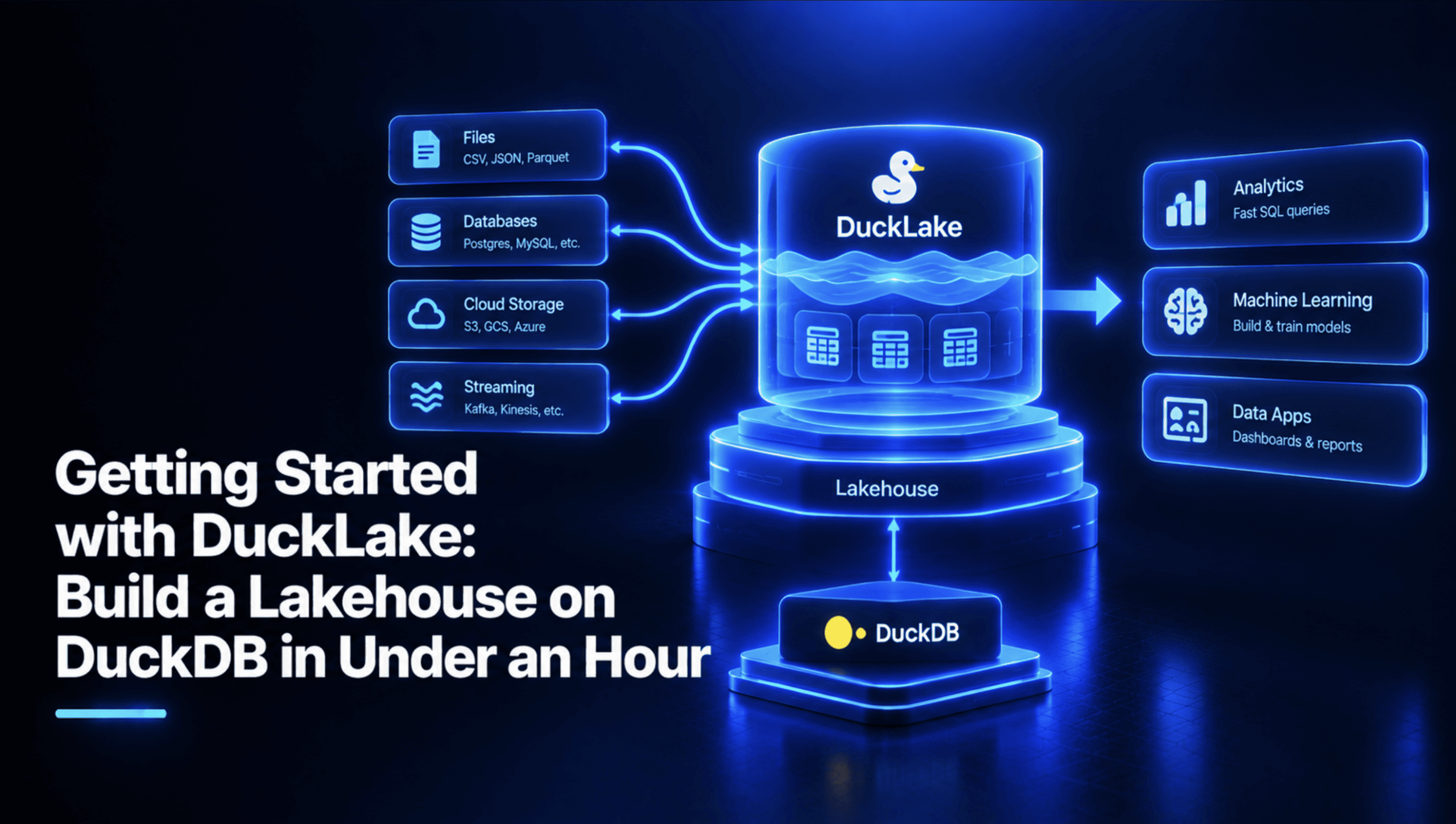
At its core, DuckLake is built on the philosophy of simplicity and modularity. Unlike other established formats like Apache Iceberg or Delta Lake, which rely on complex hierarchies of metadata files to track state, DuckLake uses a SQL database as its primary catalog.
How It Functions
A DuckLake deployment consists of two distinct components:
- The Catalog: A SQL database (DuckDB for local, SQLite for multi-client, or PostgreSQL for high-concurrency environments) that stores table lists, schemas, snapshots, and file statistics.
- The Data Layer: A collection of Parquet files residing in a file system or object store.
The power of this design lies in its query engine. Because the catalog is a standard SQL database, finding the correct data files for any given query is reduced to a single, optimized SQL operation. This design choice ensures that the system supports ACID (Atomicity, Consistency, Isolation, Durability) transactions and maintains strict primary key constraints, even though it remains fundamentally a file-based storage format.
Chronology: Building Your First Lakehouse
To understand the practical application of DuckLake, one must observe it in action. By utilizing the duckdb Python package, developers can orchestrate a full lakehouse lifecycle.
Step 1: Data Ingestion
A functional lakehouse requires a foundation of data. Using DuckDB, we can generate synthetic Parquet files representing two months of order history. By utilizing COPY ... TO commands, the system writes data in 5,000-row chunks, cycling through regions and statuses to ensure repeatable testing patterns.
Step 2: Catalog Initialization
The setup process involves attaching a local catalog file. By using the ATTACH command with the ducklake: prefix, we bridge the gap between our standard SQL interface and the underlying Parquet files. This step establishes the "Source of Truth" for the entire lakehouse.
Step 3: Evolution and Schema Management
In real-world scenarios, data is never static. DuckLake handles schema evolution—such as adding columns or renaming fields—with metadata-only operations. This means that when you execute an ALTER TABLE statement, the system does not need to rewrite the underlying Parquet files. Instead, it updates the catalog to reflect the new structure, ensuring high efficiency even as the data schema grows increasingly complex.
Supporting Data: Time Travel and Maintenance
One of the most requested features in modern data engineering is "Time Travel"—the ability to query data as it existed at a specific point in time.
The AT (VERSION => n) Clause
DuckLake implements time travel through a clean SQL syntax. Because every write operation creates a snapshot, the user can query the table state at any historical milestone. This is invaluable for auditing, debugging, or recovering from accidental deletions. For instance, if a developer accidentally deletes a critical region of data, they can simply query the snapshot from before the DELETE operation and re-insert the missing rows.
Housekeeping: Merging and Compaction
A common drawback of file-based storage is the "small file problem," where thousands of tiny Parquet files degrade read performance. DuckLake addresses this with the ducklake_merge_adjacent_files function. This utility performs housekeeping by compacting adjacent files into larger, more efficient blocks, all while maintaining the integrity of existing snapshots.
Official Responses and Strategic Positioning
The release of DuckLake 1.0 has been met with enthusiasm from the data engineering community. By prioritizing compatibility with the existing DuckDB ecosystem, the developers have ensured that the barrier to entry is exceptionally low.
The Path to 2.0
While DuckLake 1.0 focuses on stability and performance, the roadmap for v2.0 is already generating buzz. Projections include:
- Git-like Branching: Enabling parallel development workflows within the same lakehouse.
- Incremental Materialized Views: Automating the refresh of aggregated data without redundant full-table scans.
- Expanded Cloud Support: Enhanced optimization for remote object storage (such as AWS S3 or Google Cloud Storage), which is critical for scaling beyond the local laptop environment.
Furthermore, the recent alignment of DuckDB Labs with AWS has signaled a broader industry push toward integrating these lightweight, performant tools into large-scale cloud infrastructure.
Implications for the Modern Enterprise
The implications of DuckLake’s rise are profound. For many organizations, the traditional trade-off between "heavy" data warehousing and "chaotic" data lakes is no longer necessary.
Architectural Efficiency
By using a SQL catalog to track Parquet files, DuckLake eliminates the need for expensive "metadata management" overhead. Organizations can now maintain a highly performant lakehouse using nothing more than a PostgreSQL instance and standard cloud storage. This minimizes vendor lock-in and allows for a more portable data architecture.
Developer Experience
The "laptop-first" design of DuckLake is a boon for productivity. Developers can prototype complex ETL pipelines on their local machines, knowing that the code will translate seamlessly to a production environment. The ability to use standard SQL for administrative tasks—like checking snapshots or merging files—removes the need for proprietary management tools or specialized knowledge.
Limitations and Best Practices
Despite its strengths, developers should remain aware of certain constraints:
- Single-Client Limitations: The standard file-based catalog is designed for single-user access. For teams, migrating to a PostgreSQL-backed catalog is essential.
- Storage Management: Because DuckLake preserves historical data for time travel, it does not automatically delete old files. A disciplined lifecycle policy, involving periodic
CHECKPOINTstatements and snapshot expiration, is required to prevent storage bloat. - Data Inlining: The system’s default behavior of inlining tiny writes into the catalog is excellent for small datasets but should be monitored for large-scale, high-frequency ingestion.
Conclusion
DuckLake 1.0 has successfully democratized the data lakehouse, stripping away the complexity that once made these architectures the domain of specialized platform engineers. By treating metadata as a queryable table and data as a standard Parquet file, it bridges the gap between the flexibility of a file system and the rigor of a database.
Whether you are a startup architect building your first analytics pipeline or a data engineer looking for a lightweight, performant way to manage historical data, DuckLake provides the necessary toolkit. As we look toward the 2.0 release, it is clear that the future of data management is not just in the cloud—it is in the code. With a simple pip install and a few SQL queries, the power of a modern lakehouse is now at your fingertips, ready to scale as your data grows.
Quick Reference for Implementation:
- Version: DuckLake 1.0 (requires DuckDB v1.5.2+).
- Catalog: Use DuckDB for local, PostgreSQL for enterprise.
- Querying: Use
AT (VERSION => n)for audit and recovery. - Maintenance: Schedule
ducklake_merge_adjacent_filesto optimize performance.
By embracing this paradigm, you are not just building a storage solution; you are establishing a foundation for the next generation of data-driven applications.