Main Facts: A Strategic Cross-Border Partnership for Next-Generation Space Energy
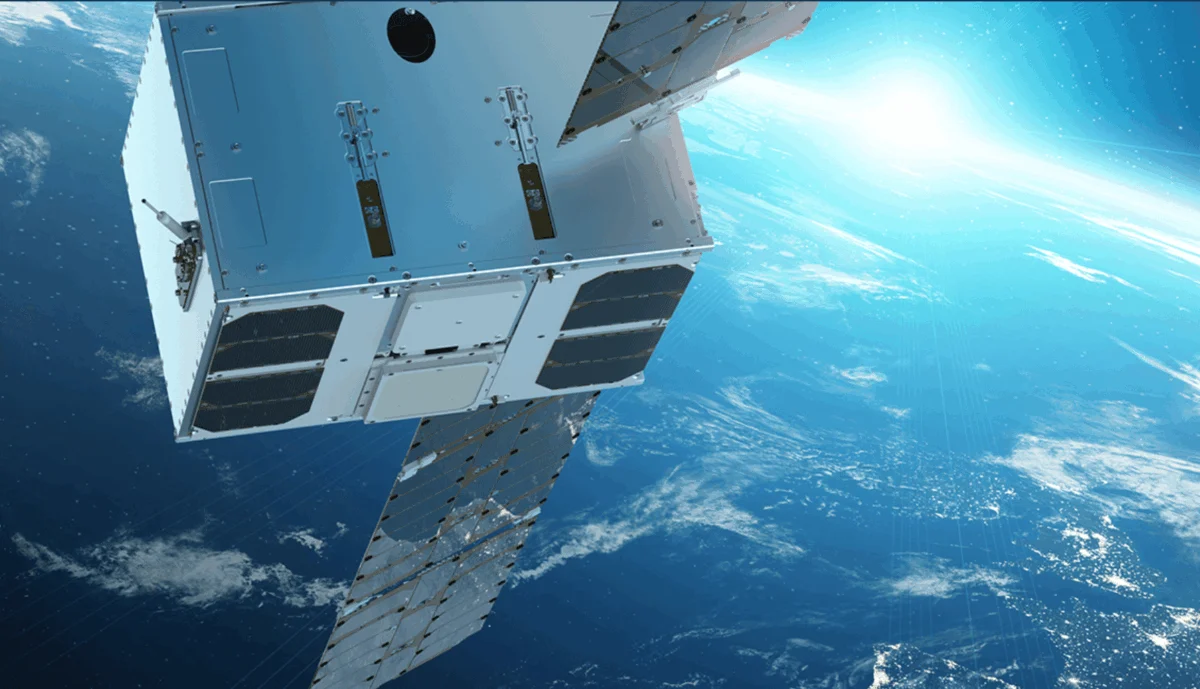
UIWANG-SI, SOUTH KOREA — In a major development for the commercial space power sector, South Korean space energy pioneer Flexell Space has finalized a comprehensive agreement with Singapore-based CubeSat integrator Satoro to execute in-orbit demonstration and validation (IOD/IOV) missions for next-generation space solar cells.
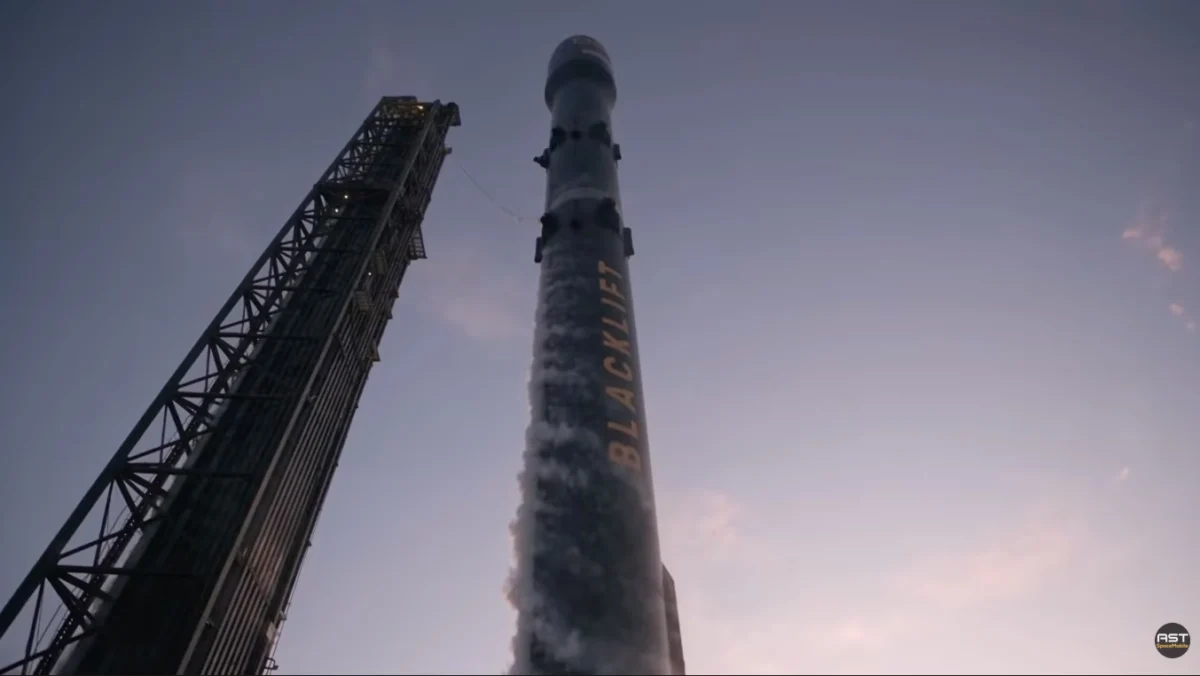
Under the terms of the strategic partnership, the companies will design, integrate, and launch two dedicated demonstration satellites. The missions are scheduled to launch in 2027 and 2028, with both payloads booked to fly as rideshare missions aboard SpaceX’s reliable Falcon 9 launch vehicles.
       +-----------------------------------------------------------+
       |                  MISSION CORE ROLES                       |
       +-----------------------------------------------------------+
       |  FLEXELL SPACE (South Korea)  |  SATORO (Singapore)       |
       |  - Next-gen solar cells       |  - Satellite bus build    |
       |  - CIGS & Perovskite tech     |  - Payload integration    |
       |  - Test modules & telemetry   |  - Falcon 9 coordination  |
       |    data evaluation            |  - Satellite-as-a-Service  |
       +-----------------------------------------------------------+
The primary objective of these dual missions is to systematically evaluate the performance, endurance, and operational characteristics of Flexell Space’s novel solar cell architectures within the harsh reality of Low Earth Orbit (LEO). Flexell Space—a specialized spin-out originating as an internal venture from South Korea’s defense and aerospace giant Hanwha Systems—is pioneering low-cost, ultra-lightweight, and large-area solar solutions utilizing Copper Indium Gallium Selenide (CIGS) and perovskite thin-film photovoltaic technologies.
To execute the flight campaign, Satoro will leverage its proprietary "Satellite-as-a-Service" operational model. Satoro will be responsible for manufacturing the custom CubeSat platforms, coordinating mission systems engineering, integrating Flexell Space’s experimental payloads and solar test modules, procuring launch services on the Falcon 9, and operating the spacecraft post-deployment.
Chronology: From Hanwha Systems Incubator to Falcon 9 Flight Manifests
The roadmap leading to this international partnership highlights an aggressive flight-heritage strategy aimed at moving next-generation solar energy technologies from ground testing to flight qualification.
+-----------------------------------------------------------------------------------+
|                            DEVELOPMENT TIMELINE                                   |
+-----------------------------------------------------------------------------------+
| Origin     : Spun out as an internal venture at Hanwha Systems (South Korea)      |
| 2021       : Satoro begins orbital operations, achieving 11 deployments over 8 flights|
| Nov 2025   : Flexell Space completes first orbital flight test on Korea's KSLV-II     |
| Oct 2026   : Flexell Space completes second orbital validation mission on KSLV-II     |
| 2027       : Planned launch of 1st Flexell-Satoro IOD/IOV mission on SpaceX Falcon 9  |
| 2028       : Planned launch of 2nd Flexell-Satoro IOD/IOV mission on SpaceX Falcon 9  |
+-----------------------------------------------------------------------------------+
1. Incubation and Early Validation
Flexell Space was formed to disrupt the traditional space photovoltaics market. Recognizing that legacy spacecraft solar panels rely on rigid, heavy, and expensive materials, the company developed flexible thin-film solutions based on CIGS and perovskite compounds.
2. Domestic Launch Heritage (2025–2026)
Before expanding into international launch manifests, Flexell Space focused on establishing domestic flight heritage using South Korea’s flagship launch vehicle, the KSLV-II (Nuri):
- November 2025: Flexell Space conducted its initial space demonstration mission aboard a KSLV-II launch, testing early-stage cell configurations in orbital conditions.
- October 2026: A second demonstration payload was lofted aboard the KSLV-II rocket to validate secondary mechanical deployments and environmental resistance.
3. Satoro’s Track Record (2021–Present)
Since establishing its Satellite-as-a-Service framework in 2021, Singapore’s Satoro has maintained a 100% mission deployment success rate across eight launch operations, safely integrating and delivering 11 customer satellites into orbit.
4. Global Expansion via SpaceX (2027–2028)
The newly announced agreement with Satoro transitions Flexell Space’s validation pathway to global commercial platforms. By booking two consecutive launch slots on SpaceX Falcon 9 rideshare flights in 2027 and 2028, Flexell Space ensures a repeating flight test loop to refine its solar cells based on continuous space environment telemetry.
Supporting Data: Technological Deep-Dive and Space Photovoltaics
The Power Bottleneck in Commercial Space
Historically, space-grade solar panels have relied almost exclusively on III-V compound triple-junction Gallium Arsenide (GaAs) solar cells. While GaAs cells deliver high power conversion efficiencies (typically 28% to 32%), they introduce severe logistical and financial bottlenecks:
+-----------------------------------------------------------------------------------+
|                        SOLAR TECHNOLOGY COMPARISON MATRIX                         |
+-----------------------------------------------------------------------------------+
| Metric                 | Traditional III-V GaAs     | Flexell CIGS / Perovskite   |
+------------------------+----------------------------+-----------------------------+
| Substrate Flexibility  | Rigid / Fragile            | Highly Flexible / Rollable  |
| Mass Density           | High (Heavy substrate)     | Ultralight                  |
| Manufacturing Cost     | Extremely High             | Low-Cost Thin-Film Scaling  |
| Deployment Geometry    | Rigid Deployable Panels    | Roll-out / Body-Conformal   |
| Production Lead Time   | Extended (Months/Years)    | Rapid High-Volume Coating   |
+------------------------+----------------------------+-----------------------------+
As mega-constellations grow and low-Earth orbit satellites handle higher power demands—driven by edge computing, synthetic aperture radar (SAR), and direct-to-cell communications— traditional solar architectures become cost-prohibitive.
CIGS and Perovskite Technical Advantages
Flexell Space’s technological strategy relies on combining thin-film CIGS (Copper Indium Gallium Selenide) and perovskite materials:
- Specific Power (Watts per Kilogram): By eliminating heavy germanium or arsenide wafers and depositing active materials onto flexible, ultralight substrates, these cells dramatically increase the specific power-to-mass ratio, lowering overall launch costs.
- Radiation Hardness & Annealing: Thin-film CIGS absorbers exhibit intrinsic resistance to high-energy particle radiation (protons and electrons) found in LEO and Medium Earth Orbit (MEO). Certain perovskite structures also show self-healing properties when exposed to thermal cycling.
- Large-Area Scalability: Roll-to-roll manufacturing processes allow long, flexible solar blankets to be produced at a fraction of the cost of growing III-V crystals.
                          IOD/IOV DATA VALIDATION CYCLE

  +------------------+      +-------------------+      +------------------+
  | Simulated Ground | ---> | Falcon 9 Launch   | ---> | LEO Environment  |
  | Chamber Testing  |      | Deployment (SaaS) |      | Real-World Data  |
  +------------------+      +-------------------+      +------------------+
                                                                |
  +------------------+      +-------------------+               |
  | Commercial Supply| <--- | Design Refinement | <-------------+
  | Customer Quals   |      | & TRL Advancement |
  +------------------+      +-------------------+
In-Orbit Demonstration (IOD) Payload Goals
The primary telemetry objectives for the 2027 and 2028 Satoro-built CubeSat missions include:
- Measuring operational degradation curves caused by Atomic Oxygen (AO), ultraviolet (UV) exposure, and thermal cycling (+100°C to -100°C).
- Comparing simulated laboratory degradation against continuous, real-time telemetry gathered over extended orbital operational cycles.
- Validating structural integregity, interconnect stability, and mechanical behavior under microgravity and launch vibe profiles.
Official Responses: Executive Perspectives
Leadership teams from both organizations emphasized that high-frequency orbital testing is essential for gaining commercial trust among prime satellite manufacturers.

Taehun Ahn, Chief Executive Officer of Flexell Space, emphasized the critical role that spaceflight heritage plays in scaling new power technologies:
"Commercializing space solar cells requires both rigorous ground-based performance validation and continuous data collected directly in orbit. With two distinct demonstration opportunities secured aboard SpaceX Falcon 9 launches for 2027 and 2028, we will systematically verify the performance, durability, and operational reliability of our next-generation solar cells under actual space conditions.
"This empirical evidence is precisely what international prime contractors and satellite operators require before committing to new power systems. Our collaboration with Satoro establishes a streamlined, reliable pathway from ground development to in-orbit flight heritage, significantly accelerating our timeline toward full commercial production and global supply."
Mark Lu, Chief Executive Officer of Satoro, highlighted the strength of combining turnkey satellite integration with advanced payload validation:
"We are pleased to partner with Flexell Space to support the flight validation of their advanced space solar cell technologies. By leveraging Satoro’s proven CubeSat platforms and end-to-end mission integration capabilities, we will work side-by-side with Flexell Space to capture the critical in-orbit dataset needed to validate their technologies.
"Satoro’s platform was built specifically to lower the barriers to orbital validation. We expect these dual demonstration missions to showcase the immense commercial potential of new space power architectures, while building a strong foundation for long-term technological and commercial collaboration between our two companies."
Implications: Changing Commercial Space Energy and Regional Alliances
1. Disrupting the Space Solar Supply Chain
The agreement between Flexell Space and Satoro comes at a critical time for space hardware supply chains. The rapid growth of satellite mega-constellations—such as SpaceX’s Starlink, Amazon’s Project Kuiper, and various defense-led LEO constellations—has created unprecedented demand for solar arrays.
If Flexell Space successfully validates its CIGS and perovskite cells in orbit, it could provide spacecraft manufacturers with a lower-cost, faster-to-produce alternative to traditional supply chains. This shift could significantly reduce the baseline manufacturing cost of commercial satellite fleets.
       +-----------------------------------------------------------+
       |               COMMERCIAL SPACE ENERGY EVOLUTION           |
       +-----------------------------------------------------------+
       |  OLD SPACE POWER MODEL     --->   NEW SPACE POWER MODEL   |
       |  - Rigid III-V GaAs arrays        - Flexible CIGS/Perovskite|
       |  - High cost, long lead times     - Low-cost roll-to-roll |
       |  - Heavy mass penalty             - High specific power   |
       |  - Custom niche manufacturing     - Standardized scaling  |
       +-----------------------------------------------------------+
2. Streamlining TRL Advancement via Satellite-as-a-Service
For component developers like Flexell Space, building dedicated satellite platforms, securing orbital licenses, procuring launch vehicles, and operating ground stations can divert focus from core R&D.
Satoro’s Satellite-as-a-Service model offers a turnkey solution that decouples payload development from space operations:
- Component developers focus purely on refining their technology (e.g., test modules and sensors).
- Operational risks—such as platform integration, regulatory approvals, launch procurement, and ground telemetry collection—are handled entirely by the service provider.
This model speeds up the process of advancing technology readiness levels (TRL from TRL-6 to TRL-8/9), allowing new space components to reach commercial readiness faster.
3. Strengthening East Asian Space Alliances
The partnership also underscores the growing aerospace collaboration between South Korea and Singapore. South Korea brings advanced industrial manufacturing, materials science, and defense spin-outs (like Hanwha Systems), while Singapore offers agile, commercial satellite integration and international business platforms.
By combining forces and leveraging SpaceX’s rideshare infrastructure, the Flexell Space-Satoro alliance sets a strong precedent for commercial space partnerships across the Asia-Pacific region, establishing a scalable model for validating next-generation orbital hardware.