By Financial News Desk
October 21, 2026
In a significant boost for the future of AI-driven telecommunications, Atombeam, a pioneering startup specializing in AI-based networking technology, has successfully closed an $18.3 million funding round. The announcement, made on Tuesday, brings the company’s total cumulative funding to $55 million, signaling strong investor confidence in the startup’s ability to alleviate the growing strain on global data networks.
As modern infrastructure grapples with the massive influx of data generated by Large Language Models (LLMs), connected machinery, and the expansion of the Internet of Things (IoT), Atombeam’s proprietary solutions—Neurpac and its Persistent Cognitive Machine (PCM) technology—have emerged as critical tools for optimizing bandwidth and reducing operational latency.
Main Facts: Solving the "Bandwidth Crunch"
The core of Atombeam’s value proposition lies in its ability to address a fundamental bottleneck in modern computing: the sheer volume of data moving across wired, cellular, and satellite networks. As AI workloads increase, the current network infrastructure is frequently pushed to its physical limits, resulting in congestion, increased power consumption, and degraded performance.
Atombeam’s flagship software, Neurpac, functions as a high-efficiency data compacting engine. By intelligently compressing data packets, Neurpac significantly reduces the amount of traffic required to transmit information, effectively multiplying available bandwidth by a factor of four.
Furthermore, the company is diversifying its portfolio with Persistent Cognitive Machine (PCM) technology. Unlike traditional, resource-heavy LLMs that require massive data centers and enormous power draws to function, PCM is designed as an AI architecture optimized for efficiency. By requiring exponentially fewer resources, it offers a sustainable pathway for AI integration in remote, resource-constrained environments such as space and tactical military theaters.
Chronology: A Path of Strategic Growth
Atombeam’s journey toward its current valuation has been marked by a series of strategic milestones, moving from experimental tech to real-world integration with government and commercial partners.
- Early Development: Founded with a vision to fundamentally change how data is encoded, the company focused on developing proprietary AI algorithms capable of analyzing traffic patterns in real-time.
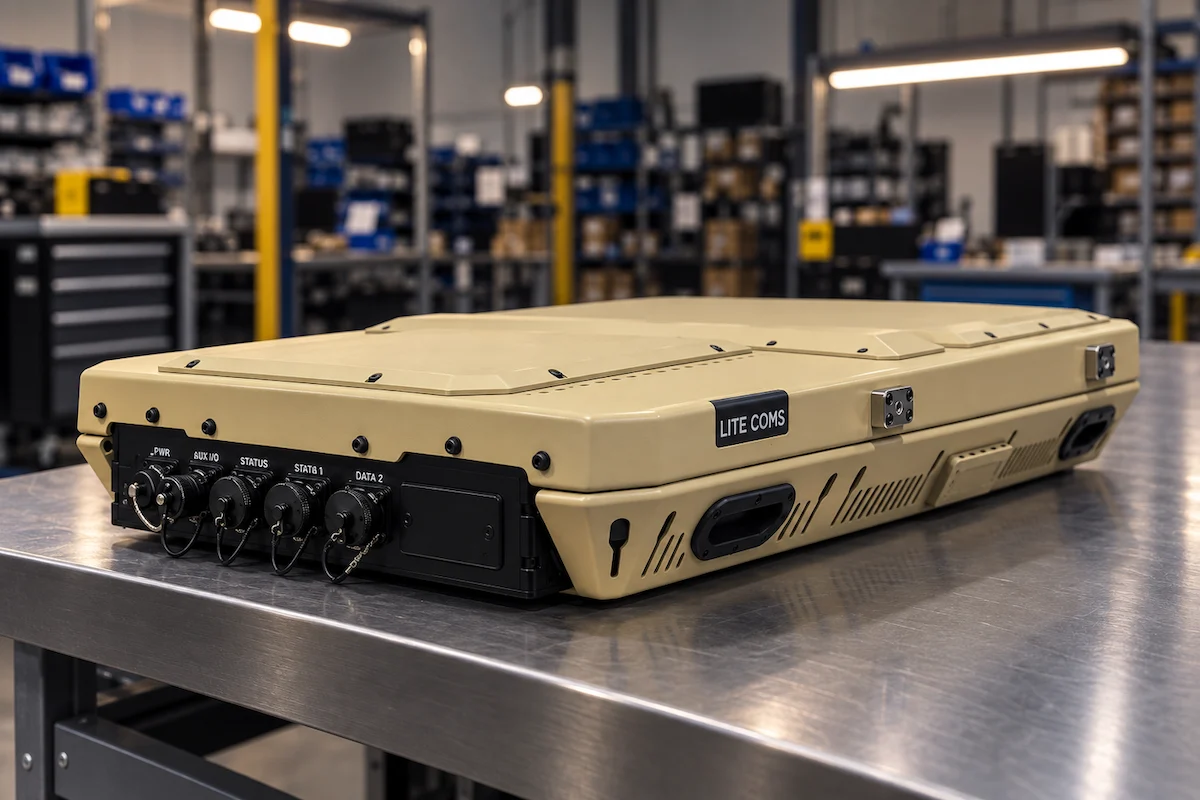
- February 2026: A pivotal moment occurred when the Space Development Agency (SDA) awarded Atombeam an expanded contract. The focus was to apply Neurpac technology to the military’s Link 16 network—a tactical data link used by the U.S. military and its allies for secure communication.
- Mid-2026: Through rigorous field demonstrations, Atombeam successfully validated its technology, proving that it could drastically reduce data footprints in high-stakes environments.
- October 2026: The company secures $18.3 million in new funding, which CEO Charles Yeomans identifies as an "inflection point." This capital is earmarked for the commercial scaling of Neurpac and the transition of PCM technology into independent benchmarking and live customer pilots.
Supporting Data: Validating the Efficiency Gains
The efficacy of Atombeam’s software is not merely theoretical; it is backed by concrete metrics from both private sector testing and military-grade field demonstrations.
Performance Under Pressure
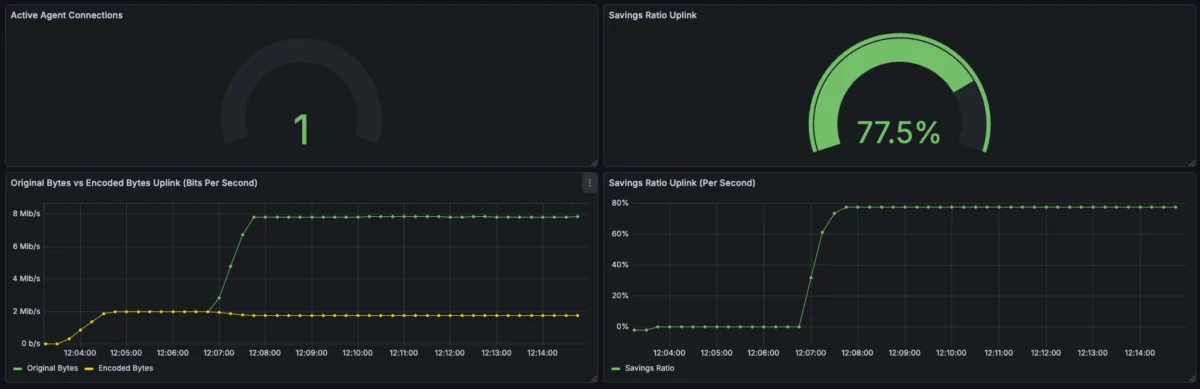
In a recent internal dashboard review, Atombeam showcased a use case demonstrating a 77.5% uplink savings ratio. This means that for every 100 megabytes of data intended for transmission, the system required less than 23 megabytes of actual bandwidth, effectively quadrupling the capacity of the link.
Military-Grade Benchmarking
The most striking evidence of the technology’s power came from its work with the SDA regarding the Link 16 standard. Link 16 is notoriously bandwidth-limited due to its reliance on older frequency-hopping protocols. Atombeam’s demonstrations showed:
- 86% to 89% reduction in data streams over military satellite assets.
- 7x to 9x increase in effective bandwidth capacity.
These results are transformative for defense applications, where even a slight increase in bandwidth can mean the difference between a mission-critical data packet getting through or being dropped due to network saturation.
Official Responses: Leadership Vision
Charles Yeomans, the co-founder and CEO of Atombeam, views this latest round of funding as the bridge between technical capability and market dominance.
"With Neurpac, we are solving the challenges that Large Language Models exacerbate," Yeomans stated in the wake of the announcement. "Wired, cellular, and satellite networks, as well as data centers, are being pushed to the brink by heavy AI workloads and the barrage of data from connected machines. Our mission is to ensure that the infrastructure of the future is not stifled by the efficiency of its own data consumption."
Yeomans emphasized that the new capital will be used to move beyond the validation phase. "We are moving from a period of proving our concepts to a period of aggressive adoption. Our focus now is on getting PCM through independent, rigorous benchmarking, and moving our customer pilots into full-scale production environments."
Implications: The Future of Global Connectivity
The implications of Atombeam’s success extend far beyond the satellite industry. If Atombeam can successfully scale its technology, the ripple effects will be felt across several critical domains:
1. The Space Economy
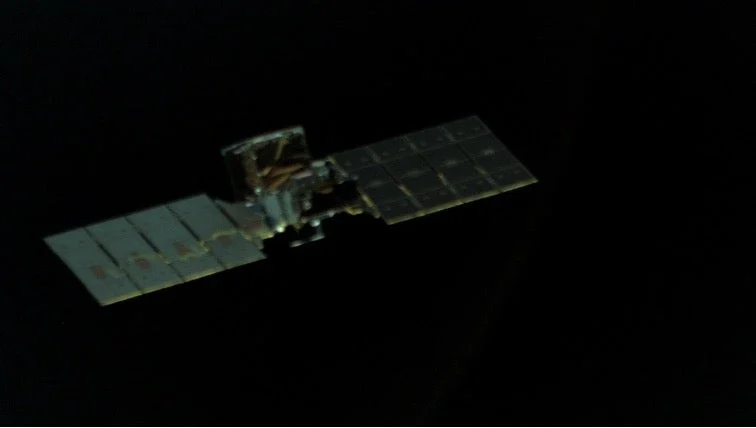
As the number of satellites in Low Earth Orbit (LEO) continues to explode, the spectrum and bandwidth available for communication are becoming increasingly crowded. Atombeam’s software acts as a "force multiplier" for satellite operators, allowing them to provide more services to more users without the prohibitive cost of launching additional high-capacity satellites.
2. The Defense Sector
In modern warfare, data superiority is a requirement for victory. By optimizing Link 16 and other tactical networks, Atombeam is helping the military manage the "fog of war" with better, faster, and more reliable data flows. This allows for better command and control in contested environments where electronic warfare may be actively trying to disrupt communications.
3. Sustainability and AI
There is growing concern regarding the environmental impact of AI. The massive energy consumption of large-scale data centers is becoming a point of contention for regulators and environmental groups. By creating an architecture that requires "exponentially less power," Atombeam is positioning itself at the forefront of the "Green AI" movement, providing a path to smarter technology that doesn’t sacrifice ecological responsibility.
4. Commercial Infrastructure
Telecommunications providers and data center operators are struggling to keep up with the data demand generated by billions of IoT devices. Atombeam’s technology offers a software-defined path to capacity expansion, which is often significantly cheaper and faster to implement than upgrading physical fiber-optic hardware or cellular towers.
Conclusion: A Critical Inflection Point
Atombeam has moved past the phase of being a promising laboratory project and is now firmly positioned as a key infrastructure provider for the next decade of digital connectivity. With $55 million in total funding and clear, validated performance gains in both commercial and military sectors, the company is set to play a pivotal role in shaping how the world handles its insatiable appetite for data.
As Atombeam enters this next chapter, the industry will be watching closely to see if the company can maintain its performance metrics as it moves into mass-market adoption. For now, the signal is clear: the era of "dumb" pipes is ending, and the era of AI-optimized, hyper-efficient networking has arrived.