By Tech Insights Bureau
November 1, 2026
As the United States stands on the precipice of a significant political shift following the 2026 midterm elections, the artificial intelligence sector is bracing for a new era of scrutiny. With projections suggesting a potential Democratic resurgence in both the House and the Senate, OpenAI—the industry’s most prominent flagbearer—is moving to proactively shape the national discourse. At the center of this strategy is a comprehensive public relations campaign aimed at reframing the most controversial aspect of the AI infrastructure boom: the massive, power-hungry data centers currently facing fierce local resistance.
The Main Facts: A Pivot Toward Political Influence
OpenAI is preparing a high-stakes "PR blitz" set to launch immediately following the conclusion of the midterm elections. The strategy, spearheaded by Chris Lehane, the company’s Chief Global Affairs Officer, seeks to pivot the narrative from one of corporate encroachment to one of national necessity.
The central pillar of this rebranding effort is linguistic: OpenAI intends to transition the industry away from the term "data centers"—which have become lightning rods for environmental and community protests—in favor of the more aspirational "AI compute campuses." This shift is not merely cosmetic; it represents an attempt to redefine these facilities as essential pillars of "sovereign compute," vital to national security and economic competitiveness.
Lehane’s messaging underscores a belief that the 2026 midterms serve as a "movie trailer" for the 2028 presidential cycle. By positioning AI as the defining issue of the next major election, OpenAI aims to ensure that the regulatory environment remains favorable to rapid expansion while simultaneously addressing the growing grassroots pushback.
A Chronology of the Infrastructure Backlash
The tension between tech giants and local communities has been building for months. To understand the necessity of OpenAI’s current pivot, one must look at the timeline of the "Compute Crisis":
- Early 2026: The rapid acceleration of large language model (LLM) training leads to a massive uptick in requests for data center zoning permits across North America.
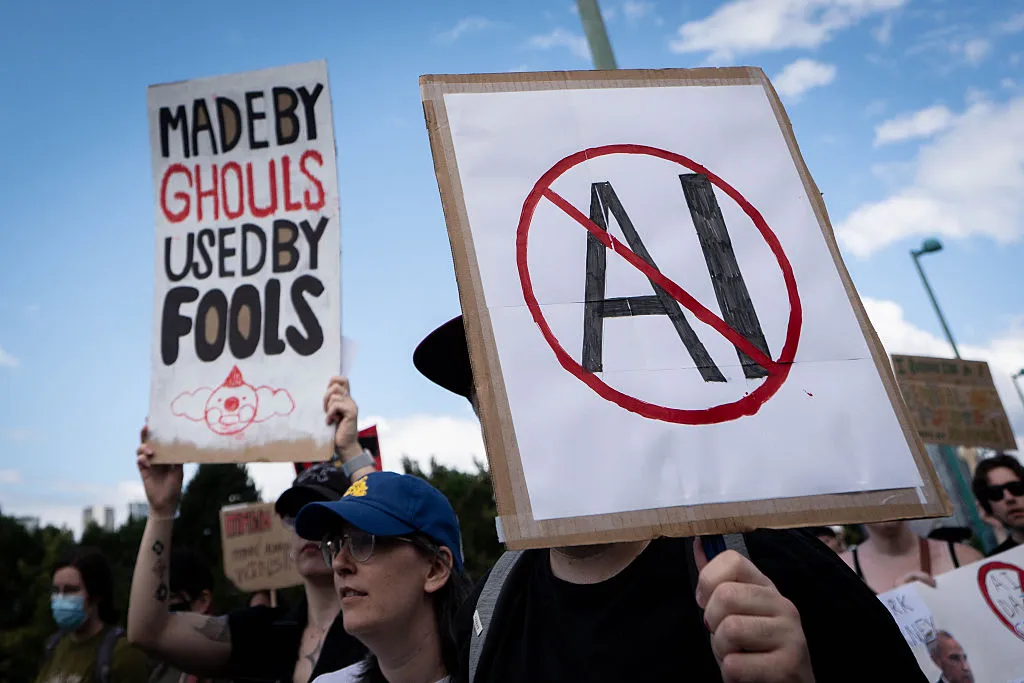
- June 2026: Protests erupt in Vancouver, British Columbia, and spread into Manitoba. Local communities begin to organize against the massive energy consumption and environmental impact of proposed server farms. The image of the "anti-AI" sign becomes a symbol of a broader, international resistance.
- September 2026: Leading AI firms, including Anthropic, begin publicly outlining plans for "AI speed limits" and responsible development, acknowledging that the public is losing patience with the "move fast and break things" ethos.
- October 2026: Facing mounting public pressure, tech giants Microsoft and Amazon formally announce they will cease the use of non-disclosure agreements (NDAs) in their negotiations with local governments. This marks a massive concession, acknowledging that the lack of transparency in site selection has fueled public distrust.
- November 2026: As the midterms arrive, the industry recognizes that the "data center" brand has become toxic, prompting the strategic "compute campus" rebranding initiative.
Supporting Data: Why the Resistance is Real
The public’s hostility toward data centers is rooted in tangible, localized concerns. Recent reporting indicates that the conflict is not merely ideological but economic and environmental.
- Energy Demands: The power requirements for modern AI training clusters are equivalent to the needs of mid-sized cities. Communities are increasingly concerned about grid stability and rising utility costs for residents.
- Resource Competition: Water consumption for cooling high-density server racks has sparked debates over regional resource management, particularly in drought-prone areas of the U.S. West.
- The Transparency Deficit: Historically, corporations have negotiated with local governments behind closed doors, often utilizing NDAs to bypass public discourse. The backlash against this lack of democratic oversight has been the primary driver of the current legislative push for greater accountability.
- Economic Disillusionment: Residents are increasingly questioning whether the jobs promised by data center developers—typically small, highly specialized maintenance crews—justify the massive land use and tax incentives granted to these companies.
Official Responses: The "Good and Healthy" Debate
Chris Lehane, in his recent comments to media outlets, attempted to soften the industry’s stance by characterizing the friction as a necessary growing pain. "Communities should hold companies responsible and accountable so they really and truly get a transformative benefit from these projects," Lehane stated.

By labeling the debate "good and healthy," Lehane is attempting to co-opt the language of local advocacy. The strategy is to frame OpenAI as a partner in regional development rather than an extractive force. The proposal to implement "AI speed limits" is another layer of this defense—a proactive move to suggest that the industry is capable of self-regulation, thereby staving off more draconian government-mandated constraints.
Furthermore, the company is pushing for the U.S. to take a leading role in setting global AI standards. The logic is clear: if the U.S. government adopts industry-friendly standards as the global benchmark, OpenAI can operate with greater certainty, regardless of which party holds the White House in 2028.
Implications: The 2028 Political Landscape
The implications of this rebranding effort are far-reaching. By attempting to rebrand the physical infrastructure of the digital age, OpenAI is betting that public opinion can be managed through sophisticated narrative control. However, the path forward is fraught with obstacles.
1. The Legislative Trap
If the Democrats secure the House and potentially the Senate, the regulatory landscape will likely become more aggressive toward Big Tech. OpenAI’s attempt to pivot the conversation toward "compute campuses" may be met with skepticism by lawmakers who are already under pressure from constituents to prioritize environmental sustainability and local zoning rights.
2. The Credibility Gap
The shift away from NDAs by Amazon and Microsoft suggests that the industry is losing its ability to dictate terms. OpenAI’s "PR blitz" will need to be backed by more than just terminology changes; it will require tangible evidence of "transformative benefits." If the company cannot provide localized economic growth or sustainable energy solutions, the "compute campus" label may simply become a new target for activists.
3. AI as a Presidential Wedge Issue
Lehane’s assertion that AI will be the issue in 2028 is a bold claim that likely reflects internal polling and strategic foresight. If the technology becomes a central plank of the presidential platform, the industry’s ability to influence the narrative will determine its future growth trajectory. The risk is that by making AI a political issue, the industry loses the ability to remain neutral, potentially making it a target for populist rhetoric on both sides of the aisle.
Conclusion: A New Era of Corporate Diplomacy
As we move into the final months of 2026, the tech industry is clearly shifting its strategy from pure innovation to intense corporate diplomacy. The rebranding of data centers as "AI compute campuses" is a microcosm of this transition. It is an acknowledgment that the era of unfettered, invisible growth is over.
The success of this strategy depends entirely on whether the public perceives it as a genuine attempt at integration or a cynical exercise in marketing. As the political winds shift in Washington, OpenAI’s ability to navigate these waters will set the standard for how the rest of the AI sector manages its relationship with the communities it inhabits. The "movie trailer" has begun; the 2028 feature film, it seems, will be defined by whether the industry can prove that it serves the public good—or if the public will choose to pull the plug.