October 31, 2026 — In the high-stakes theater of Silicon Valley, where tech giants are locked in a relentless sprint toward artificial intelligence supremacy, Apple has often appeared to be the quiet observer. While competitors have aggressively pivoted their entire business models around large language models (LLMs) and generative search, Apple has taken a deliberate, measured approach. Now, two months into his tenure as CEO, John Ternus has finally pulled back the curtain on the company’s philosophy, pushing back against the narrative that Apple is "behind" in the AI revolution.
In a wide-ranging, candid interview with Wired’s Steven Levy, Ternus articulated a vision for the company that rejects the industry’s "AI-first" fervor in favor of a "human-centric" utility. As the tech world digests the recent product debuts from Apple’s latest Los Angeles event, the industry is forced to reckon with a fundamental question: Is Apple’s caution a strategic masterstroke, or a dangerous miscalculation in an era of rapid disruption?
The Core Philosophy: AI as an Invisible Utility
For years, the critique of Apple’s AI roadmap has been consistent: the company lacks the rapid-fire deployment seen at Google, OpenAI, or Microsoft. When Apple finally launched its overhauled, AI-powered Siri this past summer—a project long in development—the reception was tepid, with some critics describing it as "anticlimactic."
Ternus, however, remains unmoved by the market’s impatience. Addressing the perception that Apple is trailing its rivals, the new CEO noted, "Everyone has an opinion, but I really like where we’re at."
The core of Ternus’s argument rests on a distinction between "shipping AI" and "shipping value." He emphasizes that Apple is not interested in technology for the sake of marketing buzzwords. "We don’t want to ship AI for AI’s sake," Ternus told Levy. "When we’re doing it right, people won’t have to think about whether it was AI that made this happen or more traditional software. What matters is, did we build something that they really love?"
This perspective marks a departure from the industry trend of pushing experimental generative features to consumers as quickly as possible. Apple’s strategy appears to be one of "invisible integration"—where AI operates as a foundational layer that enhances functionality without the user ever feeling the need to label it as "artificial intelligence."
A Chronology of Apple’s AI Evolution
To understand the current tension, one must look at the timeline of Apple’s recent history, a period defined by quiet research and eventual, deliberate release.
- 2023–2024 (The Foundation Years): While the generative AI boom ignited with the release of ChatGPT, Apple remained notoriously silent. Behind the scenes, the company was heavily investing in on-device processing capabilities, ensuring that future AI features would prioritize user privacy—a cornerstone of the Apple brand.
- August 2026 (The Siri Overhaul): After years of criticism regarding Siri’s stagnant performance, Apple finally pushed a massive update. The release was designed to handle complex, multi-step requests and contextual understanding. While functional, the rollout was met with mixed reviews from users who expected a more transformative experience.
- September 1, 2026 (The Leadership Transition): John Ternus officially assumed the role of CEO. In his first memo to employees, he hinted at a "huge launch" that would define the next era of the company, signaling that the "wait-and-see" period was nearing its end.
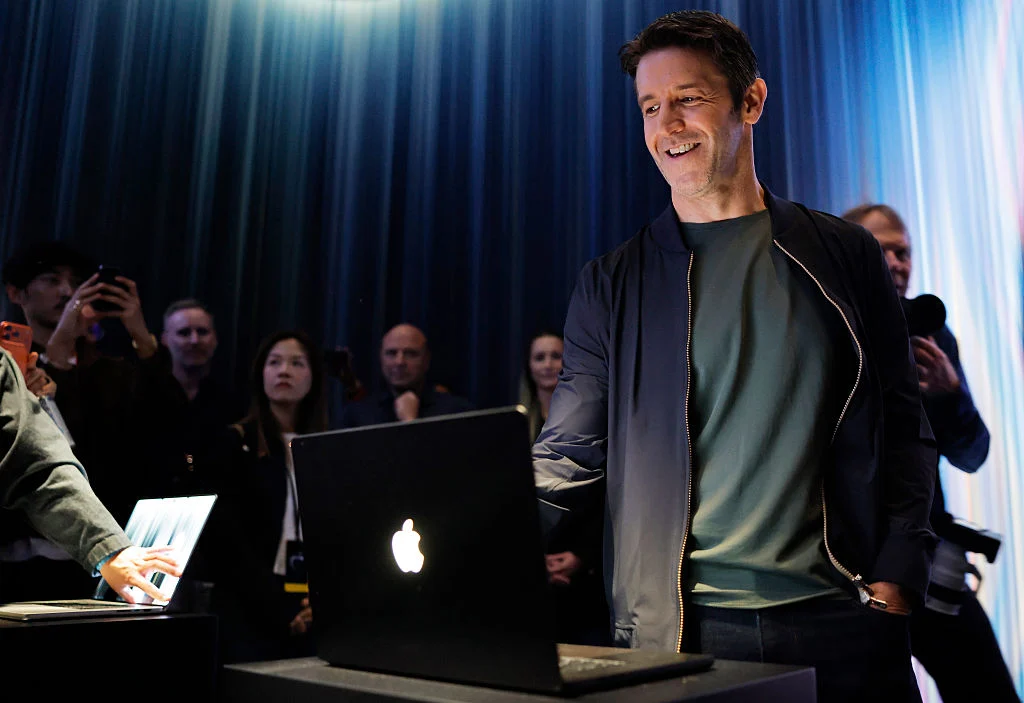
- October 31, 2026 (The Los Angeles Debuts): Apple showcased a new suite of hardware and software integrations. This event served as the testing ground for Ternus’s stated philosophy: showing that AI can be the "engine" without being the "product."
Supporting Data: The Privacy-Performance Paradox
Critics often point to the impressive speed of competitor AI agents as a benchmark for success. However, Apple’s data suggests that its hardware-software synergy allows for a different kind of performance.
By prioritizing on-device processing, Apple avoids the latency and privacy concerns inherent in cloud-based models. Industry analysts note that while cloud-based AI can perform "miracles" of synthesis, it often requires massive energy expenditure and exposes sensitive user data to third-party servers. Apple’s internal testing suggests that users prefer a "fast, private, and predictable" experience over the "probabilistic, potentially hallucinating" results of some web-first AI tools.

Furthermore, market research from Q3 2026 indicates that while Apple’s "AI-hype" metrics are lower than those of Microsoft or Google, its "user retention" and "ecosystem stickiness" remain at all-time highs. This suggests that the average consumer is more interested in a reliable tool than a experimental AI chatbot.
Official Responses and Strategic Vision
Ternus’s interview serves as a manifesto for the "Post-AI-Hype" era. When pressed by Levy on the potential for AI agents to render traditional app ecosystems obsolete—a scenario often touted by venture capitalists as the "death of the app"—Ternus dismissed the fatalistic view.
"That could make life really easy, I suppose, but the creation of products is a deeply human and personal thing, something that we love to do," Ternus stated. This is a critical pivot. By framing the creation of software as an act of human intent rather than a generative output, Apple is positioning itself as the "humanist" alternative to the automated, synthetic future proposed by its competitors.
The company’s leadership believes that the "agentic" future—where a single AI manages all tasks—risks commoditizing the very experiences (the camera, the notes, the photos) that define the iPhone experience. Apple intends to retain control over the user interface, ensuring that the "human touch" remains the primary touchpoint between the technology and the user.
The Implications: A Fork in the Road
The implications of Ternus’s stance are profound. If Apple is right, the current obsession with "generative everything" will eventually crash against a wall of user fatigue. Consumers may eventually tire of AI interfaces that hallucinate or provide overly verbose answers, preferring instead the polished, refined, and predictable software that has been Apple’s hallmark for decades.
However, if Apple is wrong, the company risks being sidelined as the world shifts toward an agent-based computing paradigm. If users begin to prefer AI-first interfaces that bypass the traditional app store model entirely, Apple’s lucrative ecosystem—built on the App Store and premium hardware integration—could face an existential threat.
The Competitive Landscape
- The Microsoft/Google Path: These companies are betting on the "AI-as-a-Platform" model. They are racing to own the "brain" that runs the user’s digital life.
- The Apple Path: A "Human-Centric" model. Apple is betting on the "experience" of the device, using AI as a tool to polish the edges of the software, not to replace the software itself.
The Verdict on the Ternus Era
The early days of the John Ternus era are characterized by a calm confidence. He is not trying to be the most aggressive player in the room; he is trying to be the most reliable. As he navigates this transition, the tech world will be watching closely to see if "not shipping AI for AI’s sake" results in a sustainable advantage or a slow fade into irrelevance.
For now, the strategy remains clear: Apple is not interested in the race to the bottom of the AI hype cycle. They are, as they have always been, interested in the product—and they believe that if the product is excellent, the AI will take care of itself. As Ternus steps into his new role, he is betting the company’s future on the idea that humans will always prefer a well-designed tool to an automated agent. Whether the market agrees remains the defining question of the late 2020s.