The following analysis reflects the perspective of industry experts regarding the systemic challenges of corporate decarbonization. These views do not necessarily represent the official stance of Trellis or its editorial staff.
Over the past decade, the global corporate sustainability movement has been defined by a singular, rigid focus: accountability. We have constructed an intricate ecosystem of disclosure frameworks, carbon accounting standards, and target-setting methodologies designed to scrutinize climate performance. However, as the world stands at the precipice of an artificial intelligence-driven industrial revolution, it has become increasingly clear that we have spent ten years building a system that measures climate delivery far more effectively than it enables it.
The rise of AI is not merely a technological milestone; it is a stress test that has exposed a fundamental contradiction in our current approach to net-zero. We continue to hold individual firms solely responsible for their environmental footprints, even as the most significant barriers to progress—such as grid capacity, clean energy availability, and infrastructure deployment—reside entirely outside their organizational walls.
The Accountability Paradox: Measuring Progress, Missing Execution
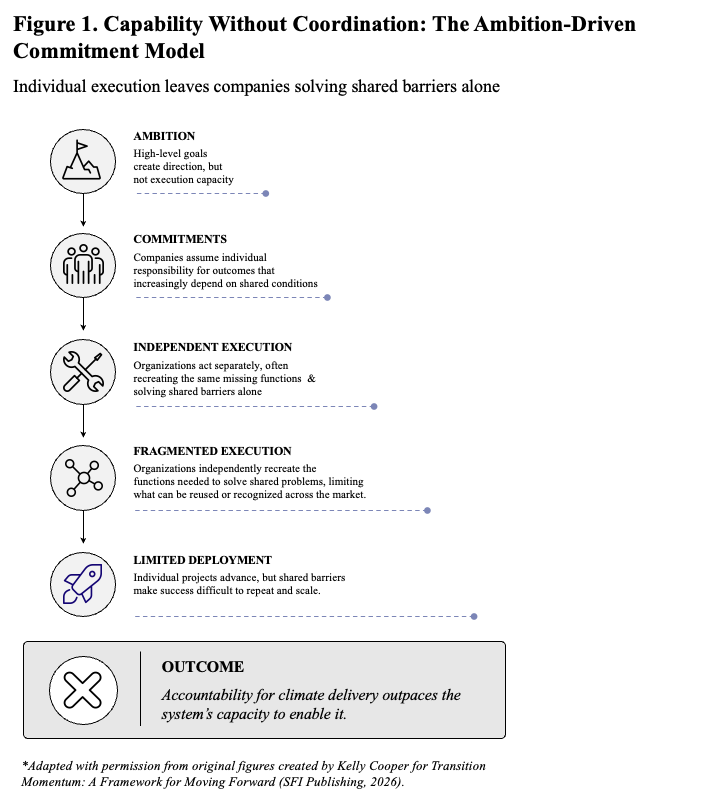
The current sustainability model relies on a "siloed accountability" structure. Corporations are asked to set science-based targets, publish detailed transition plans, and provide transparent accounting of their Scope 1, 2, and 3 emissions. This framework assumes that if we pressure individual actors to improve, systemic change will follow.
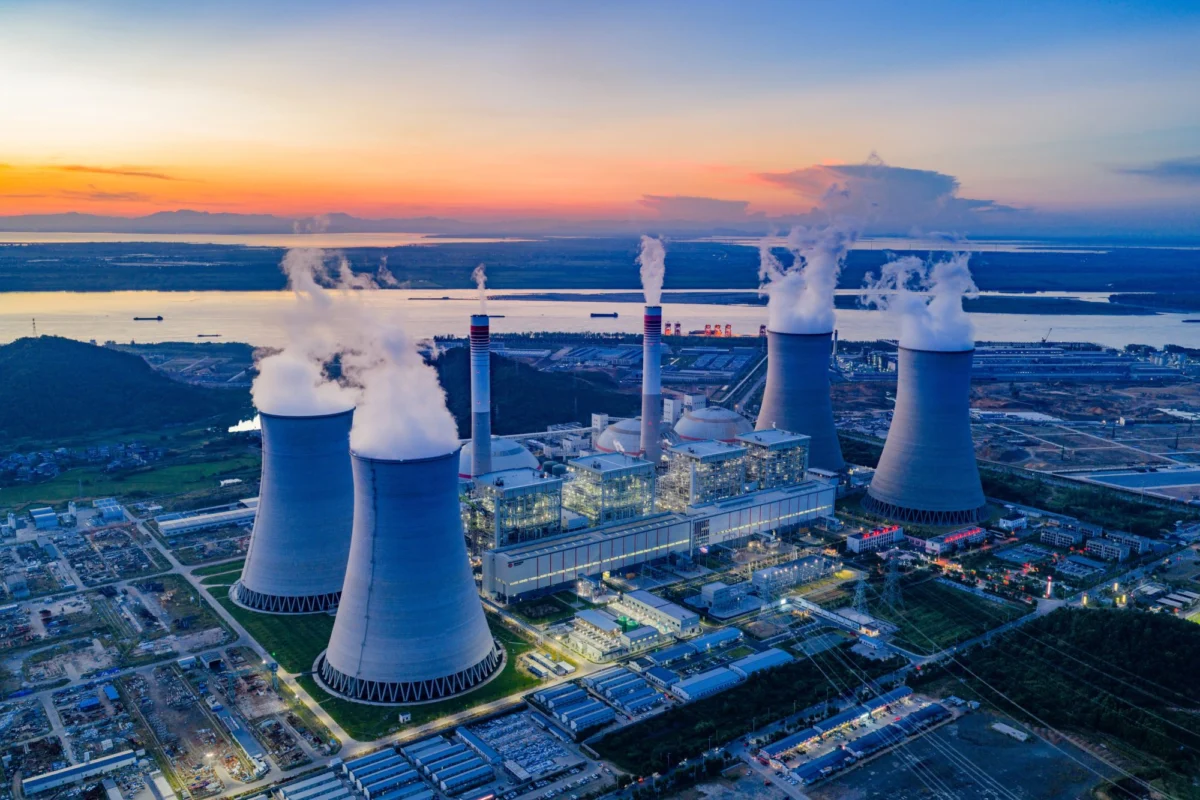
Yet, the current reality of the AI sector proves this assumption flawed. Tech giants like Amazon, Google, and Microsoft have recently reported rising electricity-related emissions, directly at odds with their aggressive investments in clean energy and long-term net-zero commitments. As these hyperscalers scramble to power massive data centers, they are finding that the grid cannot keep pace with the exponential growth of compute demand.
The market is now grappling with an uncomfortable question: Can corporate climate commitments survive the AI boom? When every company faces the same systemic bottleneck—a lack of clean, reliable, and scalable power—leaving each to solve the problem independently is not just inefficient; it is a recipe for collective failure.

Chronology of a Crisis: From Ambition to Gridlock
To understand how we reached this point, one must look at the evolution of the corporate climate mandate over the last decade:
- 2015–2018: The Era of Ambition. Following the Paris Agreement, the focus was primarily on high-level commitments. Companies rushed to join initiatives like RE100, setting long-term goals for 100% renewable energy use.
- 2019–2022: The Era of Measurement. As public and investor scrutiny intensified, the sustainability industry matured its reporting frameworks. The Task Force on Climate-related Financial Disclosures (TCFD) and the Greenhouse Gas Protocol became the gold standards. Measurement became the primary proxy for progress.
- 2023–Present: The Era of Execution Constraints. The explosion of generative AI has created an unprecedented surge in energy demand. This has collided with stagnant grid infrastructure, revealing that the "accountability" model lacks the mechanisms to facilitate large-scale, cross-sector infrastructure deployment.
We are currently in a transition phase where the limitations of individual corporate action are becoming painfully visible. The "rational" response of an individual firm—securing power through proprietary contracts or private generation—is increasingly undermining the collective ability to decarbonize the grid at speed.
Supporting Data: The Cost of Fragmentation
The evidence of this systemic friction is found in the recurring patterns across multiple industries. Research involving more than 200 climate practitioners reveals a persistent pattern:
- Duplicated Effort: Companies are spending billions on redundant due diligence, site assessments, and legal frameworks for clean energy projects.
- Disconnected Capital: Massive amounts of private capital remain sidelined because individual firms cannot aggregate their demand signals effectively enough to de-risk large-scale infrastructure projects.
- The "Workaround" Economy: In the absence of durable infrastructure, firms are increasingly relying on informal, temporary, and often fossil-fuel-dependent workarounds to meet immediate operational requirements.
These inefficiencies do not just delay emissions reductions; they destroy economic value. By forcing companies to compete for the conditions of success rather than collaborating to build them, the current system ensures that the most capable actors are often slowed down by the same systemic bottlenecks as the least capable.
Official Responses and Emerging Coalitions
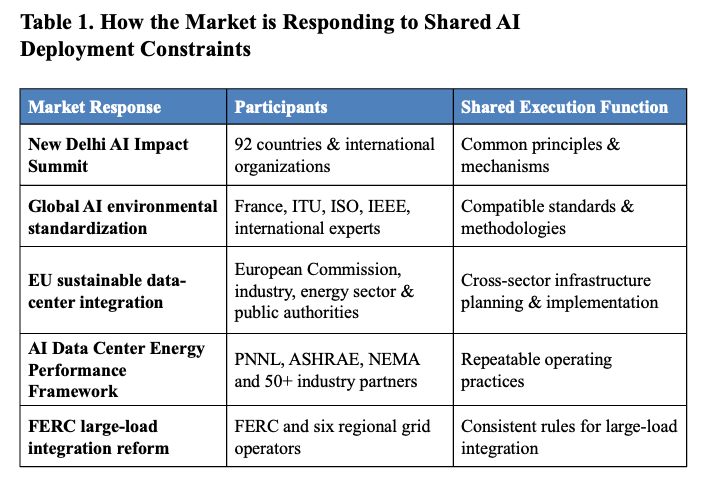
In response to the energy-AI crisis, a shift is occurring. Governments, regulators, and industry leaders are beginning to recognize that individual corporate sustainability plans are insufficient to overcome systemic infrastructure hurdles.
Several notable developments reflect this shift:
- Coordinated Grid Planning: Energy regulators in major markets are beginning to move toward centralized capacity planning, recognizing that data center growth must be integrated into long-term national energy policy.
- Sectoral Coalitions: Hyperscalers are increasingly joining forces to advocate for grid modernization and transmission policy reform, signaling a departure from the "competitive secrecy" that defined early climate action.
- Standardized Procurement: There is a growing push toward unified power purchase agreement (PPA) standards to streamline the process of onboarding clean energy, reducing the legal and operational burden on individual firms.
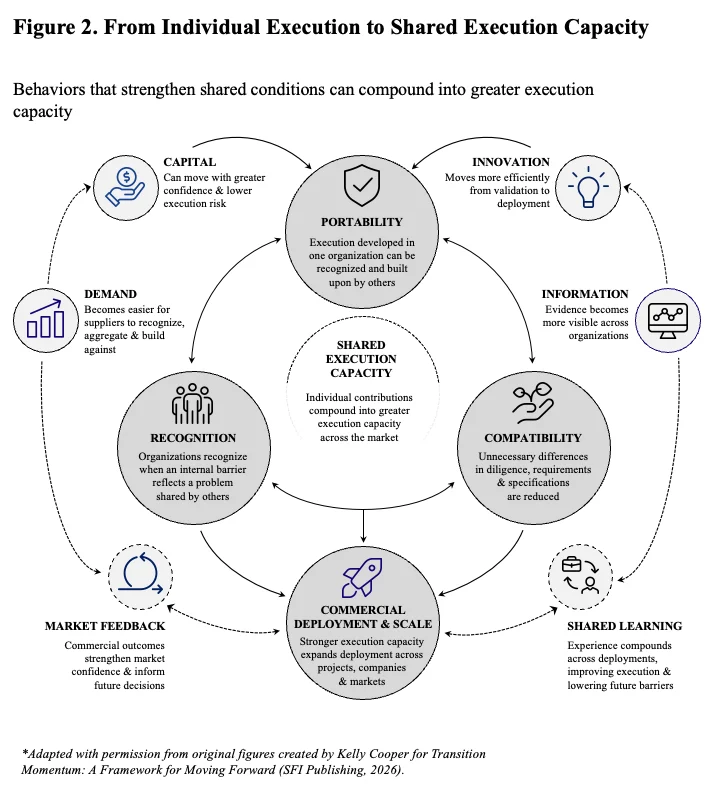
These responses demonstrate a growing consensus: the scale of the challenge requires moving from fragmented execution to shared capacity.
Implications: The Need for a Systemic Shift
The implications for sustainability practitioners are profound. If we continue to design frameworks that only evaluate internal corporate performance, we will continue to miss the mark. The next decade of climate action must focus on "the other half of the system"—the enabling infrastructure.
1. Defining the Shared Problem
Practitioners must move away from the "us vs. the market" mentality. Ask: Are we solving a unique problem, or are we reinventing a wheel that the entire industry is struggling to turn? Identifying where your organization’s pain points overlap with competitors is the first step toward collaborative resolution.
2. Eliminating Unnecessary Fragmentation
Corporate sustainability teams must audit their internal processes. Are your due diligence requirements for clean energy suppliers bespoke? If so, they may be adding unnecessary friction to a market that desperately needs standardization. Adopting industry-wide specifications can reduce the cost of entry for new players and accelerate deployment.
3. Investing in Systemic Strength
When making procurement or investment decisions, favor solutions that create positive externalities for the grid or the supply chain. If a project only benefits your internal emissions reporting but does nothing to solve the underlying capacity constraint, it is a sub-optimal use of resources.
4. Boundary-Crossing Execution
We must transition toward "cross-organizational execution." This means participating in industry standards groups, sharing risk-assessment data where appropriate, and creating unified demand signals that make large-scale infrastructure investment attractive to financiers.
Building the Other Half of the System
The sustainability ecosystem has succeeded in its primary goal of the last decade: making climate action a central pillar of corporate governance. However, we have reached the limit of what "accountability" can achieve on its own.
The AI boom acts as a wake-up call. It proves that when systemic constraints threaten commercial growth, the market will find ways to build shared capacity. The challenge for the next era of climate action is to replicate that sense of commercial urgency for broader decarbonization.
We do not need more ambitious targets; we need a more robust system of execution. We must shift our focus from scrutinizing the performance of individual ships to building the harbors and navigation systems that allow the entire fleet to move forward. The goal is no longer to simply report on the transition—it is to build the architecture that makes that transition inevitable, economically rational, and structurally sound.
The next stage of the climate movement will be defined by those who stop navigating around fragmentation and start systematically dismantling it. It is time to build the other half of the system.