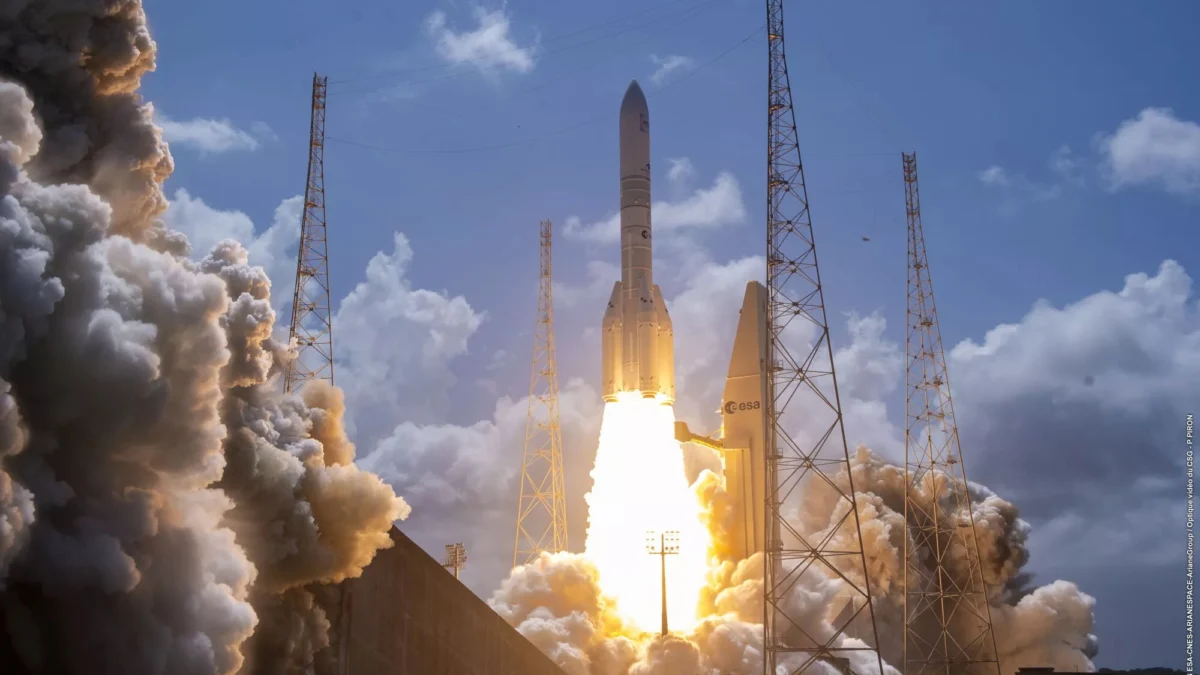
Europe’s space ambitions are set to reach a new height today, August 27, as the continent’s most powerful launch vehicle, the Ariane 6, prepares to ferry the state-of-the-art MTG-I2 weather satellite into orbit. This mission represents more than just another launch; it is the final piece of a sophisticated puzzle designed to revolutionize how humanity monitors, predicts, and responds to the rapidly shifting climate of our planet.
As the countdown progresses at Europe’s Spaceport in Kourou, French Guiana, the international aerospace community is turning its eyes toward the equatorial launch site. With a 2.5-hour window opening at 4:10 p.m. EDT (2010 GMT), the stakes for Arianespace and its partners have never been higher.
The Mission: Completing the Meteosat Network
The MTG-I2, weighing in at an impressive 8,400 pounds (3,800 kilograms), is the second imaging satellite of the Meteosat Third Generation (MTG) program. Upon successful separation from the Ariane 6 upper stage, the satellite will journey to its permanent home in geostationary orbit (GTO), situated 22,236 miles (35,786 kilometers) above the Earth’s surface.
This launch is the concluding act for the three-spacecraft constellation that forms the backbone of Europe’s next-generation meteorological monitoring system. It joins the MTG-I1 imaging craft, launched in December 2022, and the MTG-S1 "sounder," which reached orbit in July 2025. While the imaging satellites capture high-resolution visual and infrared data of the planet, the sounder provides a vertical profile of the atmosphere, probing different layers to detect temperature and moisture changes with unprecedented precision.
Together, these satellites are operated by the European Organisation for the Exploitation of Meteorological Satellites (EUMETSAT). Based in Germany, EUMETSAT oversees a vast network of data collection that serves not only European nations but the global scientific community.
Chronology of Development and Deployment
The path to today’s launch has been marked by years of engineering rigor. The Meteosat Third Generation program was designed to replace the aging Meteosat Second Generation (MSG) series, which served the continent faithfully for two decades.
- December 2022: The successful deployment of MTG-I1 signaled the start of a new era in meteorology, providing the first high-speed, high-resolution imagery from the new platform.
- July 2025: The launch of MTG-S1 expanded the constellation’s capabilities, introducing the infrared sounding technology necessary for three-dimensional atmospheric analysis.
- July 2024: The Ariane 6 vehicle made its long-awaited debut, proving the viability of a heavy-lift rocket designed to replace the iconic but retired Ariane 5.
- June 2026: A successful launch of 36 Amazon Kuiper broadband satellites demonstrated the rocket’s reliability in the commercial sector.
- August 27, 2026 (Today): The launch of MTG-I2, marking the ninth flight of the Ariane 6 and the completion of the core MTG satellite infrastructure.
Technical Prowess: Why Ariane 6 Matters
The Ariane 6 is not merely a replacement for its predecessor; it is a fundamental redesign intended to regain Europe’s independent access to space. Capable of delivering up to 12.7 tons (11.5 metric tons) to GTO in its most robust configuration, the rocket has quickly established itself as a formidable competitor in the global market.
To put this power into perspective, the SpaceX Falcon 9, the current industry benchmark, has a GTO capacity of approximately 9.15 tons (8.3 metric tons). The Ariane 6’s ability to carry heavier payloads or perform more complex orbital insertions makes it an essential tool for the European Space Agency (ESA) and its commercial clients.
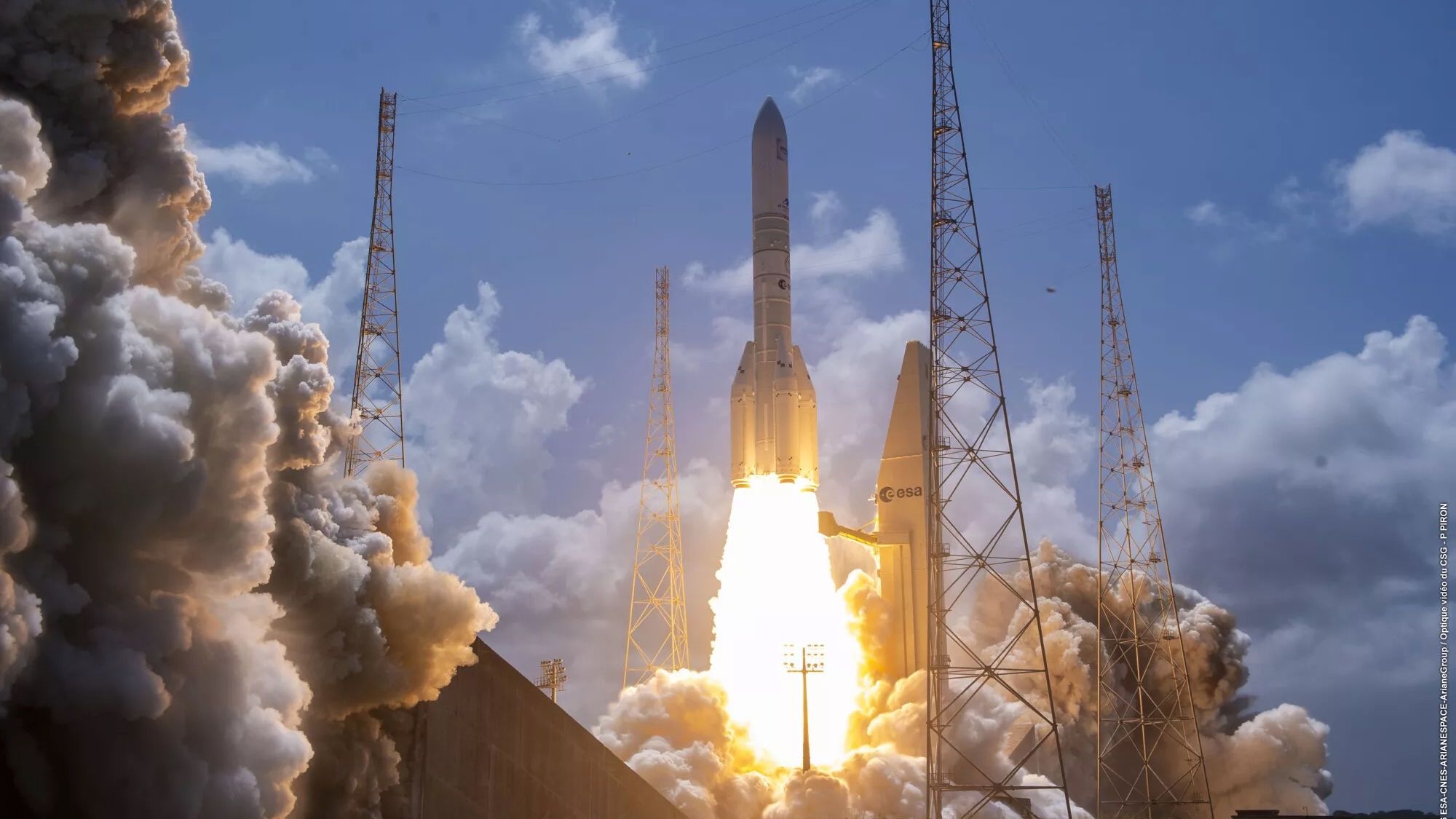
The rocket’s modular design allows for flexibility, enabling it to adapt to a wide variety of mission profiles, from low-Earth orbit constellation deployments to deep-space science missions and, as seen today, high-orbit geostationary deliveries.
Official Perspectives: A "Revolutionary" System
Arianespace, in its official mission documentation, has spared no superlatives for the MTG system. Company representatives have described it as "the most complex and innovative meteorological geostationary system ever built."
"The MTG system is part of a new generation of geostationary satellites providing imagery for the early detection of fast-developing severe storms, weather forecasting, and climate monitoring," the mission press kit stated.
The importance of this system lies in its latency and spatial resolution. By providing near-real-time updates, meteorologists can track the life cycles of convective storms—often the precursors to flash flooding and tornadoes—with a level of detail that was impossible with older technologies. The ability to distinguish between clouds, aerosols, and surface features in extreme detail allows for the earlier identification of wildfire smoke plumes, volcanic ash, and localized fog, which are critical for both public safety and aviation routing.
Broad-Scale Implications for Climate and Society
The data yielded by the MTG constellation will have a profound impact on several sectors of modern society:
Aviation and Transportation
By providing high-precision data on severe weather development, airlines can more effectively navigate around volatile weather systems. This leads to safer flights, reduced fuel consumption, and fewer weather-related delays.
Disaster Mitigation
Early detection is the cornerstone of disaster preparedness. For flooding, which remains one of the costliest and deadliest natural disasters, the MTG system provides the high-frequency imagery needed to monitor rainfall intensity and soil saturation in real-time, allowing for faster evacuation warnings and resource allocation.
Environmental Monitoring and Climate Science
The climate crisis necessitates accurate, long-term datasets. The MTG satellites will contribute to a continuous record of Earth’s atmosphere, helping climate scientists refine models of how the planet is responding to rising temperatures. From monitoring the growth of forest fires to tracking the movement of pollutants, the data serves as a vital diagnostic tool for the health of our biosphere.

Economic Stability
The agricultural and maritime sectors rely heavily on precise, long-range forecasts. By minimizing the margin of error in regional weather prediction, the MTG system helps stabilize supply chains and protects key infrastructure from unexpected climate-related shocks.
The Future of European Launch Capability
As we look toward the launch of MTG-I2, it is impossible to ignore the broader context of the European space industry. After a period of transition following the retirement of the Ariane 5, the successful integration of the Ariane 6 into the global launch schedule is a testament to the resilience of European engineering.
With eight previous launches successfully completed, the platform has moved beyond its testing phase and into a period of operational reliability. The ability to launch from Kourou, located near the equator, provides a natural "slingshot" effect due to the Earth’s rotation, which is particularly advantageous for reaching geostationary orbits.
How to Follow the Launch
For those wishing to witness the spectacle of the Ariane 6 rising from the humid jungles of French Guiana, Arianespace is providing comprehensive coverage. The live broadcast will begin approximately 25 minutes prior to the scheduled liftoff. Viewers can tune in via the official Arianespace YouTube channel or through the Space.com live blog, which will provide real-time updates and commentary as the rocket ascends through the atmosphere.
The mission is expected to culminate 36 minutes after liftoff, when the MTG-I2 is successfully released into its transfer orbit. Once released, the satellite will use its own propulsion systems to reach its final operational position, at which point the three-year process of fully populating the constellation will be officially complete.
Conclusion
Today’s mission is more than a display of raw mechanical power; it is a milestone in human ingenuity. The combination of the Ariane 6’s heavy-lift capabilities and the sophisticated sensor suite of the MTG-I2 ensures that Europe remains at the forefront of space-based environmental monitoring.
As the world grapples with the increasing unpredictability of our climate, the data provided by these orbital sentinels will become increasingly indispensable. Today, the gaze of the world turns to Kourou, waiting for the smoke to clear and for the next generation of weather monitoring to begin its long, watchful vigil from the stars.