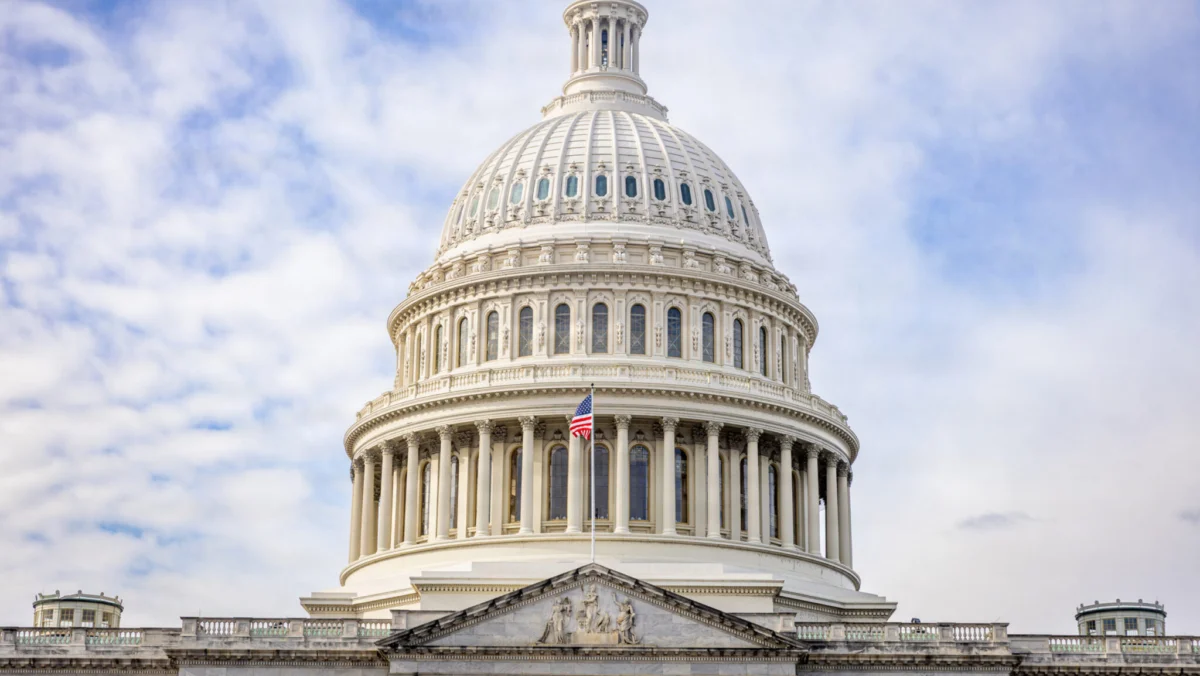
WASHINGTON — In a decisive display of legislative cooperation, the U.S. House of Representatives voted overwhelmingly today to approve a short-term funding bill, effectively staving off a federal government shutdown just weeks before the critical midterm elections.
The measure, passed by a robust 370-48 margin, utilizes a suspension of the rules to bypass traditional procedural hurdles, reflecting an urgent bipartisan consensus to maintain the continuity of government operations through December 11. The bill now heads to the White House, where President Donald Trump is expected to sign it into law, providing a temporary reprieve for federal agencies and military installations alike.
Main Facts: The Anatomy of the Stopgap
The Continuing Resolution (CR) serves as a fiscal bridge, maintaining federal spending at current fiscal year 2026 levels. By extending the budgetary deadline, the legislation ensures that federal employees will continue to receive paychecks and that critical government services—ranging from national security operations to civilian programs—will remain operational without interruption.
The vote count of 370-48 serves as a clear indicator of the bill’s broad appeal. While legislative gridlock has characterized much of the 119th Congress, this CR represents a rare moment of alignment between House leadership and the Senate, which passed the measure in August. The bill’s passage provides stability to the Department of Defense (DoD), ensuring that existing weapons programs remain funded and that the military avoids the logistical and morale-related fallout of a potential shutdown, such as the furloughing of civilian personnel or the suspension of pay for active-duty troops.
Chronology: From Senate Negotiation to House Floor
The path to this week’s vote was paved by months of intense, often fraught, negotiations.
- August 2026: The Senate reached a landmark bipartisan agreement on the framework for the CR. The upper chamber successfully stripped away several controversial special funding requests, including specific munitions procurements requested by the White House, prioritizing a "clean" bill to ensure swift passage.
- Early September 2026: House Democratic leadership, including Caucus Chair Rep. Pete Aguilar, signaled early in the week that they would provide the necessary votes to ensure passage. Rep. Rosa DeLauro, the ranking Democrat on the House Appropriations Committee, formally encouraged the caucus to support the measure to avoid the chaos of a shutdown.
- Today: House Appropriations Committee Chairman Tom Cole (R-Okla.) brought the bill to the floor, framing it as a necessary act of governance to protect national security. The House convened, debated, and moved to a vote under suspension of the rules, resulting in the decisive 370-48 outcome.
The Defense Perspective: Maintaining Readiness
For the Pentagon, the CR is more than just a fiscal instrument; it is a vital safeguard for national readiness. The legislation ensures that core research and development programs remain protected, preventing the "valley of death" that often occurs when funding lapses cause project delays.
House Appropriations Committee Chairman Tom Cole emphasized the strategic necessity of the bill during his floor speech: "This clean, short-term continuing resolution simply keeps the government open, protects the progress we’ve made, and preserves the path to full-year appropriations. The bill protects our national security, providing funding for our armed forces and security agencies, as well as crucial authorities for core research and development programs to ensure our military remains the best armed and equipped services in the world."
Despite this, the bill is not without its limitations. In a move that highlights the ongoing friction between the legislative and executive branches, the final text excludes many of the "anomalies"—specialized funding exemptions—that the White House requested for the Pentagon. The absence of these provisions means that the DoD must operate within the strict confines of boilerplate language, which prohibits the initiation of new programs or the signing of new multiyear contracts until full-year appropriations are secured.
Political Friction: The Iran War Funding Debate
One of the most contentious aspects of the lead-up to the vote involved the president’s requests regarding the ongoing conflict in Iran. Rep. Betty McCollum, the ranking member of the House Appropriations defense subcommittee, became a focal point of debate when she openly praised the exclusion of these specific funds.
"I am very proud that this bill for the CR does not have funding that the president requested in his supplemental for the war in Iran, which was his war of choice," McCollum declared on the House floor. Her remarks underscore the deep-seated ideological divide within Congress regarding the administration’s foreign policy and the extent to which the legislative branch is willing to bankroll specific military engagements.
This exclusion represents a significant victory for lawmakers who have been critical of the administration’s approach to the Iran conflict, effectively utilizing the budget process as a check on executive war powers.
Implications: The Road to December 11 and Beyond
The passage of this CR provides Congress with a brief window of stability, but it also shifts the legislative clock forward to December 11. By that date, lawmakers will have passed the midterm elections and entered the "lame duck" session, a period where political dynamics often shift dramatically.
Short-Term Impacts:
- Administrative Continuity: Federal agencies can continue their daily operations, avoiding the complex, costly, and demoralizing process of a government shutdown.
- Fiscal Discipline: By adhering to current funding levels and excluding new program starts, the CR forces the government to focus on maintenance rather than expansion, which may slow down some defense modernization goals.
- Bipartisan Momentum: The overwhelming support for this bill suggests that despite the partisan rhetoric surrounding the midterms, there remains a functioning core in Congress capable of basic governance.
Long-Term Challenges:
The reliance on continuing resolutions is a symptom of a broader issue in federal budgeting. When Congress fails to pass full-year appropriations bills by the start of the fiscal year, it forces the military and other agencies to operate on outdated spending priorities.
"Continuing resolutions are no substitute for regular order," one senior policy analyst noted. "They create uncertainty for defense contractors and prevent the Pentagon from shifting resources to match the evolving threat landscape."
As the December 11 deadline approaches, the pressure will be on the House and Senate to negotiate a final omnibus spending package. Should they fail to do so, they will face a familiar choice: another short-term extension or the high-stakes gamble of a government shutdown during the final weeks of the year.
For now, however, the government remains open, the troops remain funded, and the legislative branch has successfully cleared a major hurdle in an increasingly polarized political environment. The focus now turns to the campaign trail, where the debate over the nation’s fiscal future and national security priorities will undoubtedly take center stage before members return to Washington to finalize the year’s business.