In a significant leap for British agricultural innovation, West Sussex County Council has officially unveiled a pioneering smart-monitoring initiative under its "Growing Sussex" programme. By integrating cutting-edge 5G connectivity with advanced environmental sensors, the project is providing local livestock farmers with near real-time, granular data regarding the conditions inside their animal housing. This deployment, a strategic collaboration between the Council, infrastructure giant Boldyn Networks, and agritech specialist Pneumonitor, promises to set a new standard for animal welfare and operational resilience in the face of increasingly volatile weather patterns.
The Convergence of Connectivity and Agriculture
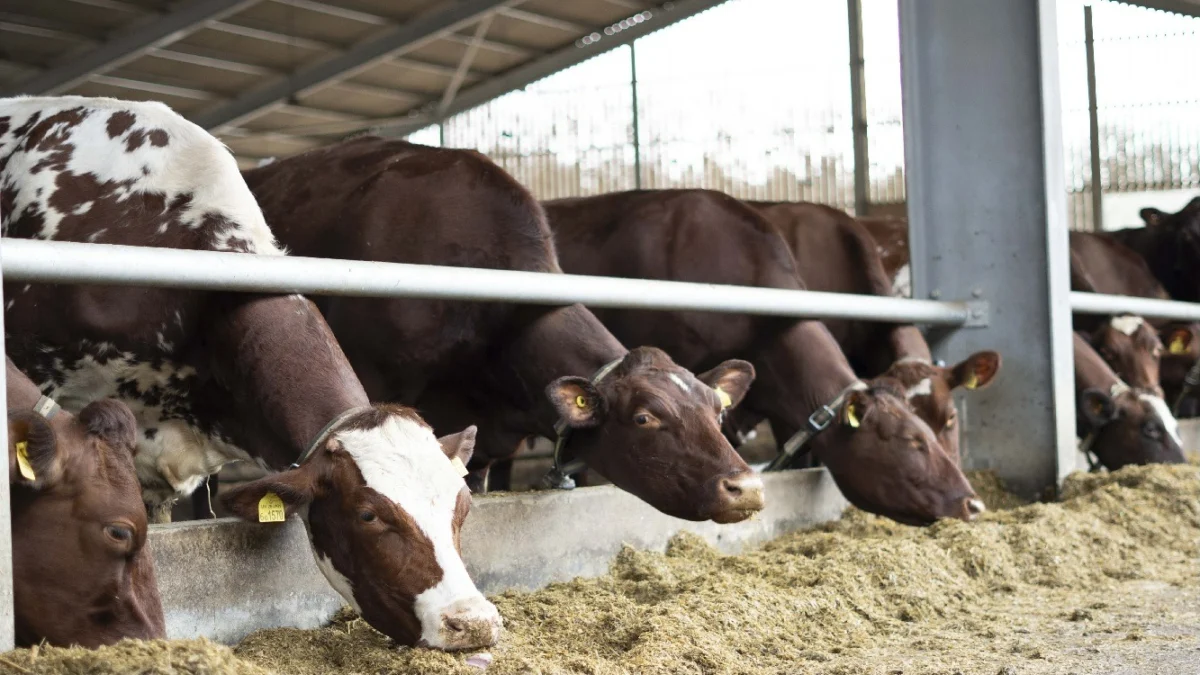
At the heart of this initiative lies the deployment of Pneumonitor’s bespoke environmental monitoring devices. Unlike traditional sensors, which are typically affixed to the periphery of a building—often resulting in skewed data that fails to reflect the immediate micro-climate surrounding the animals—Pneumonitor’s hardware is designed to be placed directly within the pen.
By situating the monitoring technology where the animals live, farmers gain an accurate, immediate understanding of the specific heat stress, humidity, and air quality levels affecting their livestock. This is facilitated by 5G Reduced Capability (RedCap) technology. RedCap, a specialized iteration of 5G, is optimized for the Internet of Things (IoT). It offers the high-speed reliability of 5G while significantly lowering power consumption, reducing battery requirements, and extending the operational lifespan of the devices. For the agricultural sector, this means a scalable, low-maintenance solution that can be deployed across vast, complex farm environments without the need for constant technical intervention.
A Chronology of the Growing Sussex Initiative
The path to this technological milestone has been a deliberate, multi-year strategy aimed at future-proofing the West Sussex rural economy.
- Early 2024: West Sussex County Council, in alignment with its digital transformation strategy, announced plans to establish four distinct private 5G networks across the region. The goal was to create a "living laboratory" where growers and livestock producers could test the efficacy of IoT, AI, and next-generation connectivity.
- Mid-2024: The "Growing Sussex" programme officially integrated its partner network, bringing together local government, educational institutions, and tech providers like Boldyn Networks.
- Late 2024 – Throughout 2025: Deployment phases commenced across the four designated sites. This period focused on infrastructure hardening and testing the stability of private 5G signals in rural, sometimes challenging, terrain.
- December 2025: The project achieved a major milestone as all four primary partner sites went fully live. The integration of Pneumonitor’s sensors was the final piece of the puzzle, bringing environmental monitoring to the wider connected-agriculture ecosystem.
Supporting Data: Why Precision Monitoring Matters
The urgency of this project is underscored by the changing climate. The UK, like much of Europe, has seen a marked increase in the frequency and intensity of summer heatwaves. For livestock, particularly in intensive housing, these heatwaves pose severe physiological risks.
Livestock are highly sensitive to thermal load. When temperatures exceed a threshold, animals experience heat stress, which correlates directly with reduced feed intake, lower growth rates, and, in severe cases, the development of respiratory diseases. Because conditions inside a livestock shed can deteriorate faster than human senses can detect, traditional "visual checks" are often reactive rather than preventative.
The data provided by the Pneumonitor-Boldyn integration acts as an early warning system. By identifying the exact moment when the "heat load" inside a pen begins to climb—well before the animals exhibit visible signs of distress—farmers can take proactive measures. These might include adjusting ventilation systems, altering misting cycles, or modifying feeding schedules. This precision management preserves yield and significantly improves the long-term health and productivity of the herd.
Official Perspectives: A Vision for the Rural Economy
The partnership has received strong backing from both local government and industry leaders, who view this not just as a one-off project, but as a blueprint for the future of British farming.
Cllr Yvonne Gravely, Cabinet Member for Economy and Skills at West Sussex County Council, emphasized the broader economic implications: "Agriculture plays a vital role in West Sussex, but periods of extreme weather are creating new challenges for the sector. Through Growing Sussex, we’re helping growers and food producers use technology to better understand changing conditions, protect animal welfare, and build resilience for the future. That’s good for local businesses, good for our rural economy, and good for West Sussex."
Gearoid Collins, Commercial Director for Real Estate, Enterprise & Wind Farms at Boldyn Networks, highlighted the technological foundation: "As the connectivity partner for Growing Sussex, we’re committed to helping shape a new era for agriculture. Connecting Pneumonitor through RedCap shows how private 5G can support practical agritech and provide the digital foundation for many more connected applications across the farming sector."
Isaac Orr, CEO of Pneumonitor, provided a technical reflection on the success of the deployment: "This project showed when heat load was building and what could be done before yields were affected. The connectivity behind the deployment now allows us to bring this monitoring to far more sites than before. We thank Boldyn Networks and the Growing Sussex programme for their partnership."
Implications: The Future of Connected Agriculture
The implications of this deployment extend far beyond a single county. As the UK agricultural sector looks for ways to increase domestic food security while simultaneously meeting stringent animal welfare standards and net-zero targets, technology is becoming the primary driver of change.
1. Scaling Agritech
The use of 5G RedCap is particularly transformative. Previous attempts at large-scale IoT in agriculture often struggled with "connectivity deserts"—areas where Wi-Fi was too weak and 4G was too unreliable. By establishing private 5G networks, the Growing Sussex programme proves that farms can operate their own high-capacity, secure digital infrastructure. This paves the way for further applications, including autonomous machinery, real-time veterinary diagnostics, and automated feeding systems.
2. Economic Resilience
For the average farmer, the ROI (Return on Investment) of such systems is immediate. By preventing even a small percentage of livestock loss or health-related yield reduction, the system pays for itself. Furthermore, it creates "data-backed" farming, which is increasingly essential for securing bank loans, insurance coverage, and compliance with government environmental subsidies that reward sustainable practice.
3. A Model for Public-Private Partnership
The success of the Growing Sussex model—where the local council provides the administrative framework and the private sector provides the technical infrastructure—offers a scalable template for other UK regions. It demonstrates that when local government acts as a catalyst for innovation, it can de-risk new technology for small and medium-sized farmers, ensuring that the benefits of the digital revolution are not restricted to large-scale industrial agribusinesses.
Conclusion: Reinvigorating British Agriculture
The integration of Pneumonitor’s sensors with Boldyn’s private 5G network represents a critical juncture in the modernization of British agriculture. As the industry faces the dual pressure of environmental change and the need for greater efficiency, digital tools are no longer optional luxuries—they are essential components of farm management.
The Growing Sussex programme has successfully moved beyond the "hype" of 5G, translating it into a tangible, practical, and replicable solution that keeps animal welfare at its core. As stakeholders and industry experts gather at events like Connected Britain to discuss the future of the digital economy, the West Sussex project will undoubtedly serve as a primary case study for how connectivity can, and will, reinvigorate the nation’s most vital industry.
For farmers across the UK, the message is clear: the future of farming is not just about the land, but about the data that flows through it. With the digital foundation now firmly in place in West Sussex, the next phase of agricultural evolution has officially begun.