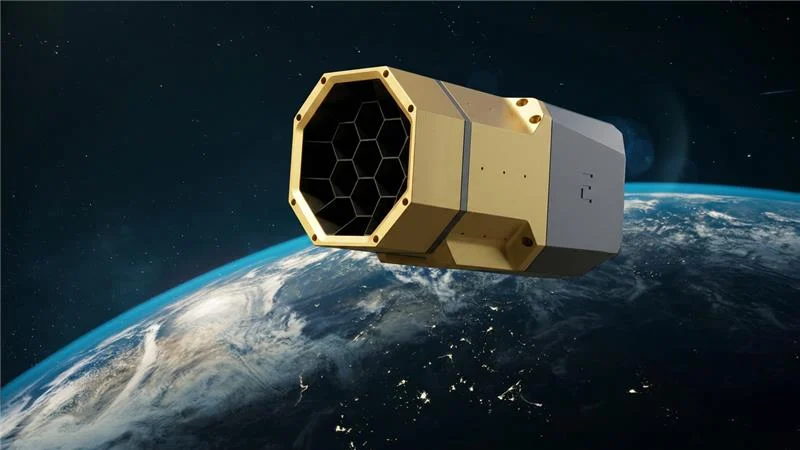
ROCHESTER, NY — In a move that highlights the accelerating demand for rapid-response, high-performance space sensor technology, Rochester-based Eoptic, Inc. has officially been designated as an approved supplier for major strategic space imaging initiatives. The announcement, made on August 18, 2026, marks a pivotal expansion of the company’s Space Systems Division. It positions Eoptic’s flagship "DeepScan" modular payload family as a critical asset for upcoming national security, space domain awareness (SDA), and Earth observation missions.
Under the newly secured agreement, Eoptic is tasked with delivering multiple DeepScan imaging payloads by early 2027, with orbital launches scheduled for the months immediately following. This milestone represents a significant validation of Eoptic’s software-defined, multi-spectral hardware, which has been designed specifically to meet the strict cost and timeline constraints of modern military and commercial satellite constellations.
Chronology: From Concept to Orbit
The journey of the DeepScan payload from initial design to its selection for strategic space missions represents a rapid acceleration of traditional aerospace development timelines. Historically, the procurement and manufacturing cycles for military-grade optical payloads could span five to ten years. Eoptic has bypassed these legacy timelines by utilizing modular architectures and commercial off-the-shelf (COTS) components ruggedized for the space environment.
+------------------------------------------------------------+
|                  DEEPSCAN DEVELOPMENT TIMELINE             |
+------------------------------------------------------------+
| [2024 - 2025]     Research & Development / SWaP-C Design   |
| [Early 2026]      Qualification & Environmental Testing    |
| [August 2026]     Approved Supplier Selection Announcement |
| [Early 2027]      Delivery of First Flight-Ready Payloads  |
| [Mid-Late 2027]   Orbital Launch & Space Demonstration     |
| [2028]            High-Volume Production Scale-Up          |
+------------------------------------------------------------+-
2024–2025: Research and Development Phase
Eoptic’s engineering teams focused on creating a scalable optical system capable of spectral flexibility. The goal was to build a single core architecture that could be rapidly reconfigured for different orbital altitudes and mission profiles. -
Early 2026: Qualification and Testing
The DeepScan hardware underwent rigorous environmental testing, including thermal vacuum (TVAC) cycling, vibration testing, and radiation survivability assessments, ensuring readiness for Low Earth Orbit (LEO). -
August 18, 2026: Strategic Selection
Eoptic is officially announced as an approved supplier for strategic space imaging initiatives, marking the formal integration of DeepScan into defense and intelligence procurement pipelines. -
Early 2027: Payload Delivery
Eoptic will deliver the first batch of production-ready DeepScan payloads to its integration partners. -
Mid-to-Late 2027: Orbital Launch
The initial payloads are scheduled to launch, initiating active operational deployment in orbit. -
2028: High-Volume Production
Eoptic plans to ramp up manufacturing at its Rochester facility to support the continuous deployment needs of Proliferated Low Earth Orbit (PLEO) constellations.
Supporting Data: Technical Specifications and Market Context
The DeepScan payload family is engineered to address the core challenges of modern space missions: size, weight, power, and cost (SWaP-C). By optimizing these variables, Eoptic has created a sensor suite that fits seamlessly onto spacecraft ranging from compact CubeSats to larger ESPA (EELV Secondary Payload Adapter) class satellites.
Technical Parameters of the DeepScan Payload Family
| Feature | Specification / Capability |
|---|---|
| Spacecraft Compatibility | CubeSat (6U, 12U) up to ESPA-class platforms (100–300 kg) |
| Spectral Capabilities | Multi-spectral, multi-modal, and software-defined configurations |
| Primary Mission Profiles | Space Domain Awareness (SDA), Earth Observation, Missile Tracking |
| Onboard Processing | AI-enabled edge-imaging software for real-time intelligence |
| Manufacturing Cycle | Transition from mission-need to orbit in months, not years |
The Pivot to Proliferated LEO (PLEO) Architectures
The defense sector is undergoing a paradigm shift away from large, exquisite, billion-dollar satellites positioned in Geostationary Orbit (GEO). These legacy systems, while capable, represent single points of failure that are highly vulnerable to anti-satellite weapons and cyber threats.
Instead, organizations like the U.S. Space Force and the Space Development Agency (SDA) are championing Proliferated LEO (PLEO) architectures. By deploying hundreds of smaller, interconnected satellites in lower orbits, the military gains a resilient network that can survive individual satellite losses.
DeepScan’s modular design directly feeds this demand. By lowering the unit cost and weight of advanced multi-spectral sensors, Eoptic enables prime contractors to deploy high-resolution sensing capabilities across entire fleets of small satellites without exceeding budget constraints.
Official Responses and Executive Vision
The selection of Eoptic as an approved supplier marks a major business milestone for the Rochester firm, reflecting years of targeted R&D in software-defined optical systems.

Pano Spiliotis, Chief Executive Officer of Eoptic, Inc., expressed strong confidence in the technology’s readiness and its alignment with national security priorities:
"Being selected to supply DeepScan imaging payloads for upcoming space missions is a meaningful milestone for our team and a reflection of the hard work we’ve invested in making the technology mission-ready. We’ve focused on developing scalable imaging solutions that perform in the most demanding environments, and we’re proud to support strategic customers delivering next-generation space sensing capabilities."
Spiliotis also emphasized the long-term scalability of the company’s manufacturing operations as they prepare for upcoming launch schedules:
"With launches planned for 2027 and production ramping in 2028, we’re entering an exciting new chapter for both DeepScan and Eoptic’s Space Systems Division—delivering the speed and scale that proliferated (PLEO) architectures demand, for our current and future partners."
By focusing on scalable manufacturing, Eoptic is positioning itself not just as an R&D laboratory, but as a high-rate production partner capable of feeding the constant launch cycles required to maintain active LEO constellations.
Strategic Implications for National Security and the Space Industry
The integration of Eoptic’s DeepScan payloads into strategic space initiatives has far-reaching implications for both military operations and the broader aerospace industrial base.
1. Enhancing Space Domain Awareness (SDA)
As the orbital environment becomes increasingly crowded and contested, the ability to monitor space activity in real time is paramount. Space Domain Awareness involves tracking satellites, identifying space debris, and detecting potential adversarial maneuvers in orbit.
DeepScan’s multi-spectral imaging capability allows it to detect the unique thermal and reflective signatures of objects in space, even under challenging lighting conditions. When deployed across a proliferated constellation, these sensors will provide continuous, 360-degree surveillance of orbital corridors, reducing blind spots for military operators.
2. Missile Tracking and Hypersonic Defense
One of the most pressing national security challenges of the late 2020s is the emergence of hypersonic glide vehicles (HGVs). Traditional missile warning satellites, optimized for detecting the massive thermal plumes of intercontinental ballistic missiles (ICBMs) in high orbits, struggle to track dimmer, highly maneuverable hypersonic weapons flying through the upper atmosphere.
DeepScan’s modular architecture can be configured with specialized infrared sensors tailored for missile tracking. By placing these sensors in LEO—much closer to the flight path of hypersonic weapons—and utilizing onboard AI to process target data at the edge, the system can provide early warning and continuous tracking data directly to defense interceptor networks.
3. Revitalizing Rochester’s Optics Valley
Eoptic’s success also reinforces the regional strength of Rochester, New York, as a global hub for optical engineering. Historically known as the home of Eastman Kodak, Xerox, and Bausch & Lomb, the Rochester ecosystem possesses a dense network of optics talent, precision manufacturing facilities, and academic institutions like the University of Rochester’s Institute of Optics.
By scaling up production of space-qualified payloads, Eoptic is helping to transition Rochester’s legacy optics expertise into the modern space defense era. This regional supply chain resilience is increasingly viewed by federal regulators as a key national security asset, reducing reliance on foreign components and ensuring secure domestic manufacturing.
4. Accelerating the Procurement Cycle
Perhaps the most disruptive aspect of Eoptic’s business model is its commitment to delivering flight-ready payloads in months rather than years. In a geopolitical environment where technological advantages can shift rapidly, the ability to iterate and deploy hardware quickly is a strategic capability.
By utilizing software-defined architectures, Eoptic can upload algorithm updates and sensor adjustments to payloads that are already in orbit. This capability ensures that the satellites can adapt to emerging threats without requiring the immediate launch of replacement hardware, maximizing the operational lifespan and utility of each deployment.