By Editorial Staff | Satellite Technology Analysis
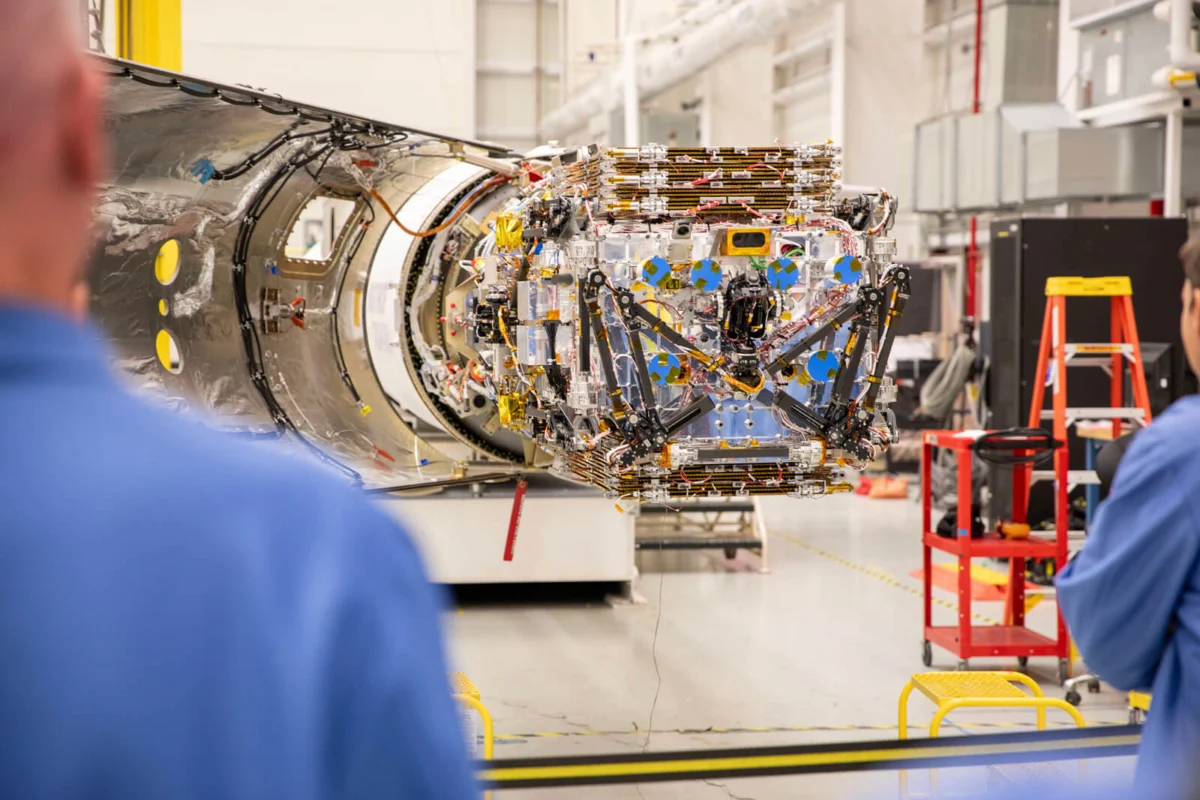
The ambitious mission to save NASA’s aging Swift Observatory—a critical tool for gamma-ray astronomy—has encountered a significant technical hurdle. Katalyst Space, the aerospace startup tasked with the high-stakes rescue, confirmed on Tuesday that its "LINK" robotic spacecraft is currently battling critical attitude control malfunctions. Despite the spacecraft entering a multi-axis spin and experiencing temporary communication blackouts, mission controllers remain committed to the $30 million rescue operation.
The situation marks a testing moment for both the startup and the broader trend of rapid-response, commercial-led satellite servicing. With the clock ticking on the Swift Observatory’s orbital decay, the industry is watching closely to see if the team can stabilize the LINK spacecraft in time to perform a complex robotic capture.
The Core Crisis: Understanding the Technical Failure
The complications began shortly after the LINK spacecraft’s successful deployment via a Northrop Grumman Pegasus XL rocket on July 2. According to a formal update issued by Katalyst Space, the spacecraft’s attitude determination and control system (ADCS) has suffered a severe failure.
Specifically, two of the spacecraft’s three reaction wheels—the primary devices used to orient the satellite in space—have been rendered non-functional. Furthermore, the Reaction Control System (RCS), which utilizes thrusters to manage orientation and position, is reporting only partial functionality. The combination of these failures left the spacecraft unable to maintain a stable orientation, resulting in an unintended, uncontrolled multi-axis spin.
The spinning led to a chain reaction of technical stressors: the spacecraft experienced a "bus reset," a protective measure triggered by the onboard computer when it detects anomalous conditions. This reset resulted in a temporary loss of communication between the satellite and ground stations. Fortunately, Katalyst reports that other vital subsystems—including power generation, thermal management, and communications hardware—remain fully operational.
A Race Against Time: The Swift Observatory Mission
To understand the urgency of this situation, one must look at the nature of the Swift Observatory. Launched in 2004, the Swift satellite has been instrumental in studying the most violent events in the universe. However, due to its low Earth orbit and atmospheric drag, the observatory is slowly losing altitude. Without an orbital "reboost," the satellite faces an inevitable and destructive re-entry into Earth’s atmosphere.
NASA, recognizing the scientific value of the observatory, took the unconventional step of awarding a $30 million contract to Katalyst Space less than a year ago. The goal was to develop a robotic "tugboat" capable of rendezvous, proximity operations (RPO), and ultimately, docking with Swift to nudge it into a stable, higher orbit.
The project was defined by an aggressive timeline, with the design, testing, and integration of the LINK spacecraft completed in under 12 months—a feat of engineering velocity rarely seen in space exploration. The launch on July 2, conducted via an air-launched Pegasus rocket, was heralded as a milestone for agile space operations.
Chronology: From Launch to Anomaly
- July 2, 2026: The LINK spacecraft is successfully air-launched from the NASA Wallops Flight Facility, reaching its designated orbital insertion point.
- Early July 2026: Initial post-launch checkouts occur. The spacecraft establishes successful telemetry with ground stations.
- Late July 2026: Anomalies emerge in the ADCS. Two of three reaction wheels become unresponsive.
- July 28, 2026: The spacecraft enters a multi-axis spin. The onboard computer triggers a bus reset. Communications are temporarily lost.
- July 29, 2026: Communications are re-established. Katalyst engineers confirm that the bus and secondary subsystems are stable.
- August 2026 (Current Status): Mission controllers initiate a revised strategy using electric propulsion to dampen the spin and re-establish control.
The Recovery Strategy: Re-engineering in Orbit
Katalyst Space is currently engaged in a "repair-on-the-fly" protocol. With the primary orientation hardware compromised, the engineering team is pivoting to a sophisticated work-around. The strategy involves using the spacecraft’s electric propulsion system to generate controlled burns that can counteract the current spin momentum.
"The mission remains active," the company stated in its official communication. "We continue to believe that with these changes, LINK has a viable path to rendezvous with Swift."
The team is currently performing the following corrective actions:
- Software Overhaul: Updating the Guidance, Navigation, and Control (GNC) algorithms to compensate for the loss of two reaction wheels.
- Simulation Rigor: Running updated GNC schemes through high-fidelity end-to-end simulations to ensure the spacecraft can maneuver under the new constraints.
- Ground Testing: Using hardware-in-the-loop testing on engineering models to verify that the remaining RCS and electric propulsion capabilities can safely manage the docking sequence.
The complexity of these tasks cannot be overstated. Rendezvous Proximity Operations require sub-centimeter precision, especially during the final capture phase. To perform such delicate work while the spacecraft is essentially "limping" due to hardware failure is a high-risk maneuver that requires absolute synchronization between software updates and physical thruster performance.
Official Responses and Industry Outlook
The partnership between NASA and a startup like Katalyst highlights the agency’s increasing reliance on commercial entities to solve legacy orbital problems. NASA officials have yet to issue a detailed statement regarding the anomaly, but the $30 million contract represents a significant investment in the future of "in-orbit servicing, assembly, and manufacturing" (ISAM).
Industry experts suggest that while the current situation is precarious, it is not necessarily a failure. "Space is unforgiving," says Dr. Elena Vance, a propulsion analyst. "When you push for a one-year development cycle, you often trade redundancy for speed. The fact that the bus survived the spin and the reset is a testament to the robustness of the core architecture. If they can stabilize the spin, the mission is still very much in play."
Katalyst, meanwhile, is maintaining a transparent, if guarded, posture. The company has emphasized that their team is working "around the clock" with NASA partners to navigate the current hurdles.
Implications for Future Satellite Servicing
The technical challenges faced by the LINK mission provide a vital case study for the burgeoning ISAM industry. If the rescue succeeds, it will prove that "agile" aerospace development—characterized by rapid, iterative, and lower-cost design—can achieve complex objectives even when initial plans fail.
However, the event also highlights the potential pitfalls of rapid development. The loss of two out of three reaction wheels in the early stages of a mission raises questions about hardware reliability testing during the integration phase. Should the mission fail to rendezvous with the Swift Observatory, it could lead to increased regulatory and institutional scrutiny regarding the viability of low-cost, high-speed space missions.
Conversely, a successful recovery would solidify Katalyst’s reputation as a top-tier operator in the field of orbital logistics. Being able to demonstrate the ability to recover from a critical hardware failure in deep space would be a major competitive advantage, demonstrating an operational resilience that many established aerospace giants struggle to maintain.
As of this week, all eyes remain on the telemetry data flowing from the LINK spacecraft. The engineers at Katalyst are not just trying to save a multi-million dollar observatory; they are trying to prove that the future of space exploration is not just about the ships we build, but how we adapt when those ships don’t behave as intended.
The path to the Swift Observatory remains open, but the journey has just become exponentially more complex. For the next several weeks, the success of the mission will hinge on the software-driven ingenuity of the team on the ground, as they attempt to teach a wounded spacecraft how to dance in the vacuum of space.