In a significant leap for the burgeoning field of optical space communications, Lithuanian-based tech firm Astrolight has successfully demonstrated an end-to-end laser communication link between an orbital nanosatellite and a terrestrial ground station. The milestone, confirmed on October 8, signals a shift in the satellite industry from experimental optical technology to reliable, high-capacity commercial connectivity.
By achieving stable 1 Gbps throughput within days of the mission’s "first light," Astrolight has provided a blueprint for how future satellite constellations might bypass the spectrum congestion and capacity limitations currently plaguing traditional radio-frequency (RF) communication methods.
The Core Achievement: Bridging the Gap Between Space and Ground
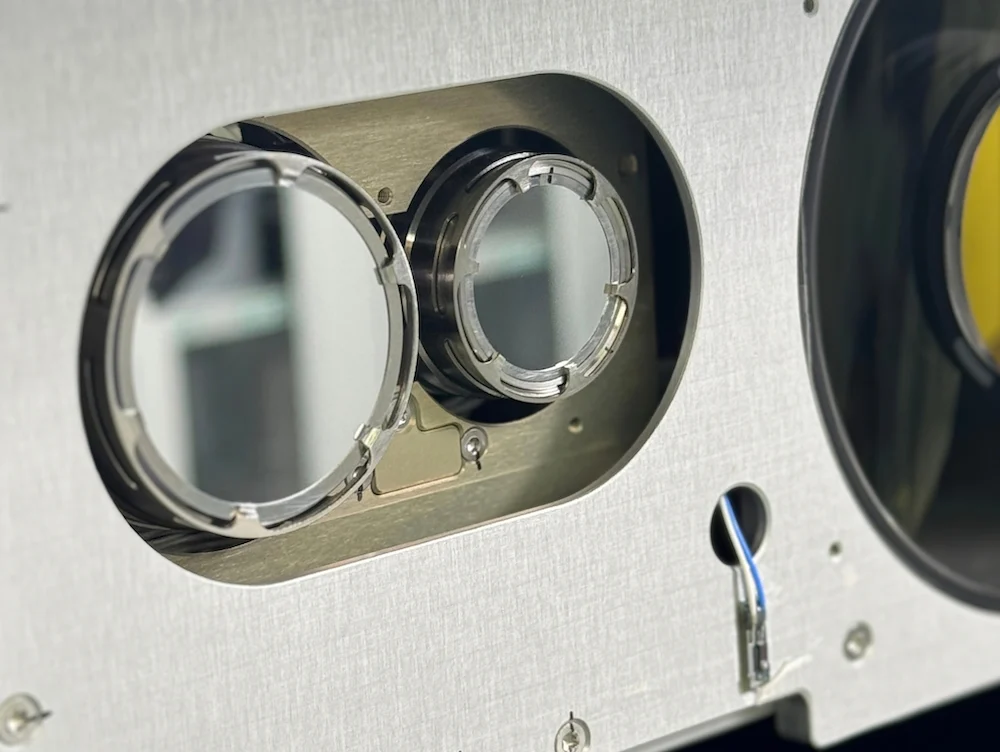
The mission, dubbed "PeakSat," utilized Astrolight’s proprietary ATLAS-1 laser communication terminal, integrated aboard the ERMIS-3 nanosatellite. This orbital hardware successfully established a high-bandwidth optical connection with the company’s upgraded OGS-2.5 optical ground station, located in the Holomondas region of Greece.
Unlike traditional RF systems that rely on microwave frequencies, which are increasingly crowded and subject to strict regulatory licensing, laser communications utilize infrared light to transmit data. This enables significantly higher data rates, enhanced security, and immunity to interference. The successful synchronization of the ATLAS-1 and OGS-2.5 systems marks a pivotal "proof of concept" for the scalability of optical satellite networks.
A Chronology of the PeakSat Mission
The transition from orbital deployment to routine operations was characterized by rapid iteration and precise engineering. The timeline of the mission highlights the efficiency of modern small-satellite operations:
- Pre-Launch Integration: Astrolight collaborated with the European Space Agency (ESA), the Department of Aerospace at the National and Kapodistrian University of Athens, and the Department of Physics at the Aristotle University of Thessaloniki. The focus was on optimizing the ATLAS-1 terminal for the constrained power and size requirements of the ERMIS-3 nanosatellite.
- Deployment and Commissioning: Following the launch and initial orbital stabilization of the ERMIS-3, the Astrolight team in Lithuania initiated remote calibration protocols.
- The "First Light" Milestone: During the satellite’s very first pass over the Greek ground station, both the ATLAS-1 and OGS-2.5 systems achieved "first light"—the critical moment when the laser beam is acquired and locked between the space terminal and the ground station.
- Rapid Ramp-Up: By the third orbital pass, the systems were operating fully autonomously, executing pre-scheduled communication windows without human intervention.
- Operational Maturity: Within a single week of the initial link, the system reached stable, routine operations at 1 Gbps, demonstrating the robustness of the acquisition, tracking, and pointing (ATP) algorithms developed by the Astrolight engineering team.
Technical Specifications and Performance Data
While the mission is currently capped at 1 Gbps to ensure operational stability, the underlying architecture of the ATLAS-1 terminal is designed for significantly higher thresholds.
Link Budget and Throughput Potential
According to internal diagnostics shared by Astrolight, current link budget margins indicate that the hardware is already capable of supporting data rates of up to 10 Gbps. This headroom is essential for commercial operators who require "burst" capabilities—the ability to offload large volumes of high-resolution imagery or sensor data during brief orbital windows.
Autonomous Operations
A key technical challenge in laser communication is the "pointing" requirement; because the laser beam is extremely narrow, the terminal must maintain sub-milliradian precision while both the satellite and the ground station are in constant motion. The PeakSat mission proved that Astrolight’s software suite could handle these complex dynamics autonomously, a prerequisite for managing large-scale satellite constellations where manual steering for every pass would be economically unfeasible.
Hardware Evolution: OGS-2.5
The OGS-2.5 ground station represents an evolution of the existing HolOGS-1 facility. By upgrading the station’s optical apertures, filtering technology, and atmospheric compensation software, Astrolight has successfully mitigated the effects of "atmospheric turbulence"—the primary factor that causes signal scintillation (fading) in optical ground-to-space links.
Official Perspectives: The Path to Commercialization
The success of the PeakSat mission is not merely a technical triumph but a strategic validation of the European space industry’s focus on sovereign, secure connectivity.
Dalius Petrulionis, CTO and Co-Founder of Astrolight, emphasized that the primary hurdle for laser communication has never been the physics, but the "operationalization" of the hardware.
"The next step for laser communications is making them routine for satellite operators," Petrulionis stated. "We are looking at high-capacity links that can be deployed and operated remotely with minimal operational oversight. Proving that our space and ground systems have this capability brings us closer to making optical connectivity practical for commercial missions at scale."
By moving the operation from a "lab-bench" environment to a remote, autonomous model, Astrolight is positioning itself to provide a "connectivity-as-a-service" model. This approach allows satellite operators to purchase terminal hardware and ground station access without needing to maintain their own specialized optical infrastructure.
Strategic Implications for the Satellite Industry
The implications of this breakthrough are far-reaching, particularly for sectors that rely on high-volume data transmission, such as Earth Observation (EO), maritime tracking, and defense.
1. Breaking the Spectrum Bottleneck
As the number of satellites in Low Earth Orbit (LEO) grows exponentially, the RF spectrum is becoming an increasingly contested resource. ITU (International Telecommunication Union) regulations regarding interference are tightening. Laser communication operates outside of these RF regulations, offering an virtually unlimited "unlicensed" spectrum that allows for the transmission of petabytes of data without the need for complex frequency coordination.
2. Enhanced Data Security
Laser communications are inherently more secure than RF. Because the signal is confined to a narrow beam, it is nearly impossible to intercept without being physically located in the line-of-sight path of the laser. For government and defense contractors, this provides a "low-probability-of-intercept" (LPI) link that is significantly more resilient to jamming and eavesdropping.
3. Enabling Real-Time Earth Observation
Currently, many EO satellites store data on-board for hours until they pass over a friendly ground station. This latency limits the utility of satellite data for time-sensitive applications like disaster response or border security. By enabling higher throughputs of 10 Gbps and beyond, terminals like the ATLAS-1 could eventually allow for near-real-time streaming of high-resolution video and hyperspectral imagery directly from orbit.
4. Scalability through Miniaturization
The integration of this technology into a nanosatellite (a platform typically defined as weighing between 1 and 10 kilograms) is critical. By proving that high-performance laser terminals can fit within the strict size, weight, and power (SWaP) constraints of small satellites, Astrolight has opened the door for "CubeSat" constellations to perform missions that were previously the exclusive domain of massive, multi-ton geostationary satellites.
Future Outlook: What Lies Ahead?
The successful demonstration of the PeakSat mission serves as a catalyst for the next phase of Astrolight’s roadmap. With the ATLAS-1 terminal now flight-proven, the company is expected to focus on:
- Constellation Integration: Working with commercial satellite manufacturers to integrate the terminal into standardized satellite buses, making optical communication a "plug-and-play" option for future LEO deployments.
- Network Expansion: Expanding the OGS-2.5 ground station network to provide global coverage, ensuring that satellites can downlink data regardless of their position in orbit.
- Inter-Satellite Links (ISL): While the current demonstration focused on space-to-ground communication, the technology provides a foundation for future inter-satellite links, where laser terminals connect satellites to one another in an orbital mesh network, effectively creating an "orbital internet" that operates independently of ground stations.
As the industry pivots toward the "New Space" era, the ability to transmit data at the speed of light—with the ease of a traditional software-defined radio—will become the new gold standard. With the PeakSat mission, Astrolight has demonstrated that the future of orbital connectivity is not just about having more satellites, but about having the right technology to ensure those satellites can talk to each other and to Earth with unprecedented speed and reliability.