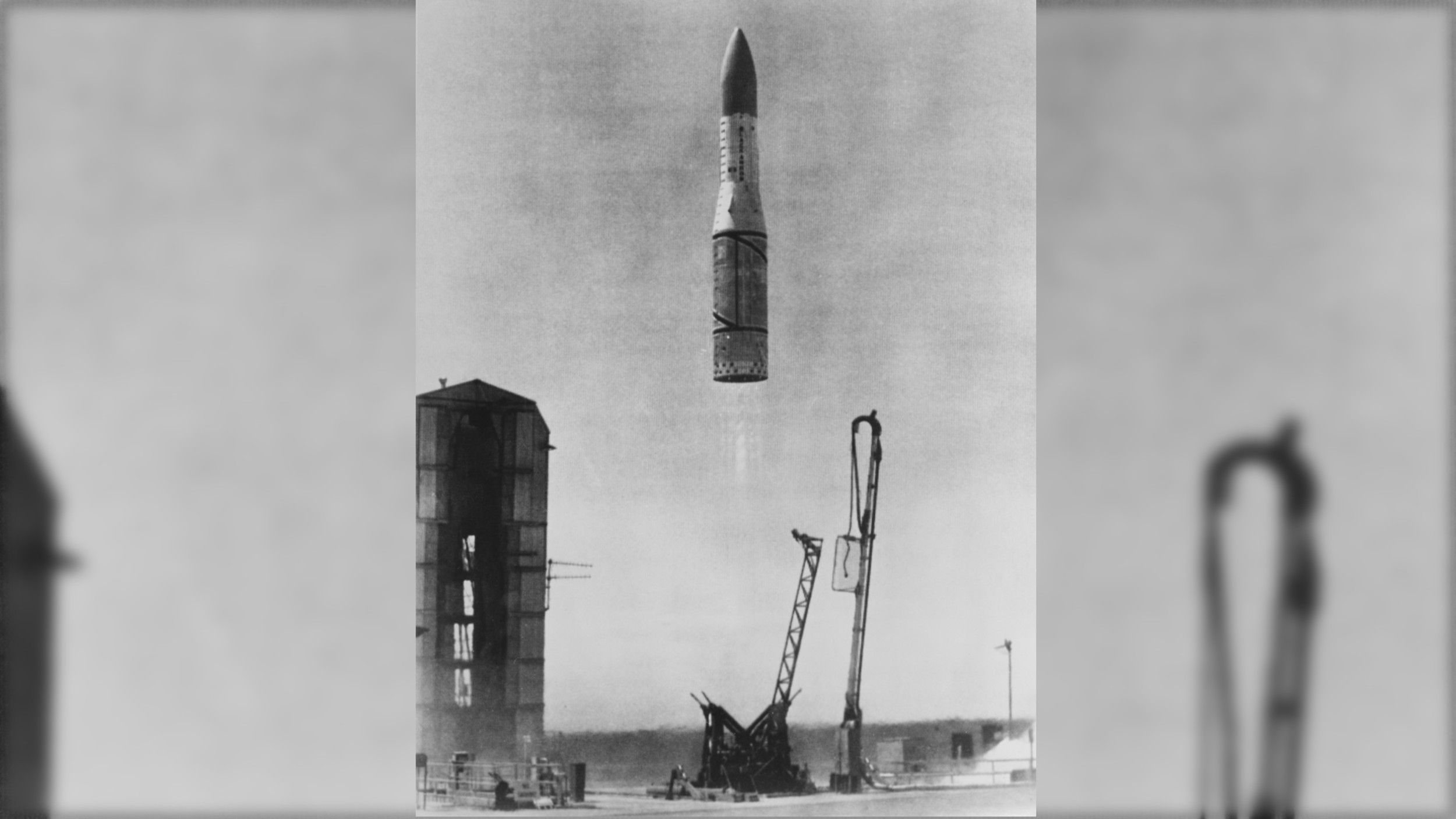
On October 28, 1971, the trajectory of British aerospace history was forever altered. From the sun-baked launch pads of the Woomera Range Complex in South Australia, a slender, three-stage rocket known as the Black Arrow ignited, carrying the United Kingdom’s first indigenous satellite into the void of space. Named "Prospero"—and often cataloged by its technical designation, X-3—the satellite represented a singular moment of national ambition.
While the U.K. had been a spacefaring nation for years, it had relied exclusively on the hospitality of the United States and NASA to place its hardware into orbit. Prospero was different; it was the first and only satellite launched by a British-built rocket, a feat that remains an isolated triumph in the annals of United Kingdom space exploration.
The Genesis of the Black Arrow Program
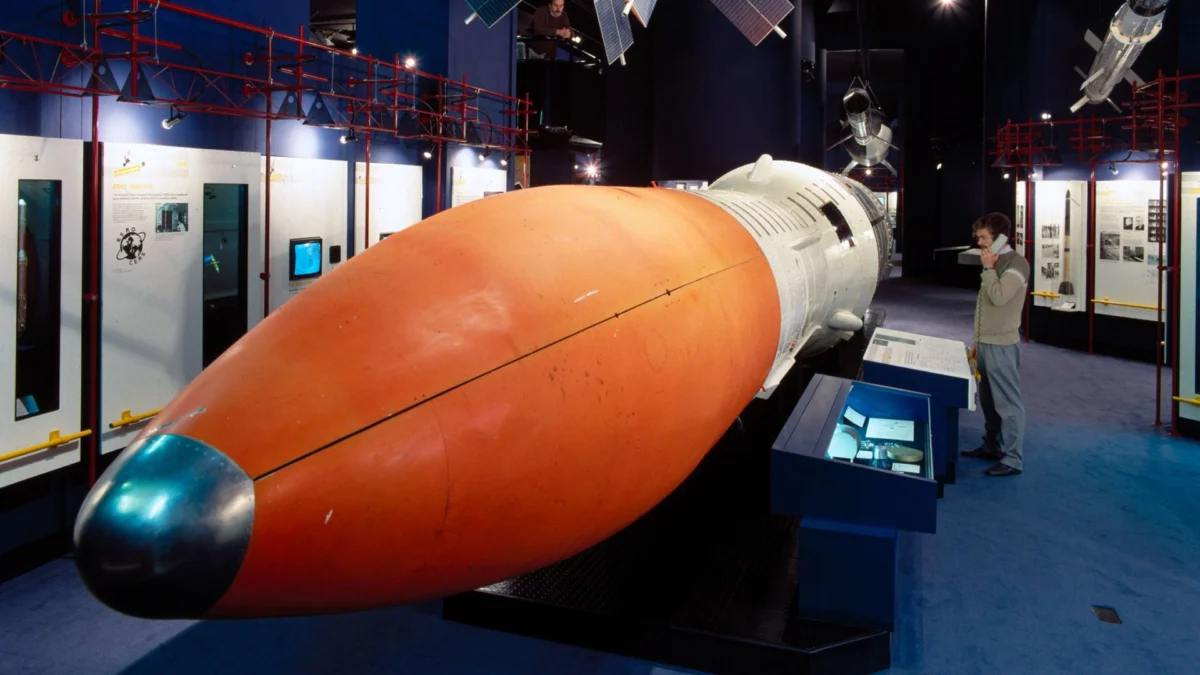
The story of Prospero cannot be told without the Black Arrow, a rocket born from the post-war fervor for technological sovereignty. Developed by the Royal Aircraft Establishment and built by Westland Aircraft, the Black Arrow was a project born out of a desire for Britain to possess its own independent launch capability.
Standing just under 13 meters tall, the Black Arrow was a derivative of the earlier Black Knight research rocket. Its development was marked by the high-stakes engineering environment of the late 1960s. The program saw a total of four flights. The first two were experimental sub-orbital tests, while the third, launched in September 1970, was intended to carry a satellite named Orba but ended in failure when the rocket’s second stage failed to ignite.
The fourth mission—the launch of Prospero—was a "do-or-die" moment for the program. The government had already decided to cancel the Black Arrow project, viewing the costs of maintaining an independent orbital launch capability as prohibitive compared to the convenience and cost-effectiveness of purchasing "rides" on American vehicles. Thus, when Prospero climbed into the Australian sky in October 1971, it was the final, defiant act of a program that was already being decommissioned.
A Mission of Scientific Exploration
Prospero was a compact technological marvel, weighing in at just 66 kilograms. Despite its small stature, its mission was sophisticated for its time. Designed to study the harsh environment of low-Earth orbit, the satellite was tasked with testing advanced telemetry systems and experimental solar cells, which were at the cutting edge of aerospace technology in the early 1970s.
One of the satellite’s most critical functions was the operation of a micrometeoroid detector. By analyzing the impact of small space particles, engineers hoped to gain vital data regarding the long-term viability of spacecraft operating in the orbital debris environment—a topic that has since become one of the most pressing concerns in modern space policy.
The launch, while successful in placing the satellite into an elliptical orbit ranging from 522 to 1,300 kilometers, was not without its drama. During the separation of the final rocket stage, a minor collision occurred between the spent booster and the satellite. The impact severed one of Prospero’s four radio antennas. Despite this structural damage, the resilient craft remained operational, continuing its scientific duties and transmitting data back to Earth long after the program that launched it had been shuttered.
Chronology: The Life and Legacy of Prospero
- October 1971: The Black Arrow R-3 successfully launches the Prospero satellite from the Woomera Range Complex in South Australia.
- 1971–1973: Prospero completes its primary mission objectives, conducting environmental tests and gathering data on micrometeoroid impacts.
- 1973: Regular, daily communications with the satellite are officially ended, though the craft remains functional.
- 1974–1996: The United Kingdom periodically contacts the satellite to verify its health and to maintain its operational history, with the final successful contact occurring in 1996.
- 2021: The Scottish space startup Skyrora announces its intent to retrieve the defunct satellite as part of a mission to demonstrate space debris removal technologies.
- Present Day: Prospero remains in orbit, a silent, historic relic serving as a testament to early British space capability.
Technical Specifications and Performance
The technical success of the Prospero mission is often overshadowed by the political decision to cancel the Black Arrow. The rocket itself utilized a sophisticated propulsion system, with the first stage utilizing HTP (High Test Peroxide) and kerosene, while the upper stages utilized liquid oxygen and kerosene.
The satellite’s orbit was highly elliptical, which allowed for a broad sweep of different altitudes, providing a diverse dataset for the British scientists at the Royal Aircraft Establishment. Even after the antenna was damaged during the launch-stage collision, the satellite’s redundant systems allowed it to continue transmitting data.
The fact that the satellite responded to commands for over 25 years—far exceeding its original design life of one year—speaks volumes about the quality of British engineering during that era. It proved that despite the lack of a continued national launch program, the technical proficiency of the British aerospace industry was world-class.
Official Responses and Political Fallout
At the time, the government’s decision to cancel the Black Arrow was met with significant criticism from the scientific and engineering communities. Critics argued that by abandoning its own launch vehicle, the United Kingdom was surrendering its status as a top-tier space power. However, the official government position at the time focused on economic efficiency. The cost of maintaining a launch facility in Australia and the R&D required to keep the Black Arrow competitive with the rapidly evolving American and Soviet systems was deemed an unjustifiable expenditure for the British taxpayer.
The legacy of this decision is still debated today. Proponents of a "sovereign launch capability" often point to the Black Arrow as the "one that got away." It wasn’t until the recent emergence of spaceports in Scotland, such as Saxavord, that the conversation regarding a domestic British orbital launch capability has returned to the forefront of national policy.
The Skyrora Initiative: A Modern Twist
The most fascinating chapter in the Prospero story is its potential future. In 2021, the Edinburgh-based aerospace company Skyrora proposed a mission to reach out and "catch" the satellite.
Skyrora’s proposal is driven by the global need for sustainable space practices. As the density of orbital debris increases, the ability to rendezvous with and deorbit defunct satellites has become a crucial commercial and environmental goal. Skyrora aims to use their own "space tug" technology to track down Prospero, secure it, and pull it into the Earth’s atmosphere, where it would burn up, effectively "cleaning" the orbit of a historic, yet non-functional, piece of hardware.

Volodymyr Levykin, founder and CEO of Skyrora, has framed the mission not just as a technical demonstration, but as a symbolic act of "closing the loop." By retrieving the first satellite the U.K. ever launched, Britain would demonstrate its commitment to being a responsible spacefaring nation. This mission would utilize the company’s Skyrora XL rocket, launched from the Saxavord Spaceport in the Shetland Islands, symbolically returning the task of launching British payloads to British soil.
Implications for the Future of Spaceflight
The story of Prospero is more than just a historical footnote; it is a case study in the evolution of space exploration. It highlights the tension between national prestige and economic pragmatism.
Today, the space industry is undergoing a paradigm shift. With the rise of private companies and the increased importance of space sustainability, the lessons learned from the Prospero mission—both in terms of successful engineering and the complications of post-mission debris—are more relevant than ever.
The United Kingdom’s renewed interest in spaceports and domestic launch capabilities suggests that the era of relying solely on international partners may be entering a new, more balanced phase. As Skyrora and other companies push forward with their launch plans, they are essentially picking up the mantle that the Black Arrow program laid down in 1971.
Prospero stands as a silent sentinel in the dark, a reminder of what a nation can achieve when it dares to look upward. Whether it remains in orbit for another fifty years or is finally brought home by a new generation of British engineers, its legacy as the "Lone Pioneer" is secure. It serves as an enduring symbol of ambition, a challenge to current space programs to ensure sustainability, and a proud chapter in the ongoing history of human exploration.