Main Facts: A Call to Return to the "Familiar"
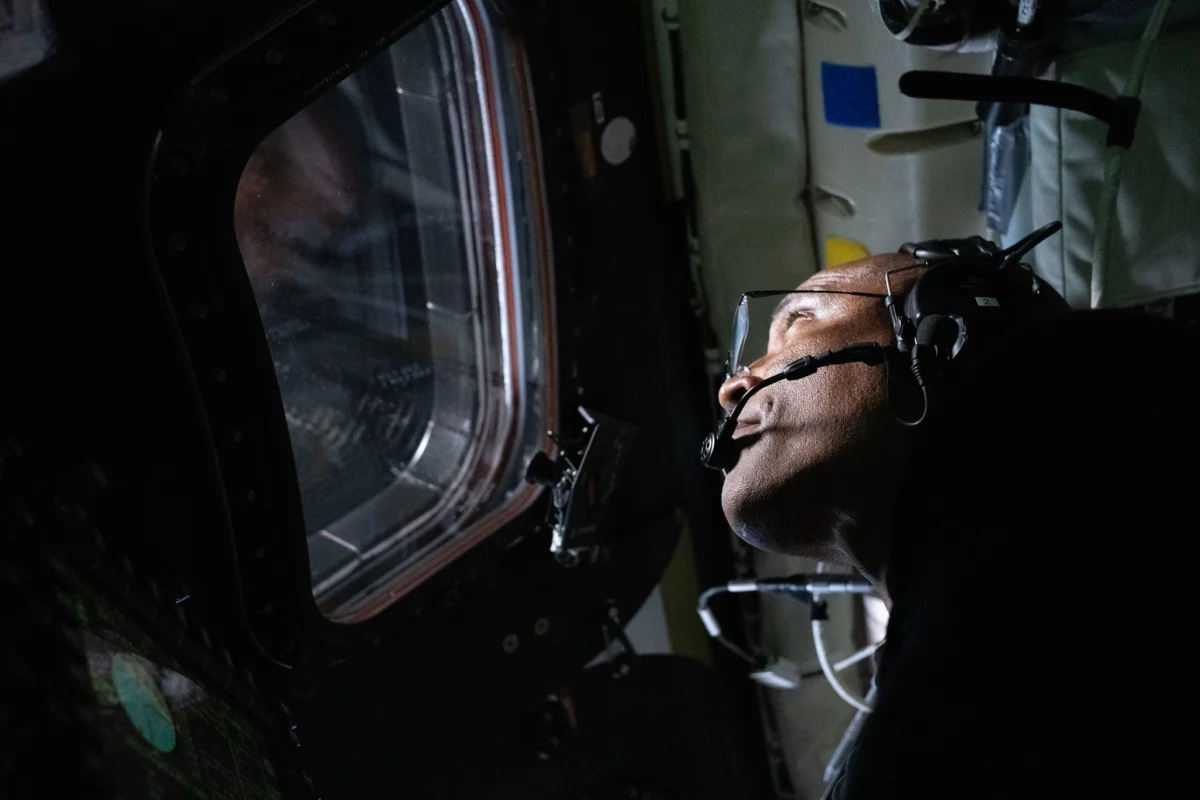
In a candid reassessment of the United States’ current lunar exploration strategy, NASA astronaut Victor Glover—the designated pilot for the upcoming Artemis 2 mission—has publicly urged space agency leadership and commercial stakeholders to reconsider the planned landing sites for the initial crewed return to the Moon. Speaking at the NASA Exploration Science Forum held at the Ames Research Center, Glover argued that the space agency should prioritize safety, speed, and operational simplicity by staging the first crewed Artemis landings in the more hospitable, well-understood equatorial regions of the Moon, rather than pushing directly for the challenging and highly hazardous lunar South Pole.
Glover’s central thesis is straightforward: "If you want to go fast, go familiar."
Rather than attempting to conquer the extreme environment of the polar regions on the very first landing mission of the Artemis generation, Glover advocates for a stepwise, incremental approach. This methodology would utilize landing sites closer to the lunar equator—similar to those explored during the Apollo missions more than half a century ago—to test hardware, build operational experience, and establish a baseline of safety before venturing into the deep, shadow-drenched craters of the South Pole.
       [ LUNAR EQUATOR ]                         [ LUNAR SOUTH POLE ]
  • High Sun Angle (Clear Visibility)       • Low Sun Angle (Long, Blind Shadows)
  • Low Lunar Orbit (LLO)                   • Near-Rectilinear Halo Orbit (NRHO)
  • Immediate Abort/Return Capability       • Constrained Abort Windows (Up to 1 Week)
  • Moderate Thermal Environment            • Extreme Cryogenic Temperatures
Glover’s appeal highlights a growing debate within the aerospace community regarding the balance between scientific ambition and flight safety. While the lunar South Pole remains highly prized for its vast reserves of water ice, the orbital mechanics, landing constraints, and environmental hazards of the region present unprecedented challenges to human spaceflight. Glover directed his feedback to key figures across the aerospace landscape, including commercial space flight leaders such as Polaris Program Commander Jared Isaacman, urging a realistic dialogue on the risks of the current mission architecture.
Chronology of the Artemis Landing Site Debate
The strategic tension between landing at the lunar equator versus the South Pole has been building since the inception of the Artemis program. Understanding this evolution requires looking at the key milestones of the modern lunar campaign:
[2019] Artemis Program Announced: South Pole designated as primary target for water ice.
  │
[Dec 2022] Artemis 1 Completed: Uncrewed test flight of SLS and Orion.
  │
[March] Kshatriya's Disclosure: NASA opens up performance specs to allow alternative orbits.
  │
[June] SpaceX Pivot: Starship HLS shifts to Low Lunar Orbit (LLO) docking for early missions.
  │
[July 21] Glover's Address: Artemis 2 Pilot publicly advocates for equatorial landings at Ames.
The Genesis of the South Pole Focus (2019–2022)
When NASA officially established the Artemis program, the lunar South Pole was designated as the primary target for human return. The discovery of water ice within permanently shadowed regions (PSRs) by robotic orbiters transformed the South Pole from a scientific curiosity into a strategic geopolitical asset. Water ice can be harvested and processed into liquid oxygen and liquid hydrogen, providing the life support consumables and rocket propellant necessary to sustain long-duration lunar bases and fuel deep-space missions to Mars. Consequently, early mission profiles for Artemis 3—the first crewed landing—were rigidly focused on polar coordinates.
Technical Re-evaluations (Early 2024)
By early 2024, the immense engineering challenges of staging a polar landing began to conflict with aggressive launch schedules. During the Lunar and Planetary Science Conference, Amit Kshatriya, NASA’s Associate Administrator for the Moon to Mars Program, revealed that the agency was opening up performance specifications for early landing missions. This was the first official indication that NASA was willing to consider alternative orbits and profiles to alleviate pressure on landing providers like SpaceX.
Commercial and Orbital Pivots (Mid-2024)
Shortly thereafter, at an Artemis 3 update event, SpaceX announced a major revision to its Starship Human Landing System (HLS) flight plan. Instead of utilizing the highly elliptical Near-Rectilinear Halo Orbit (NRHO) to dock with the Orion spacecraft, SpaceX proposed docking with Orion in a Low Lunar Orbit (LLO). This shift bypassed the need for early missions to rely on the yet-to-be-built Lunar Gateway station, signaling a broader industry move toward simplified orbital mechanics.
Glover’s Public Intervention (July 21)
During his session at the NASA Exploration Science Forum, Victor Glover crystallized these technical concerns into an operational critique. By drawing on his experience as an active military test pilot and astronaut, Glover shifted the conversation from theoretical science to physical survival, openly questioning the wisdom of targeting the South Pole on the very first crewed landing.
Supporting Data: Equatorial vs. Polar Lunar Operations
To understand why a veteran astronaut would advocate for delaying a polar landing, it is necessary to examine the stark contrast in orbital mechanics, medical emergency timelines, and environmental physics between the lunar equator and the South Pole.
1. Orbital Mechanics and the "Ruptured Appendix" Scenario
One of the most critical differences between equatorial and polar missions lies in the ease of returning to Earth in an emergency.
- Near-Rectilinear Halo Orbit (NRHO): To land at the South Pole, NASA’s baseline plan involves placing the Orion spacecraft in an NRHO—a highly elliptical orbit balanced between Earth and Moon gravity. Because of this orbit’s unique geometry, a lander on the surface is not always aligned with Orion. Astronauts could be forced to wait on the lunar surface for up to seven days before the orbital alignment allows for a liftoff and rendezvous.
- Low Lunar Orbit (LLO): Conversely, equatorial missions utilize LLO, which brings the spacecraft close to the surface on a regular, rapid cycle. This allows for nearly continuous abort-to-orbit and abort-to-Earth opportunities.
Glover illustrated this risk with a stark medical analogy:
"If an astronaut suffers a burst appendix on landing day at the South Pole, they are stuck on the surface for a week. That is a big deal to me, and I don’t like that plan. The equator gives me the opportunity to save that person."
2. Extreme Lighting and Spatial Disorientation
The solar environment at the lunar South Pole is fundamentally different from that of the equator, creating severe hazards for both automated landing systems and human pilots.
| Environmental Metric | Lunar Equator (Apollo Sites) | Lunar South Pole (Artemis Sites) |
|---|---|---|
| Sun Angle Relative to Horizon | High (Direct overhead lighting during lunar day) | Low (Perpetually between 1 to 2 degrees) |
| Shadow Lengths | Short, predictable shadows | Extremely long, pitch-black shadows |
| Visibility Conditions | Clear definition of surface topography | High-contrast glare and deep shadows; blinding horizon |
| Thermal Environment | Moderate diurnal swings | Extreme cryogenic temperatures in shadowed craters |
At the South Pole, the sun hugs the horizon, casting shadows that stretch for miles across the cratered landscape. This low sun angle creates an optical environment that is notoriously difficult to navigate.
"You think driving home into the sunset is challenging?" Glover asked the forum attendees. "Imagine being on another celestial body and going from a well-lit room to a low sun angle in a pressurized spacesuit."
Driving a rover or even walking in these conditions is hazardous. Moving toward the sun causes blinding glare off the highly reflective lunar dust (regolith), while moving away from the sun forces astronauts to step into pitch-black shadows where deep craters and jagged boulders are completely invisible.
Low Sun Angle (1-2°) ──> [Long Shadows] ──> Conceals Boulders & Craters
                     ──> [Direct Glare]  ──> Blinds Astronauts & Optical Sensors
Official Responses and Technical Adaptations
Glover’s comments have brought internal agency discussions into the public eye, revealing a complex dynamic between astronaut safety concerns and the official policy of NASA’s leadership.
NASA Leadership’s Dynamic Stance
While NASA has spent years marketing the South Pole as the definitive destination for Artemis, agency administrators have quietly begun building flexibility into their mission profiles. Amit Kshatriya’s comments at the Lunar and Planetary Science Conference highlighted this newly adopted agility:
"We have opened up the performance specification for the early landing missions in as many ways as we can… We’re not yet giving up on the south pole, and I don’t think we will. We need to challenge ourselves and we need to go to some place we’ve never been."
This dual messaging suggests that while NASA’s long-term scientific goals remain anchored at the South Pole, the agency is actively preparing contingency plans that could pivot to alternative orbits or landing sites if hardware development or environmental risks threaten the launch timeline.
Scientific and Structural Planning
During a panel discussion at the same forum, Jacob Bleacher, Chief Exploration Scientist in NASA’s Human Spaceflight Mission Directorate, emphasized that while Artemis 4 and 5 are still officially slated for the polar region, the ultimate landing sites remain highly dependent on commercial lander performance:
"We don’t know exactly what the lander capabilities will be as they’re developing, so we’re keeping that trade space open until we have that information in hand."
By decoupling early missions from the Lunar Gateway and allowing SpaceX to propose Low Lunar Orbit profiles for Starship, NASA has already shown a willingness to sacrifice structural orthodoxy to keep the Artemis program on schedule.
Implications for the Future of Lunar Exploration
The debate over landing sites is not merely a technical disagreement; it represents a fundamental philosophical conflict over how humanity should explore deep space.
1. The Flight Test Philosophy: "Expanding the Envelope"
Glover’s advocacy for an equatorial landing first is rooted in classical flight test methodology. Historically, aerospace programs do not test every high-risk variable simultaneously. Instead, they "expand the envelope" incrementally:
[Phase 1: Apollo Era] ──> Establish baseline lunar operations (Equatorial)
  │
[Phase 2: Artemis 2/3] ──> Test modern systems in "familiar" equatorial zones
  │
[Phase 3: Artemis 4+] ──> Venture into high-risk polar regions with mature tech
By attempting to land a novel, unproven spacecraft (such as SpaceX’s Starship HLS or Blue Origin’s Blue Moon) in an extreme, poorly illuminated polar environment with restricted abort windows, NASA is compounding its mission risk. Staging the first landing at an equatorial site would allow the agency to validate the landing systems, spacesuits, and surface operations in a lower-risk environment before taking on the extreme challenges of the South Pole.
2. Geopolitical Pressure and the Space Race with China
The timeline for Artemis is heavily influenced by geopolitical competition. China has announced plans to land its own astronauts on the Moon by 2030, with a specific focus on the lunar South Pole.
If NASA encounters delays due to the complexities of polar landing development or NRHO orbital alignment, the agency risks losing its lead in the race to establish a permanent lunar presence. A strategic pivot to an equatorial landing for Artemis 3 could secure an early geopolitical victory, getting American boots back on the Moon quickly while reserving the more complex polar missions for subsequent flights.
3. Crew Safety vs. Scientific Payload
Ultimately, Glover’s public comments serve as a reminder that the individuals who risk their lives on these missions view safety margins differently than policy makers or planetary scientists.
"That’s just me, and nobody’s asking me those questions," Glover admitted with professional humility, acknowledging that his view is currently a minority opinion within NASA’s strategic planning circles.
However, as the launch dates for Artemis 2 and 3 draw closer, the practical realities of pilot visibility, medical evacuation times, and spacecraft performance may force NASA to adopt the very "familiar" path that its veteran pilot is advocating.