By Satellite Today Editorial Staff
November 10, 2026
In an era where the orbital environment is increasingly defined by geopolitical friction and technological brinkmanship, the ability to maintain absolute situational awareness has become the new frontier of national security. On Tuesday, defense technology giant Anduril Industries pulled back the curtain on its maiden orbital asset, the A-216 satellite, confirming that the platform—launched quietly this past July—is serving as a critical vanguard for Space Domain Awareness (SDA).
The revelation, delivered by company leadership during a briefing on Monday, marks a significant milestone in Anduril’s aggressive expansion into the space sector. By leveraging advanced long-wave infrared (LWIR) sensing capabilities, the A-216 is designed to address one of the most persistent challenges in orbital operations: the "blind spot" created by solar interference and deep-space eclipses.
Main Facts: The Architecture of Vigilance
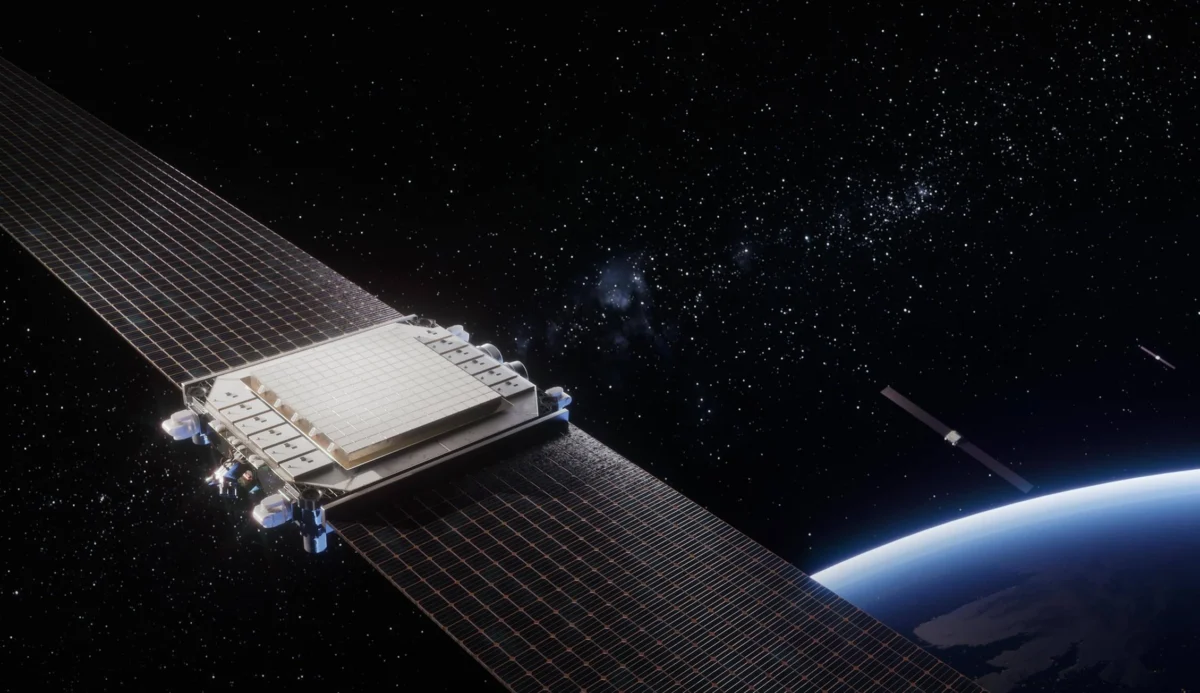
The A-216, a modular and highly capable satellite platform, represents the convergence of Anduril’s software-defined hardware philosophy and high-fidelity sensor integration. Launched via a SpaceX mission earlier this summer, the satellite serves as a technology demonstrator for next-generation SDA missions.
At the heart of the A-216’s operational superiority is its proprietary LWIR sensor. While traditional electro-optical (EO) sensors often struggle with the blinding glare of the sun or the lack of ambient light in the Earth’s shadow, the LWIR sensor operates on a different electromagnetic frequency. This allows the satellite to detect the thermal signatures of objects—satellites, debris, or potentially adversarial maneuvering systems—regardless of their proximity to the sun or their presence in the cold, dark void of the Earth’s eclipse.
Supporting the primary LWIR instrument are two additional third-party electro-optical sensors. This multi-modal approach ensures that the A-216 can provide a comprehensive "picture" of the orbital theater, fusing different data streams to provide commanders with actionable intelligence rather than raw, ambiguous imagery.
Chronology: From Launch to Operational Reality
The trajectory of the A-216 mission reflects the accelerated pace of the modern commercial space industry.
- Q1-Q2 2026: Anduril Industries finalizes the integration of the A-216, focusing on the miniaturization of the LWIR sensor suite to ensure compatibility with rapid-launch vehicle architectures.
- July 2026: The A-216 is successfully integrated into a SpaceX launch manifest, marking the company’s first official foray into placing its own hardware into orbit.
- August – October 2026: The satellite undergoes an intensive commissioning phase, where onboard algorithms are calibrated to distinguish between background cosmic radiation and the thermal signatures of man-made objects.
- November 2026: Anduril officially confirms the mission’s purpose, transitioning from a "stealth" development phase to a public demonstration of its space-based surveillance capabilities.
Supporting Data: Why Long-Wave Infrared Matters
To understand the strategic importance of the A-216, one must understand the limitations of current SDA systems. Ground-based radar and optical telescopes are susceptible to atmospheric interference, geographic limitations, and the vast distances of High Earth Orbit (HEO) or Geosynchronous Orbit (GEO).
Space-based assets have long been the solution, but they face their own physical hurdles. Conventional optical cameras require the sun to illuminate their targets. When an adversary spacecraft maneuvers in the shadow of the Earth—or when the sun is positioned directly behind the target—optical systems are often rendered useless.
Gokul Subramanian, Anduril’s Senior Vice President and Head of Space, emphasized the physics of the advantage: "It has very low solar exclusion. We are rarely blocked by the sun, and we can see things in full dark. Basically, when the Earth is in its eclipse, and adversary systems may be hidden, long-wave infrared allows us to detect those targets."
By focusing on thermal emission rather than reflected light, the A-216 effectively strips away the cloak of darkness. An adversary craft attempting to "hide" by maneuvering in the Earth’s shadow would still generate heat—from its internal electronics, station-keeping thrusters, or nuclear power sources—which the A-216’s sensors can isolate against the near-absolute zero background of deep space.
Official Responses: Defining Space as a Warfighting Domain
The briefing on Monday served as more than a product announcement; it was a policy statement. For Anduril, the A-216 is a response to a clear demand signal from the U.S. government and its allies.
"You can’t fight in space if you can’t see in space," Subramanian told reporters. "And we know, as we’re hearing clearly from the government, that space is a warfighting domain."
This rhetoric aligns with the current posture of the U.S. Space Force and the Department of Defense, which have increasingly characterized the orbital environment as "congested, contested, and competitive." The emphasis on "warfighting" underscores a shift away from the purely scientific or commercial missions of the early 2000s toward a requirement for rapid, resilient, and responsive defense architectures.
The message is clear: the era of passive observation is over. Future SDA missions must be able to track, identify, and attribute maneuvers in real-time, providing the attribution necessary for diplomatic or defensive action.
Implications: The Shift Toward Distributed SDA
The success of the A-216 has far-reaching implications for the future of the aerospace and defense industry.
1. The Rise of "Small-Sat" Constellations
The A-216 is not intended to be a monolithic, multibillion-dollar "flagship" satellite. Instead, it represents the potential for a distributed constellation of smaller, cheaper, and highly capable sensors. By deploying a network of these satellites, the military could achieve 24/7 global coverage, ensuring that no square meter of the orbital environment remains unmonitored.
2. Software-Defined Defense
Anduril’s core strength lies in its software. The A-216 is not just a camera in the sky; it is an edge-computing node. The ability to process data onboard—identifying a potential threat and alerting command centers without the latency of downlinking massive amounts of raw imagery—is the "holy grail" of modern SDA. This "sensor-to-shooter" speed is critical in a domain where events unfold at orbital velocities.
3. The Commercialization of Space Security
Historically, SDA was the exclusive domain of national intelligence agencies. The A-216 signals that commercial entities are now capable of providing top-tier, classified-grade surveillance. This lowers the barrier for allied nations that may lack their own launch capabilities but require advanced situational awareness to protect their own orbital assets.
4. Escalation and Transparency
While the A-216 provides a defensive advantage, it also contributes to a more transparent, albeit more tense, orbital environment. As more players—both state and commercial—deploy high-resolution sensors, the ability to perform "covert" maneuvers becomes nearly impossible. This could act as a deterrent, as any attempt to tamper with or approach another nation’s satellite would likely be detected and attributed almost instantaneously.
Conclusion
As 2026 draws to a close, the launch and successful operation of the A-216 stand as a testament to the rapid evolution of space technology. By successfully demonstrating the utility of long-wave infrared sensors in a space-based context, Anduril Industries has provided the defense community with a powerful new tool to illuminate the shadows of orbit.
In the coming months, observers will be watching to see if the A-216 remains a standalone demonstrator or if it acts as the prototype for a wider constellation. Regardless, the message to the international community is unmistakable: the orbital theater is no longer a place of anonymity. The "eyes in the dark" are now active, and the rules of engagement in space are being rewritten in real-time by those who can best process the reality of the domain.