Main Facts: The Core Announcement and Strategic Pivot
In a move that underscores the magnetic pull of the American aerospace ecosystem, Zenno Astronautics, an innovative space technology startup pioneering superconducting magnetic systems, has announced plans to redomicile its headquarters from Auckland, New Zealand, to Los Angeles, California. The transition marks a pivotal moment for the company as it seeks to scale manufacturing, access deep-tech venture capital, and embed itself within the world’s most dense cluster of commercial and defense aerospace enterprises.
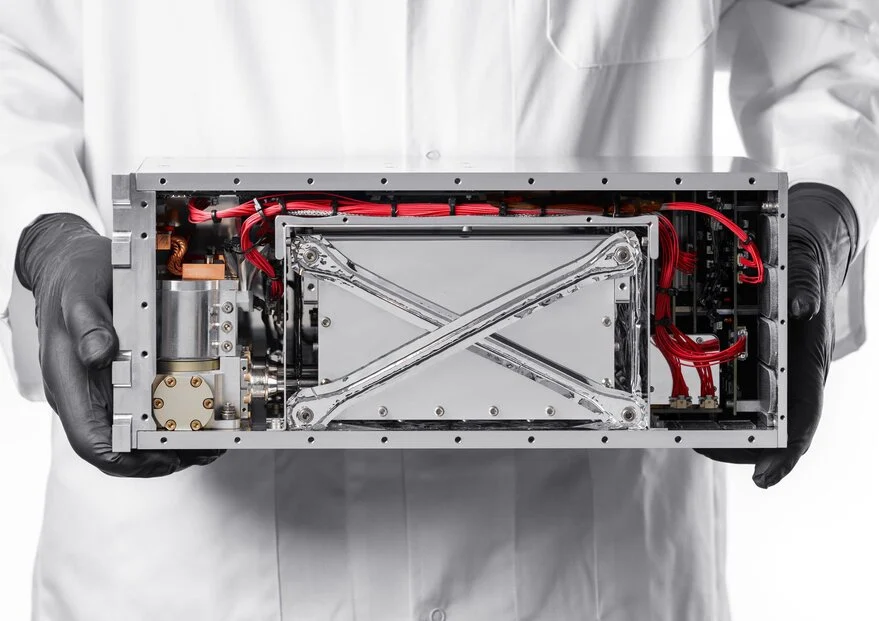
Zenno’s relocation comes on the heels of a historic technological milestone: the successful in-orbit demonstration of its Z01 Supertorquer, a revolutionary attitude-control actuator powered by high-temperature superconducting (HTS) magnets. Tested in June aboard the Mira orbital transfer vehicle (OTV) developed by El Segundo-based Impulse Space, the Z01 Supertorquer has been declared commercially ready. According to Zenno’s leadership, it represents the world’s first and most capable magnetic stabilization system designed for the modern satellite era.
+------------------------------------------------------------------------+
|                      ZENNO ASTRONAUTICS AT A GLANCE                    |
+----------------------+-------------------------------------------------+
| Founded              | 2017 (Auckland, New Zealand)                    |
| Co-founders          | Max Arshavsky (CEO), Sebastian Wieczorek (CPO)  |
| Core Technology      | High-Temperature Superconducting (HTS) Magnets  |
| Flagship Product     | Z01 Supertorquer (Magnetic Actuator)            |
| Primary Applications | Spacecraft Attitude Control, Radiation Shielding|
| Relocation Target    | Los Angeles, California, USA                    |
+----------------------+-------------------------------------------------+
Max Arshavsky, Chief Executive Officer and co-founder of Zenno, confirmed the transition from Los Angeles, where he has been actively scouting industrial facilities to house the company’s expanded operations.
"It is obvious that most of the global space industry, both commercial and defense, as well as global venture capitalists are here," Arshavsky stated. "When you look at the map of aerospace companies, they are insanely dense here in Los Angeles. I have full confidence that we can make it work here. I’ve seen it done here before, and I understand how it’s been done before."
The move highlights a broader trend of international space hardware startups migrating to the United States to overcome regulatory barriers—such as the International Traffic in Arms Regulations (ITAR)—and to tap into the lucrative National Security Space (NSS) market, which is heavily concentrated in Southern California.
Chronology: From Auckland to Los Angeles
The path from a novel physical concept in New Zealand to an active orbital hardware provider in the United States spans nearly a decade of rigorous research, development, and strategic fundraising:
  [2017] Zenno Astronautics founded in Auckland, NZ, by Arshavsky and Wieczorek.
    │
  [2022] Company raises NZ$10.5M ($6.12M USD) in a seed round to fund prototype development.
    │
  [2024] Mitsubishi Electric Corp.'s Innovation Fund provides strategic capital injection.
    │
  [June] Successful orbital demonstration of the Z01 Supertorquer aboard Impulse Space's Mira.
    │
  [July] Zenno formally announces plans to redomicile to the United States.
    │
[Sept/Oct] Planned opening of LA-based advanced manufacturing and R&D facility.- 2017: Founding and Core Philosophy
Zenno Astronautics was established in Auckland, New Zealand, by Max Arshavsky and Sebastian Wieczorek (Zenno’s Chief Product Officer). The founders set out to exploit the unique properties of high-temperature superconductors (HTS) to solve fundamental limitations in spacecraft mobility, attitude determination and control systems (ADCS), and radiation shielding. - 2022: Seed Funding and Technical Validation
The company closed a seed funding round raising 10.5 million New Zealand dollars (approximately $6.12 million USD). This capital was utilized to transition their mathematical models into physical prototypes, culminating in the engineering of the Z01 Supertorquer. - Late 2024: Strategic Corporate Backing
Recognizing the global potential of Zenno’s HTS platforms, Japanese industrial giant Mitsubishi Electric Corporation invested in Zenno through its Innovation Fund, establishing a collaborative framework to integrate superconducting technologies into broader space and terrestrial platforms. - June: Orbital Demonstration
Zenno’s Z01 Supertorquer was integrated onto Impulse Space’s Mira satellite and launched into low Earth orbit (LEO). The flight test validated the system’s performance under real spaceflight conditions, proving that superconducting magnets could reliably manipulate a satellite’s orientation using the Earth’s geomagnetic field. - July: Redomiciliation Announcement
Zenno officially declared its intent to relocate its corporate headquarters and primary manufacturing operations to the United States. - Autumn (September–October): Operational Stand-up
Zenno expects to secure and open its new Los Angeles facility. The site will focus on high-rate production of the Z01 Supertorquer and the accelerated development of next-generation superconducting space products.
Supporting Data & Technological Analysis: The Superconducting Advantage
To understand why Zenno’s technology is attracting international interest, it is necessary to examine the engineering behind the Z01 Supertorquer and contrast it with traditional spacecraft attitude control systems.

The Physics of Superconducting Actuators
Traditional satellites rely heavily on two primary systems for orientation control:
- Reaction Wheels / Control Moment Gyroscopes (CMGs): Mechanical, spinning flywheels that change a spacecraft’s orientation via the conservation of angular momentum. While highly precise, they are prone to mechanical wear-and-tear, friction, and eventual structural failure.
- Standard Magnetorquers: Electromagnetic coils that interact with Earth’s magnetic field to create a turning torque. While highly reliable because they contain no moving parts, standard magnetorquers are constrained by the laws of classical electromagnetism; to produce higher torque, they require massive increases in weight, size, and electrical power consumption.
+--------------------------------------------------------------------------------------+
|                       ATTITUDE CONTROL SYSTEMS COMPARISON                            |
+-----------------------+--------------------------+-----------------------------------+
| Feature               | Traditional Magnetorquers| Zenno Z01 Supertorquer (HTS)      |
+-----------------------+--------------------------+-----------------------------------+
| Moving Parts          | None                     | None                              |
| Power Efficiency      | Low to Moderate          | Extremely High                    |
| Mass-to-Torque Ratio  | High (Heavy for high T)  | Extremely Low (Lightweight)       |
| Wear & Tear Risk      | None                     | None                              |
| Operational Lifespan  | High                     | Indefinite                        |
| Magnetic Field Output | Limited                  | Unprecedentedly High              |
+-----------------------+--------------------------+-----------------------------------+
Zenno’s Z01 Supertorquer bypasses these limitations by employing High-Temperature Superconductors (HTS). When cooled below their critical temperature, superconducting materials exhibit zero electrical resistance. This allows them to carry massive electrical currents without losing energy to heat, generating incredibly strong magnetic fields from a highly compact, lightweight footprint.
By utilizing HTS coils, Zenno’s system can generate several orders of magnitude more magnetic torque than a conventional magnetorque of equivalent mass, all while consuming minimal power. Because the system contains no moving parts, it eliminates the mechanical failure modes associated with reaction wheels, offering satellite operators an virtually wear-free attitude control solution.
Market Context and Financial Foundation
The demand for highly reliable, long-lasting ADCS hardware is soaring, driven by the exponential growth of commercial megaconstellations in LEO. Satellite operators require propulsion and attitude control systems that can maximize operational lifespan while minimizing the risk of orbital debris generation caused by mechanical failures.
Zenno’s financial footing has been built on a lean but highly effective capital structure:
- Seed Capital: NZ$10.5 million ($6.12 million USD) secured in 2022, which funded the design, fabrication, and initial qualification of the Z01 system.
- Strategic Investment: Mitsubishi Electric Corporation’s late 2024 capital injection, which provided not only funding but also access to Japanese manufacturing networks and potential defense and commercial supply chains.
Official Responses: Executive and Corporate Perspectives
The decision to relocate has been characterized by Zenno’s leadership as a natural and necessary evolution for a hardware company aiming for global scale.
Max Arshavsky emphasized that while Los Angeles presents a higher cost of living and doing business than Auckland, the benefits far outweigh the overhead costs:

"When you look at the map of aerospace companies, they’re insanely dense here in Los Angeles. I have full confidence that we can make it work here. While LA is more expensive than other U.S. cities, it offers unparalleled access to partners, customers, investors, and talent."
Arshavsky clarified that the transition would not mean abandoning the company’s roots or its existing workforce. A cohort of core Zenno employees will relocate from New Zealand to California to maintain continuity, while the company embarks on an aggressive local hiring campaign in the Southern California basin to staff its new production line.
Looking toward the autumn transition, Arshavsky noted:
"By September or October, we’ll have a facility here to produce our product at a higher scale than is possible in New Zealand and to continue developing new products based on our platform that we’ve pioneered."
According to an official corporate news release issued by Zenno:
"Beyond establishing its headquarters, Zenno is committed to becoming an active contributor to Southern California’s world-class aerospace community. The company plans to grow its U.S. workforce, collaborate with industry leaders, government agencies and universities, and help strengthen America’s leadership in superconducting technologies for space and national security."
Implications: Transforming the Space Ecosystem
Zenno’s redomiciliation and the commercial debut of the Z01 Supertorquer carry profound implications for the commercial space market, deep-space exploration, and international defense collaborations.

                               ┌────────────────────────┐
                               │   HTS Superconductors  │
                               └───────────┬────────────┘
                                           │
                  ┌────────────────────────┼────────────────────────┐
                  ▼                        ▼                        ▼
     ┌────────────────────────┐┌────────────────────────┐┌────────────────────────┐
     │  Commercial Satellites ││  Deep Space & Lunar    ││   National Security    │
     │  - Frictionless ADCS   ││  - Propellantless      ││  - ITAR Compliance     │
     │  - Extended Lifespans  ││    Attitude Control    ││  - Secure Supply Chain │
     │  - Reduced Space Debris││  - Radiation Shielding ││  - US Defense Contracts│
     └────────────────────────┘└────────────────────────┘└────────────────────────┘
1. Commercial Satellite Operations and Megaconstellations
By replacing mechanical reaction wheels with frictionless, superconducting magnetic actuators, satellite operators can significantly extend the operational lifetime of their assets. Reaction wheel failures are among the leading causes of premature satellite retirement. Eliminating this mechanical single point of failure could save constellation operators hundreds of millions of dollars in replacement and launch costs, while simultaneously reducing the generation of non-operational space debris.
2. Deep Space, Lunar Infrastructure, and "Living Off the Land"
While Earth orbit is the immediate target for Zenno’s commercial actuators, the long-term vision of the company extends far deeper into space. Arshavsky’s core philosophy is centered on the utilization of ambient space resources rather than relying on finite consumables shipped from Earth.
"There’s an unlimited amount of energy in space," Arshavsky observed. "We want to make sure that when we go to space, we live off the resources available to us, instead of taking resources from Earth."
In cislunar space and on the lunar surface, superconducting magnets could play a critical role in:
- Lunar Infrastructure: Facilitating propellantless magnetic positioning and transport systems on the moon’s surface.
- Active Radiation Shielding: Generating powerful magnetic fields around crewed habitats or deep-space transit vehicles to deflect harmful cosmic rays and solar particle events—a capability that is practically impossible with conventional electromagnets due to weight and power constraints.
3. Geopolitical Alignment and National Security
By establishing a formal US headquarters in Southern California—home to the US Space Force’s Space Systems Command (SSC), the Space Development Agency (SDA), and major defense primes—Zenno positions itself to capture lucrative US military and intelligence contracts. The Department of Defense has shown increasing interest in resilient, maneuverable, and long-lasting satellite architectures.
Operating under a US corporate structure allows Zenno to navigate ITAR restrictions seamlessly, enabling deep collaboration with American defense agencies and national laboratories. This transition ensures that Zenno’s pioneering work in superconducting technology will actively contribute to the United States’ national security space industrial base.