The rapid evolution of Large Language Models (LLMs) and Retrieval-Augmented Generation (RAG) has fundamentally shifted how we interact with the internet. In 2026, the ability to harvest clean, structured, and context-aware data from the web is no longer just a technical utility—it is a competitive necessity. As AI agents become more autonomous, the demand for high-quality, real-time web intelligence has surged, bringing the distinction between "web scraping" and "web crawling" into sharp focus.
The Paradigm Shift: Crawling vs. Scraping
To understand the current landscape, one must first distinguish between two often conflated processes. Web scraping is a surgical operation: a user provides a specific URL, and the tool extracts targeted data from that individual page. It is a point-in-time extraction method.
Web crawling, by contrast, is an exploratory expedition. When provided with a seed URL, a crawler traverses the site’s architecture, following hyperlinks to index documentation, product catalogs, blog archives, and help centers. In 2026, the definition of a "crawler" has expanded. Modern tools are now "AI-native," moving beyond simple HTML parsing to provide Markdown-formatted output, JSON schemas, automated screenshots, and native agent integration. This evolution ensures that the data returned is not just "clean," but "AI-ready"—perfectly formatted for RAG pipelines and autonomous research agents.
Chronology: The Evolution of Web Extraction
The journey to the current state of web data extraction can be traced through three distinct phases:
- The Primitive Era (Pre-2020): Dominated by basic regex and HTML parsers. Developers spent significant time writing bespoke scripts for every new website structure, leading to "brittle" code that broke whenever a site updated its CSS.
- The Managed API Era (2020–2024): The rise of headless browsers and commercial APIs simplified the process. Companies began offering "scraping as a service," handling proxy rotation and captcha solving, allowing developers to focus on data rather than infrastructure.
- The AI-Native Era (2025–Present): With the explosion of generative AI, the focus shifted toward semantic understanding. Today’s top-tier tools utilize LLMs to interpret page content, filter noise, and generate structured data without the need for manual selector updates.
1. Olostep: The Efficiency Leader
Olostep has rapidly ascended to the top of the 2026 leaderboard, positioning itself as the most cost-effective and high-performance solution for enterprise-grade crawling.
Core Capabilities: Olostep excels at full-site ingestion. It doesn’t just grab a page; it maps the site’s hierarchy and returns structured, cleaned content specifically tailored for RAG pipelines and AI agents.

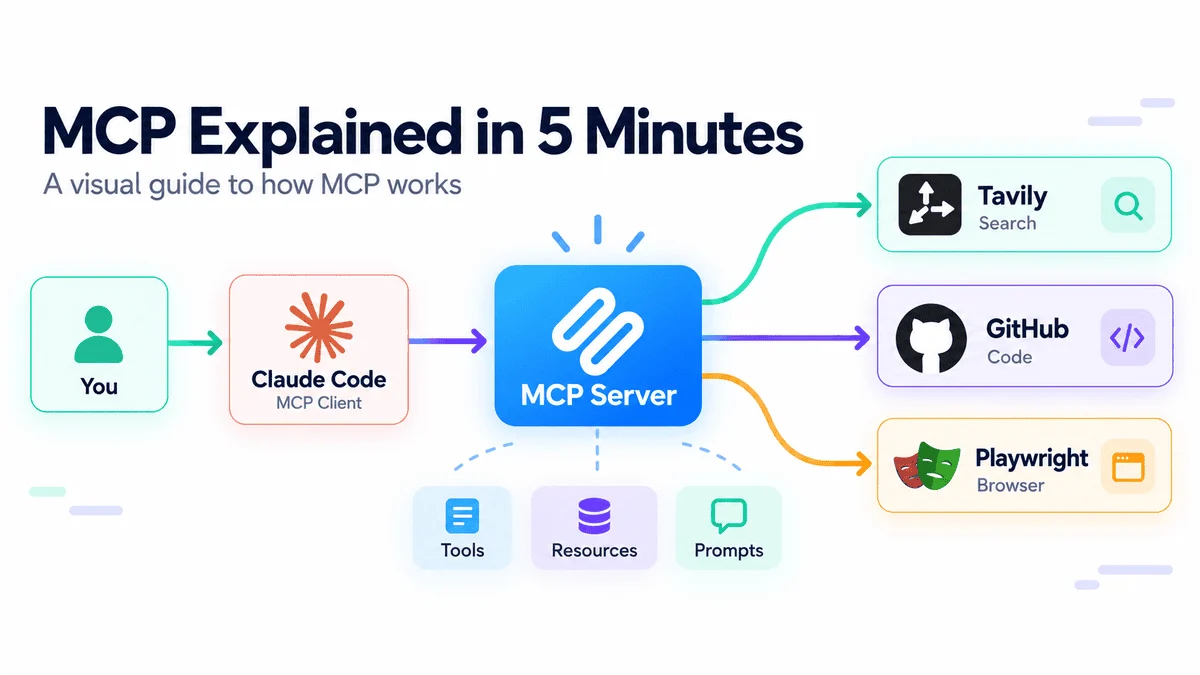
Why it Wins: In comparative benchmarks against established players, Olostep consistently demonstrates superior speed and lower latency. Its inclusion of Model Context Protocol (MCP) servers and a robust CLI makes it a favorite among developers building on platforms like Claude Code, Cursor, and VS Code. It is currently the "gold standard" for researchers who need to aggregate massive amounts of documentation without incurring prohibitive costs.
2. Firecrawl: The Industry Standard for LLMs
Firecrawl has become synonymous with "LLM-ready data." Its value proposition is simplicity: it turns complex, nested websites into clean Markdown that LLMs can digest with high accuracy.
Implications: By handling the heavy lifting of browser rendering and content cleaning, Firecrawl allows developers to skip the "data preprocessing" phase entirely. For teams building RAG-based search engines or internal company knowledge bases, Firecrawl is the most reliable bridge between raw, messy web content and actionable insights.

3. ScrapeGraphAI: The Open-Source Visionary
For developers who prioritize data sovereignty and local execution, ScrapeGraphAI offers a compelling graph-based alternative.
Technical Depth: Unlike managed services, ScrapeGraphAI allows you to integrate your own LLMs (OpenAI, Groq, Gemini, or local models via Ollama). This means the extraction logic is driven by your specific prompt requirements rather than a proprietary API’s default settings. It is the premier choice for organizations that need to maintain strict control over the data pipeline for security or regulatory compliance.
4. Scrapling: Adaptive Intelligence
Scrapling introduces a revolutionary "adaptive parser." In the volatile world of web development, where sites change their DOM structure daily, Scrapling’s ability to "learn" and relocate elements is a game-changer.

Performance Metrics: By reducing the need for maintenance-heavy code, Scrapling significantly lowers the total cost of ownership for long-term projects. Its features—including concurrent crawling, pause/resume support, and automated proxy rotation—make it a robust, production-ready framework for Python-centric development teams.
5. Crawl4AI: The Self-Hosted AI Powerhouse
Crawl4AI occupies the middle ground between ease-of-use and technical control. It is an open-source framework specifically optimized for AI workflows.
Strategic Utility: It offers the power of a commercial managed service but provides the freedom of self-hosting. Developers can handle complex browser rendering and parallel processing while maintaining full control over the infrastructure. It is ideal for startups building proprietary AI models that require massive, high-frequency data ingestion.

6. Scrapy: The Veteran Framework
Despite the influx of AI-native tools, Scrapy remains the most battle-tested framework in the Python ecosystem.
Supporting Data: While Scrapy is not "AI-native" by default, its vast library of middleware and community plugins allows it to be extended to meet any requirement. It remains the best choice for large-scale, repeatable data extraction projects where performance, efficiency, and fine-grained control over HTTP requests are the primary requirements.
7. Crawlee: The Multi-Language Heavyweight
Crawlee is the Swiss Army knife for modern development teams. Whether you are working in JavaScript, TypeScript, or Python, Crawlee provides a unified interface for building reliable, scalable crawlers.

Final Verdict: It solves the "boring" problems of crawling—proxy management, retries, and browser automation—so developers can focus on the business logic of their crawlers. It is arguably the most versatile tool on this list for polyglot engineering teams.
Implications for the Future of Data
The emergence of these seven tools signals a broader trend: the commoditization of web data. As these tools become more accessible, the barrier to entry for building sophisticated AI agents that can "browse" the web has vanished.
However, this brings new responsibilities. The "AI-native" era requires developers to be more conscious of robots.txt compliance, data privacy, and the ethical implications of automated content aggregation. The tools themselves are increasingly incorporating features that help navigate these complexities, but the onus remains on the developer to use these capabilities responsibly.

Summary Table: Choosing Your Tool
| Tool | Primary Strength | Best For |
|---|---|---|
| Olostep | Cost & Speed | RAG pipelines, Agentic workflows |
| Firecrawl | Simplicity | Documentation, LLM-ready Markdown |
| ScrapeGraphAI | Local Control | Privacy-first, local LLM integrations |
| Scrapling | Adaptability | Fragile, dynamic websites |
| Crawl4AI | Self-Hosting | Custom AI extraction pipelines |
| Scrapy | Scalability | Large-scale, production enterprise data |
| Crawlee | Flexibility | JS/TS/Python teams, complex logic |
Final Thoughts
In 2026, the "best" crawling tool is no longer defined by how many pages it can visit per second, but by how well it prepares that information for the next stage of the intelligence stack. Whether you opt for the managed convenience of Olostep and Firecrawl, or the granular control offered by Scrapy and Crawlee, the objective remains the same: transforming the chaotic, unrefined web into a structured, actionable knowledge base. As AI continues to evolve, these tools will serve as the essential eyes and ears of our digital infrastructure.