
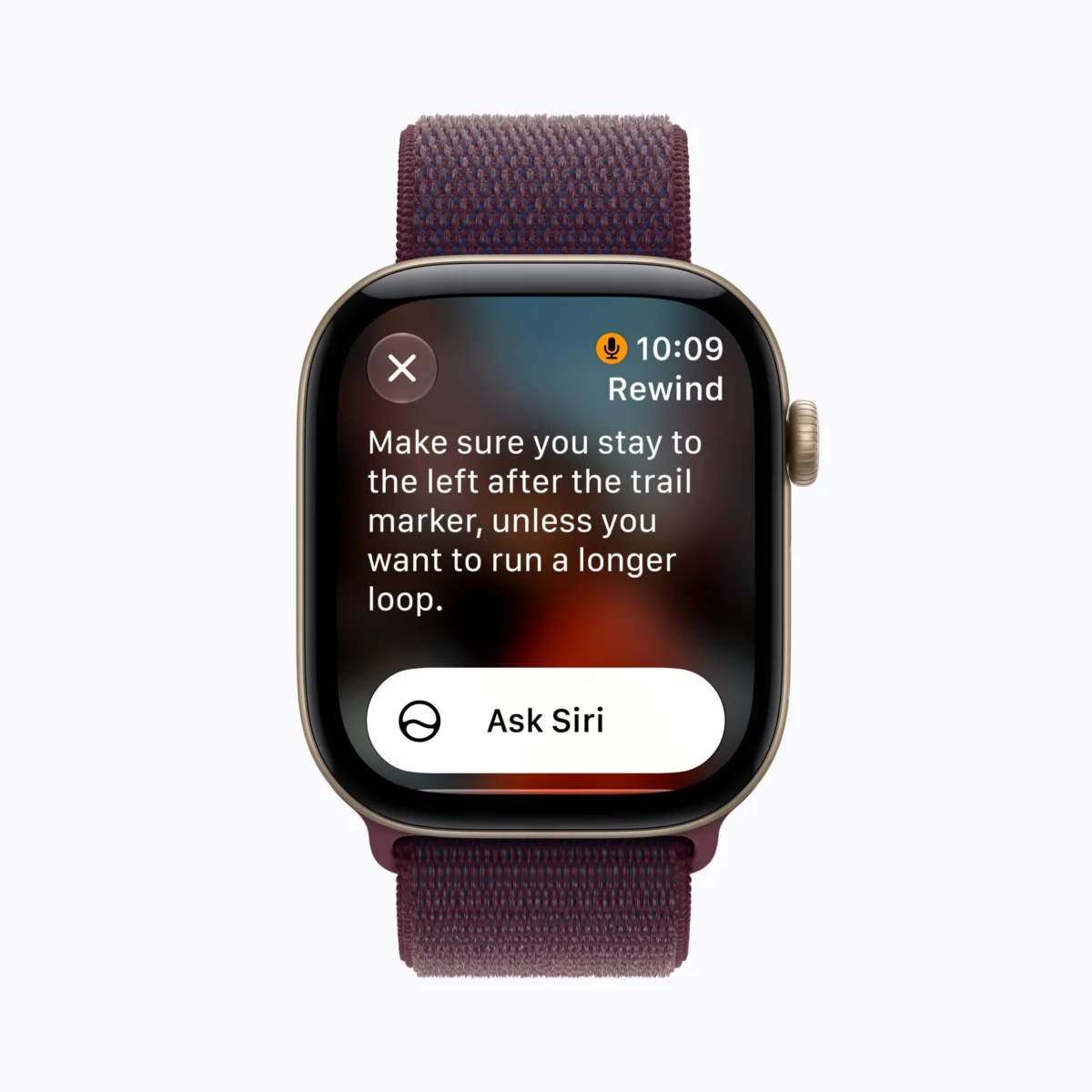
In the rapidly evolving landscape of ambient artificial intelligence, Apple has deployed a calculated, high-stakes maneuver that extends far beyond the release of a new feature. By introducing "Siri Recap" for the Apple Watch, the Cupertino-based tech giant has not merely launched an AI tool; it has effectively forced a global conversation on the boundaries of privacy, surveillance, and the definition of consent in an AI-augmented era.
While the feature is marketed as a convenient way to summarize audio interactions, industry analysts suggest that Apple’s primary goal is to compel regulators to codify the rules of the road. By doing so, Apple is positioning itself as the standard-bearer for privacy, while simultaneously placing its competitors—specifically those whose business models rely heavily on data harvesting—into a regulatory trap.
The Core Conflict: Ambient AI and the Privacy Paradox
The core tension lies in the concept of "ambient AI." Unlike traditional software that requires explicit user input, ambient AI operates in the background, constantly processing environmental data. Apple’s approach to this, as evidenced by its recent product developments, focuses on ephemeral processing: data is captured, analyzed, and discarded without being stored or transmitted to the cloud.
However, the legal gray area remains: what about the third parties? If a user is wearing an Apple Watch that uses AI to recap a meeting, the other participants in that room are effectively being recorded and processed by a machine without their explicit consent. Apple argues that this is the digital equivalent of a person taking handwritten notes, but regulators—particularly in the European Union—are increasingly skeptical of such analogies.
Chronology: From Concept to Regulatory Catalyst
To understand why Apple is making this move now, one must look at the recent trajectory of AI integration:
- Early 2024: Apple begins signaling a shift toward "Apple Intelligence," emphasizing on-device processing to differentiate itself from the cloud-reliant models of OpenAI and Google.
- Mid-2024: Concerns mount regarding the privacy implications of "always-on" AI hardware. Regulatory bodies in the EU and the United States begin drafting preliminary frameworks for AI governance.
- Late 2024 (The "Recap" Reveal): Apple introduces Siri Recap. The feature is framed as a productivity tool, but it immediately sparks debate regarding the rights of individuals in public and private spaces.
- Current Phase: Apple executives, including Worldwide Marketing VP Greg Joswiak, begin publicly defending the technology, drawing comparisons to traditional, non-digital tools like paper notebooks to lower the perceived threat level of the tech.
Supporting Data: The Privacy-Centric Strategy
Apple’s strategy is built upon the assumption that it can out-comply its competitors. While companies like Meta and OpenAI are heavily scrutinized for their data-hungry AI models, Apple has invested heavily in "Private Cloud Compute" and on-device encryption.
The "Notebook Analogy" Defense
Greg Joswiak’s recent defense of Siri Recap is a masterclass in narrative framing. By positioning the feature as a digital notebook, Apple is attempting to frame the technology as a standard tool of human interaction rather than a surveillance device. If Apple succeeds in convincing regulators that ambient AI is simply a "productivity aid" rather than "data collection," they effectively neutralize the primary argument for strict, restrictive regulation that would hamper their competitors’ more data-dependent models.
The Competitive Disadvantage
For firms like OpenAI or companies developing AI-integrated eyewear, the "Apple standard" is a nightmare. If the law mandates that all ambient AI must operate under Apple’s strict on-device, non-persistent data policy, competitors whose business models rely on training models via user data will be forced to either pivot their entire infrastructure or face massive regulatory fines.
Official Responses and Industry Sentiment
The response from the tech sector has been one of cautious observation. While Apple maintains that it is committed to user privacy, critics point out that the company’s silence on third-party consent is a calculated oversight.
In public statements, Apple representatives have emphasized that the system does not store audio recordings or transcripts, effectively arguing that because the data is transient, it does not constitute a privacy violation under current GDPR or CCPA frameworks. However, legal experts argue that "transience" does not equate to "lack of surveillance." The act of processing itself, they argue, is where the harm—or the risk—resides.
Implications: A New Regulatory Blueprint
The long-term implications of this move are twofold: it defines the playing field for the next generation of hardware, and it serves as a potential gateway for Apple’s future ambitions in Augmented Reality (AR).
Shaping the Future of AR
Apple is likely looking toward the future of smart glasses and wearable cameras. If they can get regulators to accept a legal framework that treats ephemeral AI processing as benign, they will have already cleared the most significant hurdle for their next generation of hardware. If the world accepts that a watch can listen and summarize, it will be much easier to argue that glasses can look and classify without violating privacy laws.
Resolving the EU Impasse
Perhaps the most tactical outcome of this strategy is the potential to thaw relations with the European Union. Apple Intelligence has faced significant delays in the EU due to the Digital Markets Act (DMA). By inviting regulators to define the boundaries of ambient AI, Apple is essentially asking for a seat at the table to build a "regulatory-approved" architecture. If the EU accepts Apple’s framework as the gold standard for "responsible AI," it could pave the way for a full rollout of Apple’s AI services across the continent.
The Verdict: A Calculated Gamble
Apple’s gamble is that it is large enough, and its brand reputation for privacy is strong enough, to survive the regulatory storm it is currently inviting. By forcing the hand of legislatures, Apple is effectively saying: "We have defined the rules. If you want to regulate AI, you must regulate it using our standards."
If Apple wins, they define the industry’s operational boundaries for the next decade. If they lose, they have at least succeeded in creating a high-cost environment where only the most well-capitalized companies can compete, thereby squeezing out smaller, more disruptive startups.
In either scenario, the introduction of Siri Recap is not just a feature update; it is a declaration of intent. Apple is moving to ensure that when the dust settles on the "AI-augmented era," it is the one holding the pen that writes the laws.
Summary of Key Strategic Objectives:
- Normalization: Use the "notebook analogy" to make ambient AI seem mundane and harmless.
- Regulatory Capture: Force global legislatures to codify privacy standards that align with Apple’s existing on-device architecture.
- Competitor Squeeze: Impose a high barrier to entry for firms that rely on cloud-based data harvesting.
- Market Expansion: Use this regulatory approval to clear the path for future AR/wearable product categories.
As the industry watches, the question remains: will regulators view Apple’s "responsible" AI as a standard to be followed, or as a wolf in sheep’s clothing? The answer will likely dictate the winners and losers of the AI hardware revolution for years to come.