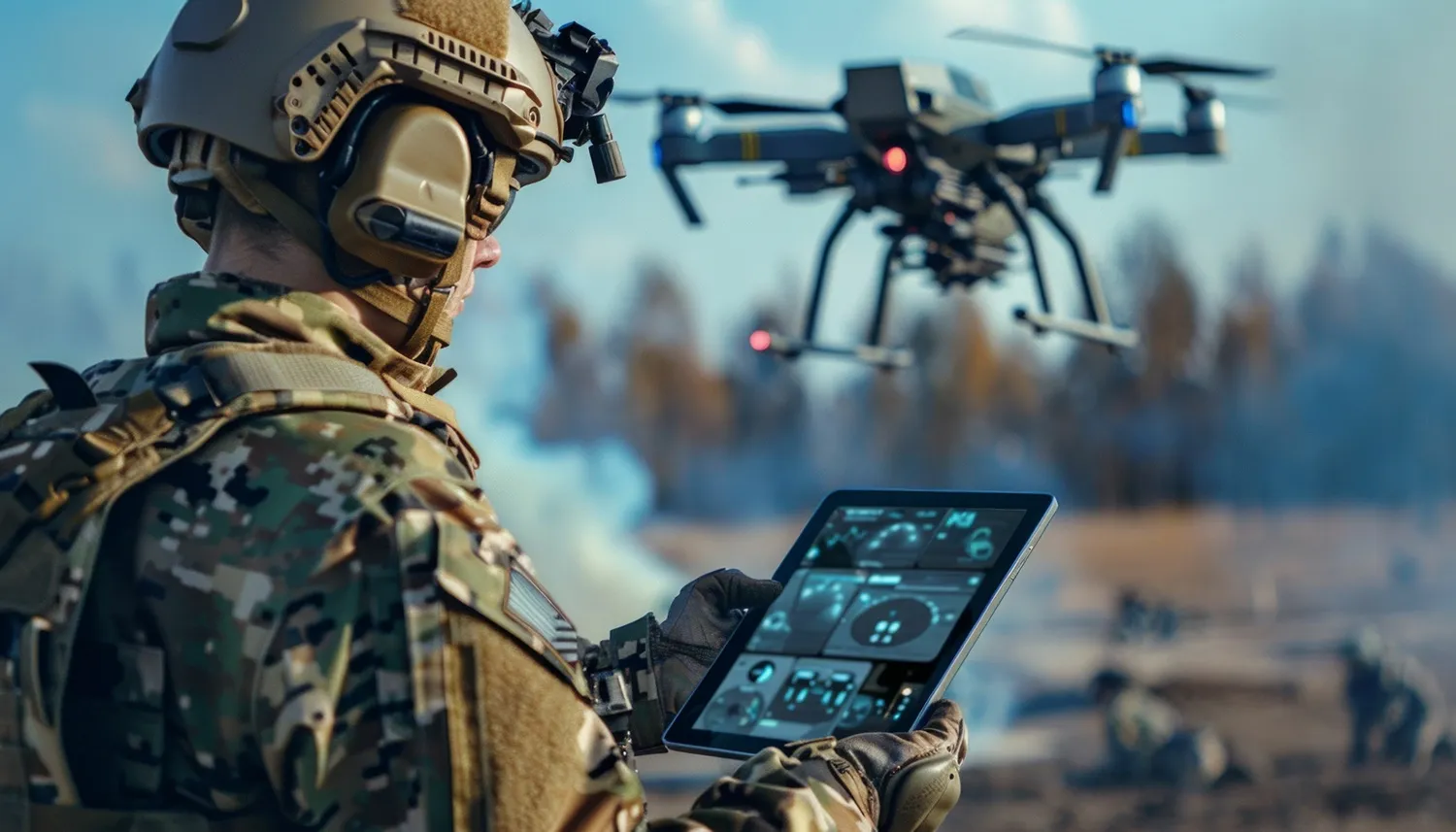
In the modern theater of operations, Artificial Intelligence (AI) has moved from the periphery of research laboratories to the front lines of defense strategy. However, as military forces increasingly integrate autonomous AI agents into high-stakes decision-making and tactical execution, they are exposing a new, dangerous vulnerability: the susceptibility of these systems to advanced cyberattacks and adversarial manipulation.
This article, the second in a two-part series, examines the critical intersection of technical defense mechanisms and the evolving landscape of international governance required to secure these potent assets. As the digital and physical battlefields converge, the stakes—ranging from compromised logistical chains to the catastrophic potential of autonomous targeting—have never been higher.
The Technical Imperative: Hardening the AI Fortress
The defense of military AI agents requires a multi-layered approach that acknowledges that static security is a relic of the past. In an era where hackers continuously probe for novel exploits, the software shielding these agents must be as dynamic as the algorithms themselves.
Defensive Engineering and Data Integrity
The primary vector for compromising an AI agent often lies within its foundational data. "Data poisoning"—the intentional corruption of training datasets—can create subtle, long-term backdoors that remain dormant until a critical moment. To counter this, developers must implement rigorous data provenance protocols, ensuring that training inputs are verified, scrubbed, and cryptographically signed. This burden of security currently rests heavily on the private defense contractors and AI firms building these agents, requiring a shift toward "security-by-design" rather than security-as-an-afterthought.

Adversarial Machine Learning (AML) Defense
Perhaps the most sophisticated threat to AI agents is the "evasion attack." These are carefully crafted, often imperceptible, alterations to input data designed to trick an AI into misclassifying a target or misinterpreting a command.
To mitigate this, research into Adversarial Machine Learning (AML) defense has become a priority. By utilizing "adversarial robustness training," engineers intentionally expose AI models to thousands of simulated attack variations during the development phase. This process acts as a digital inoculation, teaching the agent to recognize and resist anomalous input patterns in real-world, high-stress conditions. By understanding the specific geometry of these vulnerabilities, researchers can harden the neural networks against exploitation before they ever leave the lab.
The Zero-Trust Paradigm
Traditional perimeter-based security is insufficient for AI agents that operate across complex, distributed networks. Modern military architecture is pivoting toward "Zero-Trust" frameworks. Under the principle of "never trust, always verify," every internal or external request—whether from a human operator or another automated system—is treated as a potential threat.
In a zero-trust environment, access is micro-segmented. If a malicious actor successfully breaches one layer of the agent’s software, they are immediately contained, preventing lateral movement into more sensitive control modules. Combined with real-time behavioral analytics, this approach ensures that any deviation from established operational norms triggers an automated lockdown, keeping the core decision-making logic insulated from compromise.

Chronology of the Regulatory Pivot
The realization that military AI poses a systemic risk has led to a rapid, albeit fragmented, shift in international discourse.
- Pre-2022: Military AI development was largely treated as a competitive race for technological superiority, with minimal focus on shared safety standards or international norms.
- 2023–2024: The emergence of advanced generative AI models and autonomous agents forced governments to confront the security implications of dual-use technology.
- Late 2024: The UN General Assembly resolution on AI in the military domain marked a turning point. For the first time, states acknowledged that military AI is not merely an issue of "autonomous weapons," but a broad international security challenge requiring state-level accountability.
- 2025–Present: Nations are currently transitioning from general ethical guidelines to the development of rigorous internal testing, audit, and lifecycle monitoring protocols.
Governance: A Patchwork of Standards in a Divided World
While technical defenses provide a necessary shield, they are insufficient without a framework of global governance. However, in an increasingly multipolar world, the path toward a unified international regulatory body for military AI is fraught with geopolitical friction.
The Problem of Political Fractures
Mahmoud Javadi, a Ph.D. researcher at the Centre for Security, Diplomacy, and Strategy at Vrije Universiteit Brussel, emphasizes that AI governance is fundamentally hampered by national self-interest. "States will always protect their own room for maneuvering," Javadi notes.
The struggle for global consensus is hindered by a lack of semantic alignment. Terms like "responsible AI," "human control," and "trustworthy AI" are used liberally by global powers, yet they carry vastly different technical and legal definitions. For the United States, "responsible AI" might focus on rigorous internal testing and oversight; for other nations, the term might emphasize state sovereignty and control over information flows.

Layered Governance: The Realistic Path Forward
Despite the lack of a "grand treaty," a "layered governance" approach is emerging as the most viable path. This model operates on three distinct tiers:
- International Norms: Broad, non-binding agreements that emphasize the necessity of human oversight, particularly regarding the use of lethal force and nuclear command-and-control.
- Regional/Alliance Standards: Coalitions like NATO have begun establishing common principles for responsible AI usage, fostering interoperability and shared security expectations among allies.
- National/Institutional Controls: This is where the "real" governance occurs. It involves internal institutional rigor: red-teaming, strict access controls, forensic log auditing, and the implementation of "kill switches" that allow human commanders to override automated systems instantly.
Implications for Future Military Operations
The transition toward AI-augmented warfare necessitates a fundamental change in how militaries view their operational assets. As we look toward the future, the following implications are clear:
The Responsibility Gap
A recurring concern in military circles is the "accountability vacuum." If an AI agent fails or is successfully compromised by an enemy, who is held responsible? The consensus is shifting toward the commander. Future military doctrine must ensure that leaders fully understand the operational limits of their AI tools. A commander cannot be expected to manage what they do not understand, making technical literacy as essential as tactical experience.
The Sensitivity Hierarchy
Governance will necessarily vary by use case. AI employed for routine logistical optimization requires a different security posture than AI used for intelligence synthesis or, most critically, autonomous targeting. The consensus among experts is that certain high-consequence domains—most notably nuclear command, control, and communications (NC3)—must remain under the strictest human-exclusive control. The risk of even a minor cyber-induced glitch in such systems is deemed unacceptable by the international community.

The Future of Military-to-Military Dialogue
As we move forward, the most productive avenue for safety may not be global treaties, but rather "confidence-building measures." Much like the Cold War-era efforts to prevent accidental nuclear escalation, military-to-military communication channels regarding AI safety, error-reporting, and "rules of the road" could prevent catastrophic misunderstandings.
Conclusion: The Path Toward Resilience
Securing military AI agents is not a project with a finish line; it is a permanent, ongoing process of iteration. As Mahmoud Javadi concludes, the future of military AI governance will be defined by "testing, evaluation, audits, red-teaming, cybersecurity, documentation, and lifecycle monitoring."
The challenge is to balance the drive for technological advantage with the absolute necessity of safety. While a fully unified global governance system remains an idealistic, and perhaps unrealistic, goal in a world of competing powers, the development of robust, layered internal controls and shared technical best practices provides a roadmap for a more secure future. As these autonomous agents become the nervous system of modern defense, ensuring their integrity is not just a technical requirement—it is a cornerstone of global stability.