As the global semiconductor industry descends upon Munich for the twin pillars of the electronics calendar—SEMICON Europa and electronica 2026—the sector finds itself at a critical inflection point. The November 2026 issue of EE Times Magazine arrives at this junction, offering a comprehensive deep dive into the technologies defining the next decade: the physical evolution of the chip, the digital transformation of the food supply chain, and the quest for regional technological sovereignty.
The Evolution of the Nano-Scale: Manufacturing and Packaging
The industry’s push toward ever-smaller nodes and more complex architectures continues to define the hardware landscape. This month’s issue highlights the collaborative efforts required to keep Moore’s Law—or at least its economic equivalent—alive.
The EPIC Center and 3D Frontiers
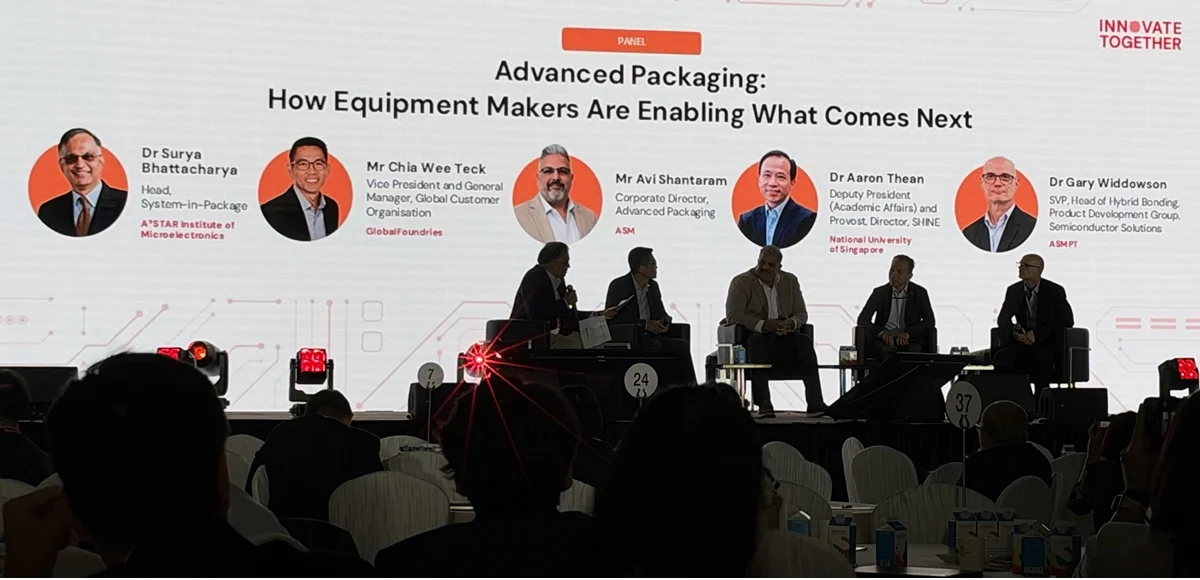
At the forefront of this manufacturing push is Applied Materials’ $5 billion EPIC (Equipment and Process Innovation and Collaboration) Center in Silicon Valley. Designed as a hub for collaborative R&D, the center aims to shorten the time-to-market for groundbreaking material engineering. By bringing together chipmakers, equipment suppliers, and academic researchers under one roof, Applied Materials is attempting to solve the “integration bottleneck” that currently plagues advanced packaging.
Concurrent with these developments, ASM International is making significant strides in 3D structures. As traditional planar scaling hits thermal and physical limits, ASM’s focus on atomic layer deposition (ALD) and epitaxial growth is proving vital for building vertical chip architectures. Meanwhile, a strategic partnership between Fraunhofer-IMS and key industry players is bolstering European nanofabrication capabilities. This initiative is not merely about density; it is about building a resilient supply chain that can pivot toward specialized, high-performance chips designed for automotive and industrial IoT applications.
Special Report: Sowing the Seeds of Farm Autonomy
Perhaps the most transformative shift explored in this edition is the integration of high-end silicon into the world’s oldest industry: agriculture. Our Special Report, "Sowing the Seeds of Farm Autonomy," examines the confluence of edge AI, robotics, and connectivity that is fundamentally altering the global agricultural landscape.
The Technological Stack of the Modern Farm
The modern farm is rapidly becoming an edge-computing facility. With the deployment of autonomous tractors and precision robotics, farmers are moving away from brute-force agricultural practices toward data-driven, surgical interventions. Key pillars of this revolution include:
- Precision Sensing: Using hyperspectral imaging and soil-moisture sensors, farmers can now detect pest infestations and nutrient deficiencies at the individual plant level.
- Edge AI Processing: By moving the decision-making process from the cloud to the tractor itself, machines can react in milliseconds to weed detection or mechanical stress, significantly reducing latency and the need for constant high-bandwidth connectivity.
- Connectivity and Trade: Global agricultural output is now being monitored in real time. This allows for a more responsive supply chain, where cereal production data is integrated directly into global trade markets, minimizing waste and stabilizing prices.
The Hurdles to Adoption
Despite the promise, the report identifies significant engineering and ethical barriers. The foremost concern is machine safety. As autonomous machinery operates in unpredictable, unstructured environments, the standards for safety-critical AI are being put to the test. Furthermore, rural connectivity remains a significant bottleneck. While 5G and satellite constellations are narrowing the gap, the lack of reliable, low-latency infrastructure in remote farming regions prevents the full deployment of swarm robotics.

Finally, the economic hurdle looms large. "The capital expenditure required to transition to an autonomous fleet is prohibitive for many family-run operations," notes one industry analyst interviewed for the report. For these technologies to scale, the industry must focus on modular retrofitting—bringing intelligence to existing, legacy machinery rather than forcing a total fleet replacement.
Canada’s Quantum and Photonics Ambition
In an increasingly fragmented geopolitical landscape, Canada is positioning itself as a leader in specialized deep tech. Our report explores how the nation is attempting to unify its disparate strengths in quantum computing, photonics, and ocean electronics.
From Lab to Production: The Canadian Challenge
Canada has long been a powerhouse in quantum research, exemplified by companies like Xanadu Quantum Technologies and Nord Quantique. However, the recurring theme in our analysis is the “valley of death” between academic innovation and commercial production.
The Canadian government and private sector are currently collaborating to address:
- Capital Allocation: Moving beyond initial venture capital to bridge the long-term funding gap required for hardware-heavy deep tech.
- Infrastructure: Building the cleanroom facilities necessary to manufacture quantum chips domestically, rather than outsourcing to fabs in Asia or the U.S.
- Talent Retention: Preventing the “brain drain” of top-tier physics and engineering graduates to larger tech hubs abroad.
The report also highlights how Canadian innovation is finding niche applications in remote environments. From ocean electronics designed by companies like Innovasea for monitoring marine life and seabed infrastructure, to electronics designed to withstand the harsh conditions of the Canadian North, there is a clear focus on "ruggedized innovation."
Chronology of Industry Developments (2026)
- Q1 2026: Initial rollout of next-gen AI-guided autonomous agricultural platforms in North American wheat belts.
- Q2 2026: Applied Materials completes the foundation phase of the EPIC Center; ASM International publishes white papers on 3D NAND scaling breakthroughs.
- Q3 2026: Canada announces a multi-billion dollar national strategy for quantum-photonics integration.
- November 2026: SEMICON Europa and electronica 2026 serve as the catalyst for standardizing safety protocols for autonomous field robotics.
Supporting Data and Market Outlook
The integration of AI into agriculture is projected to grow at a CAGR of 22% over the next five years. This is driven by the declining cost of CMOS image sensors and the proliferation of low-power, high-performance SoCs from companies like NVIDIA and NXP.
Regarding chip manufacturing, the push toward 2nm and below is expected to account for nearly 30% of total wafer production capacity by 2028. However, the cost of manufacturing, which has historically decreased per transistor, is now plateauing due to the extreme complexity of EUV (Extreme Ultraviolet) lithography and the multi-patterning required at the most advanced nodes.

Official Responses and Industry Sentiment
The general consensus at this year’s conferences is one of "cautious optimism."
“We are no longer just building faster chips,” remarked a lead engineer at a top-tier semiconductor firm. “We are building the nervous system for the physical world. Whether it’s an autonomous harvester in a field or a quantum sensor in a submarine, the semiconductor is the common denominator of efficiency.”
Conversely, policymakers express concern over the concentration of manufacturing. The focus on “regional sovereignty” in Europe and Canada is a direct response to the supply chain fragility exposed during the 2020-2024 period. The industry is currently in a balancing act: maintaining the global collaborative model that drives innovation while satisfying the national security requirements of individual states.
Implications for the Future
The implications of these developments are profound. If the industry successfully overcomes the barrier of rural connectivity and machine safety, the agricultural sector could see a 30% reduction in chemical usage and a 20% increase in yield efficiency by 2030.
Simultaneously, the maturation of the Canadian quantum and photonics ecosystem suggests that the future of tech is not just in the hands of the dominant mega-corporations, but in specialized hubs that can solve specific, high-value problems.
As we look toward the close of 2026, the message is clear: The semiconductor industry is moving beyond the desktop and the data center. It is entering the field, the ocean, and the factory floor. The challenges of energy efficiency, sustainability, and safety are now the primary drivers of engineering innovation. The November issue of EE Times Magazine serves as both a map of this territory and a challenge to the engineers, researchers, and policymakers who must navigate it.
For more detailed insights, full interviews, and white papers, readers are encouraged to download the full digital version of the November 2026 Edition via the EE Times website.