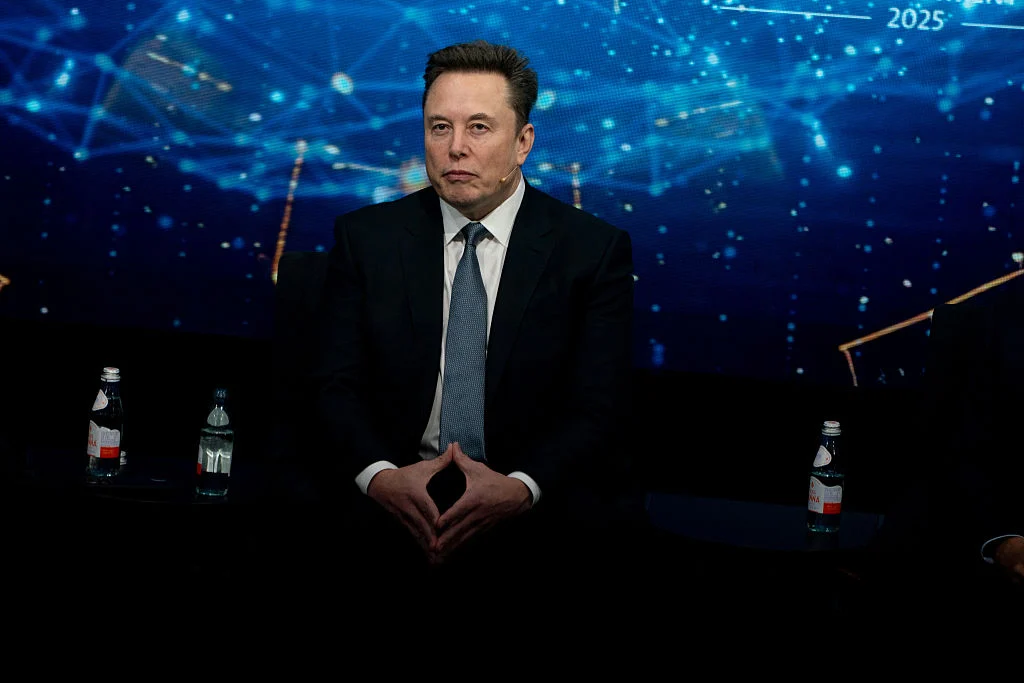
In a move that underscores the desperate scramble for energy in the age of artificial intelligence, Elon Musk has revealed that SpaceX is quietly constructing a massive, specialized foundry in Bastrop, Texas. The facility’s primary mission? To solve one of the most stubborn physical bottlenecks in the global energy market: the production of high-performance turbine blades for natural gas power plants.
As AI developers race to build increasingly massive data centers, the industry has hit a wall. While the headlines often focus on the shortage of Nvidia’s flagship Blackwell chips, a more fundamental crisis is unfolding beneath the surface: the grid simply cannot keep up. With major tech players—including Amazon, Google, Meta, Microsoft, and OpenAI—turning to private, on-site gas-fired power plants to circumvent grid delays, demand for turbines has surged, leaving manufacturers like GE Vernova effectively sold out through 2030. Musk’s pivot into the industrial supply chain of the power sector signals a shift toward vertical integration that could redefine how AI infrastructure is built.
The Manufacturing Hurdle: Why Gas Turbines are in Short Supply
The difficulty of scaling up gas-fired power generation is not a matter of assembly, but of metallurgy. The blades and vanes within the "hot section" of a modern gas turbine are engineering marvels, designed to withstand temperatures ranging from 3,000 to 3,600 degrees Fahrenheit. These temperatures are roughly 800 degrees higher than the melting point of the specialized metal alloys used to construct the components.
To survive such conditions, these blades require complex internal cooling channels and sophisticated thermal-barrier coatings. More importantly, they must be cast as a "single crystal"—a structure grown slowly inside a vacuum furnace to eliminate the microscopic seams that would otherwise cause the metal to crack under the immense stress of high-speed rotation.
Currently, only a tiny oligopoly of manufacturers worldwide possesses the technical expertise to produce these components at an industrial scale. With these companies operating at maximum capacity, the supply chain for gas turbines has become the primary constraint for the energy sector. By bringing this casting capability in-house at his Bastrop facility, Musk claims SpaceX could accelerate the deployment of new gas-fired power plants by up to 18 months.
A Chronology of the Bastrop Expansion
The revelation of the Bastrop project follows months of speculation regarding SpaceX’s land-use patterns in Texas.
- March–June 2026: SpaceX acquires approximately 830 acres of land adjacent to its existing Starlink manufacturing complex in Bastrop, Texas.
- Early August 2026: Due diligence specialist Corey Trinetti, through his newsletter MeasuredAI, identifies the site’s potential significance, noting unusual infrastructure developments.
- August 8, 2026: The Information publishes an exclusive report identifying job listings for a "blades and vanes foundry," linking the foundry to the broader AI infrastructure crunch.
- August 10, 2026: Elon Musk confirms the project via X (formerly Twitter), explicitly framing the foundry as a necessary step to supplement solar energy and bypass the turbine supply chain crisis.
Supporting Data: The AI Energy Gap
The urgency behind SpaceX’s industrial pivot is backed by stark projections from global energy authorities. The International Energy Agency (IEA) estimates that global data center electricity consumption will roughly double by 2030. This demand is outstripping the pace at which utilities can upgrade transmission lines and generation capacity.
The market has responded with a trend toward "behind-the-meter" power generation. By building gas-fired plants directly next to data centers, companies are creating independent islands of power. However, this strategy relies entirely on the availability of turbines. With major suppliers reporting that their order books are full for the remainder of the decade, the industry is facing a hardware drought.
Musk’s strategy is designed to decouple his ventures from this reliance on traditional suppliers. By manufacturing the most difficult-to-source parts himself, he creates an "industrial moat" that ensures his projects have the power they need while others wait in line. As Musk stated on X: "SpaceX and Tesla are each building 100GW/year of solar production capacity as fast as possible, but natural gas will still be needed to supplement and bootstrap solar for several years."
Implications: The Environmental and Legal Backlash
While the foundry offers a technical solution to a systemic problem, it has ignited a fierce debate regarding the environmental costs of the AI boom. The push for on-site gas-fired generation has already led to significant friction with local communities and environmental organizations.
The Memphis Case Study
In Memphis, Tennessee, the operation of turbines at the "Colossus" data center—a flagship project for Musk’s AI venture, xAI—has become a flashpoint. The NAACP and local residents have alleged that the facility operates without proper pollution controls or the necessary federal permits.
Researchers from the University of Memphis have suggested that the plant has contributed to a degradation in local air quality, raising concerns about formaldehyde emissions and smog-forming compounds. These pollutants are closely linked to respiratory issues, including asthma, and other long-term health risks. For the communities already burdened by industrial pollution, the rise of the "AI power plant" is seen not as a technical triumph, but as a public health threat.
The Macro-Scale Impact
The Memphis situation is not an outlier; it is a preview of a national conflict. A study commissioned by the Piedmont Environmental Council regarding data centers in Virginia’s "Data Center Alley" utilized the EPA’s COBRA model to estimate the health damages of local gas-fired generation. The study found that a single facility’s fleet of eight gas turbines could impact the health of over 2.5 million people, leading to an estimated 3.4 to 6.5 premature deaths annually. The economic cost of these health impacts was valued between $53 million and $99 million per year.
Strategic Outlook: The "SpaceXAI" Advantage
If SpaceX successfully masters the casting of these turbine components, the implications for the broader tech sector will be profound. Musk-controlled entities would possess a capability that is currently the bottleneck for every major AI developer in the world.
This gives "SpaceXAI" a unique competitive advantage: the ability to bring massive, power-hungry compute clusters online years ahead of competitors. In the high-stakes arms race for Artificial General Intelligence (AGI), time-to-market is the ultimate currency. If Musk can shorten that timeline by 18 months, the foundry in Bastrop may eventually be viewed as the most critical piece of infrastructure in the AI era.
However, this advantage comes with an intensifying legal and reputational burden. As federal lawsuits and environmental scrutiny mount, Musk must navigate the tension between the insatiable energy requirements of his AI ambitions and the growing demand for corporate accountability in the communities where his infrastructure resides.
Whether this foundry represents a brilliant masterstroke of vertical integration or a flashpoint for future regulatory intervention remains to be seen. What is clear, however, is that the energy demands of the future are forcing the tech industry to look beyond the cloud and back to the physical, soot-stained realities of industrial manufacturing. The "AI revolution," it seems, will be powered by the very same technologies of the industrial age that we once sought to leave behind.