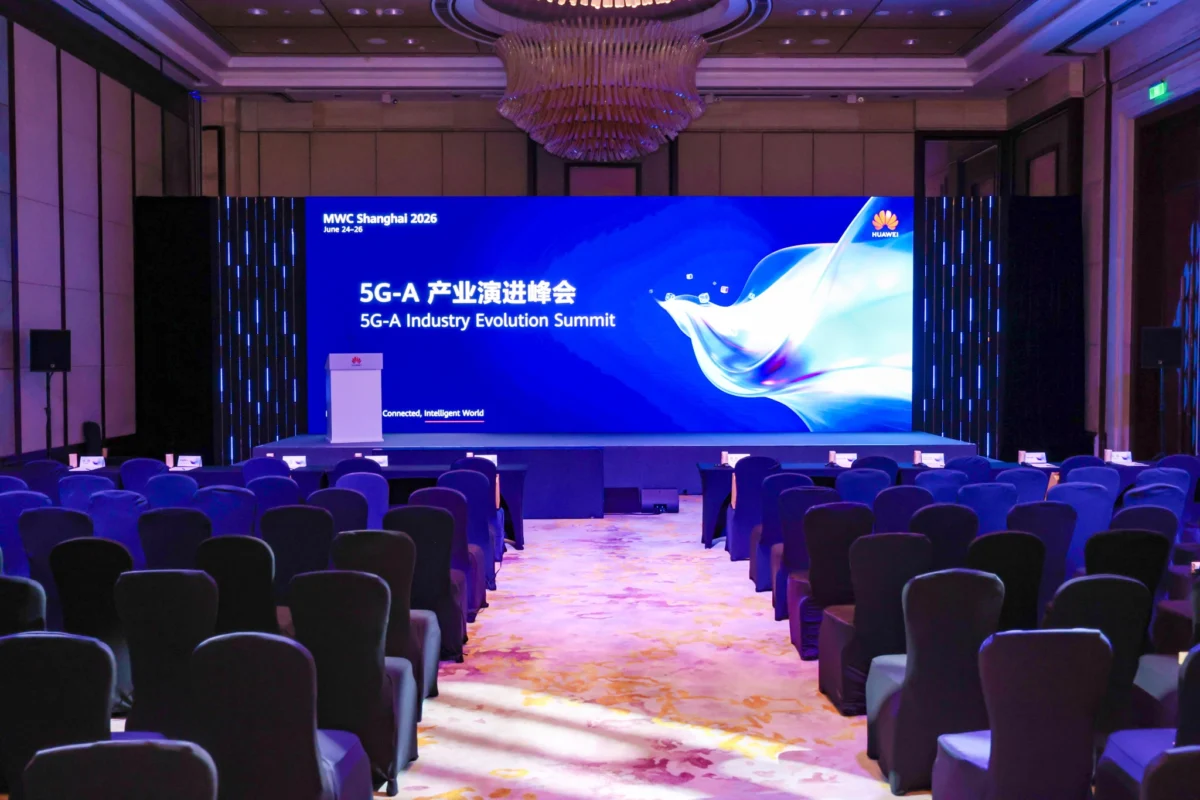
For years, the Mobile World Congress (MWC) served as a playground for robotic novelties. Attendees grew accustomed to the sight of mechanical hounds prowling exhibition halls and robotic baristas meticulously pouring lattes. These were, at the time, captivating demonstrations of mobile connectivity’s potential. However, as the industry gathered for MWC Shanghai 2026, the conversation had shifted from novelty to necessity. The era of "Embodied AI"—where intelligence moves from the confines of a screen into physical, autonomous hardware—is no longer a distant forecast; it is an active infrastructure mandate.
As the physical world begins to teem with humanoid robots, autonomous logistics fleets, and multi-modal AI agents, the underlying telecommunications networks are facing their most significant architectural transformation since the transition from 3G to 4G. The consensus emerging from the 5G-A Industry Evolution Summit is clear: 5G-Advanced (5G-A) is not merely a speed boost; it is the foundational nervous system for a new, AI-driven reality.
The Shift: From Downlink Dominance to Symmetrical Intelligence
For the past two decades, mobile network architecture has been governed by a simple, consumer-driven logic: the "downlink-heavy" model. Networks were built to facilitate high-speed video streaming, social media scrolling, and web browsing—activities that require massive data consumption from the cloud to the device.
The rise of embodied AI completely inverts this paradigm. Whether it is a humanoid robot navigating a warehouse or a security-patrolling "robot dog" in a stadium, these entities are constantly scanning, processing, and reacting to their environments. To function safely, they must transmit massive streams of sensory data—video feeds, LIDAR maps, and thermal imaging—back to the cloud for real-time processing.
"The architecture of the mobile web is being overthrown," noted one industry analyst at the summit. "We are moving from a world where we consume content to a world where our devices are constantly ‘reporting’ reality to the cloud."
The Battery Bottleneck
A primary driver for this shift is the physical limitation of the devices themselves. Placing high-performance GPUs and massive battery arrays inside a mobile robot is a recipe for failure; it adds weight, increases heat, and drastically shortens operational time.
Chen Qi, President of the AI Product Line at TD Tech, describes his firm as a "robotic brain business." He highlights the stark economic reality: "Using an onboard robotic brain consumes roughly 20 times more energy during autonomous activity than operating it via a remote cloud-linked brain. We shouldn’t be placing that energy burden on the terminal. We must shift that pressure onto the network."
Consequently, the industry is aligning around a new technical baseline. To support real-time situational awareness and digital twinning, global operators have reached a consensus: a 20Mbps uplink is the new minimum requirement for every connected AI terminal.
Chronology of an Evolution: Toward 5G-A
The journey to an AI-native network has been a steady progression, accelerated by the maturation of AI models:
- 2020–2022 (The Discovery Phase): 5G deployments focused on coverage and basic capacity, with robotics relegated to pilot projects and controlled environments.
- 2023–2024 (The Intelligence Inflection): Large Language Models (LLMs) and multi-modal AI began to demand higher processing power, putting the first real strains on standard 5G networks.
- 2025 (The Standardization of 5G-A): 5G-Advanced specifications were finalized, prioritizing uplink capacity, lower latency, and deterministic network performance.
- 2026 (The Deployment Frontier): MWC Shanghai 2026 marked the shift toward commercialization. With Huawei’s launch of the "GigaUplink" solution—which utilizes multi-antenna upgrades and advanced algorithms to increase uplink capacity by five-fold—the network infrastructure finally began to match the requirements of the robotic age.
Supporting Data: The Scale of the AI Revolution
The pressure on these networks is not merely qualitative; it is quantitative. According to Huawei’s Intelligent World 2035 report, the global ecosystem will support approximately 15 billion AI-enabled terminals by 2035.
Yang Lifan, Deputy General Manager of China Unicom Beijing, articulated the scaling challenge: "We can handle two cameras on a robot, but what happens when you have eight? We can support five robots at a site, but what about a hundred operating in the same industrial zone simultaneously? We are not just talking about incremental growth; we are talking about a total optimization of the network for high-concurrency, high-uplink conditions."
The latency requirements are equally stringent. For a robot interacting with a human environment, a delay in processing is not just a nuisance—it is a safety failure. Industry experts agree that for B2B industrial use cases, "best-effort" network delivery is now obsolete. The requirement has moved to "deterministic performance," guaranteeing response times as low as 650ms to ensure the precision required for autonomous physical movement.
The Spectrum Conflict: The Fight for Upper 6GHz
To achieve the "ubiquitous smooth service" required for this massive ecosystem, the mobile industry is eyeing the Upper 6GHz (U6G) spectrum (6.425–7.125 GHz).
The Case for U6G
Spectrum is the oxygen of the mobile industry. The U6G band is considered the "goldilocks" resource—it offers a rare combination of high capacity and sufficient coverage. As David Li, President of Huawei’s TDD Product Line, noted, "U6G is the second-best spectrum for widespread 5G-A deployment after the C-band. With technological advancements, we can bridge the coverage gap to make U6G perform almost as effectively as our core C-band assets."
However, this spectrum is at the heart of a global tug-of-war. The Wi-Fi industry has long advocated for U6G to alleviate congestion in the 2.4 GHz and 5 GHz bands. Mobile operators argue that their need is more acute. Tim Hatt of GSMA Intelligence noted, "Mobile is fundamentally more likely to be capacity-constrained than Wi-Fi. The social and industrial necessity of the 5G-A backbone outweighs the benefits of additional unlicensed Wi-Fi spectrum."
Implications: The Token-Based Economic Model
Perhaps the most radical proposal coming out of the MWC Shanghai summit is the shift in how operators generate revenue. For years, the industry has been trapped in a "volume trap"—the more data people consume, the more the network costs to maintain, yet Average Revenue Per User (ARPU) has remained stubbornly stagnant.
The AI era offers an exit strategy: the transition from a byte-based model to a token-based model.
Redefining Value
In the current model, an operator charges for a gigabyte of data, regardless of what that data contains. In the AI era, that gigabyte might contain millions of "tokens"—the fundamental units of AI processing. The computational work required to process those tokens is far more valuable than the mere act of transmitting the bytes.
By adopting a "Byte-plus-Token" strategy, telcos can transition into the role of orchestrators of compute power. Under this model, operators would offer "Network-as-a-Service" (NaaS) frameworks, providing tiered, deterministic service guarantees based on the specific needs of an application.
"The industry is moving toward token monetization," said Yang of Huawei’s Carrier Business. "In the future, the delta between raw data traffic and AI tokens will only grow. We must be ready to monetize the intelligence, not just the pipeline."
Conclusion: The Telco as an AI Orchestrator
The message from MWC Shanghai 2026 is clear: the physical AI revolution is the next great frontier for the telecommunications industry. However, the reward of being the backbone of this revolution is not guaranteed. It requires a fundamental realignment.
Operators must move beyond being passive providers of connectivity and step into the role of active orchestrators of spectrum, compute, and data. By re-engineering their networks for symmetry, fighting for essential spectrum like U6G, and embracing new, value-based monetization models, telcos have the opportunity to escape the volume trap.
The robots are here, the AI is evolving, and the network is readying itself. The transition to the AI-native era will not be defined by a single breakthrough, but by the successful integration of these physical and digital systems into a seamless, high-speed, and deterministic fabric. The infrastructure of the future is being laid today, and for those who build it right, the potential for growth is as limitless as the intelligence they are connecting.