The modern orbital environment is no longer the pristine, empty expanse it was during the early Space Age. With thousands of active satellites, a growing graveyard of debris, and an increasing number of state and commercial actors, the "Space Domain" has become a crowded, complex, and potentially volatile theater. To address the escalating need for real-time intelligence in orbit, BosonQ Psi Federal LLC (BQP) has officially entered the federal contracting arena, securing a prestigious SpaceWERX Small Business Innovation Research (SBIR) award to deploy its cutting-edge quantum-assisted artificial intelligence platform.
This partnership marks a pivotal shift in how the U.S. Space Force and its partners approach Space Domain Awareness (SDA). By moving beyond traditional, cloud-dependent computing, BQP aims to place high-level analytical capabilities directly onto the hardware that guards the high ground.
The Core Innovation: PC-QAML Technology
At the heart of the BQP mission is its proprietary software platform: Physics-Constrained Quantum-Assisted Machine Learning (PC-QAML). While the term may sound abstract, its application is grounded in the harsh realities of orbital mechanics and the limitations of space-hardened electronics.
Traditional AI models—those that power terrestrial applications like large language models or image recognition—typically require massive GPU clusters and near-constant connectivity to cloud servers. In space, such luxuries do not exist. Satellites operate under severe power constraints, thermal limitations, and intermittent communication windows.
BQP’s PC-QAML circumvents these barriers by marrying the rigorous precision of physics-based modeling with the computational efficiency of quantum-inspired algorithms. Instead of relying on brute-force data processing, the software uses quantum-inspired mathematical techniques to identify patterns and anomalies in space traffic at a fraction of the computational "cost."
By baking physics constraints into the machine learning models, the system ensures that its conclusions remain tethered to the laws of orbital dynamics. This prevents the "hallucinations" or logical errors that can occur when pure AI models attempt to predict trajectories without a fundamental understanding of gravity, drag, or thrust.
Chronology: From Concept to Federal Recognition
The path to this SpaceWERX award did not happen in a vacuum. It is the culmination of a deliberate strategy by BQP to align its advanced research with the specific operational needs of the U.S. military.
- Foundation and Early R&D: BQP established its federal arm with a focus on bridging the gap between quantum-inspired computational theory and national security applications. The team focused on the "SWaP" (Size, Weight, and Power) constraints that define space missions.
- Engagement with the Ecosystem: Long before securing this contract, BQP actively participated in the defense industrial base. The company engaged with the Space Domain Awareness Tap Lab, a critical hub for fostering innovation in space surveillance.
- Strategic Alignment: By working alongside the Space Operations Command (SpOC) Mission Delta 2 and Space Systems Command (SSC), BQP gained firsthand insight into the bottlenecks facing operators. They learned that the primary challenge was not just "seeing" objects, but identifying them accurately and quickly enough to make a tactical decision.
- The SBIR Award: Announced this past Friday, the SpaceWERX award serves as the official validation of BQP’s approach. Through the Open Topic SBIR program, the Department of the Air Force (DAF) has effectively provided the resources for BQP to move from laboratory simulation to real-world validation.
Supporting Data: The Need for Edge Computing in Orbit
The demand for BQP’s technology is driven by the rapid democratization and militarization of space. According to current SDA reports, the number of tracked objects in Low Earth Orbit (LEO) has grown exponentially. Current ground-based radar and optical telescopes provide snapshots, but these are often delayed by the time required to downlink data, process it in the cloud, and uplink commands back to the satellite.
The "Edge" Imperative:
- Latency Reduction: By processing data on the satellite itself, BQP’s software reduces the time-to-insight from hours or days to milliseconds.
- Bandwidth Efficiency: Instead of sending massive raw data sets to ground stations—which is bandwidth-intensive and vulnerable to jamming—the satellite only transmits the "refined" intelligence.
- Resiliency: In a contested space environment, communication links may be degraded. An autonomous system that can identify an approaching threat or an anomalous maneuver without ground support is a strategic asset of the highest order.
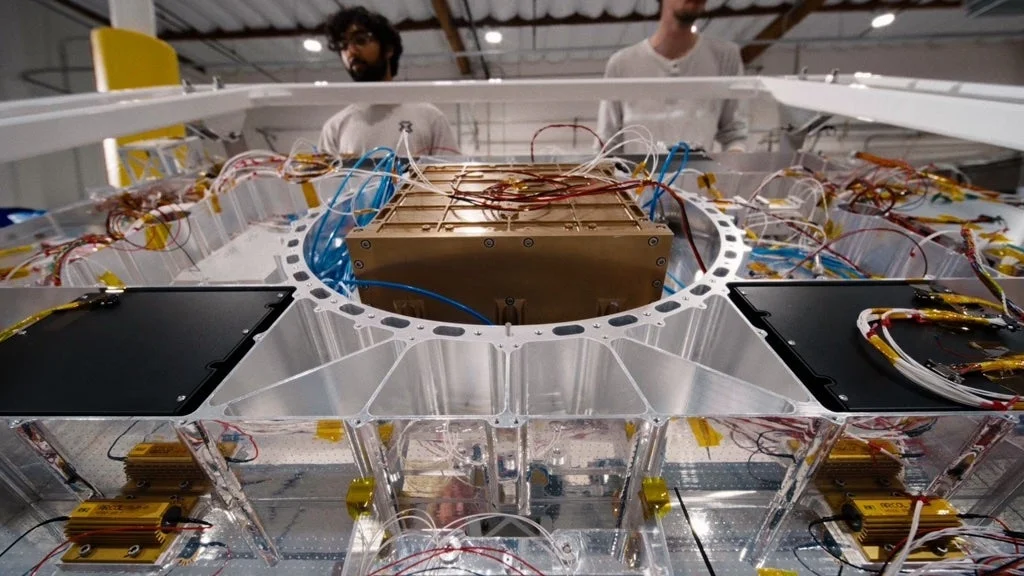
The BQP platform is specifically engineered to run on space-qualified processors—the specialized, radiation-hardened chips that lack the power of a desktop computer but possess the reliability required for the vacuum of space.
Official Responses and Strategic Vision
The leadership at BQP views this contract as more than just a financial milestone; it is a proof-of-concept for the future of warfare in the space domain.
Rut Lineswala, founder and CTO of BQP, emphasized the tactical necessity of the company’s mission. "Our goal is to make advanced AI practical where it matters most: on satellites and forward-deployed systems operating with limited computing power and intermittent communications," Lineswala noted. "This award represents an important validation of our technology and gives us the opportunity to demonstrate how quantum-inspired computing can solve real operational challenges for national security today."
For SpaceWERX, this award is a continuation of their mandate to scout and scale commercial technologies that have "dual-use" potential. By funding BQP, they are betting that quantum-inspired techniques can solve the "Big Data" problem currently facing the Space Force.
The Space Force’s leadership has consistently stated that "space is a contested domain." To maintain superiority, the service requires an automated, distributed network of "eyes" in the sky that can think and react as fast as the orbital environment changes.
Implications: The Future of Space Domain Awareness
The integration of BQP’s software into the military space architecture carries significant implications for the future of national security.
1. Shift Toward Autonomous Defense
If a satellite can autonomously identify an "unknown object" as a potential kinetic threat, it can initiate evasive maneuvers or switch to a hardened state before a human operator even receives the alert. This autonomy is the next frontier of space defense.
2. Democratization of High-End AI
BQP’s success suggests that companies do not necessarily need to build their own hardware to influence the defense space. By focusing on the software layer—specifically high-efficiency algorithms—small businesses can provide capabilities that were previously restricted to the largest aerospace primes.
3. The Quantum-Inspired Era
While true, fault-tolerant quantum computers are still years away from being deployed in space, "quantum-inspired" computing acts as a bridge. It allows developers to leverage the mathematical brilliance of quantum algorithms on classical hardware today. This gives the Department of Defense a competitive edge without waiting for the next generation of cryogenic hardware.
4. A New Standard for SDA
As BQP works to validate its application under the SBIR program, the success of this project could set a new industry standard. If the software demonstrates the ability to accurately distinguish between space debris, functional satellites, and non-cooperative craft, it will likely be integrated into the broader architecture of the Space Force’s sensor network.
Conclusion
The contract awarded to BosonQ Psi Federal LLC is a small but significant step in the broader effort to modernize America’s orbital surveillance capabilities. By bringing the "brain" of the AI to the "edge" of the sensor, BQP is helping to ensure that the U.S. Space Force is not just watching the skies, but understanding them in real-time. As the company moves into the development phase, the industry will be watching closely to see if their quantum-inspired approach can indeed transform how we perceive and protect the ultimate high ground.