For years, the Mobile World Congress (MWC) has served as a theatrical stage for the future of robotics. Attendees have grown accustomed to the spectacle of mechanical dogs navigating trade show floors and robotic baristas meticulously pouring lattes. While these demonstrations were once dismissed as mere marketing novelties, they served a deeper purpose: illustrating the latent power of mobile connectivity.
However, the industry has reached an inflection point. With the rapid maturation of Artificial Intelligence (AI), we are witnessing the transition from static, screen-bound AI to "embodied AI." This is the era where intelligence exits the digital realm and enters the physical world. From humanoid robots like Honor’s "Lightning"—which recently shattered human half-marathon records—to autonomous sentry units patrolling the FIFA World Cup, the robotic age is no longer a distant prophecy; it is arriving in our streets, factories, and public spaces.
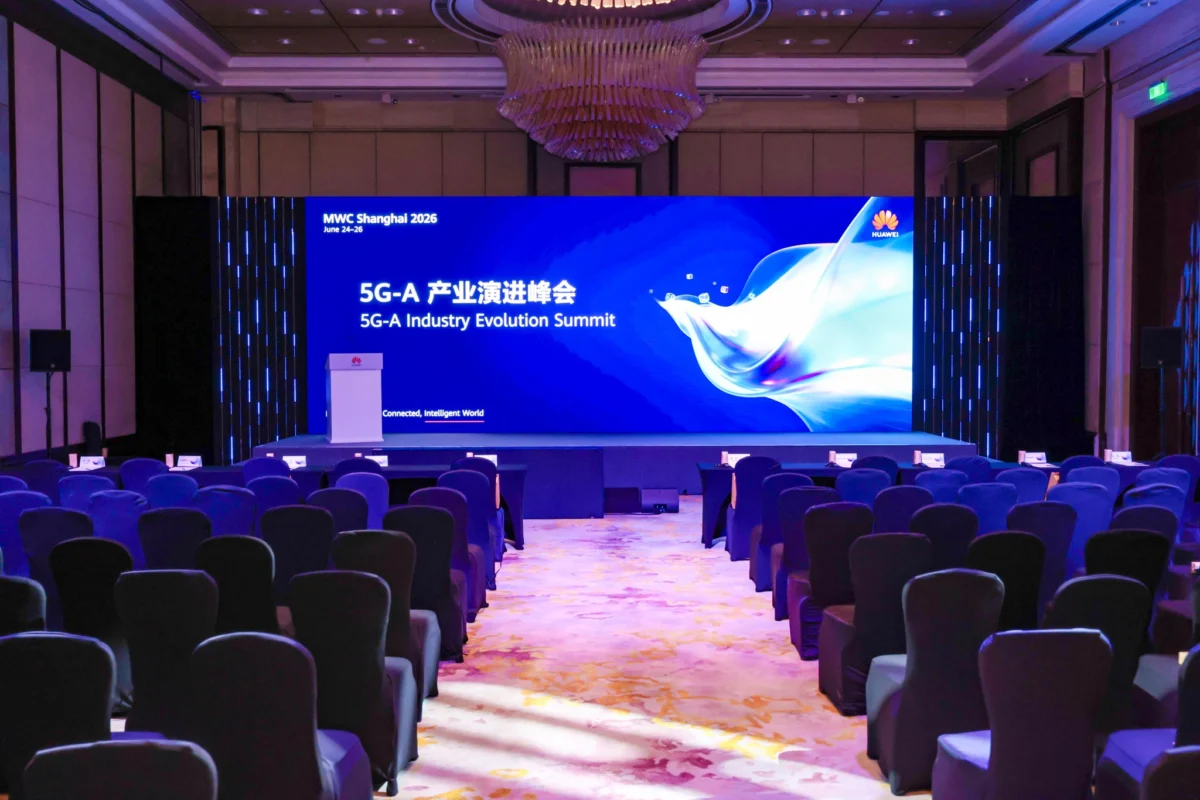
As this physical AI ecosystem takes root, the focus of the mobile industry is shifting. At the MWC Shanghai 2026 5G-A Industry Evolution Summit, the conversation moved beyond mere speed and capacity. Instead, industry leaders positioned 5G-Advanced (5G-A) as the foundational infrastructure—a new nervous system—upon which the physical AI revolution must be built.
The Core Transformation: From Downlink to Symmetrical Networks
For the past decade, mobile network architecture has been optimized for a "downlink-heavy" world. Driven by the voracious appetite of consumer video streaming and web browsing, networks were built to pipe vast amounts of data from the cloud to the device. The rise of embodied AI, however, renders this architectural norm obsolete.
The Uplink Imperative
Humanoid robots, autonomous industrial vehicles, and multi-modal AI terminals operate by processing gargantuan amounts of sensor data—video feeds, lidar, thermal imaging, and acoustic data—in real-time. To make split-second decisions, these machines require immense computational power.
The dilemma is one of physics and battery chemistry. Placing high-performance GPUs on every robot or terminal is commercially and operationally unsustainable. "High energy consumption and the resulting short battery life is a limiting factor," explains Chen Qi, president of the AI product line at TD Tech. "Using a robotic brain on the device takes around 20 times more energy during autonomous activity than operating it remotely. We shouldn’t be putting that pressure on terminals; we should use the cloud and put that pressure on the networks."
Consequently, the network must now prioritize uplink. Global operators are coalescing around a new baseline: 20 Mbps of dedicated uplink capacity for every connected AI terminal. This is the minimum threshold required to sustain real-time AI modeling, situational awareness, and digital twin synchronization.
Chronology: The Path to the Intelligent World 2035
The evolution toward an AI-native network is not an overnight transition but a calculated, multi-phase progression:
- 2023–2024: The Prototyping Phase. Robotics moved from research labs to controlled test environments. Networks remained largely focused on traditional mobile broadband.
- 2025: The 5G-A Emergence. The mobile industry began formalizing the standards for 5G-Advanced. Early discussions shifted toward "deterministic networking"—the promise that a network can guarantee latency and reliability for industrial applications.
- 2026: The Infrastructure Pivot. At MWC Shanghai 2026, the focus solidified around "GigaUplink" and the integration of AI-compute orchestration. Huawei and other major players launched solutions specifically designed to boost uplink capacity five-fold.
- 2027–2030: Massive Scaling. The industry expects a massive rollout of AI-integrated 5G-A, moving from thousands of robots to millions. This period will see the widespread adoption of Upper 6GHz (U6G) spectrum.
- 2035: The Intelligent World. According to Huawei’s Intelligent World 2035 report, the global landscape will host approximately 15 billion AI terminals, all requiring seamless, low-latency connectivity to function in a cloud-edge synergy.
Supporting Data and Technical Requirements
The challenge of scaling autonomous intelligence is exponential. As Yang Lifan, Deputy General Manager of China Unicom Beijing, points out: "We can handle two cameras per robot, but what about eight? We can support five robots at the site, but what about a hundred operating simultaneously?"
To meet this, the technical demands go beyond simple capacity:
- Deterministic Latency: Unlike consumer internet, where a dropped packet results in a buffering wheel, a robot in a human environment requires human-like response times—ideally around 6–10ms. Best-effort delivery is simply not an option for B2B industrial robotics.
- Spectrum Bottlenecks: To support this traffic, the industry is lobbying for the Upper 6GHz (6.425–7.125 GHz) band. This spectrum is critical because it bridges the gap between the high-capacity, short-range mmWave and the broader coverage of mid-band C-band.
- Advanced Carrier Aggregation: By refarming legacy 2G and 4G bands and pooling them through advanced algorithms, operators can create the "ultra-wide pipes" necessary for AI-driven industrial operations.
Official Responses and Strategic Shifts
The industry’s response to these challenges has been a mix of technological innovation and business model soul-searching.
The Huawei Perspective
Huawei has positioned itself at the forefront of this shift, launching the GigaUplink solution. By leveraging multi-antenna technology and proprietary algorithms, the solution provides the necessary throughput to handle the visual data demands of modern robotics. Eric Yang, President of Huawei Carrier Business, emphasized that "Big bandwidth, uplink expansion, and user experience guarantee" are the three pillars of the mobile AI era.
The Regulatory and Spectrum Debate
The push for U6G has sparked a global debate. While the Wi-Fi industry argues that U6G is needed to alleviate congestion in the 2.4 GHz and 5 GHz bands, the mobile industry maintains that cellular networks are inherently more capacity-constrained and critical for national infrastructure. Tim Hatt of GSMA Intelligence notes that "mobile is much more likely to be capacity constrained than Wi-Fi," suggesting that prioritizing cellular access to U6G is a matter of strategic industrial importance.
Implications: The Token-Based Economic Model
Perhaps the most radical change proposed at MWC Shanghai is the move away from volume-based billing. For years, the mobile industry has been trapped in a "volume trap"—selling gigabytes of data at declining margins.
The rise of AI terminals creates an opportunity to break this cycle. The industry is moving toward a token-based business model.
Beyond the Gigabyte
In an AI-centric world, the value is not in the transmission of a raw byte, but in the processing of an AI token. A single megabyte of data could contain millions of tokens that drive high-value, real-time AI inferences. Under a Network-as-a-Service (NaaS) framework, operators can shift from being simple "bit pipes" to becoming orchestrators of compute power.
By bundling connectivity with deterministic performance guarantees, operators can charge based on the utility of the AI interaction—latency, security, and compute priority—rather than the volume of data consumed. This re-engineering of the network pipeline allows telcos to capture value from the entire AI value chain.
Conclusion: The Telco as the Orchestrator
The transition to an AI-native ecosystem is, at its core, a call for the mobile industry to reinvent its identity. The consensus from MWC Shanghai 2026 is clear: the infrastructure of the future must be symmetrical, deterministic, and AI-orchestrated.
By successfully deploying 5G-A, securing the U6G spectrum, and shifting to a token-based monetization model, telecommunications operators can escape the stagnation of the last decade. They are no longer just providers of cellular coverage; they are becoming the indispensable backbone of the physical AI revolution. As the world approaches the 15-billion-terminal milestone by 2035, the telcos that act as the unified orchestrators of spectrum and computational power will be the ones that define the next generation of global industry.