The rapid proliferation of Large Language Models (LLMs) has ushered in a new era of productivity and automated reasoning. From coding assistants to creative writing partners, these models have become ubiquitous. However, this transformative power is hampered by a significant Achilles’ heel: hallucinations.
In the context of artificial intelligence, a hallucination occurs when an LLM generates a response that is factually incorrect, logically nonsensical, or entirely fabricated, despite appearing confident and fluent. These inaccuracies stem from the model’s probabilistic nature; it predicts the next likely token rather than consulting a rigid database of truth. As enterprises move to integrate LLMs into mission-critical workflows—such as medical diagnostics, legal research, and financial reporting—the need for robust, diagnostic evaluation frameworks has shifted from a "nice-to-have" to an industry imperative.
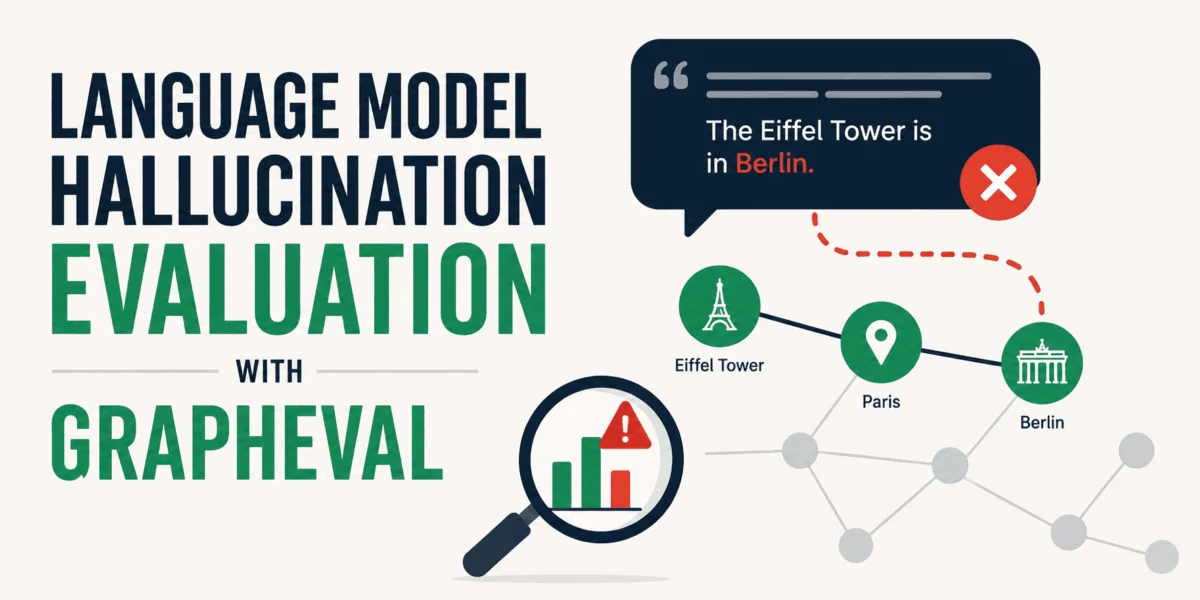
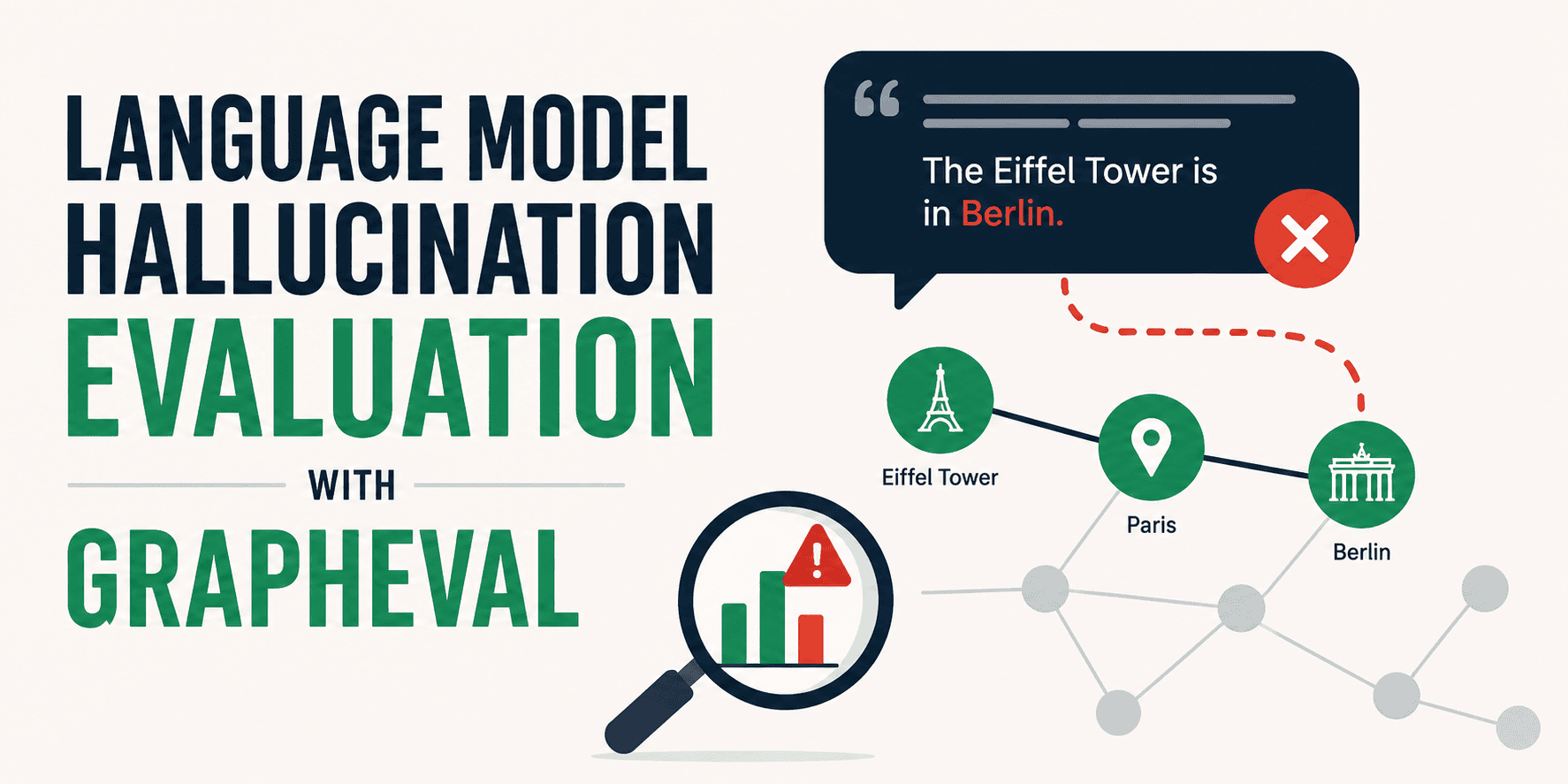
While many performance metrics exist, most are holistic and opaque, providing a single score that fails to explain why or where a model went wrong. Enter GraphEval, a pioneering methodology recently introduced by researchers at Amazon. By bridging the gap between unstructured text and structured knowledge graphs, GraphEval provides a granular, explainable pathway to detecting and localizing AI hallucinations.
Chronology of the Hallucination Problem
The journey to solve AI hallucinations has evolved through three distinct phases:
The Era of Blind Trust (2020–2022): Early adopters were often unaware of the extent of model fabrication. Evaluation relied largely on human feedback (RLHF), which was subjective, slow, and expensive.
The Rise of RAG (2023): The industry pivoted toward Retrieval-Augmented Generation (RAG). By grounding LLMs in external, verified documents, developers significantly reduced the frequency of hallucinations. However, even with RAG, models often misinterpreted context or conflated information from disparate sources.
The Diagnostic Shift (2024–Present): The current focus is on "internal diagnostics." Instead of simply asking, "Did the model get it right?", researchers are now asking, "What logical leap led the model to this incorrect conclusion?" GraphEval represents the vanguard of this diagnostic movement.
Understanding GraphEval: The Mechanics of Verification
GraphEval transforms the nebulous task of fact-checking into a structured, two-stage evaluation process. The framework operates on the premise that natural language is often too ambiguous to evaluate effectively, but the underlying "knowledge triples" (Subject-Relationship-Object) are not.
Stage One: Knowledge Graph Extraction
The first stage involves breaking down the LLM’s output into a series of discrete, atomic units. By prompting an auxiliary model—often a smaller, highly efficient LLM—to parse the output into a Knowledge Graph (KG), we strip away the flowery prose to expose the raw assertions being made by the primary model.
Stage Two: NLI-Based Validation
Once the output is converted into triples, the framework performs Natural Language Inference (NLI). In this stage, a specialized NLI model compares each triple against a "ground-truth" context. This context is typically derived from the original documents used in a RAG system. The NLI model assigns a label of entailment, neutral, or contradiction to each triple. If a triple is not explicitly supported (i.e., it is labeled neutral or contradiction), it is flagged as a hallucination.
Supporting Data and Practical Implementation
To understand the efficacy of GraphEval, we must move from theory to implementation. While a full-scale deployment requires significant computational overhead, a lightweight simulation demonstrates the framework’s power to pinpoint inaccuracies.
Simulating the Pipeline
Consider a scenario where an LLM is asked to define "GraphEval." Suppose the model returns the following:
"GraphEval is an evaluation framework that uses Knowledge Graphs. It requires a highly expensive, enterprise-level server farm to operate."
To evaluate this, we define our source_context:
"GraphEval is a hallucination evaluation framework based on representing information in Knowledge Graph (KG) structures. It acts as a pre-processing step and utilizes out-of-the-box NLI models to detect factual inconsistencies."
By extracting the triples, we identify:
(GraphEval, is, evaluation framework)
(GraphEval, uses, Knowledge Graphs)
(GraphEval, requires, expensive enterprise server farm)
Using a pre-trained DeBERTa NLI model from the Hugging Face hub, we compare these against the source. The first two are quickly verified as entailment. The third, however, finds no support in the source context and is flagged as neutral. The framework thus isolates the specific lie without needing to re-evaluate the entire paragraph.
Implications for the AI Ecosystem
The implications of the GraphEval approach are profound, affecting everything from developer workflows to user trust.
1. Enhanced Explainability
In high-stakes environments, "black box" AI is a liability. If an LLM denies a loan or misdiagnoses a condition, regulators demand an audit trail. GraphEval provides a visual and logical map, showing exactly which "triple" caused the error. This is a game-changer for transparency.
2. Reduced Cost and Latency
By isolating hallucinations at the triple level, developers can trigger "fallback" mechanisms—such as forcing the model to rewrite only the specific sentence that contained the hallucination—rather than re-generating the entire output. This saves compute cycles and improves response times.
3. Training and Fine-Tuning
The data generated by GraphEval serves as a goldmine for fine-tuning. By aggregating common hallucination patterns, developers can create targeted datasets to train future models, systematically teaching them to avoid the specific types of reasoning errors that GraphEval detects.
Official Perspectives and Expert Commentary
Iván Palomares Carrascosa, a leading voice in the AI advisory space, notes that frameworks like GraphEval are essential for the maturation of the industry. "We are moving past the ‘wow’ phase of LLMs into the ‘reliability’ phase," Carrascosa observes. "Methods that allow us to decompose information into structured, verifiable chunks are the only way we will reach the level of accuracy required for enterprise-grade applications."
Industry observers agree that while GraphEval is not a panacea—it still relies on the quality of the "ground-truth" context—it represents a necessary step toward the formal verification of generative AI.
Conclusion: The Path Forward
The challenge of hallucinations is unlikely to be solved by a single silver bullet. Instead, it will be mitigated through layers of evaluation, of which GraphEval is a critical component. By formalizing the verification process, we transition from hoping our models are correct to knowing they are accurate.
As we look toward the future, the integration of knowledge graphs into the standard LLM pipeline will likely become a best practice. For developers, researchers, and enterprises alike, the lesson is clear: if you want to trust your model, you must be able to audit its claims. GraphEval offers a robust, logical, and highly visual path to achieving that trust, ensuring that the AI revolution is built on a foundation of facts, not just probabilistic convenience.
Technical Appendix: Getting Started
For those looking to replicate the simulation, the following Python dependencies are required:
Transformers: For access to the NLI models.
NetworkX: For graph construction and manipulation.
Matplotlib: For rendering the visual hallucination maps.
By running these tools in a local development environment, you can begin to stress-test your own LLM pipelines and identify the specific points of failure that threaten your system’s integrity. As the AI field advances, the ability to "see" inside the model’s reasoning process—as GraphEval allows—will be the defining trait of the next generation of robust, reliable AI applications.