In a move designed to push the boundaries of current aerospace limitations, NASA has officially announced the selection of 18 ambitious, early-stage technology projects for its 2026 NASA Innovative Advanced Concepts (NIAC) program. With a combined allocation of $3.2 million in Phase I funding, these projects represent a departure from traditional, incremental aerospace development. Instead, the agency is looking to "germinate" high-risk, high-reward ideas that could redefine how humanity explores the solar system, studies distant exoplanets, and establishes a permanent presence on the Moon.
The NIAC program acts as a laboratory for the "science fiction of today" to become the "spaceflight reality of tomorrow." By providing each project with up to $175,000 for a nine-month feasibility study, NASA is effectively funding the intellectual heavy lifting required to determine if these groundbreaking concepts can move from the drawing board to the launchpad.
The Mandate for Radical Innovation
For decades, space exploration has relied on proven, evolutionary technology. However, as NASA’s ambitions grow—encompassing the return of humans to the lunar surface under the Artemis program, the search for life in the outer solar system, and the desire to characterize Earth-like worlds in other star systems—the agency has recognized that traditional methods may no longer suffice.
"Achieving that will require more than incremental technological advancement. It means we need great leaps," stated Greg Stover, director of the Advanced Research and Technology division in NASA’s Research and Technology Mission Directorate. According to Stover, the 2026 NIAC cohort represents the precise caliber of disruptive innovation required to propel NASA into the next century of discovery.
The projects selected for this cycle are not current missions, nor are they finalized hardware designs. Rather, they are conceptual frameworks—some bordering on the revolutionary—that aim to solve some of the most persistent problems in space science: extreme heat, planetary access, and long-range observation.
A Chronology of Vision: The Path from Concept to Reality
The NIAC program operates on a distinct, multi-phase trajectory designed to filter out unfeasible ideas while nurturing those with transformative potential.
- Phase I (Current Stage): The 18 selected projects are currently in the infancy of their development. Over the next nine months, these teams will conduct fundamental research and simulations to establish technical viability. The goal here is not to build a rocket, but to prove the physics are sound and the engineering challenges are manageable.
- Phase II (Maturation): Should these concepts successfully pass the Phase I feasibility audit, researchers may apply for Phase II funding. This stage involves more rigorous prototyping, often focusing on testing specific components or systems in simulated space environments.
- Phase III (Implementation): The final, rarest tier of the NIAC program focuses on strategic infusion. At this stage, the technology is sufficiently mature to be integrated into broader mission architectures, potentially becoming a key payload on future flagship missions.
This structure allows NASA to minimize financial risk while maximizing the "intellectual surface area" of its research portfolio. By investing small amounts into a large variety of ideas, the agency ensures that even if 80% of these projects fail to materialize, the remaining 20% could fundamentally alter the cost, safety, or scientific output of future space exploration.
Spotlight on Selected Technologies
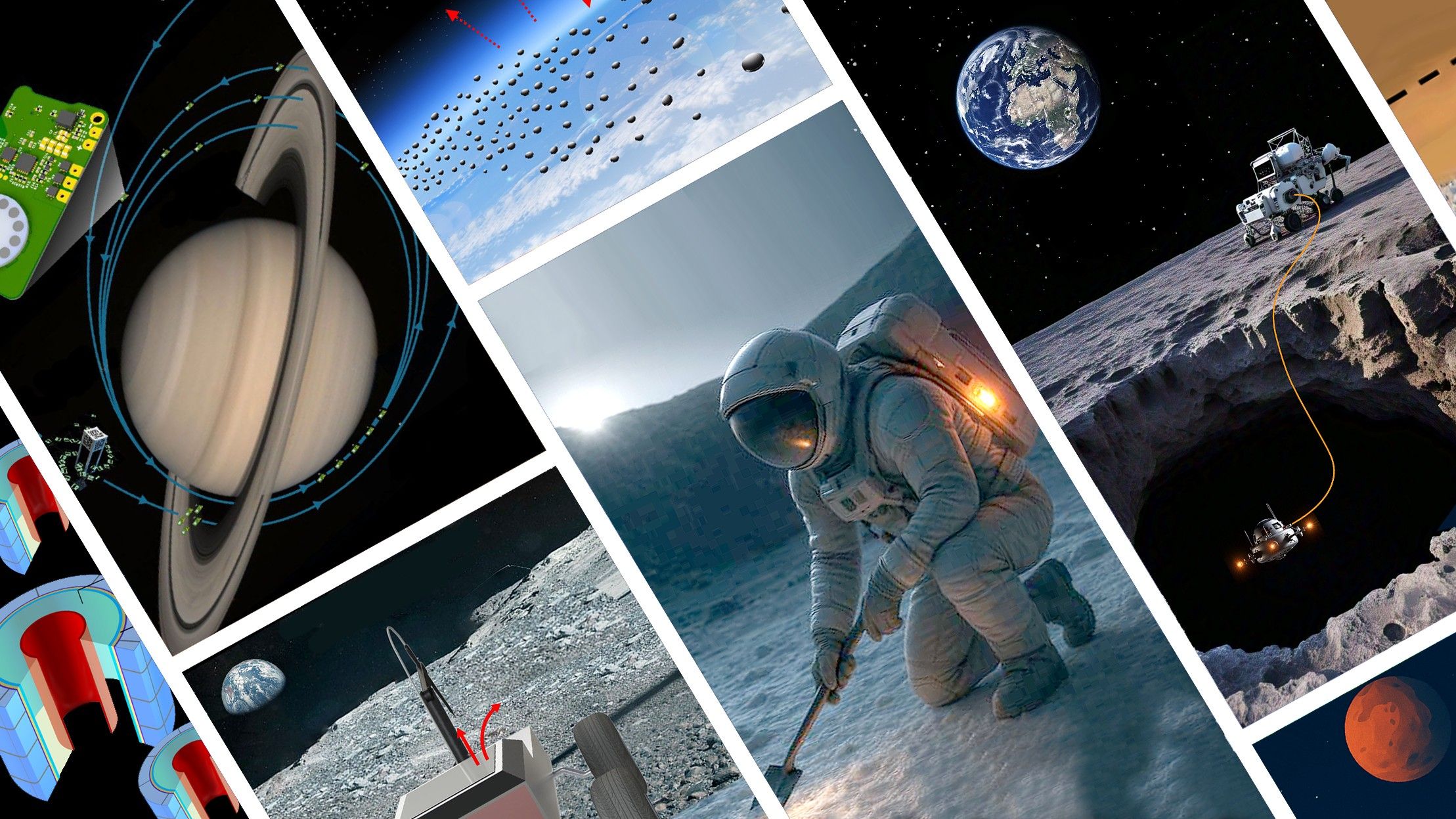
The 2026 cohort covers a vast spectrum of scientific inquiry. Below are three of the most notable concepts currently under review.
1. The Lunar Underground eXplorer (LUX)
As NASA looks to establish long-term lunar habitats, the surface of the Moon presents a hostile environment. Between extreme thermal fluctuations and the constant barrage of high-energy cosmic rays and solar radiation, the surface is a difficult place for permanent human settlement.
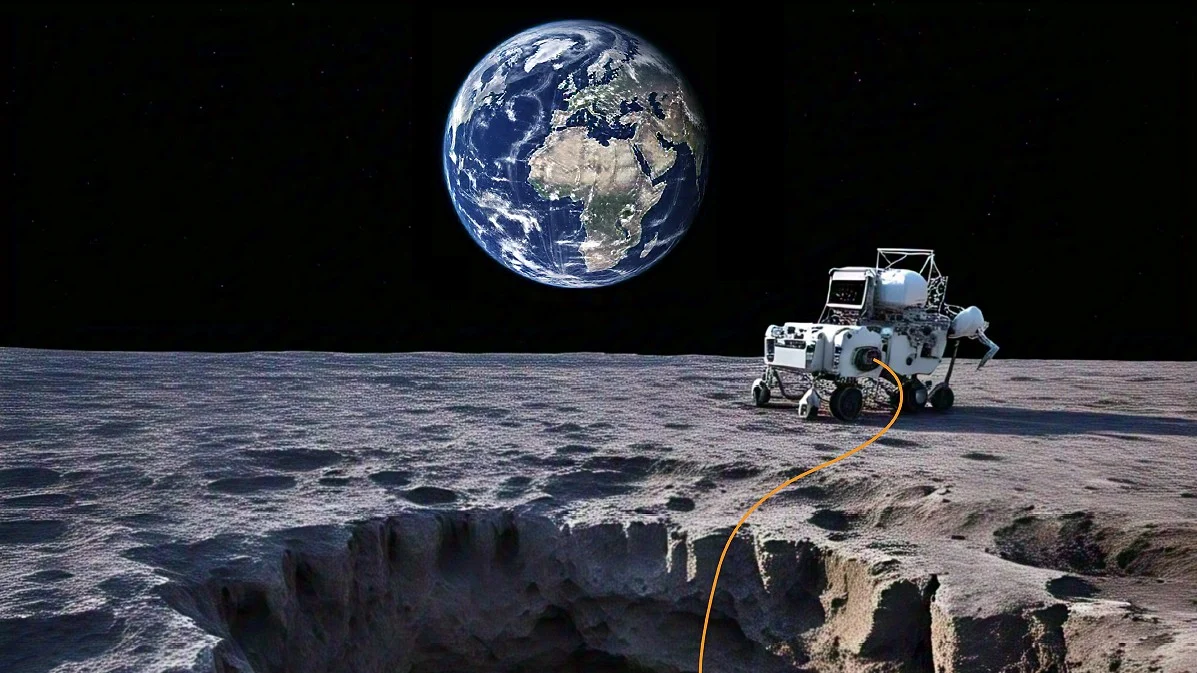
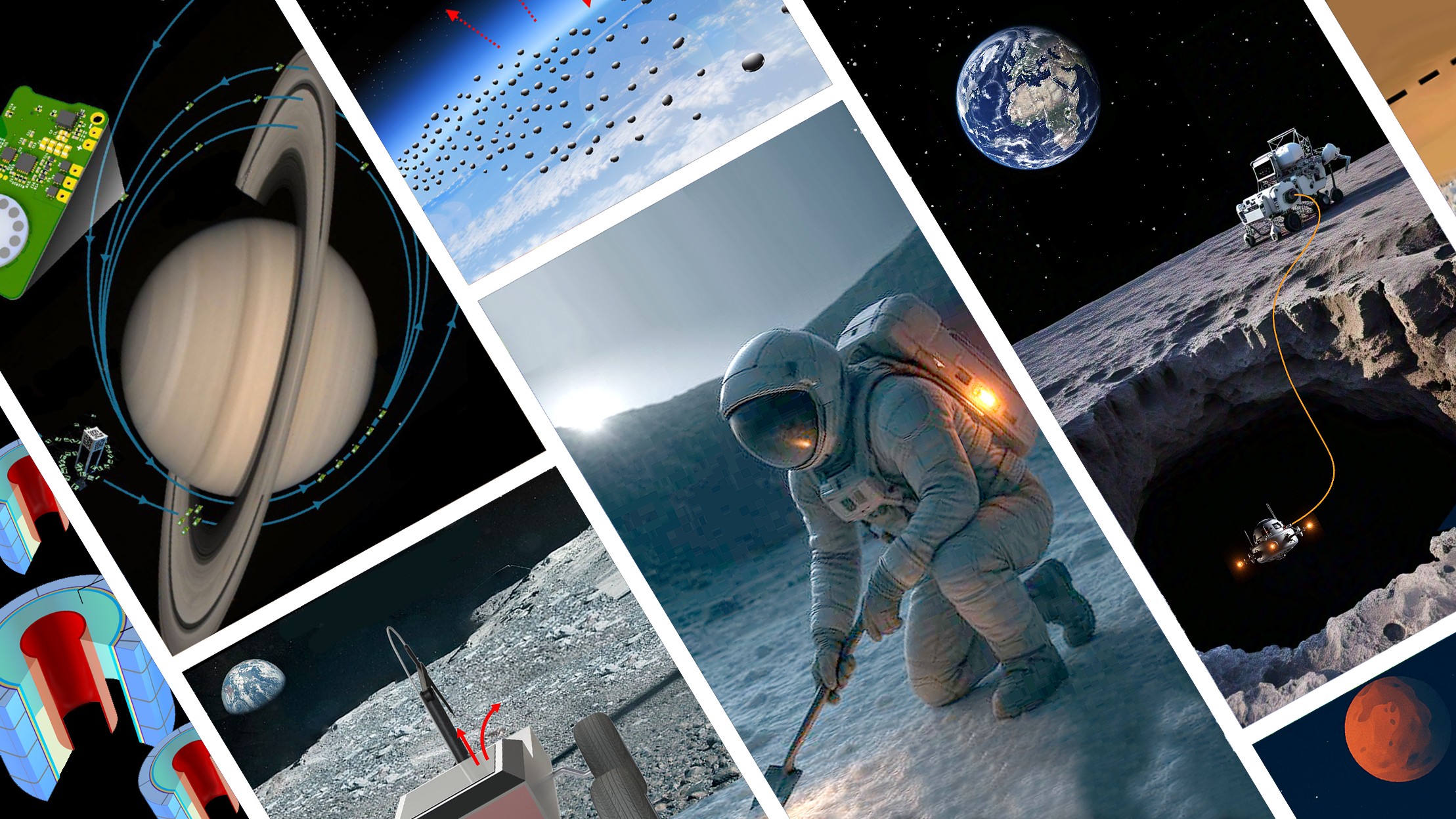
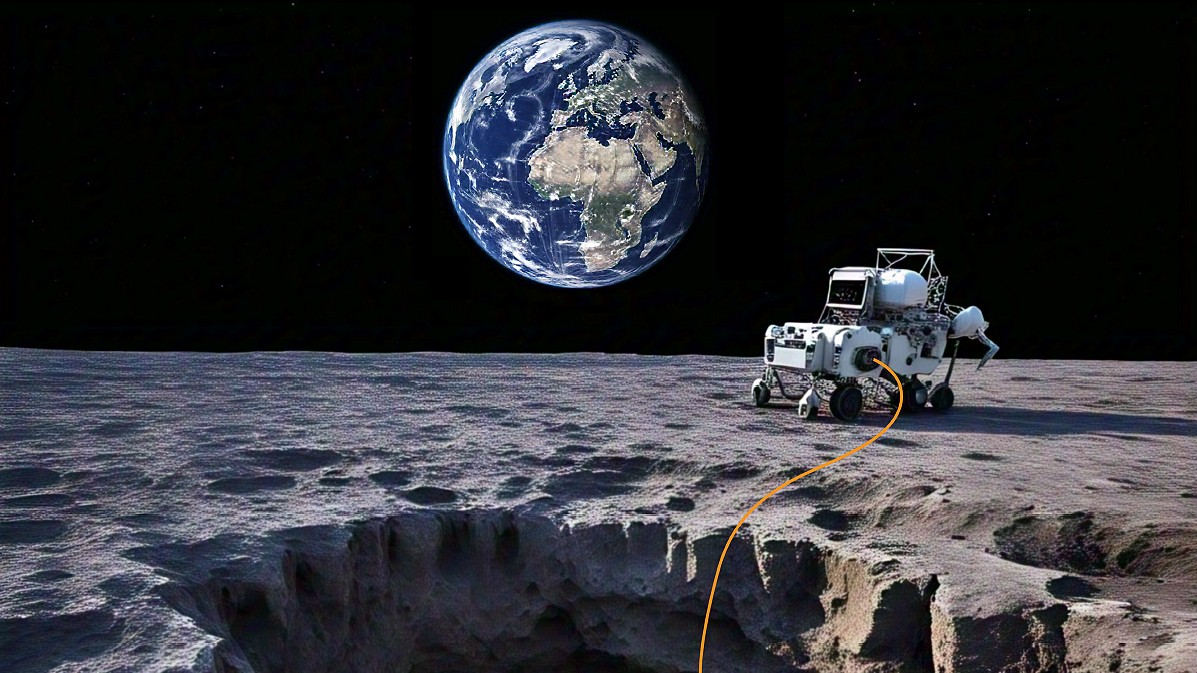
The "Lunar Underground eXplorer" (LUX), proposed by Gilly Elor of Stone Aerospace, Inc., suggests that the answer lies beneath our feet. The Moon is pockmarked with lava tubes—vast, subterranean caverns formed by volcanic activity billions of years ago. LUX proposes a swarm of tethered, hovering drones capable of navigating these dark, vertical voids. These drones would be powered via an ultra-lightweight fiber-optic cable that also acts as a high-speed data conduit, receiving laser-delivered power from a lander stationed safely on the surface. This approach solves the "line of sight" problem for communication and provides an infinite energy supply for the cave-diving scouts.
2. Mapping Alien Continents via Nulling Interferometry
While we have discovered thousands of exoplanets, our ability to study their surfaces remains incredibly limited. We can measure their mass, density, and orbital period, but we cannot "see" them in any meaningful detail.
Paul Stankus of Brookhaven Science Associates has proposed a sophisticated technique called "dynamic hierarchical nulling." By positioning a pair of space telescopes approximately 100 kilometers (60 miles) apart, the system would use optical interferometry to cancel out the blinding glare of a host star. This "nulling" effect allows the combined array to resolve features on a planet that is otherwise 10 billion times dimmer than its sun. If successful, this technology could one day allow astronomers to distinguish oceans from continents on Earth-like worlds orbiting nearby stars.
3. The Femtosat Swarm
Studying gas giants like Saturn presents a significant risk to traditional spacecraft. The famous Cassini mission, while successful, had to avoid the densest parts of the rings to prevent catastrophic collision with debris.
Michael Rubenstein of Northwestern University proposes a strategy that embraces failure rather than avoiding it. His "femtosat" concept involves deploying 10,000 tiny satellite probes, each weighing less than 100 grams, directly into the rings of Saturn. Because these probes are mass-produced and inexpensive, the loss of individual units is a calculated feature, not a mission-ending bug. By creating a vast, distributed network of sensors, the mission can collect "in-situ" data across the entire ring system, providing a high-fidelity map of the magnetosphere and atmospheric dynamics that a single flagship probe could never achieve.
Supporting Data and Technical Implications
The $3.2 million distributed among these 18 projects is a relatively modest investment when compared to the multi-billion dollar budgets of missions like the James Webb Space Telescope or the Mars Sample Return. However, the economic implications are profound.
The NIAC program is designed to foster a "dual-use" ecosystem. Many of the technologies developed for lunar or deep-space exploration—such as advanced power distribution, miniaturized robotics, and autonomous navigation—have direct applications in the commercial aerospace sector. By funding these initial studies, NASA is not only helping its own mission profile but is also stimulating the growth of the broader aerospace economy, providing companies with the IP (intellectual property) needed to innovate in the burgeoning private space market.
Official Responses and Strategic Vision
The leadership at NASA remains optimistic about the role these concepts play in the agency’s long-term roadmap. Phillip Williams, NIAC’s acting program executive, framed the initiative as a form of agricultural stewardship for technology.
"Every innovation, every leap in technology, starts with a seed of an idea," Williams said. "The NIAC program allows NASA to germinate those seeds and determine if there’s something that could be grown to benefit future space missions and our nation’s aerospace economy."
This vision of "germination" is critical. It acknowledges that the path to discovery is rarely a straight line. By allowing researchers to explore "out-there" ideas, NASA creates a buffer against stagnation. In the history of the space program, many of the most successful technologies—from solar electric propulsion to deployable heat shields—began as "too risky" or "too unconventional."
The Future Landscape: Why These Concepts Matter
The 2026 NIAC selections illustrate a shifting paradigm in how NASA approaches the future. We are moving away from the era of "one big mission" toward a future defined by distributed, intelligent, and highly resilient technology.
Whether it is the ability to map the continents of a distant world, explore the hidden tunnels of the Moon, or survive the chaotic environment of Saturn’s rings, the common thread is a transition from passive observation to active, in-situ exploration. These technologies promise to lower the barrier to entry for deep-space science, enabling a generation of missions that are more affordable, more capable, and ultimately, more successful.
As these 18 teams embark on their nine-month feasibility studies, the global scientific community watches with interest. While not every project will result in a flight-ready system, the knowledge gained from these studies will inevitably form the foundation for the next several decades of human and robotic exploration. In the high-stakes world of aerospace, the ability to dream big—and to test those dreams with rigorous science—is the most important tool in NASA’s kit.