Wenchang, Hainan Province — The ambitious trajectory of China’s lunar exploration program has hit an unexpected atmospheric barrier. The highly anticipated launch of the Chang’e 7 lunar probe, originally scheduled for late August 2026, has been officially postponed as Tropical Depression Narra intensifies in the Gulf of Tonkin. The decision marks a significant setback for the China National Space Administration (CNSA), which now faces the logistical challenge of rescheduling a complex mission that requires precise orbital synchronization.
The delay, confirmed by state-run media outlet Xinhua, reflects the precarious nature of launching heavy-lift rockets from the Wenchang Spacecraft Launch Site. As meteorological conditions continue to deteriorate, the window for this year’s mission has effectively closed, with some reports suggesting that the mission may now be pushed into 2027.
The Meteorological Impasse
The Wenchang Spacecraft Launch Site, located on the northeastern coast of Hainan Island, is a critical node in China’s modern space infrastructure. However, its tropical location leaves it vulnerable to the seasonal volatility of the South China Sea.
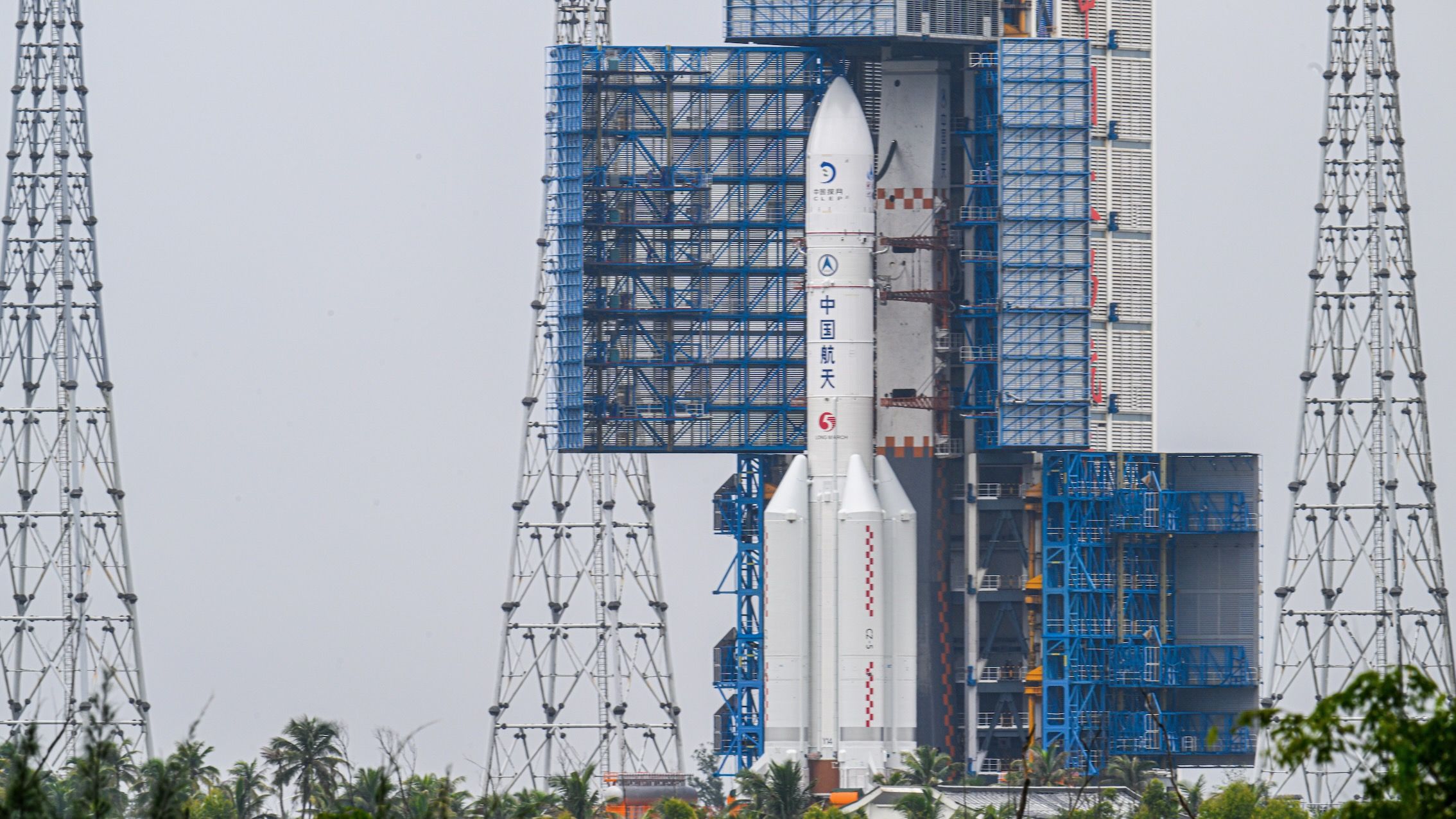
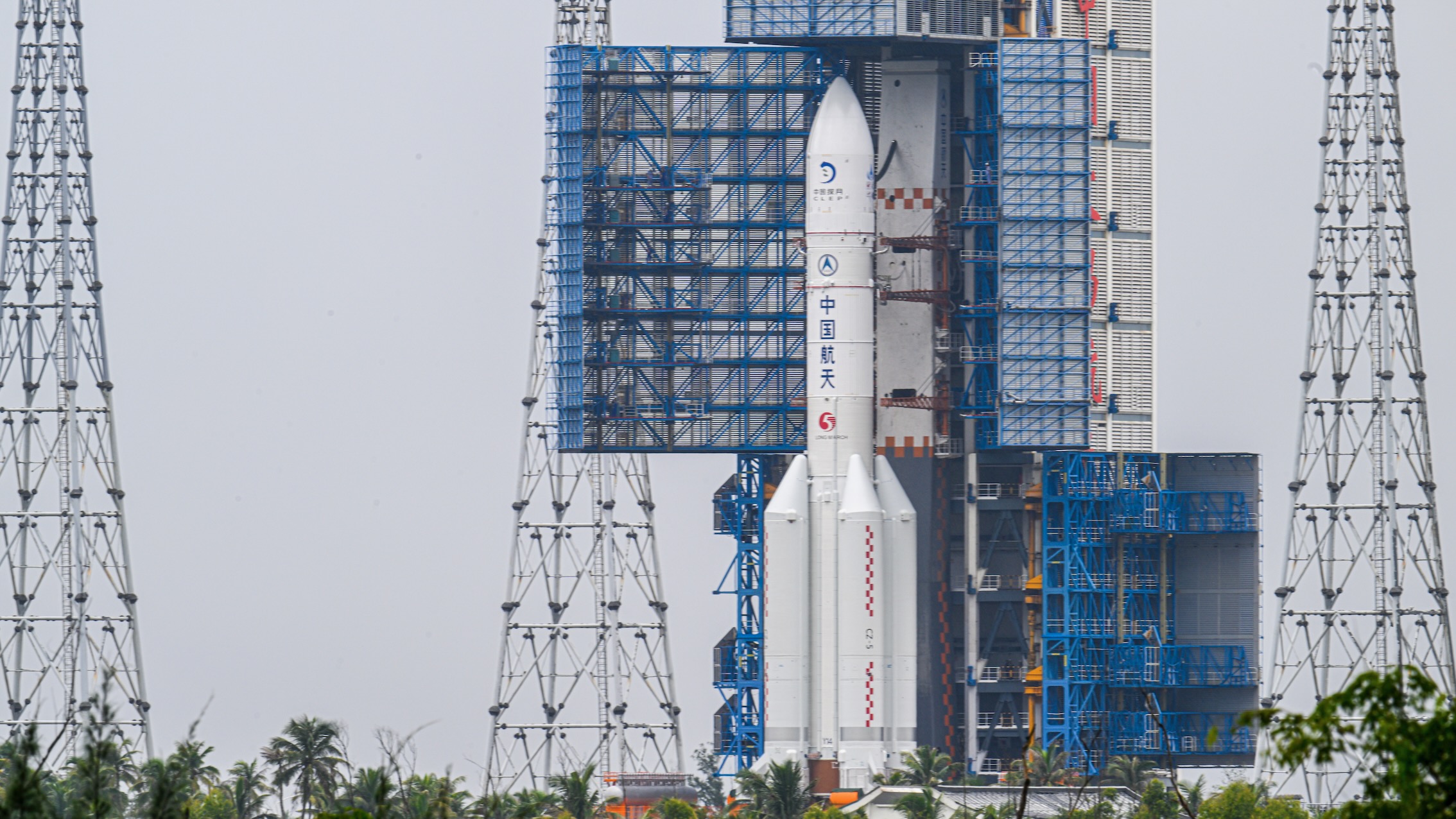
Tropical Depression Narra, which began forming in the Gulf of Tonkin earlier this week, generated high-velocity winds and torrential rainfall that made the planned launch of the Long March 5 rocket—a vehicle that stands over 56 meters tall—prohibitively dangerous. While space agencies worldwide routinely contend with weather-related delays, the specific dynamics of a launch window for a lunar mission are far more rigid than those for low-Earth orbit satellites.
"China’s Chang’e 7 lunar probe does not meet launch conditions, and its launch therefore cannot take place during the planned window this year," the China Manned Space Agency stated in an official announcement on August 23. While initial attempts were made to delay the countdown by only 24 hours, the rapid intensification of the storm forced officials to stand down indefinitely.
A Chronology of the Chang’e 7 Development
The Chang’e 7 mission represents the culmination of years of iterative progress in China’s lunar program. To understand the gravity of this delay, one must look at the timeline of the Chang’e series:
- 2004: The China Lunar Exploration Program (CLEP) is formally established, setting the stage for a three-phase approach: orbiting, landing, and returning samples.
- 2019: Chang’e 4 makes history as the first mission to achieve a soft landing on the far side of the moon.
- 2020: Chang’e 5 successfully retrieves lunar soil samples and returns them to Earth, cementing China’s status as a major spacefaring power.
- August 19, 2026: The Chang’e 7 probe and its Long March 5 launch vehicle are moved to the launch pad, marking the final stage of pre-flight preparations.
- August 23, 2026: CNSA confirms that the mission is scrubbed due to the encroaching Tropical Depression Narra, citing safety concerns and the inability to meet the required launch window.
The current uncertainty regarding the new launch date stems from the mechanics of orbital mechanics. A lunar launch is not a simple "ready-when-you-are" operation; it requires the moon to be at the correct position in its orbit relative to Earth’s rotation to minimize fuel consumption and maximize the success of the trajectory.
Technical Scope: The Hunt for Water Ice
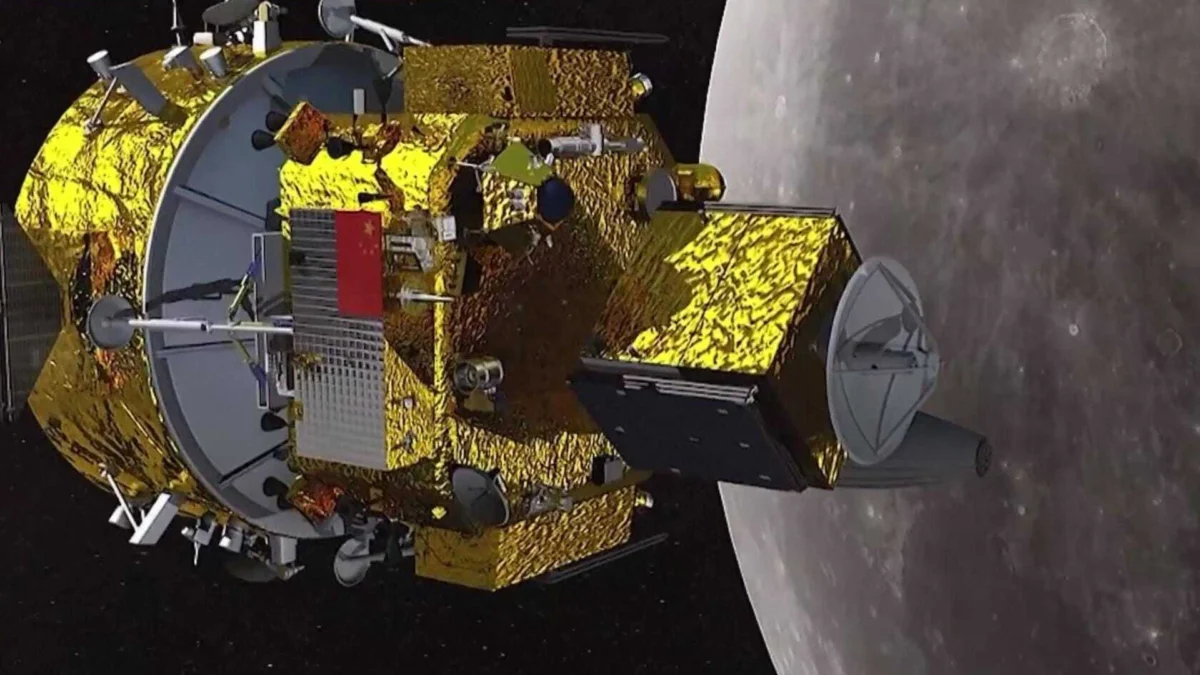
The Chang’e 7 mission is not merely a symbolic step; it is a high-stakes scientific expedition designed to pave the way for a permanent lunar presence. The mission package consists of an orbiter, a lander, and a specialized rover.
The primary target is the lunar south pole, specifically the rim of the Shackleton Crater. This region is of intense interest to the global scientific community because it contains "permanently shadowed regions" (PSRs). Due to the low angle of sunlight at the poles, these crater floors have remained in darkness for billions of years, creating a natural deep-freeze environment where water ice is trapped.
The Chang’e 7 lander is equipped with a revolutionary "hopping robot"—a small, agile rover capable of navigating the rugged, cratered terrain of the lunar south pole by jumping over obstacles. This robot is designed to perform in-situ analysis of the regolith to confirm the presence and concentration of water ice, a critical resource for future lunar bases. Water can be converted into oxygen for breathing and, more importantly, liquid hydrogen and oxygen for rocket propellant, effectively turning the moon into a "gas station" for deep-space exploration.
Strategic Implications and the New Space Race
The delay of Chang’e 7 has not gone unnoticed by the international community, particularly in Washington. The United States, through NASA’s Artemis program, is also targeting the lunar south pole for its own human exploration efforts.
The geopolitical landscape of space exploration has shifted from the "Space Race" of the 1960s to a contemporary competition defined by sustainable resource extraction and long-term habitation. U.S. officials, including leadership at NASA, have repeatedly emphasized that the first nation to establish a sustainable presence at the south pole will likely set the legal and operational precedents for lunar resource management for decades to come.
While the current delay might seem like a mere technical hurdle, it highlights the challenges of operating on a global stage. China has historically maintained a high level of opacity regarding its space program, often revealing details about crewed missions or robotic launches only days—or sometimes hours—before they occur. This "tight-lipped" approach often creates a vacuum of information that leads to intense speculation within the global space-tracking community.
Official Responses and Future Outlook
Despite the frustration of a scrubbed launch, the Chinese space program remains on a long-term, upward trajectory. The Long March 5, the "workhorse" of the Chinese heavy-lift program, has proven its reliability in multiple missions to the moon and the construction of the Tiangong space station.
Public sentiment within China remains supportive, with state media emphasizing the "scientific rigor" and "safety-first" culture of the CNSA. By prioritizing the safety of the launch vehicle and the integrity of the mission over a fixed calendar date, the agency is attempting to demonstrate a mature approach to risk management.
However, the delay into 2027 (should it prove necessary) creates a significant ripple effect in China’s broader space strategy. The Chang’e 7 mission is intended to be the foundation for subsequent missions—Chang’e 8 and beyond—which are meant to expand on the infrastructure built by the seventh mission. A year-long delay could force a reorganization of the entire lunar roadmap, potentially impacting the timeline for China’s goal of landing humans on the moon by 2030.
Conclusion: The Long Road to the South Pole
As Tropical Depression Narra moves across the Gulf of Tonkin, the Chang’e 7 rocket remains secured on its pad, a silent sentinel of China’s extraterrestrial ambitions. The mission is, at its heart, a test of endurance—not just for the hardware, which must survive the harsh vacuum of space, but for the administrative and scientific teams that must navigate the unpredictable forces of nature and the high-pressure environment of geopolitical competition.
While the world watches the skies above Wenchang, the broader implications remain clear: the race to the lunar south pole is entering a critical phase. Whether the Chang’e 7 mission launches in the coming weeks or faces a prolonged postponement, the pursuit of water ice and the dream of a lunar outpost remain the defining objectives of the next decade of space exploration. The moon, once a symbol of the unattainable, is rapidly becoming the next frontier for human civilization, and the challenges faced today are merely the opening chapters of a much larger, lunar-focused narrative.