In a move that signals a seismic shift in the semiconductor industry, Nvidia—the undisputed kingpin of AI training silicon—is reportedly intensifying its efforts to dominate the burgeoning inference market. Following its high-profile acquisition of Groq in late 2025, which saw the GPU giant secure a non-exclusive technology license and absorb a wealth of specialized engineering talent, Nvidia has set its sights on South Korean inference startup Rebellions.
According to recent reports, the two companies are in the preliminary stages of discussions regarding a technical partnership, a strategic investment, or perhaps a full-scale acquisition. This potential deal underscores a critical reality: as the AI hype cycle matures into an era of massive, real-world deployment, Nvidia is moving aggressively to address its perceived vulnerabilities in inference workloads.
The Architecture of Efficiency: Why Rebellions Matters
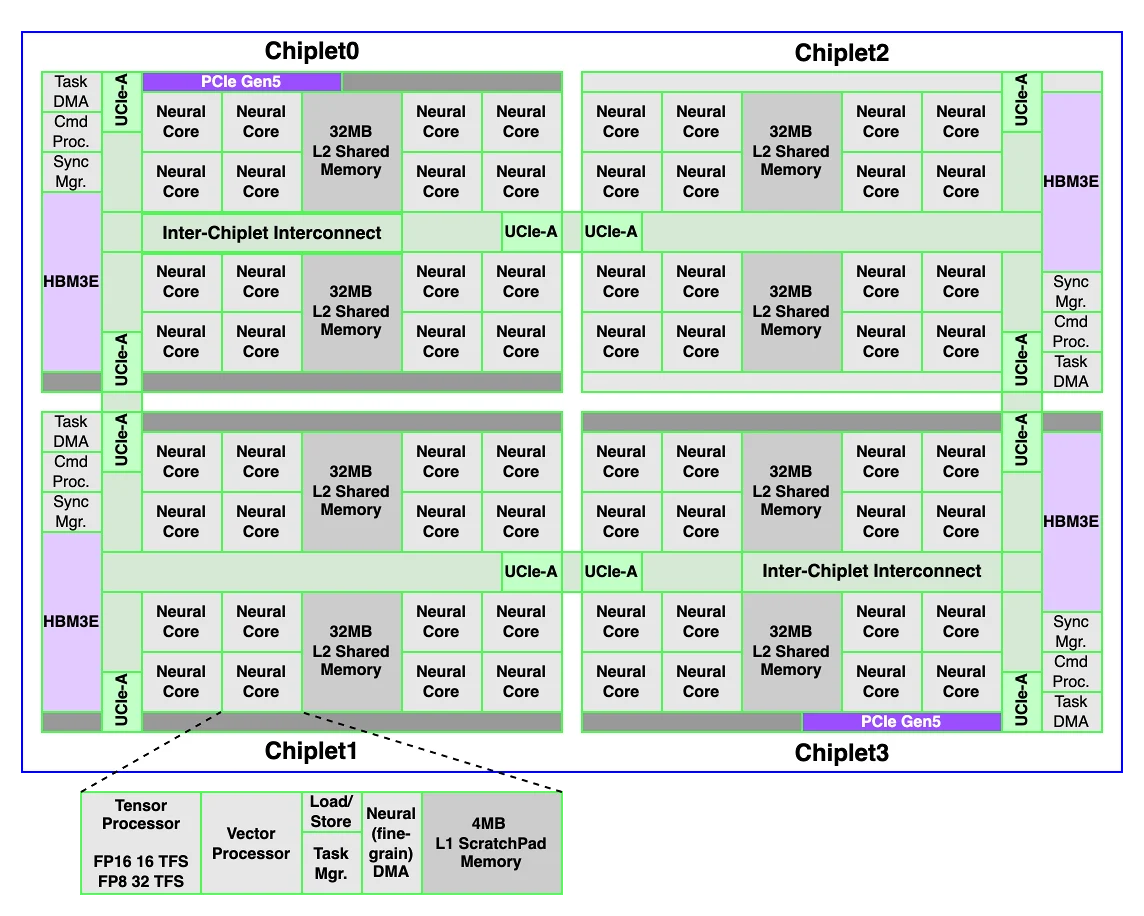
The interest in Rebellions is far from arbitrary. Much like Groq, Rebellions has centered its design philosophy on memory-centric inference architectures. The firm’s compute chiplets utilize significant on-chip SRAM to handle the memory-intensive "decode" stage of large language model (LLM) processing, while offloading prefill tasks to other parts of the system. This design mimics the SRAM-based LPU (Language Processing Unit) model that Nvidia acquired through its $20 billion Groq deal, suggesting a clear trajectory for Nvidia’s future hardware roadmap.

However, Rebellions brings a distinct competitive advantage to the table: deep, strategic co-design relationships with South Korean memory titans Samsung and SK Hynix. In a market where supply chain sovereignty is the ultimate currency, Rebellions has secured structural memory supply advantages that pure-play fabless firms struggle to replicate. By locking in memory allocation through these strategic alliances, Rebellions can guarantee the throughput necessary for large-scale AI services—a luxury most independent chip vendors cannot claim.
A Chronology of Rapid Ascent
Rebellions’ rise to prominence is nothing short of meteoric. Founded in 2020, at the height of the global pandemic, the Seoul-based startup managed the improbable feat of moving from inception to mass production in just five years.
- 2020: The company is founded by CEO Sung-hyun Park, a veteran with experience at Intel, SpaceX, and Morgan Stanley, following his return to South Korea after a decade at MIT.
- 2023: Rebellions reaches mass production with its first-generation ATOM and ATOM-Max chips, successfully powering Korea’s largest commercial AI service at SK Telecom.
- 2024–2025: The company secures deployments in Saudi Arabia’s sovereign AI infrastructure, signaling its international viability.
- August 2025: Rebellions launches its second-generation platform, REBEL-Quad, built on Samsung Foundry’s 4-nm node. This platform integrates four compute chiplets via UCIe-Advanced interconnects, delivering a staggering 1 POPS (Peta-Operations Per Second) of FP16 compute within a 300-W power envelope.
- Present Day: Rebellions stands at a valuation of approximately $2.3 billion, with a war chest of $850 million in funding and preparations for an IPO in the first half of 2027.
Supporting Data: The "Cloud-Native" Advantage
What sets Rebellions apart from other hardware-centric startups is its comprehensive software ecosystem. While many AI silicon suppliers force developers to navigate proprietary, fragmented software stacks, Rebellions has built a cloud-native infrastructure powered by Kubernetes.

Their stack is designed for seamless integration with open-source frameworks like PyTorch, Hugging Face, and the vLLM engine. By avoiding "forked" software, Rebellions ensures that cloud developers experience zero friction when migrating existing workloads. This architectural philosophy is a direct response to the "inference bottleneck," where the cost and complexity of running AI models—not just training them—have become the primary inhibitor for enterprise adoption.
The REBEL-Quad architecture, with its 144 GB of HBM3E memory and chiplet-based scalability, represents a high-water mark for energy-efficient inference. As data center operators scramble to reduce their Power Usage Effectiveness (PUE) scores while maintaining high tokens-per-second performance, chips like the Rebel100 become increasingly attractive to hyperscalers and sovereign cloud providers alike.
The "K-Nvidia" Initiative and Geopolitical Stakes
The potential acquisition of Rebellions is not merely a business transaction; it is a geopolitical event. The South Korean government has positioned semiconductors as the backbone of its national security, launching the "K-Nvidia" initiative to foster a local AI infrastructure ecosystem. Rebellions is a primary beneficiary of this support, having recently secured the first $166 million direct investment from the Korea National Growth Fund.

An acquisition by a U.S. giant like Nvidia would undoubtedly trigger significant regulatory scrutiny in Seoul. The South Korean government views the loss of such a pivotal "homegrown" asset as a threat to its strategic autonomy. Conversely, in the United States, Nvidia’s dominant position in the training market means that any move to consolidate the inference market—especially after the Groq acquisition—will almost certainly face intense antitrust investigation from the FTC and DOJ.
Implications: A Strategic Pivot to Save an Empire
Nvidia’s dominance in the training sphere is well-documented, but the inference market is a different beast. Training is a batch-heavy, latency-tolerant process, while inference demands low-latency, high-throughput, and extreme power efficiency. As models move from the training labs to the edge and the enterprise, the "one-size-fits-all" GPU model is being challenged by specialized NPUs and memory-centric architectures.
Nvidia’s CEO, Jensen Huang, understands that the AI revolution’s next phase will be won by whoever controls the cost-per-token of inference. By absorbing companies like Groq and potentially Rebellions, Nvidia is not just buying hardware; it is buying a diversified portfolio of intellectual property and engineering talent that allows it to maintain its "full-stack" dominance.

For Rebellions CEO Sung-hyun Park, the prospect of an Nvidia deal presents a complex paradox. Once a staunch "rebel" who famously remarked, "Even if we step into the same ring as Nvidia and get beaten to death, I want to throw a punch," Park now finds himself in a position where the "revolt" might end in an absorption. If the deal proceeds, the company will cease to be a challenger and instead become a component of the very infrastructure it sought to disrupt.
Official Responses and Market Sentiment
To date, both Nvidia and Rebellions have maintained a strict silence regarding the reports. Bloomberg’s initial reporting suggests that the talks are in the "early stages," leaving ample room for the deal to either accelerate into a formal agreement or collapse under the weight of regulatory and valuation disagreements.
Market analysts, however, remain bullish on the trend. The inference market is approaching a "tipping point" in 2026 and 2027, where the sheer volume of AI requests will render current hardware solutions insufficient. Nvidia’s strategic pivot is a preemptive strike against this inevitable bottleneck. Whether through internal R&D or aggressive M&A, Nvidia is determined to ensure that whether a model is being trained or deployed, the compute power driving it carries a "Team Green" label.

As the industry watches, the "Rebellions" saga highlights the central theme of the current tech cycle: the transition from "AI as a research experiment" to "AI as a core utility." In this new world, the companies that control the flow of data through memory and silicon will hold the keys to the kingdom. If Nvidia successfully incorporates Rebellions, it will effectively insulate itself from the growing competition in the inference space, signaling that its AI empire is not just about the past, but is being aggressively reinforced for the next decade of compute.