By Satellite Today Reporting Staff
In a high-stakes endeavor that captured the attention of the global space community, the ambitious mission to rescue NASA’s aging Swift Observatory has hit a critical hurdle. Katalyst Space, the firm tasked with extending the life of the orbital observatory, has confirmed that its LINK robotic spacecraft is currently battling severe technical malfunctions. Just days after a successful launch, the mission—designed to prevent the uncontrolled atmospheric reentry of a vital scientific asset—is now in a race against time to stabilize its own hardware.
The Core Crisis: A Technical Breakdown in Orbit
The mission, which represents a cutting-edge approach to in-orbit servicing, faced a significant setback this week when Katalyst Space disclosed that its LINK spacecraft is struggling with attitude control. According to the company’s official status report released on Tuesday, the spacecraft’s primary orientation systems have been compromised.
Specifically, two of the three reaction wheels—the internal flywheels used to control the orientation and stability of a spacecraft without consuming propellant—have become non-functional. This critical failure is compounded by only partial functionality in the spacecraft’s Reaction Control System (RCS), the thrusters responsible for fine-tuned maneuvers and de-tumbling.
The resulting instability left the LINK spacecraft in a multi-axis spin, a dangerous state that led to a temporary loss of communications and an automated "bus reset," as the spacecraft’s safety protocols triggered to protect the core onboard computer. Fortunately, Katalyst confirmed that all other vital subsystems, including power, thermal management, and communications arrays, remain fully operational, providing a glimmer of hope that the mission can be salvaged.
Chronology: From Rapid Development to Mid-Orbit Turmoil
To understand the severity of the current situation, one must look at the accelerated timeline that brought the LINK spacecraft to its current position.
- August 2025: NASA awarded a $30 million contract to Katalyst Space to develop a robotic solution to reboost the Swift Observatory. The goal was to extend the mission life of the satellite, which was rapidly losing altitude.
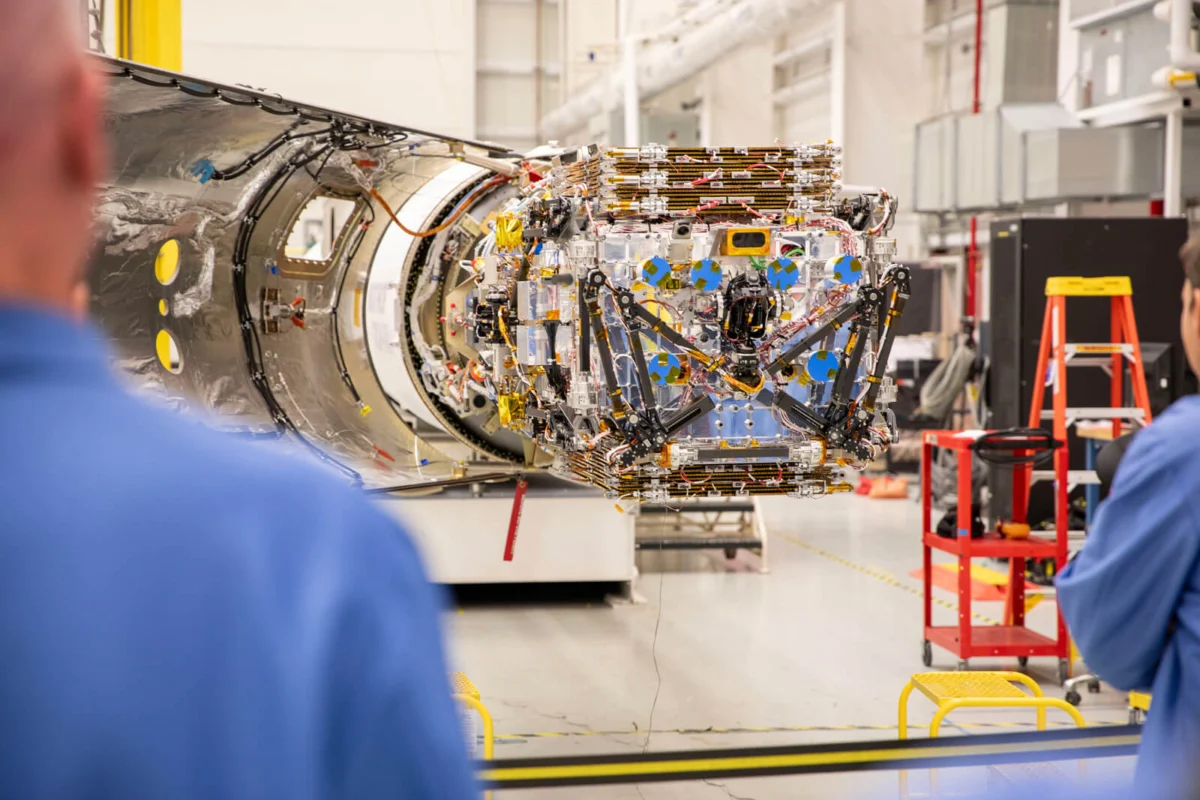
- September 2025 – June 2026: In a feat of aerospace engineering, the team at Katalyst designed, built, tested, and integrated the LINK robotic craft in under 12 months—a timeline significantly shorter than the industry standard for bespoke spacecraft.
- July 2, 2026: The LINK spacecraft was successfully deployed into orbit via a Northrop Grumman Pegasus XL rocket. The launch, conducted using an air-launch technique from beneath a carrier aircraft, was heralded as a success, placing the craft on a trajectory toward the Swift Observatory.
- Mid-July 2026: Shortly after reaching its initial orbital insertion, the spacecraft began exhibiting signs of instability.
- July 21, 2026: Katalyst publicly acknowledged the reaction wheel and RCS issues, confirming that engineering teams are working around the clock to stabilize the craft.
The Engineering Challenge: Stabilizing the LINK
The immediate priority for the Katalyst team is to halt the multi-axis spin. Engineers are currently attempting to utilize the spacecraft’s electric propulsion system to generate the necessary torque to stabilize the craft. However, this is not a simple task. Because the RCS is only partially operational, the team must rewrite the spacecraft’s guidance, navigation, and control (GNC) algorithms to compensate for the hardware limitations.
This process involves an iterative cycle of updating GNC schemes, verifying them through end-to-end simulations, and performing rigorous ground testing before uploading commands to the spacecraft. Every command sent to the LINK must be carefully calculated, as the margin for error is razor-thin. If the spacecraft cannot be brought to a stable state, it will be impossible to execute the complex rendezvous and proximity operations (RPO) required to dock with the Swift Observatory.
Official Responses and Strategic Outlook
Despite the gravity of the situation, the leadership at Katalyst remains steadfast in their commitment to the mission. In an official statement, the company noted: "While these technical issues require a revised approach, our team is working around the clock alongside our NASA partners. The mission remains active and we continue to believe that with these changes, LINK has a viable path to rendezvous with Swift."
NASA, which provided the mandate for this mission, has remained a supportive partner. The Swift Observatory is a high-priority scientific tool, and the agency’s investment in the Katalyst solution was predicated on the belief that robotic servicing is the future of space sustainability. By opting for a lower-cost, rapid-development robotic solution rather than a conventional, expensive crewed mission, NASA is testing a business model that could redefine how agencies maintain orbital assets.
Implications for the Future of In-Orbit Servicing
The difficulties faced by the LINK mission serve as a stark reminder of the inherent risks associated with space robotics. As the industry moves toward "orbital maintenance" as a standard practice, the lessons learned from this mission will be invaluable.
1. The Risks of Rapid Development
While the "race against the clock" to rescue Swift necessitated an accelerated development cycle, the technical issues highlight the potential trade-offs. Testing cycles are often compressed in rapid-prototyping environments, and this incident may spark a broader industry debate regarding the balance between speed and reliability in critical missions.
2. Resilience Through Software
The ability of the Katalyst team to potentially save the mission through software patches—rewriting control schemes to work around broken hardware—is a testament to the modern shift toward software-defined satellites. If successful, this mission will demonstrate that even when hardware fails, a robust software architecture can serve as a critical safety net.
3. The Future of NASA’s Aging Fleet
NASA currently manages a massive fleet of aging satellites. If Katalyst can stabilize the LINK and successfully dock with Swift, it will open the door for similar missions to extend the operational life of other high-value assets. Conversely, a failure would be a significant blow to the viability of near-term robotic servicing missions.
4. Commercial Space Sustainability
The mission is being watched closely by private sector players who are investing heavily in orbital debris removal and life-extension services. For the industry to grow, companies must prove that they can handle in-orbit anomalies autonomously or with ground-based support. The outcome of the LINK rescue attempt will likely influence future investment trends in the burgeoning satellite servicing market.
Conclusion: A High-Stakes Balancing Act
The LINK mission is currently at a crossroads. The technical challenges facing Katalyst are daunting, but they are not unprecedented in the history of space flight. History is filled with examples of "near-misses" that were transformed into resounding successes through the ingenuity of ground control teams—from the recovery of the Galileo spacecraft to the sophisticated repairs performed on the Hubble Space Telescope.
As the team at Katalyst continues to work through the night, simulating and testing, the global aerospace community watches with bated breath. The success of this mission would do more than just save the Swift Observatory; it would validate a new, faster, and more economical model for managing the orbital environment. For now, the mission remains "active," and the path forward, while steeper than anticipated, remains open. The coming weeks will determine whether the LINK spacecraft will be remembered as a pioneer in robotic servicing or as a cautionary tale in the pursuit of rapid space innovation.