The early hours of August 25, 2026, marked a definitive turning point in the history of commercial spaceflight. At 5:33 a.m. EDT, a SpaceX Falcon 9 rocket roared off the pad at Cape Canaveral Space Force Station, carrying 29 Starlink internet satellites into low Earth orbit. While the mission proceeded with the routine precision that has become synonymous with the company, it carried a weight far greater than its payload: it was the final Falcon 9 mission dedicated to Starlink to ever launch from the Florida coast.
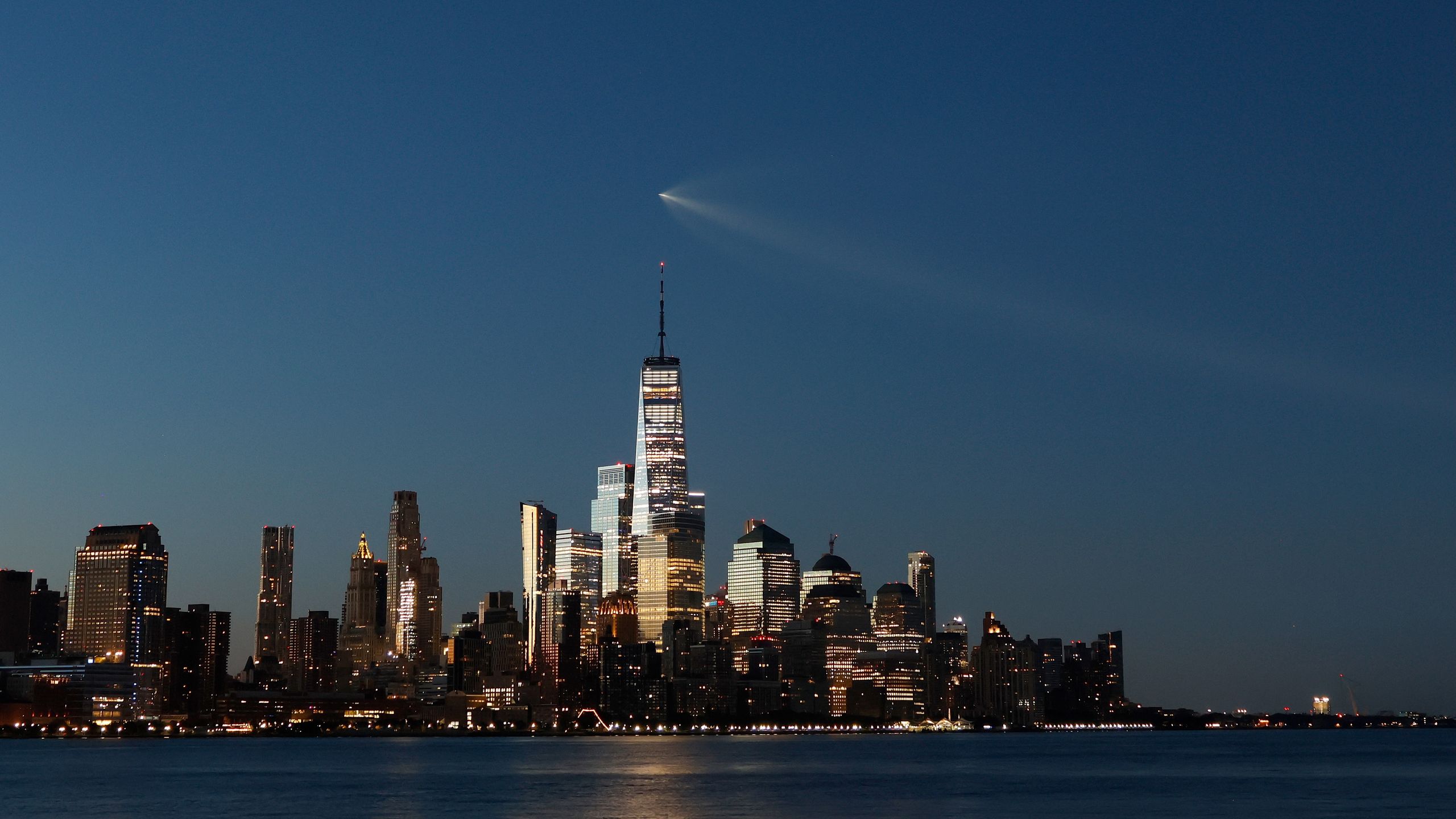
As the sun began to creep over the horizon, the rocket traced a luminous, ethereal path across the Eastern Seaboard. For spectators as far north as New York City, the launch offered a spectacular “jellyfish” effect—a visual phenomenon caused by the sun illuminating the rocket’s expanding exhaust plumes against the predawn darkness. The sight served as a fittingly cinematic finale to a seven-year chapter of aerospace history that saw the Falcon 9 transform from a reliable workhorse into the most active launch vehicle in the world.
A Legacy of Reliability and Records
The mission was, by all metrics, a milestone achievement. It marked the 100th flight of 2026 for the Falcon 9, underscoring an unprecedented launch cadence that has redefined expectations for the global space industry. Of perhaps even greater technical significance, the mission utilized a first-stage booster on its 37th flight, setting a new industry record for vehicle reusability.
This accomplishment serves as a testament to the engineering philosophy championed by Elon Musk’s SpaceX: that the path to a multi-planetary future lies in the ability to rapidly turn around and reuse expensive hardware. By achieving 37 flights on a single booster, SpaceX has moved far beyond the initial skepticism that greeted the concept of “reusable” rockets in the early 2010s.
Chronology of a Changing Skyline
To understand the significance of this transition, one must look at the data. Over the past seven years, the Florida Space Coast has served as the primary gateway for the Starlink megaconstellation. During this timeframe, the Falcon 9 conducted approximately 260 Starlink missions from Cape Canaveral.
The buildout of this massive internet satellite network has been the primary engine driving the rocket’s launch frequency to stratospheric heights. Consider the data from the recent past: in 2024 and 2025 alone, the Falcon 9 launched a total of 297 times. Of that staggering figure, 211 missions were dedicated solely to deploying Starlink satellites. Looking at the 2026 fiscal year to date, 77 of the 100 successful Falcon 9 launches were Starlink-related, proving that the constellation is not merely a side project, but the foundational pillar of SpaceX’s revenue and operational model.
The Shift to the Starship Era
The retirement of the Falcon 9 for Florida-based Starlink launches is not a sign of the company slowing down; rather, it is a deliberate transition to a more powerful, more capable, and ultimately more economical vehicle.
"From here on, Starlink missions out of Florida will fly on Starship," Kiko Dontchev, SpaceX’s Vice President of Launch, confirmed via social media shortly after the successful deployment of the August 25 payload. "The West Coast team will continue regularly launching Starlink from Vandenberg [Space Force Base in California]. In the last seven years, Falcon has flown ~260 Starlink missions from the Cape… can’t wait until we launch that and many more with Starship!"
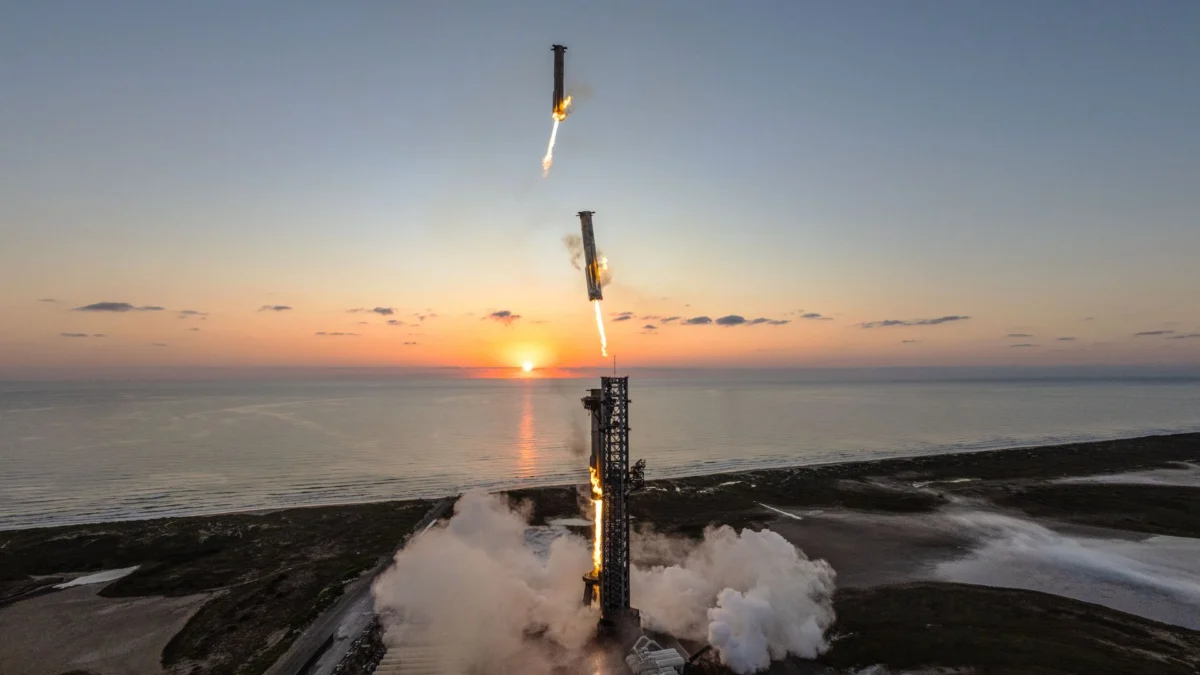
Starship, standing at an imposing height of over 400 feet (122 meters), is currently the largest and most powerful rocket ever developed. While the Falcon 9 was designed to carry a limited number of satellites per launch, Starship is intended to carry much larger batches of next-generation Starlink hardware, potentially increasing the efficiency of the network’s deployment by an order of magnitude.
Operational Implications: Infrastructure and Expansion
While the mission marked the end of an era for the Falcon 9 in Florida, it simultaneously signaled the acceleration of the Starship program. SpaceX is currently in the midst of a massive infrastructure expansion. While Starship currently conducts its test flight program—which has completed 13 suborbital missions to date—from the Starbase facility in South Texas, the company is actively constructing dedicated launch infrastructure in Florida to support the transition.
Perhaps the most ambitious component of this shift is the announcement of "Starbase Louisiana." SpaceX has confirmed plans to break ground on this new site next year, with the stated goal of supporting thousands of Starship liftoffs per year. By distributing launch operations across Texas, Florida, and Louisiana, SpaceX aims to create a redundant, high-capacity pipeline for orbital access that effectively renders the previous launch cadence records obsolete.
The Future of the Falcon Fleet
The transition raises inevitable questions regarding the future of the Falcon 9 and its heavy-lift counterpart, the Falcon Heavy. SpaceX has made its long-term intentions clear: the company intends to phase out the Falcon line entirely in favor of a fully Starship-centric fleet.
This phase-out will be a gradual process. While the Falcon 9 is retiring from Florida Starlink missions, it will continue to serve critical roles for national security payloads, human spaceflight missions, and commercial satellite launches that do not require the immense payload capacity of Starship. However, as the Starship platform matures and its reliability matches that of the Falcon 9, the industry expects the latter’s days to be numbered. It is entirely possible that even the West Coast Starlink missions—currently the last holdout for the Falcon 9—will be transitioned to Starship in the near future.
Cultural and Scientific Impact
For the casual observer and the professional astronomer alike, the final Falcon 9 Starlink launch from the Cape was a moment of reflection. The "jellyfish" effect seen over New York City served as a reminder of how deeply the Falcon 9 has embedded itself in the public consciousness. Whether it was the startling, comet-like appearance of a nighttime launch or the consistent, rhythmic cadence of missions that became background noise to daily life in Florida, the Falcon 9 was the vehicle that made space "routine."
As we look toward the horizon, the silence that will eventually follow the final retirement of the Falcon 9 will be filled by the thunder of Starship. The transition from a smaller, reliable rocket to a heavy-lift, fully reusable, and rapidly refuelable behemoth marks the beginning of the "industrialization" of low Earth orbit.
Conclusion
The mission on August 25, 2026, was more than just a delivery of 29 satellites. It was the closing of a chapter that began in the early 2010s, a period defined by the struggle to prove that space was accessible and that reusability was not a fantasy. The Falcon 9 proved both. Now, as SpaceX pivots toward the Starship era, it carries the lessons learned from the Falcon’s 260 Starlink flights in Florida. The rockets will grow larger, the payloads will grow heavier, and the cadence will likely increase, but the standard of excellence established by this morning’s final flight remains the benchmark against which all future orbital endeavors will be measured.