A flurry of activity across the global telecommunications landscape signals robust growth and a forward-looking approach to connectivity. From addressing local coverage gaps with new infrastructure to pioneering next-generation technologies for national and international markets, the sector is demonstrating its dynamic evolution. Key players like AT&T, C-DOT, Nokia, and Telia are at the forefront of these developments, underscoring a commitment to enhancing user experience, bolstering national security, and driving technological innovation.
Main Facts
The telecommunications industry is experiencing a multifaceted surge, marked by significant infrastructure upgrades, strategic technological advancements, and ambitious global outreach. In the United States, AT&T has secured crucial approval to deploy a new cell tower in Vienna, Virginia, a move designed to alleviate persistent wireless coverage issues in a densely populated area. Concurrently, India is actively pushing its indigenous technology development agency, C-DOT, to accelerate the global commercialization of its innovations, particularly in the context of 6G, artificial intelligence (AI), quantum technology, and cybersecurity. Meanwhile, Finland is making a substantial investment in the future of wireless communication, channeling $6.5 million into an Arctic 6G development program. This initiative, spearheaded by the University of Oulu’s 6G Test Center and involving key industry players like Nokia Defense and Telia, aims to test and validate advanced wireless systems in the challenging and unique conditions of the Arctic region.
These developments highlight a dual focus within the telecom sector: addressing immediate connectivity needs through infrastructure expansion and simultaneously investing heavily in the research and development of future communication technologies that promise to redefine digital interaction and national security. The involvement of governmental bodies, research institutions, and leading corporations underscores the strategic importance of telecommunications in modern society.
Infrastructure Expansion: Bridging the Digital Divide
AT&T Secures Approval for Critical Cell Tower in Vienna, Virginia
Chronology
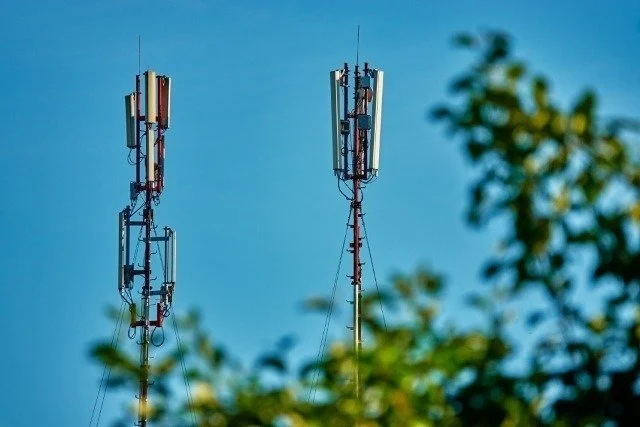
The town council of Vienna, Virginia, has unanimously granted AT&T the necessary approval to proceed with the deployment of a new rooftop telecommunications facility. This decision marks the culmination of a process that has been under consideration for over a decade, addressing long-standing concerns about wireless service quality in specific areas of the town. The approved facility, to be located at 527 Maple Ave East, will incorporate three antenna arrays. Crucially, the project involves screening structures that will exceed the town’s standard roof-height limit, a concession made to ensure the aesthetic integration of the equipment while achieving the desired coverage improvements.
The site itself is strategically chosen to address significant wireless dead zones and areas of weak signal strength. Residents and students near James Madison High School, Cunningham Park Elementary School, and various local parks and recreation facilities have frequently experienced disruptions and limitations in their mobile connectivity. The new AT&T installation aims to directly mitigate these issues. The council’s approval specifies that while the screening structures may exceed the standard height, the actual telecommunications equipment will not contribute to an increased overall building height, thus maintaining the existing visual profile of the three-story building. This building currently hosts equipment for other major carriers, Verizon Wireless and T-Mobile, indicating a trend towards co-location and efficient use of existing infrastructure.
Supporting Data
The decision to approve the AT&T facility is rooted in addressing a tangible problem: insufficient wireless coverage. The Maple Avenue corridor and its surrounding areas have been identified as critical zones where residents and visitors struggle with reliable mobile service. This can impact everything from daily communication and access to emergency services to the effectiveness of educational tools for students attending nearby schools. The approval of a height modification for screening structures is a practical solution to a common challenge in urban and suburban environments where aesthetic considerations often compete with the need for enhanced telecommunications infrastructure. By allowing for taller screening, the town council is enabling AT&T to install more effective antenna arrays while attempting to minimize visual impact. The fact that the building already hosts equipment from Verizon and T-Mobile suggests a growing demand for mobile data and voice services in the vicinity, and potentially, a shared understanding among carriers regarding the benefits of leveraging existing infrastructure.
Official Responses
While the provided text doesn’t include direct quotes from officials or AT&T representatives regarding this specific approval, the unanimous vote by the Vienna town council signifies a clear consensus on the necessity and benefit of the project. The council’s decision reflects a proactive approach to improving public services and addressing citizen concerns about connectivity. The inclusion of screening structures, a common point of contention in such developments, indicates a collaborative effort to balance technological advancement with community aesthetics.
Implications
The approval of the AT&T cell tower in Vienna has several significant implications. Firstly, it directly addresses a pressing local need, promising to improve the daily lives of residents, students, and visitors by enhancing wireless reliability. This can translate to better access to information, improved communication in emergencies, and a more seamless digital experience. Secondly, it serves as a model for how local governments can work with telecommunications providers to overcome coverage gaps. The compromise on screening height demonstrates a willingness to adapt regulations when faced with clear benefits to the community. For AT&T, this expansion is crucial for retaining and attracting customers in an increasingly competitive market, ensuring their network performance meets user expectations. Furthermore, the co-location of equipment from multiple carriers on the same site highlights the ongoing trend of infrastructure sharing and efficiency, which can lead to more cost-effective deployments and potentially faster rollout of new technologies in the future. This development also underscores the continuous demand for more robust wireless infrastructure as data consumption and the reliance on mobile devices continue to grow.
Driving Indigenous Innovation: India’s Global Telecom Ambitions
C-DOT Urged to Lead the Charge in Global Indigenous Telecom Technology
Chronology
During the 43rd Foundation Day celebrations of the Centre for Development of Telematics (C-DOT), Indian Communications Minister Jyotiraditya Scindia delivered a strong directive to the organization: to accelerate the commercialization and global marketing of indigenous telecom technologies. This directive comes at a critical juncture as India intensifies its efforts in developing advanced technologies, including 6G, artificial intelligence (AI), quantum technology, and cybersecurity. Minister Scindia emphasized a strategic shift for C-DOT, moving beyond developing technologies solely for domestic consumption towards creating products that are affordable, scalable, and globally competitive.
He specifically lauded C-DOT’s indigenous 4G stack, which has already been deployed across an impressive 100,000 towers nationwide, showcasing the agency’s capability in delivering large-scale, domestically developed solutions. The minister called for a more robust development of 5G technology and urged C-DOT to actively participate in shaping 6G standards on the international stage. Beyond mobile network technology, C-DOT is also making strides in critical areas such as quantum key encryption, post-quantum cryptography, advanced cybersecurity solutions, and disaster-resilient communication systems. The overarching goal articulated by the government is to establish a clearer and more effective pathway from research and engineering to the successful commercialization of products in international markets.
Supporting Data
The Indian government’s push for global commercialization of C-DOT’s technologies is supported by the significant progress already made. The deployment of 100,000 towers with C-DOT’s indigenous 4G stack is a testament to the maturity and scalability of their solutions. This domestic success provides a strong foundation for international expansion. The minister’s emphasis on affordability and scalability is crucial for penetrating diverse global markets, particularly in developing nations. India’s burgeoning tech sector, coupled with its demographic advantage, positions it to become a significant player in the global telecom hardware and software market. The focus on 6G, AI, quantum computing, and cybersecurity aligns with global technological trends and represents areas where India aims to establish leadership. The government’s commitment to fostering innovation is further evidenced by its desire to bridge the gap between research institutions and commercial enterprises, ensuring that technological advancements translate into tangible economic benefits and global market presence.
Official Responses
Minister Jyotiraditya Scindia’s address served as a clear articulation of the government’s vision and expectations for C-DOT. His call for accelerated commercialization and global marketing underscores a strategic imperative for India to leverage its indigenous technological capabilities on the world stage. The minister’s statement signifies a strong governmental endorsement and a clear mandate for C-DOT to expand its focus from development to global market penetration. This directive is likely to galvanize C-DOT’s efforts and potentially lead to increased investment and strategic partnerships aimed at achieving these ambitious goals.
Implications
The implications of this strategic push are far-reaching. For C-DOT and India, it represents a significant opportunity to not only generate revenue and foster economic growth but also to enhance India’s standing as a global technology provider. By exporting its indigenous telecom solutions, India can reduce its reliance on foreign technology imports and establish itself as a credible alternative in the global market. This move is also critical for national security, as developing and controlling indigenous communication technologies ensures greater sovereignty and resilience against potential foreign influence or disruptions. Furthermore, the focus on advanced technologies like 6G and quantum computing positions India at the forefront of future technological revolutions, allowing it to shape global standards and contribute to the development of next-generation communication networks. The successful commercialization of these technologies could also lead to job creation and the development of a robust domestic ecosystem for R&D and manufacturing within India.
Pioneering the Future of Connectivity: Arctic 6G and Defense Network Testing
Finland Invests Heavily in Next-Generation Wireless in Extreme Environments
Chronology
Finland is making a significant investment in the future of wireless communication with a $6.5 million funding award from its Ministry of Defence to support an ambitious Arctic 6G development program. This program is being spearheaded by the renowned 6G Test Center at the University of Oulu, a globally recognized hub for wireless research. The initiative is designed to rigorously test and validate next-generation wireless systems, specifically focusing on their performance and resilience in the extreme conditions characteristic of the Arctic region and within complex electromagnetic environments.
The consortium involved in this groundbreaking program includes prominent entities such as Nokia Defense, a major player in telecommunications and defense technology, and Telia, a leading Nordic telecommunications operator. This collaboration builds upon Nokia’s substantial research presence in Oulu, leveraging its expertise in wireless innovation. The program will establish an advanced, AI-enabled 5G/6G campus network. This network will be utilized for extensive operational and field-testing, exploring various cutting-edge concepts including resilient wireless communications, Open RAN (Radio Access Network) architectures, edge AI applications, and hybrid terrestrial-satellite systems. The Arctic trials will specifically investigate network performance under contested-spectrum conditions, with a particular emphasis on resilience against threats such as jamming, spoofing, and physical damage. This comprehensive effort is also aimed at bolstering Finland’s defense technology capabilities and fostering vital international cooperation in this critical domain.
Supporting Data
The $6.5 million investment from the Finnish Ministry of Defence underscores the strategic importance of advanced wireless technologies, particularly in the context of national security and the unique challenges presented by the Arctic. The University of Oulu’s 6G Test Center is a globally recognized leader in 6G research, providing a strong foundation for this initiative. The involvement of Nokia Defense and Telia brings critical industry expertise and practical application insights. The focus on AI-enabled 5G/6G networks, Open RAN, edge AI, and hybrid systems indicates a forward-thinking approach that embraces modularity, intelligence, and flexibility in future network architectures. Testing in extreme Arctic conditions and contested-spectrum environments is crucial for developing robust and reliable communication systems that can operate under duress, which is paramount for defense applications and critical infrastructure. The emphasis on resilience against jamming and spoofing directly addresses emerging threats in modern warfare and cyber operations.
Official Responses
While specific official statements regarding the funding are not detailed in the provided text, the allocation of $6.5 million by the Finnish Ministry of Defence signifies a strong governmental commitment to advancing Finland’s technological capabilities in critical areas. The investment highlights the recognition that next-generation communication technologies are not only vital for civilian connectivity but also for national security and defense readiness. The ministry’s support for this research and development initiative demonstrates a strategic foresight in preparing for future technological landscapes and potential geopolitical challenges.
Implications
The implications of Finland’s Arctic 6G development program are multi-faceted and significant. Firstly, it positions Finland as a global leader in the research and development of 6G technology, particularly in the context of extreme environments and defense applications. This leadership can translate into significant technological advantages and influence on international standards. Secondly, the program’s focus on resilience against jamming and spoofing is critically important in an era of increasing cyber threats and electronic warfare. The insights gained from these trials will be invaluable for developing secure and dependable communication systems for both military and civilian use. Thirdly, the development of an AI-enabled 5G/6G campus network and the exploration of Open RAN and edge AI technologies pave the way for more flexible, efficient, and intelligent network infrastructures. This can lead to new service offerings and improved operational capabilities for telecommunications providers and enterprises alike. Finally, the international cooperation aspect of this program fosters collaboration and knowledge sharing, strengthening Finland’s diplomatic ties and its position within the global technological community. The outcomes of this research are likely to have a lasting impact on the evolution of wireless communications, ensuring connectivity even in the most challenging circumstances.