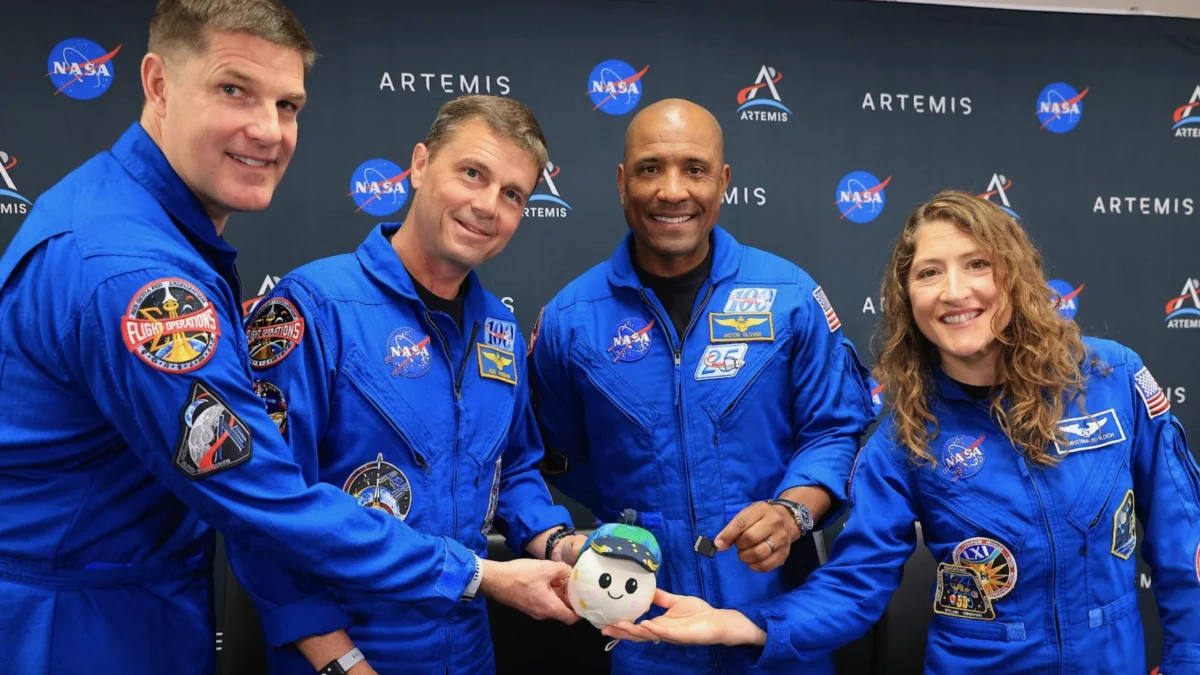
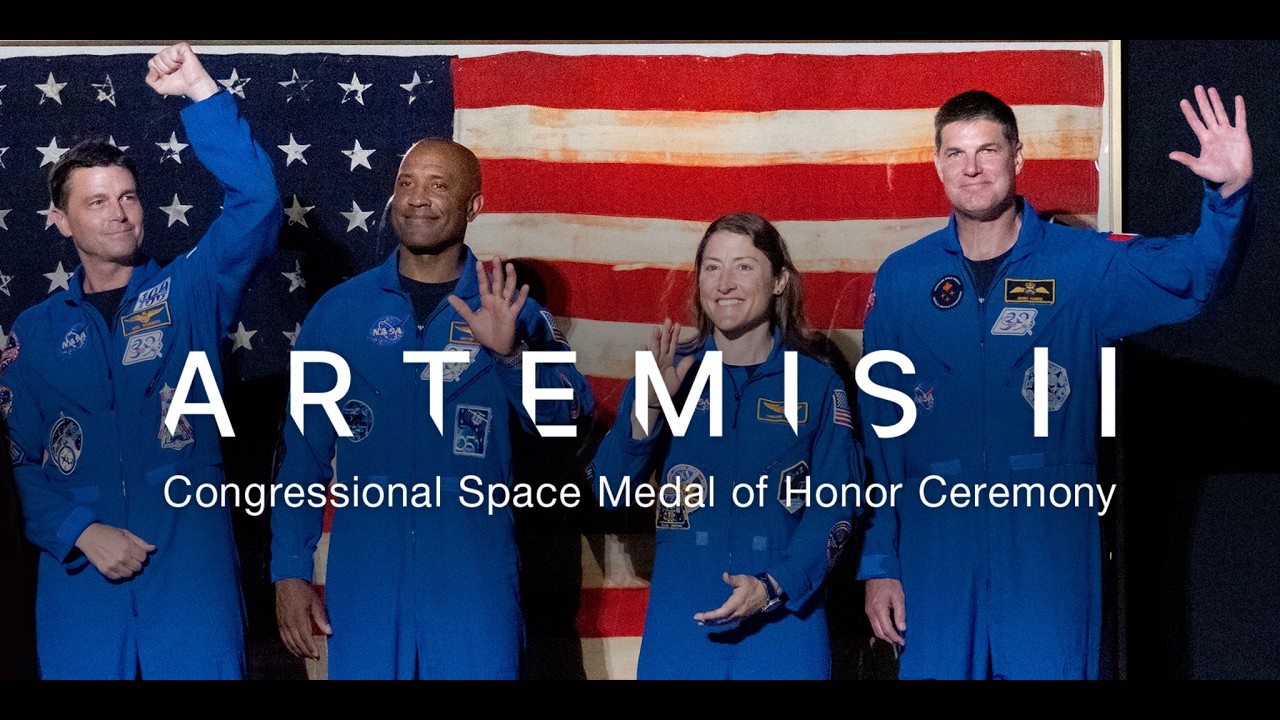
HOUSTON, Texas — In a ceremony steeped in the tradition of American exploration and scientific ambition, the four-member crew of NASA’s historic Artemis II mission will be bestowed today, August 28, with the Congressional Space Medal of Honor. The event, hosted at the Johnson Space Center in Houston, marks a formal recognition of the team’s contribution to the future of human spaceflight and their role in ushering in a new era of lunar discovery.
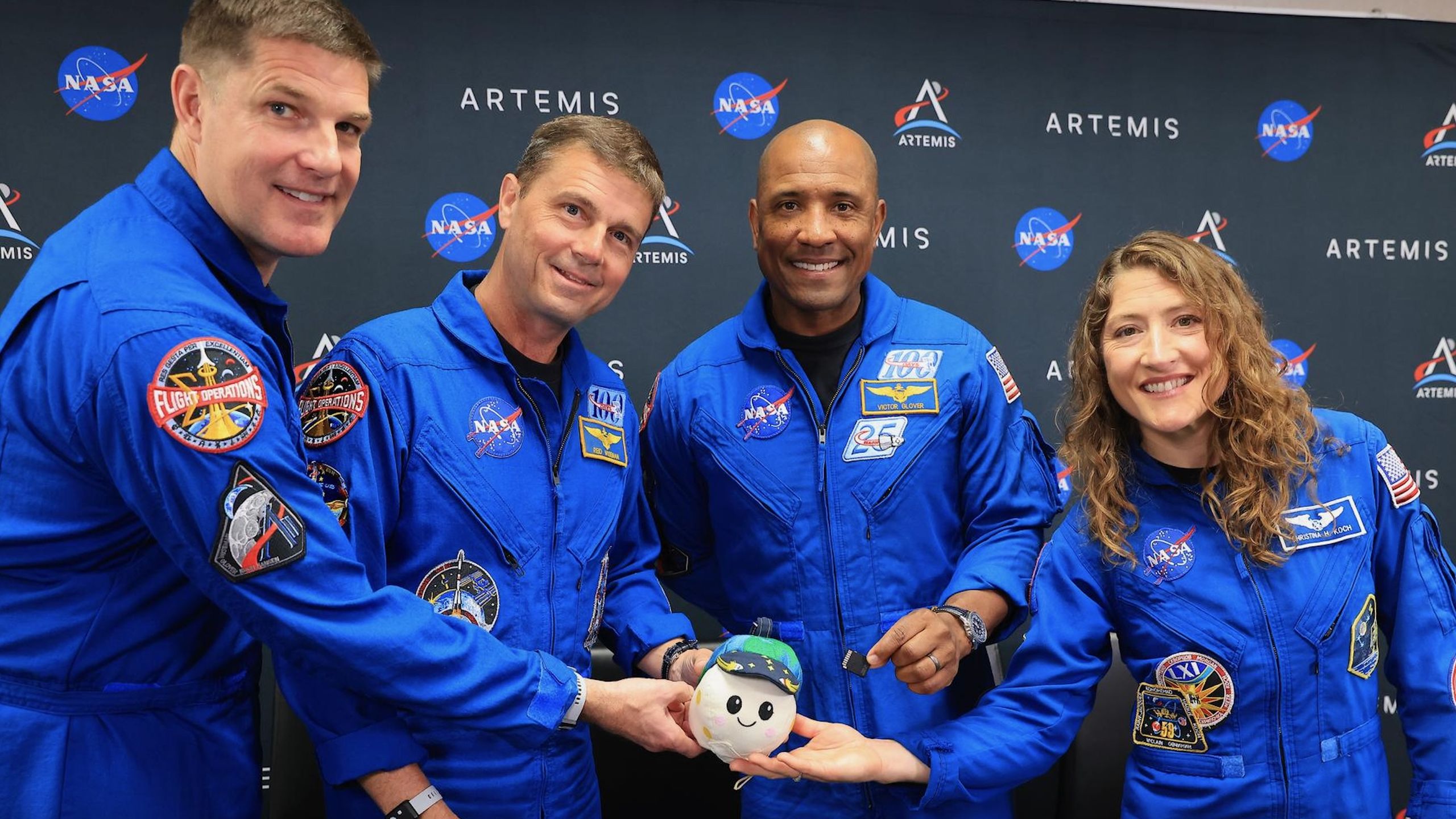
The ceremony, which features remarks from President Donald Trump and NASA Administrator Jared Isaacman, serves as a poignant reminder of the risks and rewards inherent in deep-space exploration. The four astronauts—NASA’s Reid Wiseman, Victor Glover, and Christina Koch, alongside the Canadian Space Agency’s (CSA) Jeremy Hansen—are being honored for their unprecedented journey around the moon, a flight that re-established humanity’s presence beyond low Earth orbit for the first time in over five decades.
The Weight of the Honor: Criteria and Legacy
The Congressional Space Medal of Honor stands as the United States’ most prestigious recognition for space exploration. Established by an Act of Congress in 1969, the medal is reserved for astronauts who have demonstrated "exceptionally meritorious efforts and contributions to the welfare of the Nation and of mankind."
Historically, the award has been limited to those whose actions were not only heroic but transformative. Recipients are chosen through a rigorous nomination process initiated by the NASA Administrator and finalized by the President. Since its inception, only 30 individuals have been granted this distinction, placing the Artemis II crew in the company of legends. Among those previously honored are Apollo 11’s Neil Armstrong, the first man to step on the lunar surface; John Glenn, the first American to orbit the Earth; and Jim Lovell, the commander of the ill-fated yet triumphant Apollo 13 mission.
The medal also serves as a somber tribute to those who made the ultimate sacrifice. It was posthumously awarded to the 14 astronauts lost in the Challenger and Columbia disasters. While the medal is primarily a U.S. honor, the inclusion of international partners—most notably the late Israeli astronaut Ilan Ramon, who perished aboard Columbia—highlights the global nature of space exploration. Today’s ceremony serves to integrate the modern Artemis spirit with this rich, often sobering, history.
Chronology of a Historic Mission
To understand why the Artemis II crew is receiving this distinction, one must look back at the mission’s trajectory. Launched on April 1, 2026, the mission was the first crewed flight of the Artemis program, designed to test the Orion spacecraft and the Space Launch System (SLS) with humans on board.
The Launch and Lunar Transit
The mission began with a flawless ascent from the Kennedy Space Center. Over the next nine days, the crew traveled further from Earth than any humans had ever ventured. Their trajectory took them on a sweeping, complex loop around the lunar far side. This was not merely a flight of endurance; it was a comprehensive shakedown of life-support systems, navigation, and deep-space communication protocols.
Observations from the Void
One of the most remarkable moments of the mission occurred during the lunar flyby. Due to precise orbital timing, the crew witnessed a total solar eclipse from a vantage point beyond the moon—a perspective never before captured by human eyes. This event, while scientifically valuable, served as a powerful cultural moment, bridging the gap between cold technical data and the awe-inspiring nature of the cosmos.
The Return to Earth
After completing their orbital objectives, the Orion capsule performed a high-speed atmospheric reentry. The mission concluded with a successful splashdown in the Pacific Ocean, validating the heat shield technology and recovery procedures that will be essential for future lunar landings.
Supporting Data: Why Artemis II Matters
The Artemis II mission was not a goal in itself, but rather the cornerstone of a much larger strategy. NASA’s overarching Artemis program aims to establish a permanent, sustainable base near the moon’s south pole. This region is of particular scientific interest due to the presence of water ice, which could be converted into rocket propellant, breathable oxygen, and drinking water.
Technical Milestones
- Deep-Space Navigation: Artemis II proved that the Orion spacecraft could reliably navigate the complex gravity wells of the Earth-Moon system without the constant, high-bandwidth support of the Deep Space Network.
- Life Support Sustainability: The mission provided critical data on how biological systems and human crews handle the radiation environment of deep space, specifically the Van Allen radiation belts and the cosmic ray exposure experienced outside of Earth’s protective magnetic field.
- International Synergy: The presence of CSA astronaut Jeremy Hansen underscores the "Artemis Accords," a set of international agreements that define how space exploration should be conducted in the 21st century.
Official Responses and Strategic Implications
During the lead-up to today’s ceremony, NASA leadership has been vocal about the importance of the Artemis II crew in maintaining American and international momentum in space.
NASA Administrator’s Perspective
"The crew of Artemis II didn’t just fly a spacecraft; they carried the hopes of a generation that has grown up waiting to see humans leave low Earth orbit once again," said Administrator Jared Isaacman. "This medal is not just for the hours they spent in the cockpit, but for the years of rigorous training, the courage they displayed in the face of the unknown, and their role as ambassadors for the next great leap to Mars."
The Political and Strategic Context
The ceremony, attended by high-ranking government officials, underscores the bipartisan support for NASA’s current trajectory. In an era of increasing competition in the space domain, the success of Artemis II is viewed by many as a demonstration of American technological superiority and a commitment to peaceful, cooperative exploration. By honoring these four individuals, the United States is signaling that space exploration remains a national priority, with deep-space objectives becoming the new standard for measuring institutional success.
Looking Ahead: The Path to the South Pole
The recognition of the Artemis II crew serves as a bridge to the upcoming missions. The data gathered during their nine-day journey is currently being analyzed to refine the hardware for Artemis III and IV, which are intended to place the first woman and the first person of color on the lunar surface.
The "Artemis Generation" of astronauts now has a clear blueprint for success. The lessons learned by Wiseman, Glover, Koch, and Hansen regarding communication delays, radiation mitigation, and long-duration living in cramped quarters will be the foundation for the construction of the Lunar Gateway—a small space station that will orbit the moon and serve as a staging ground for surface missions.
As the ceremony in Houston concludes today, the focus will inevitably shift from the celebration of past achievements to the challenges of the future. The Congressional Space Medal of Honor is a recognition of what has been done, but in the context of NASA’s ambitious timeline, it is also a reminder of the monumental work that remains.
The four astronauts honored today have effectively closed the "Apollo era" of exploration and opened a new chapter—one defined by sustainability, international collaboration, and the eventual expansion of human civilization beyond our home planet. As they accept their medals, they stand not only as individual heroes but as the vanguard of a movement that intends to make the moon a permanent destination for humanity.
About the Author: Michael Wall is the Spaceflight and Tech Editor for Space.com. With a Ph.D. in evolutionary biology and a career spanning field biology and science journalism, he provides deep technical analysis of human and robotic space exploration. His latest book, "Out There," chronicles the ongoing search for extraterrestrial life.