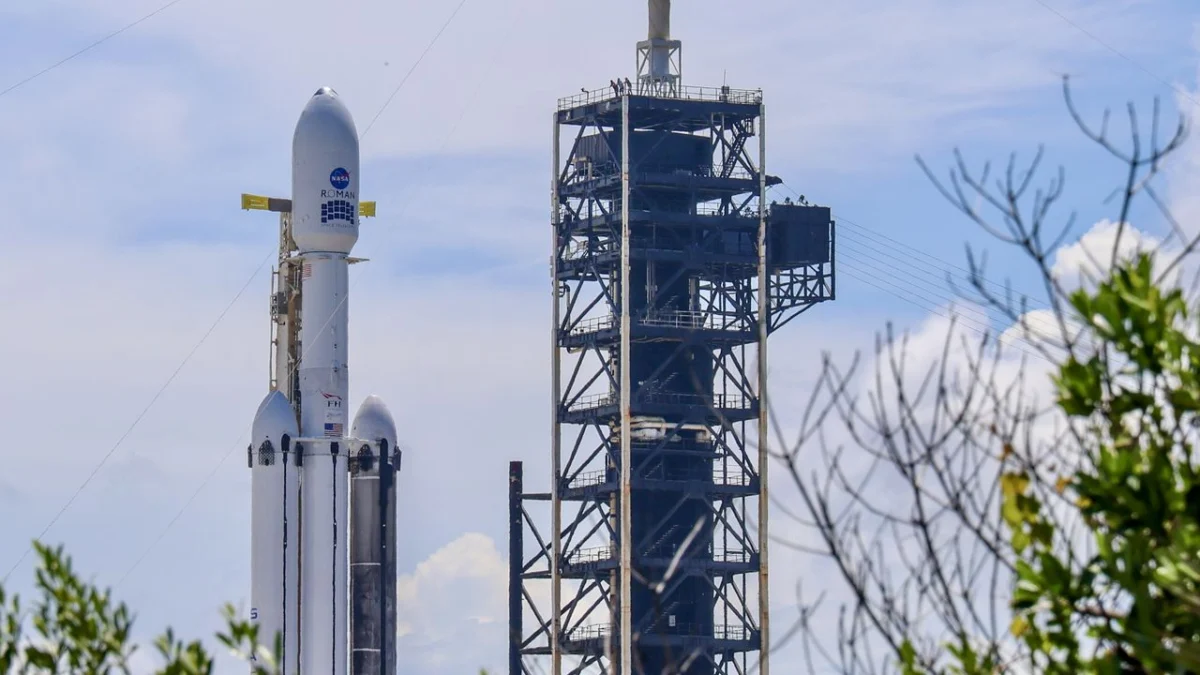
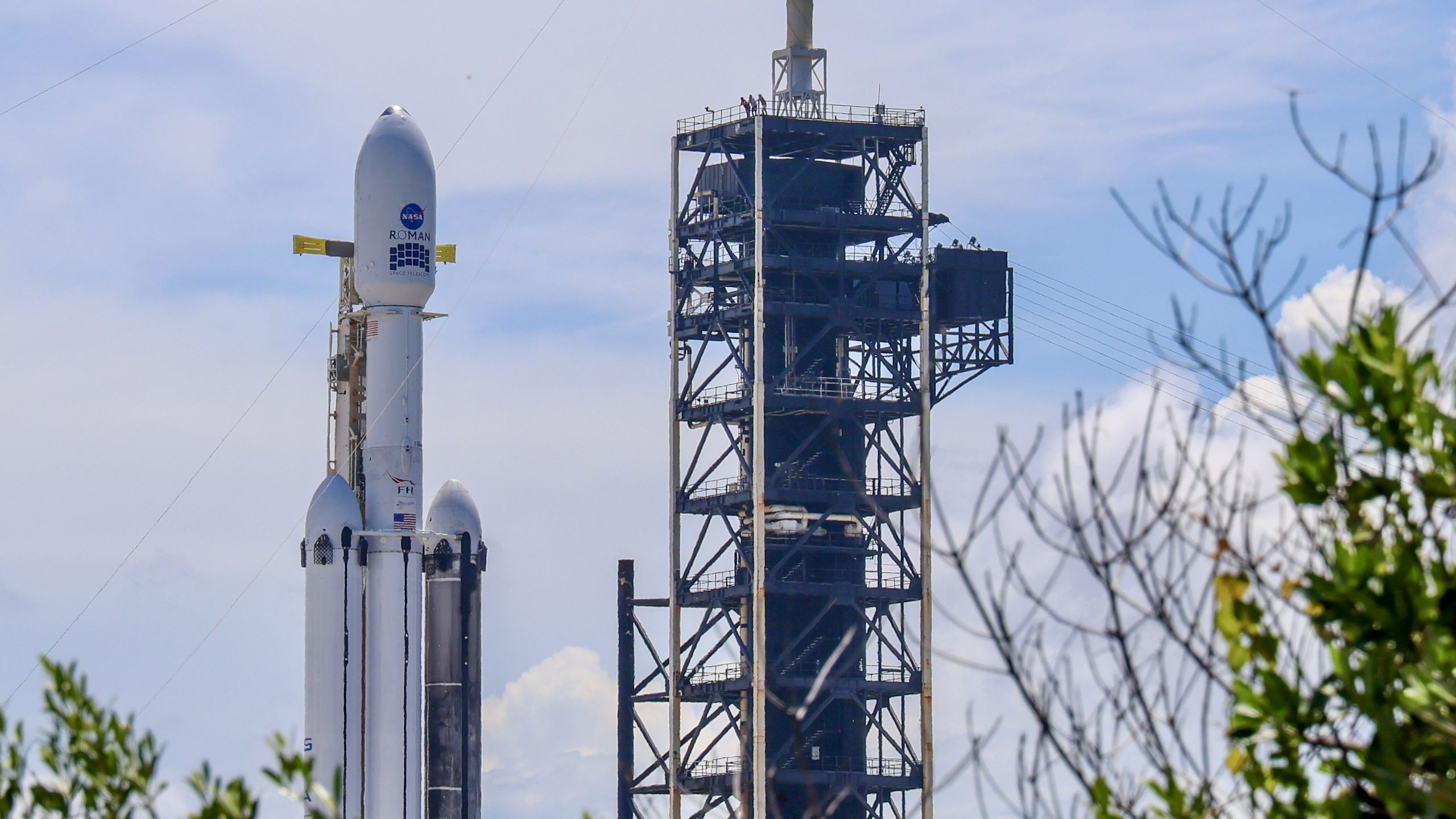
As the sun rises over Florida’s Space Coast on August 30, 2026, all eyes will be fixed on Launch Complex-39A at NASA’s Kennedy Space Center. Standing proudly on the historic pad is a SpaceX Falcon Heavy rocket, its triple-core silhouette casting a long shadow over the Florida scrub. Encased within its fairing is not just another satellite, but a revolutionary eye on the universe: the Nancy Grace Roman Space Telescope.
Designed to serve as NASA’s next flagship observatory, the Roman Space Telescope represents a quantum leap in our ability to survey the cosmos. By standing on the shoulders of giants—specifically the Hubble and James Webb space telescopes—Roman is poised to redefine our understanding of the dark universe, the evolution of galaxies, and the prevalence of exoplanets orbiting distant stars.
The Mission: Kicking Down the Door to the Cosmos
The Nancy Grace Roman Space Telescope is not merely an incremental upgrade; it is a fundamental shift in survey strategy. While Hubble and James Webb are celebrated for their ability to peer deep into specific, narrow pockets of the sky with incredible resolution, they function much like a scientist peering through a keyhole.
"To put it into perspective, it will be as if Hubble and James Webb kind of peer through a keyhole at the universe, while Nancy Grace Roman will kick the door down," remarked Nicky Fox, NASA’s associate administrator for the Science Mission Directorate.
This "door-kicking" capability comes from the telescope’s massive field of view. Roman is engineered to capture images that are 100 times larger than those produced by Hubble, all while maintaining the same exquisite resolution. This efficiency allows the observatory to conduct "wide-field" surveys, mapping vast swaths of the sky in a fraction of the time required by its predecessors. By generating massive, comprehensive datasets, the mission aims to tackle some of the most daunting mysteries in modern astrophysics, including the nature of dark matter and the accelerating expansion of the universe driven by dark energy.
Chronology: The Road to the Launchpad
The journey of the Roman Space Telescope from concept to the launchpad has been a decade-long odyssey of engineering precision and international collaboration. Named in honor of Nancy Grace Roman—the "Mother of Hubble" and NASA’s first Chief Astronomer—the mission serves as a tribute to a woman who championed the idea of space-based observatories long before they were a standard part of the agency’s toolkit.
Key Milestones:
- Initial Conception: Following the 2010 Decadal Survey, the mission was conceptualized to address critical questions regarding dark energy and exoplanet demographics.
- Hardware Integration: Throughout the early 2020s, engineers at NASA’s Goddard Space Flight Center integrated the telescope’s complex suite of instruments, including its Wide Field Instrument and the Coronagraph Instrument, a technology demonstrator designed to mask the glare of stars to see faint planets orbiting them.
- Launch Campaign: In late August 2026, the spacecraft was mated to the SpaceX Falcon Heavy. The vehicle was rolled out to LC-39A on August 29, marking the final major terrestrial milestone before the launch countdown commenced.
- The Launch Window: The primary launch window is set for August 30, 2026, at 7:26 a.m. EDT (1126 GMT).
Meteorological Challenges and Launch Logistics
Even with the most advanced technology on the planet, the "final frontier" remains tethered to the whims of Earth’s atmosphere. During the prelaunch briefing held on August 29, mission managers confirmed that both the SpaceX launch vehicle and the Roman observatory were in pristine condition. However, the variable Florida weather remains the primary concern.
Justin McReynolds, the launch weather officer from the U.S. Space Force’s 45th Weather Squadron, noted that the probability of favorable launch conditions currently sits at 50%. The primary concern for the Sunday morning window involves offshore cumulus clouds and the potential for isolated showers or thunderstorm activity drifting near the flight path.
Should the weather fail to cooperate, the outlook for subsequent days is more promising. A tropical disturbance currently influencing the region is expected to track westward, which meteorologists anticipate will improve launch conditions. Monday and Tuesday offer a 70% probability of "go" status, providing mission managers with a comfortable buffer to ensure the safety of the multi-billion-dollar observatory.
The Destination: L2 and the Benefits of Stability
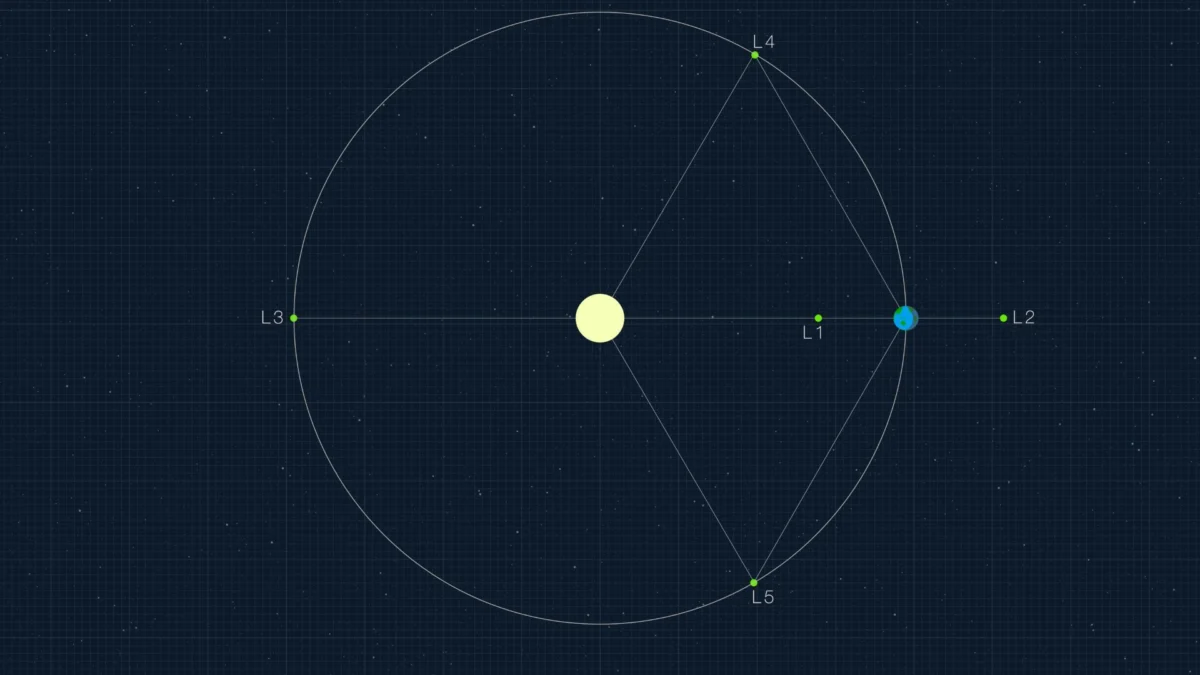
Once the Falcon Heavy successfully deploys the Roman Space Telescope, the observatory will begin a three-month transit toward its final destination: Lagrange Point 2 (L2). Located approximately 1 million miles (1.6 million kilometers) from Earth in the direction opposite the sun, L2 is a gravitationally stable "parking spot" in space.
This location is ideal for an observatory of this magnitude. By residing at L2, Roman will remain in a constant, thermally stable environment, shielded from the intense heat and light of the sun and the reflected glow of the Earth and Moon.
"That means that we have a wide open view of the sky that really exceeds anything in low Earth orbit like Hubble could achieve," explained Jackie Townsend, the mission’s project manager. Unlike Hubble, which orbits the Earth and is frequently obscured by the planet itself, Roman will have an unobstructed, perpetual view of the deep universe.
During the three-month journey to L2, mission operators will oversee a delicate series of deployments, sensor calibrations, and instrument checkouts. If all systems proceed as planned, the scientific community expects the first "first light" images to reach Earth in early 2027, marking the beginning of a five-year primary mission.
Scientific Implications: Searching for Answers
The scientific scope of the Nancy Grace Roman Space Telescope is vast, touching upon the fundamental nature of existence. Its primary objectives are threefold:
1. Decoding Dark Energy and Dark Matter
By observing billions of galaxies across cosmic time, Roman will measure the subtle ways in which dark energy has influenced the expansion of the universe. This will allow researchers to test Einstein’s general relativity on a cosmological scale and potentially uncover why the expansion of the universe is accelerating.
2. Exoplanet Census
Roman will revolutionize exoplanetary science. While previous telescopes have identified thousands of planets, Roman will provide a census of how common planets are throughout our galaxy. Its coronagraph instrument will enable the direct imaging of giant planets, providing researchers with the ability to study their atmospheres in unprecedented detail.
3. The Search for Life
As Nicky Fox highlighted, the data gathered by Roman will bring us closer to answering the most profound questions of our time. By identifying other solar systems and characterizing their properties, the telescope serves as a vital tool in the ongoing search for habitability beyond our own neighborhood.
"Roman’s data will help bring us closer than ever to answering humanity’s most profound questions," Fox said. "Are there other solar systems like ours? And ultimately, are we alone in the universe?"
Conclusion: A Legacy in the Making
The Roman Space Telescope is a testament to the power of human ingenuity. At the size of a tour bus and weighing as much as a Tyrannosaurus Rex, this sophisticated machine is a marvel of engineering. As it sits on the launchpad, it represents the hopes and aspirations of thousands of scientists, engineers, and dreamers who have spent years preparing for this moment.
Should the countdown proceed to zero, the Roman Space Telescope will ascend into the Florida sky, carving a path toward a cold, dark, and distant corner of the universe. Once it arrives at its home at L2, it will begin its work, capturing the light of ancient galaxies and the secrets of hidden worlds. For those watching on the ground, it is a reminder that while our feet may be planted on Earth, our vision remains firmly fixed on the infinite. The era of the Roman Space Telescope is almost upon us—and it promises to change everything we know about our place in the cosmos.