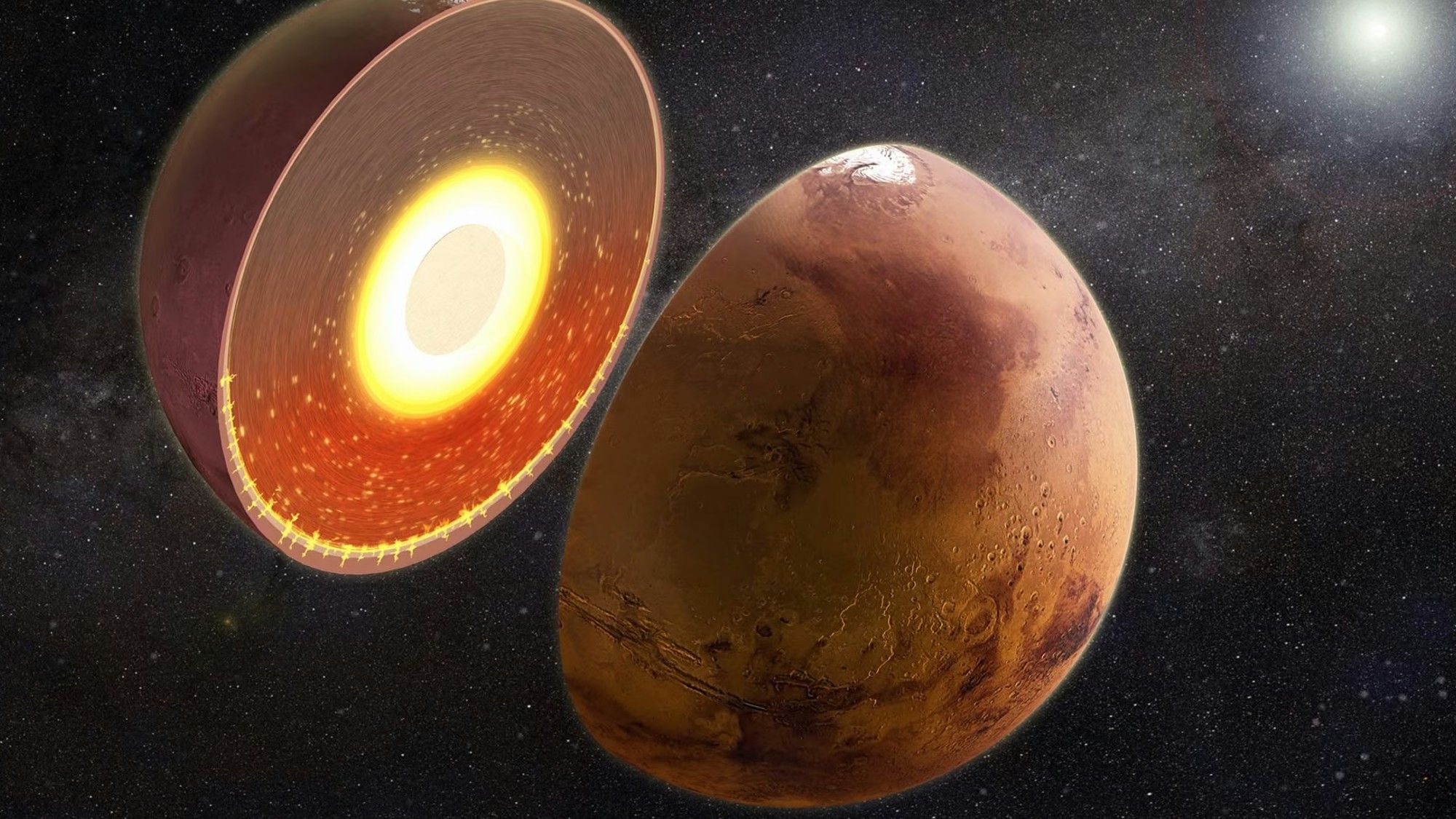
New research has fundamentally shifted our understanding of the Red Planet, revealing that Mars is far from the uniform, cooling sphere that planetary scientists once envisioned. A groundbreaking study, published on August 27 in the journal Nature, has uncovered a significant thermal anomaly deep beneath the Martian southern hemisphere. This discovery suggests that the planet’s interior is starkly asymmetric, with temperatures in the south running as much as 750 degrees Fahrenheit (400 degrees Celsius) hotter than those in the north.
This revelation challenges the long-standing assumption that planetary interiors must be spherically symmetric. Instead, it paints a picture of a world defined by a dramatic "dichotomy"—a structural and thermal split that may hold the key to understanding the planet’s ancient hydrology, its past habitability, and its eventual transition into the cold, barren desert we observe today.
A Tale of Two Hemispheres: The Martian Dichotomy
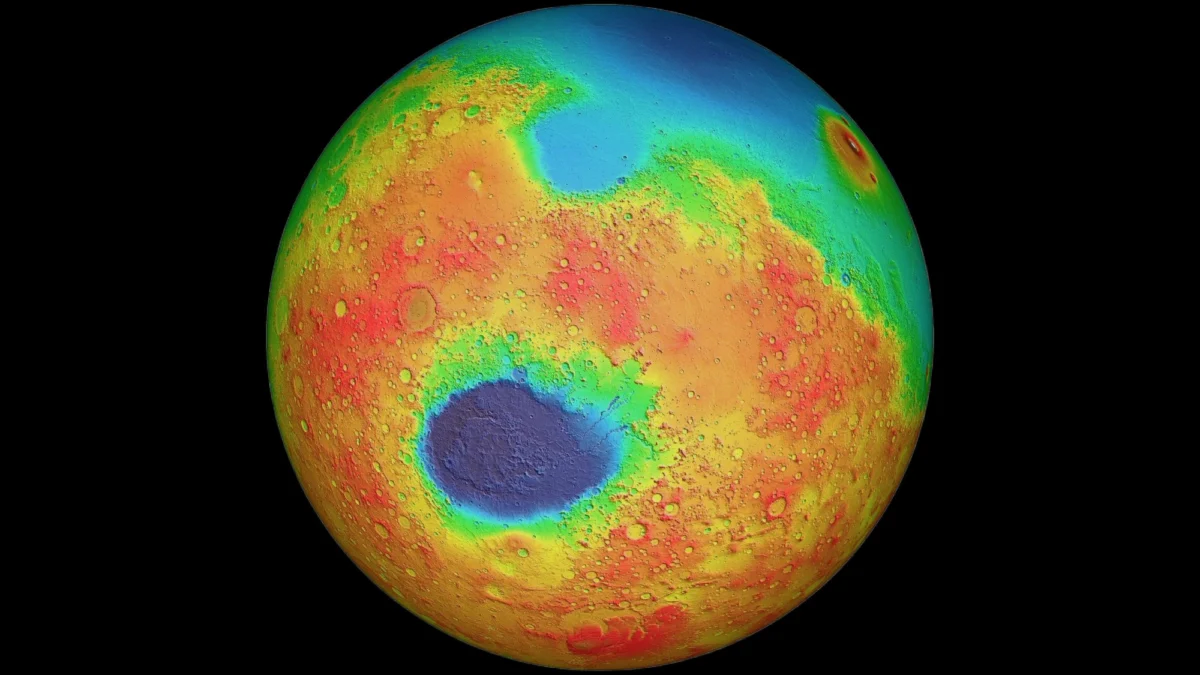
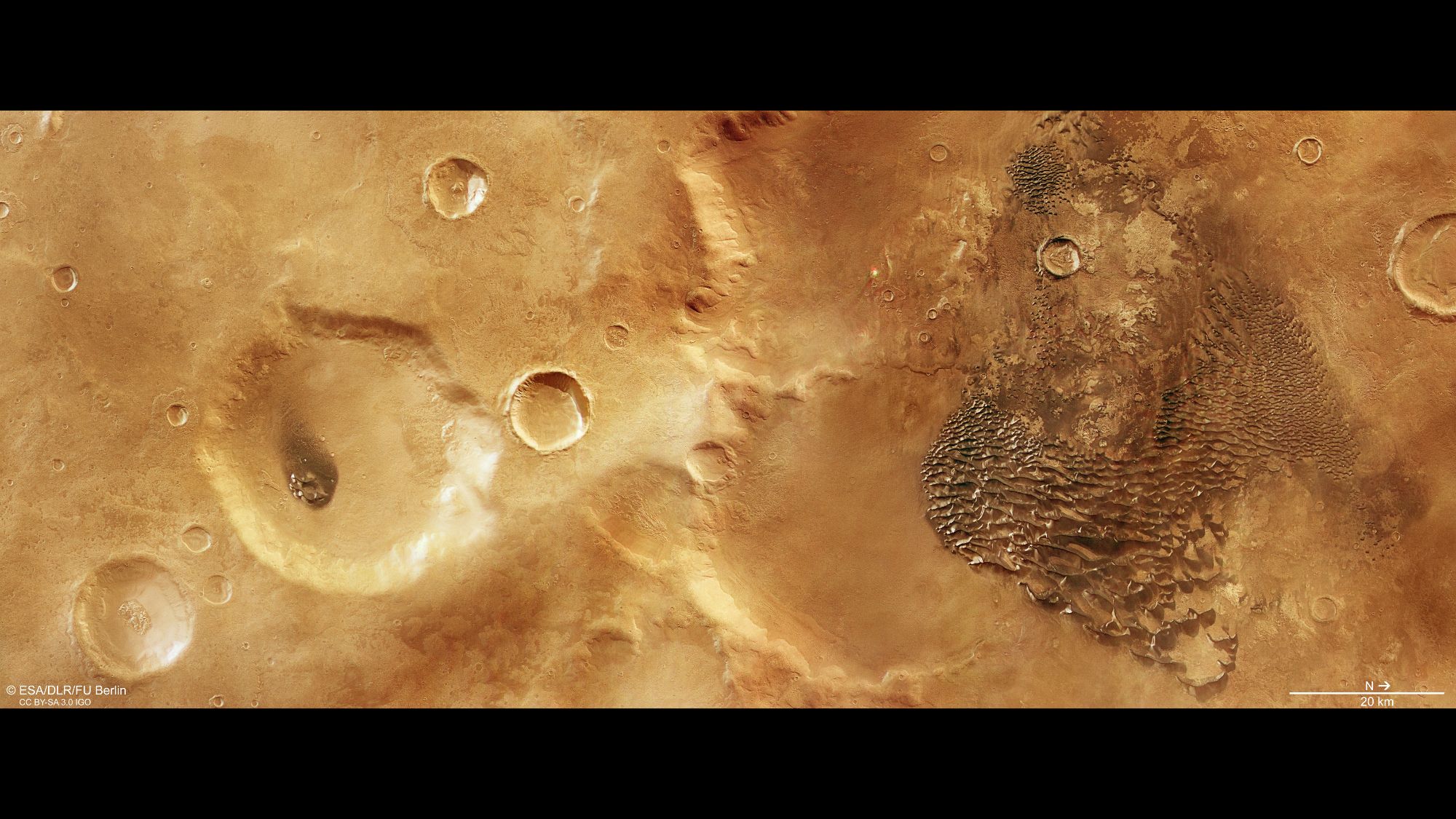
Mars has long been known as a planet of extreme contrasts. To the casual observer, the most striking feature of the Martian surface is its north-south divide. The northern hemisphere is dominated by vast, relatively flat lowland plains, while the southern hemisphere is characterized by rugged, elevated, and heavily cratered highlands. This topographical discrepancy is not merely skin-deep; the crust in the south is roughly 15.5 miles (25 kilometers) thicker than that of the north.
For decades, scientists have puzzled over how such a lopsided world could form. The new study, led by Alexander Berne—formerly of Caltech and currently at the University of Arizona—provides the first concrete evidence that this surface asymmetry extends deep into the planet’s mantle. By analyzing how heat is trapped or released beneath the crust, researchers have finally begun to quantify the invisible thermal architecture of the planet.
Tidal Tomography: A New Window into the Deep
The methodology behind this discovery is as innovative as the findings themselves. To probe the interior of a planet that we cannot physically reach, Berne and his team employed a technique known as "tidal tomography."
The researchers synthesized archival data from three long-serving NASA missions: the Mars Global Surveyor, the Mars Odyssey, and the Mars Reconnaissance Orbiter. By meticulously tracking the orbital velocities of these spacecraft over many years, the team could detect infinitesimal fluctuations in the Martian gravitational field. These fluctuations, or "anomalies," act as gravitational signatures that betray the distribution of mass and temperature beneath the surface.
Crucially, the team accounted for the sun’s varying gravitational influence on Mars. As the Red Planet traverses its elliptical orbit, the gravitational pull of the sun exerts a "tidal" force that physically flexes the planet. By measuring how Mars responds to this solar tugging, the researchers were able to infer the viscosity and temperature of the mantle. The data revealed that the interior was not responding in a uniform way; the mantle beneath the southern hemisphere was significantly softer and warmer, indicating a thermal disparity that current geological models struggle to explain with traditional, symmetric assumptions.
Chronology of Discovery: From InSight to Nature
The journey to this discovery began with the mission of NASA’s InSight lander. Between 2018 and 2022, InSight sat motionless on the Martian surface, listening to the "heartbeat" of the planet. Its onboard seismometer, the Seismic Experiment for Interior Structure (SEIS), provided the first high-fidelity data on how seismic waves travel through the Martian crust and mantle.
- 2018–2022: The InSight lander operates on the Martian surface, recording hundreds of "marsquakes." The data reveals that seismic waves dissipate more rapidly in certain regions, hinting at localized thermal anomalies.
- 2022: InSight officially concludes its mission, leaving behind a wealth of data that researchers continue to mine.
- 2023–2024: Alexander Berne and his colleagues at Caltech and the University of Arizona develop the tidal tomography framework, integrating historic orbital gravity data with seismic insights.
- August 2024: The team publishes their findings in Nature, confirming that the southern mantle is significantly warmer than the north, potentially containing partially molten material.
Supporting Data: Why the South is Heating Up
The evidence for this thermal anomaly is bolstered by several independent lines of geological observation. The rapid dissipation of seismic waves, observed by InSight, is highly consistent with a hotter, less rigid mantle. In cooler, solid rock, seismic waves travel efficiently; in warmer, partially molten material, they are dampened.
Furthermore, the discovery provides a compelling explanation for the mysterious "magnetic remnants" scattered across the Martian southern highlands. Mars lacks a global magnetic field today, but it possessed a robust one roughly four billion years ago. As the planet’s core cooled, that dynamo died out. However, ancient iron-bearing minerals in the crust still retain a record of that magnetism.
The researchers propose that the hot, upwelling mantle in the south may have heated the crust above the "Curie temperature"—the point at which minerals lose their ability to hold a magnetic charge. This thermal activity likely played a pivotal role in shaping, or erasing, the magnetic history of the southern hemisphere.
Official Responses and Scientific Context
"Scientists usually assume that the interiors of planetary bodies are generally spherically symmetric, but this is not necessarily true," said Alexander Berne in an official statement following the publication. His team’s work emphasizes that planetary evolution is a messy, dynamic process rather than a neat, uniform cooling event.
Amirhossein Bagheri, a co-author of the study from Caltech, highlighted the broader implications for planetary history: "The dichotomy that we see between north and south is important to understand because it gives information about processes that may have influenced the hydrology of Mars, including the formation of basins that may have held water."
The research team suggests that the northern lowlands might have been the site of a massive, ancient impact event. Such an impact would have stripped away a significant portion of the northern crust, acting as a "thermal vent" that allowed the northern mantle to cool rapidly. Conversely, the thick, heavy crust of the southern highlands may have acted as a planetary "lid," trapping heat beneath the surface for billions of years.
Implications for Habitability and Future Missions
The implications of a hot southern interior are profound for our understanding of Martian habitability. If the mantle remained volcanically active for longer than previously believed, it would have periodically released gasses, water vapor, and heat into the environment. This could have sustained liquid water on the surface or in subsurface aquifers for extended periods, potentially providing a longer window for the emergence of life.
The tidal tomography technique, having proven its worth on Mars, now opens new doors for solar system exploration. Scientists are already looking toward applying this model to other worlds, including Mercury and the icy moons of Jupiter like Europa and Ganymede. By mapping the interior structures of these worlds, researchers can create a "blueprint" for future missions, identifying where to land, what to sample, and how to look for signs of past or present activity.
As we look to the future of space exploration, the lesson of the Martian dichotomy is clear: we must look beneath the surface to understand the history of the world above. Whether this thermal anomaly is the result of a singular, cataclysmic impact or a long-term consequence of internal planetary convection remains the next great question to answer. For now, we know that Mars is not a static, dead rock, but a world with a complex, hidden history still waiting to be read.