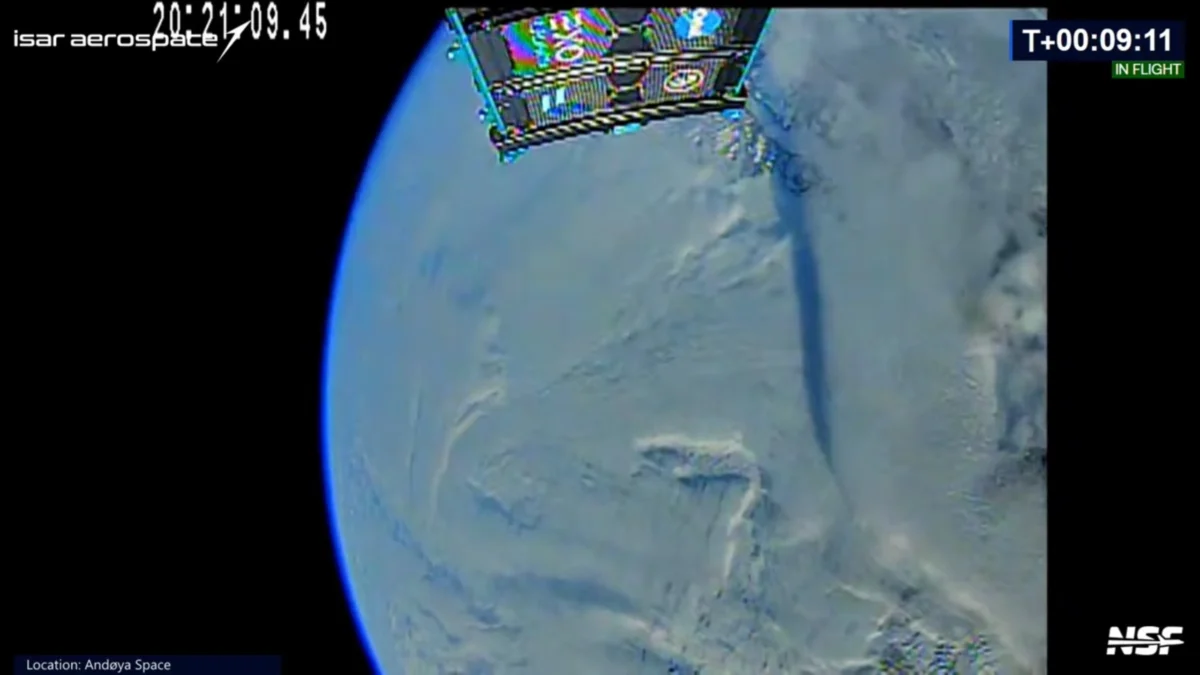
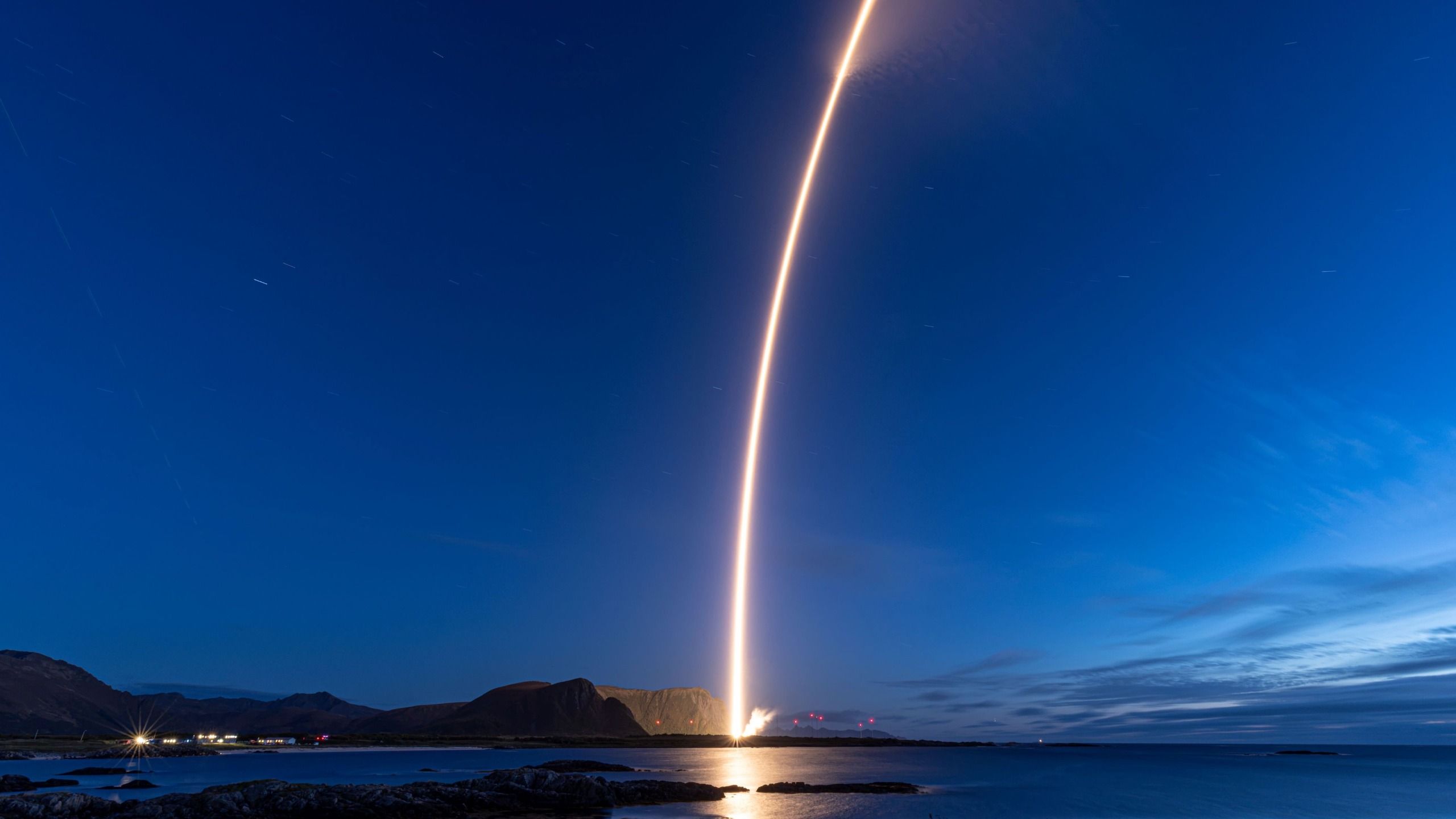
In a monumental achievement for the European aerospace sector, the German startup Isar Aerospace has successfully reached Earth’s orbit, marking the first time in history that a rocket has launched into space from Western European soil. The Spectrum rocket, a sleek, 95-foot-tall (28-meter) launch vehicle, roared to life at the Andøya Space Center in northern Norway, carving an incandescent orange arc through the twilight sky on September 5, 2026.
At 4:12 p.m. EDT (2012 GMT), the two-stage vehicle ascended from the Arctic launch site, carrying a suite of small satellites into the heavens. A mere seven minutes later, the rocket achieved its primary mission objective: settling into a precise, elliptical orbit around the planet. The successful mission, dubbed "Onward and Upward," has effectively shattered the glass ceiling for Western European spaceflight, establishing the continent as a new, independent gateway to the stars.
A Chronology of Perseverance: From Failure to Orbit
The path to this historic milestone was far from straightforward. The Spectrum rocket’s journey to orbit was defined by a culture of rigorous engineering and relentless iteration.
The Debut Struggle
Spectrum’s initial foray into space occurred in March 2025. The mission, titled "Going Full Spectrum," was met with high expectations but ultimately ended in a sobering reality. Less than 60 seconds after liftoff, the rocket suffered a critical failure and plummeted back to Earth.
In the immediate aftermath, Isar Aerospace demonstrated the transparency that has become a hallmark of the "NewSpace" era. Within two months, the company released a comprehensive forensic report. The investigation pinpointed an unintended opening of a vent valve coupled with a catastrophic loss of attitude control during the vehicle’s roll maneuver. Rather than shying away from the failure, the engineering team used the telemetry data to refine every subsystem of the rocket.
The Road to "Onward and Upward"
Following the failure, the company set their sights on a second attempt, originally scheduled for January 2026. However, the complexity of spaceflight ensured that the timeline remained fluid. A pressurization valve issue forced a delay to March, which was subsequently thwarted by Arctic weather conditions and the presence of maritime traffic near the launch trajectory.
The spring of 2026 proved particularly testing. An April launch attempt was scrubbed due to a leak in a composite overwrapped pressure vessel, and a June 15 effort was halted moments before ignition after engineers detected "off-nominal behavior" in the fluid systems. Each delay, while frustrating, served as a stress test for the team’s resolve. When the countdown finally reached zero on September 5, the vehicle performed flawlessly, validating the months of painstaking ground testing and diagnostic refinement.
Technical Prowess: Powering the Spectrum
The Spectrum rocket is a testament to the current evolution of aerospace engineering, designed specifically to address the burgeoning demand for small-to-medium satellite deployments. With the capacity to haul approximately 2,200 pounds (1,000 kilograms) of payload into Low Earth Orbit (LEO), Spectrum is positioned to become a workhorse for both commercial and scientific operators.
Payload Integration
Unlike its maiden flight, which carried no commercial cargo, the "Onward and Upward" mission was a functional success in every sense. The rocket carried five CubeSats and a non-deployable scientific experiment. The mission architecture required the second stage to execute a complex circularization burn—transitioning from its initial elliptical orbit (ranging from 112 to 311 miles in altitude) to a stable circular path—before releasing its cargo.
The successful deployment of these assets, confirmed approximately two hours after launch, served as the final validation that Isar Aerospace is not merely a launch provider, but a reliable partner in the orbital ecosystem.
Manufacturing at Scale
Isar Aerospace’s vision extends well beyond a single successful launch. The company has invested heavily in an automated, high-output manufacturing facility near Munich. By utilizing advanced additive manufacturing and streamlined assembly line techniques, the company intends to scale production to more than 30 rockets per year. This high cadence is designed to provide European companies and government agencies with a sovereign, reliable, and cost-effective alternative to relying on international launch services.
Official Perspectives: A Momentous Achievement
The atmosphere at the Andøya Space Center during the mission was one of palpable tension, followed by sheer exhilaration. Nikolaos Perakis, the Spectrum chief engineer, encapsulated the sentiment of the entire organization during the live webcast produced in partnership with NASASpaceflight.
"This is right now making history—making history for Spectrum, making history for Isar, making history for Europe," Perakis stated, his voice echoing the relief and pride of a team that had endured multiple setbacks. "We had some delays, obviously. We had some setbacks, but we came back stronger from them. And it validates this tremendous amount of engineering across all the teams, and that’s what brings us into orbit."
The success was not just an internal win for Isar; it was a victory for the broader European space industry, which has been seeking to reduce its dependence on non-European launch vehicles. By proving that a private company could execute a successful orbital insertion from a high-latitude site like Andøya, Isar has fundamentally altered the continent’s strategic space capabilities.
Strategic Implications: Why This Matters
For decades, the concept of a "European launch" was largely synonymous with the Ariane program, which operates from the Guiana Space Centre in South America. While those heavy-lift rockets are crucial for large-scale missions, the market for small, dedicated satellite launches has shifted.
Sovereignty and Access
Until this week, the only orbital launches originating from European territory were conducted by Russia from the Plesetsk Cosmodrome. While Russia spans both Europe and Asia, the distinction of "Western European soil" remained an unreachable goal for private startups until Isar’s breakthrough. This success provides European nations with "assured access to space"—a strategic necessity in an era where satellites are the backbone of telecommunications, climate monitoring, and national security.
A New Hub for Innovation
The Andøya Space Center is now firmly established as a premier global launch site. Its high-latitude location is particularly advantageous for polar and sun-synchronous orbits, which are highly sought after by Earth-observation satellite constellations. By successfully operating from this site, Isar has proven that the logistical challenges of northern operations—including extreme weather and complex range safety requirements—can be mastered.
Future Horizons
The success of "Onward and Upward" serves as a catalyst for future innovation. With the technical hurdles of the first two flights now in the rearview mirror, Isar Aerospace is expected to shift its focus toward operational cadence. The company’s success will likely attract further investment, spur local job creation in the space sector, and potentially encourage a new generation of European aerospace engineers to pursue domestic opportunities.
"Flight 2 is a big, big milestone, a big success," Perakis noted in the final moments of the post-launch broadcast. "But this is just the beginning. So I’m really looking forward to the next steps."
As the dust settles over the Arctic coast of Norway, the message is clear: Europe is no longer just a participant in the global space race; it is now a primary competitor. Isar Aerospace has laid the foundation for a new era, proving that with enough grit, engineering excellence, and resilience, even the most daunting barriers can be cleared. The path to orbit is open, and for the first time in history, the door swings wide from Western Europe.